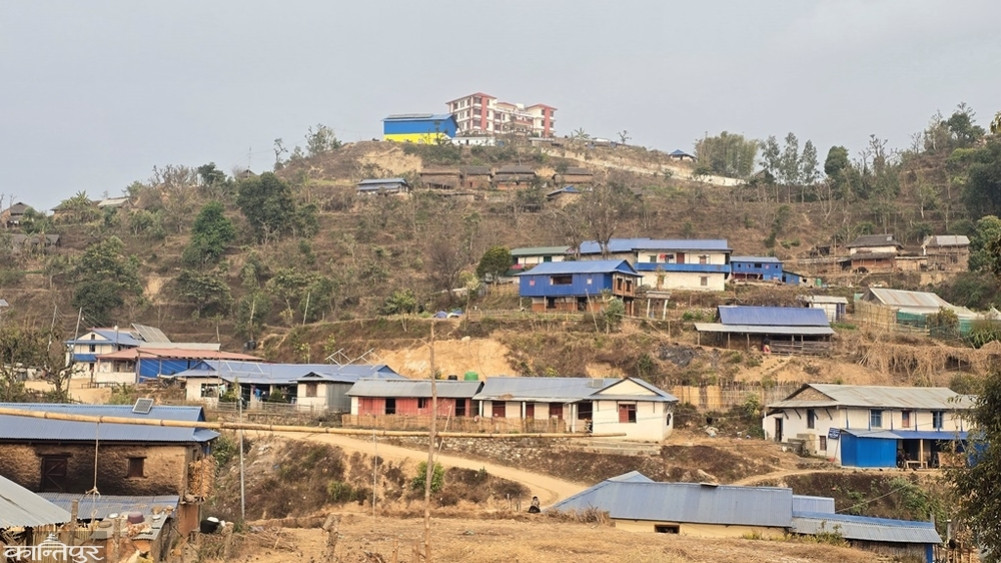
Problems such as extreme shortage of drinking water, limited hospital services, declining agricultural production, school dropout rates, and stalled airport construction have directly impacted the daily lives of the residents of Udayapur district.
We use Google Cloud Translation Services. Google requires we provide the following disclaimer relating to use of this service:
This service may contain translations powered by Google. Google disclaims all warranties related to the translations, expressed or implied, including any warranties of accuracy, reliability, and any implied warranties of merchantability, fitness for a particular purpose, and noninfringement.
Udayapur district of Koshi province is made up of hills, valleys, tar and terai. The district, which has an area of 2063 square kilometers, is bordered by Bhojpur, Khotang and Okhaldhunga to the north, Sindhuli and Dhanusha to the west, Siraha and Saptari to the south, and Sunsari and Dhankuta to the east.
This district has the Mahabharat mountain range and sparsely populated areas, while there is a flat plateau between the Mahabharat foothills and the Chure range and a dense forest in the Chure region on the southern border. Triyuga Municipality is also known as Triyuga Valley among the plateaus of the inner Madhesh between the Chure and Mahabharat on the banks of the Triyuga River. The district, with its headquarters at Gaighat (Bokse) in this municipality, is located at an altitude of 360 meters to 2310 meters above sea level. Udayapur has eight local levels, including four rural municipalities and four municipalities.
According to the Udayapur Statistics Office, the current population of Udayapur has reached 342,773. According to the 2068 census, the population of Udayapur has increased by 25,241. In 2068, the population of Udayapur was 317,532. Although the population in the hilly areas is decreasing due to the increase in migration to cities for services and facilities, the population of urban and Terai areas is increasing. Currently, the number of women in the district is 17.777 million and men are 16.534.
The largest population in the district is in Triyuga Municipality, with 14,375 people.
This municipality, which is also the district headquarters, has 23,138 households and 25,928 families. The number of women in this municipality is 54,861 and the number of men is only 49,514.
Katari Municipality has a population of 60,168. Katari, which has 12,843 households and 14,296 families, has 30,918 women and 29,250 men. Chaudandigadhi Municipality, which has 12,162 households, has a population of 53,537. There are 12,170 families, with 28,148 women and 25,389 men. Belka Municipality, which has 11,633 households and 12,170 families, has a population of 51,458, according to the statistics office. There are 26,827 women and 24,631 men.
In terms of rural municipality, Udayapurgadhi has the highest population. There are 6,650 households and 6,810 families. The population of Udayapurgadhi, which has 14,836 females and 13,093 males, has reached 29,929, according to the statistics office.
Rautamai Rural Municipality has a population of 20,418, including 10,411 females and 10,017 males. The population of Tapli Rural Municipality, which has 2,843 households, is 13,317. There are 2,884 households, including 6,729 females and 6,648 males. The population of Limchungbung Rural Municipality, which has 4,952 females and 4,837 males, is 9,789. There are 2,257 families in Limchungbung, which has 2,229 households.
There are 238,926 voters in Udayapur, which has two federal constituencies. The District Election Office, Udayapur, has stated that there are 103 polling stations and 275 polling stations in this district, which has 75 wards.
Udayapur-1, which has three municipalities, Triyuga, Chaudandigadhi and Belka, has 35 wards, which have 52 polling stations and 160 polling stations. Udayapur-2, which has 5 local levels, Tapli, Limchungbung, Udayapurgadhi and Rautamai rural municipalities and Katari municipal corporation, has 40 wards. Out of a total of 142,844 voters in Constituency No. 1, the number of male voters is 71,452, the number of female voters is 71,350 and 2 others are 2, said District Election Officer Deepak Dahal.
The residents of Udayapur, which consists of the Terai, Inner Madhes and hilly areas, mainly engage in paddy, maize, wheat, mustard, potato, orange, lemon farming and animal husbandry, small and medium industries, trade and other professions. Due to lack of irrigation, paddy production has been decreasing in Udayapur in recent years. According to the Agricultural Knowledge Center Udayapur, in the fiscal year 082/83, 31,318 metric tons of paddy was cultivated in an area of 12,912 hectares in the district.
Yogendra Prasad Yadav, head of the Agricultural Knowledge Center Udayapur, said that out of the total cultivable land in the district of 22,210 hectares, rainfed paddy was cultivated on 13,112 hectares. He, who is also a senior agricultural economist, said that paddy production is decreasing due to lack of irrigation and the effects of climate change. According to him, there has been a decrease of 18,275 metric tons of paddy production in the current fiscal year compared to the fiscal year 081/82. He said that paddy production is decreasing due to lack of rain and irrigation during the sowing season.
In the fiscal year 079/80, 53,520 metric tons of paddy was produced in 13,380 hectares. In 080/81, 51,175.8 metric tons of paddy was produced in 12,793.95 hectares. According to the data of the Agricultural Knowledge Center Udayapur, 49,575 metric tons of paddy was produced in 13,326 hectares in 081/82. Yadav, the head of the knowledge center, said that irrigation facilities have been provided to only 5,000 hectares in the district and the rest has to depend on rainwater.
Increase in orange production
Statistics show that orange production in Udayapur has increased in recent years. In the current fiscal year, 3,995 metric tons of oranges were produced in an area of 632 hectares of land, according to the Agricultural Knowledge Center Udayapur. According to Sangita Gyawali, Information Officer of the Knowledge Center, in the last fiscal year, 3,510 metric tons of oranges were produced in an area of 630 hectares. Gyawali said that although the area of land increased by only 2 hectares this year, production increased by 485 metric tons.
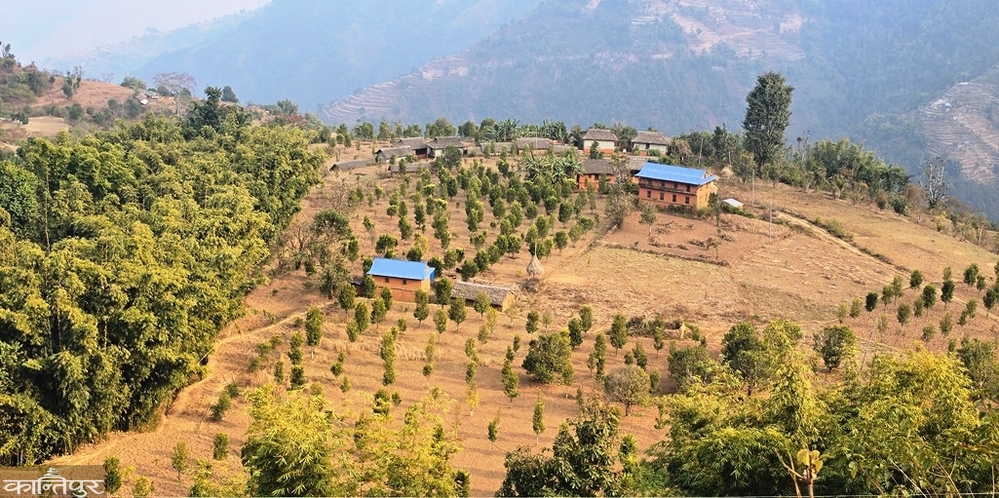
The office has stated that oranges worth about Rs 280 million have been sold and distributed this year. According to the statistics of the Knowledge Center, 30 percent of the oranges produced are consumed by the farmers themselves and 70 percent go to the market. Farmers say that production could increase further if the government provides support for modern technology, fertilizers, plant management, and pest control. Commercial orange cultivation has been taking place in various places in the hilly areas of Katari Municipality, Limchungbung, Tapli, and Rautamai rural municipalities of the district.
Farmers have complained that they have not been able to earn as much as they expected due to constant price stability, lack of storage facilities, and high transportation costs. Along with oranges, locals here have been attracted to commercial lemon cultivation. Parasman Magar of Kerabari, Tapli Rural Municipality-5, Udayapur has been cultivating lemons commercially for 3 years. He said that this year alone he has sold lemons worth Rs 300,000. 'I started lemon cultivation after orange production stopped as before. If I can take care of it, I will also earn good income from lemons,' he said.
He has been traveling to cities like Katari, Gaighat, Siraha's Lahan, Mirchaiya, Kathmandu and other cities to sell the lemons he produces. 'I have made a different brand of Tapli lemons and sold them, and I have also made them into paste by peeling them in coal,' he said. He said that the local government and concerned bodies should provide subsidies and encourage local farmers as excellent farmers.
Tapli Rural Municipality has purchased and put them into operation to transport the vegetables, fruits, livestock and dairy products produced by farmers to the market. According to Rural Municipality Chairman Dhungraj Bishwakarma, two agricultural ambulances have been purchased with the 5.1 million rupees budget of the Rural Municipality in the fiscal year 2080/081.
Farmland barren, production declining
Cultivable land has started to remain barren as the youth of the village have started going abroad for employment. As people from the hilly areas of the district migrate to the cities in search of opportunities, the land in the villages has started to become barren. Maize and millet, which are mostly grown in the hilly areas, are rarely cultivated these days.
Sitamaya Magar of Dhungre, Udayapurgadhi Rural Municipality-4, is 70 years old. All her children have married and migrated to the city. She is still busy tending the millet planted in her garden. ‘Children these days do not like millet, earlier this was our food and snack, now they do not like anything except rice,’ she says, ‘Nowadays there is no manpower to work in the village, only children and the elderly, the youth are elsewhere for employment, so how is production?’
Till 10 years ago, millet was being produced in an area of 7,850 hectares in the district. In the fiscal year 2081/082, millet was cultivated in only 2,768 hectares of land in the district, said Sangita Gyawali, Information Officer of the Agricultural Knowledge Center, Udayapur. According to her, this year, millet was cultivated on an average of 2,650 hectares and only about 4,770 metric tons were produced. The data of the Knowledge Center mentions that millet was cultivated in more than 10,000 hectares of land in Udayapur until 2060 BS. Millet dishes such as Dhindo, Roti, Chhyang, Tongwa and others are famous here.
The Madan Bhandari Highway, which has been put into operation between the Chure and Mahabharata mountains, has contributed greatly to the economy of Udayapur. From Katari to Chatara, from Katari to Gaighat to Belka, businesses have been operating from huts made of bamboo and tin roofs to well-equipped hotels and restaurants. Businessmen say that due to the Madanbhandari highway, small markets like Beltar and Rampur have also started becoming urban-oriented and a significant amount of economic transactions are taking place.
Private and public vehicles going east from Kathmandu have been using the short route of Bhiman-Katari-Gaighat-Chatra instead of taking the roundabout route via Bardibas. Due to this, passengers have been choosing hotels and restaurants here as places to eat and drink. Although the number of hotels and restaurants operating along the highway is increasing, it has not been possible to create a structure to accommodate passengers in Udayapur for a day, said Ishwar Rai, general secretary of the Hotel and Tourism Entrepreneurs Association, Udayapur. Ramesh Karki, operator of Quality Hotel in Mukurchi, said that this highway has brought a big change in the Katari, Triyuga, Chaudandigadhi and Belka municipalities and Udayapurgadhi rural municipality areas. The hotels have created a situation where agricultural products produced in the district are consumed and the taxes paid by the hotels have also contributed to the district's economy, said Belka Municipality Deputy Mayor Jira Rai.
The ventilator and oxygen plant of the district hospital are unused
The ventilator and ICU in the district hospital are not in operation, so the local people are deprived of services. Due to the lack of skilled manpower and resources, the 4-bed ICU and 2-bed ventilator are not in use, so the patients are forced to go to Dharan, Biratnagar and other places. According to the hospital administration, the 25-bed hospital was upgraded to 50 beds in 2067 BS.
Now, with the increase in the number of patients in the hospital, there are problems in management, according to the hospital administration. A technical survey was conducted 2 years ago to make the hospital 150-bed and a DPR (Detailed Project Report) was prepared and a budget was requested from the government. However, the Finance Ministry has not yet ensured the source, said Gaur Bahadur Bishwakarma, the head of the District Coordination Committee and the chairman of the Hospital Management Committee.
The hospital in Udayapur, which receives 1,500 to 2,000 patients daily, has not been able to increase its capacity, so when the number of patients increases, it is forced to treat them by lying on the floor, said Birendra Kumar Mandal, the hospital's medical superintendent. 'The number of patients with fever, typhoid, pneumonia, dengue, malaria, etc. increases during the summer months. Normal patients are sent home after being given medicine and necessary counseling, but in case of complex patients, they are forced to treat them by lying on the floor,' he said.
The oxygen plant built at the district hospital at a cost of Rs 7.9 million by the Koshi Province government during the Corona period has not been repaired even after 3 years. Since the oxygen plant in Belka Municipality of the district is also not operational, there is a compulsion to bring oxygen from places such as Lahan, Biratnagar and others at a cost of Rs 700 per cylinder.
The hospital built in Satdhar, Chaudandigadhi Municipality-7, is currently unused during the Covid pandemic. The hospital administration says that it has not been repaired because it will cost 700,000 rupees to replace the damaged equipment of the oxygen plant and it has to be brought from China. The hospital's Mesu Mandal said that it will cost more than 500,000 rupees to increase the capacity of the oxygen plant and since it is expensive to repair the old one, oxygen is being brought from outside. It has been seen during the inspection that only 50 to 60 types of medicines are available in the district hospital, out of 98 types that should be available free of charge.
Locals complain that women who come to seek services face problems due to lack of drinking water, smelly toilets and old equipment in the district's birthing centers. Due to the geographical situation, the residents of the hilly areas have been deprived of health and maternity services due to the inability to operate transportation for twelve months. There are three hospitals, 156 primary health centers, and 41 health posts in the district. There are 243 vaccination centers.
Hospital construction work slow
The construction of the hospital, which was laid by the federal government simultaneously on Mangsir 15, 2077, has been slow. The construction of the hospital was started in 6 local levels in the district in the first and second phases. The construction of a 10-bed hospital building in the forest area of Belka Municipality-6 has not yet been completed.
Mayor Ashok Karki said that the construction work could not be completed on time due to an interim order from the court in a case filed by the community forest. Mayor Karki said that the land has been acquired after the legal dispute from the court and the tender process is in progress.
Only 65 percent of the construction work of the 15-bed hospital being built in Beltar, Chaudandigadhi Municipality-7 has been completed. The construction of the 3-storey building being built on 8 katthas of public land is in the final stage, said the municipality's Chief Administrative Officer Kajiman Rai. The contract for the building was awarded for Rs 130 million and was to be completed by mid-Ashar 2080. Mayor Kaluman Lama said that the work, which was stalled due to budget shortage and various technical reasons, is progressing at a rapid pace.
The construction of a 5-bed hospital building under construction in Limchungbung Rural Municipality-3 Baraha has been completed and is operational. The hospital was named LB Karki Memorial Baraha Hospital after local Lal Bahadur Karki provided 19 ropanis of land free of charge, said the acting chairman of the rural municipality, Pushpalal Rai.
The construction of a 5-bed hospital building in Tapli Rural Municipality-5 Katahare has reached the final stage, said the rural municipality chairman, Dhungraj Bishwakarma. He said that the construction of the physical structure and painting work have been completed and only wiring and other work are left. The locals had collected donations and purchased 10 ropanis of land belonging to Chakra Bahadur Hamal and transferred it to the municipality. The construction of the building, which was contracted by Rautaha Construction for Rs 60 million, has been completed and is yet to be handed over, said the municipality chairman BK.
The construction of a 15-bed hospital in Udayapurgadhi and Rautamai rural municipalities is around 60 percent complete. Meanwhile, in Triyuga Municipality, the health post in Deuri, Triyuga Municipality-5, has been upgraded to a municipal hospital. Public Health Officer Upendra Karki said that the municipal hospital, which was inaugurated by Mayor Basanta Basnet on Asoj 3, will provide OPD, emergency, lab and some specialist services.
Drinking water problem in hilly areas
Residents of hilly areas including Tapli, Limchungbung, Rautamai in the district have been facing water problems. The residents of the area have been suffering from water shortages after the 2005 earthquake, when the water sources dried up.
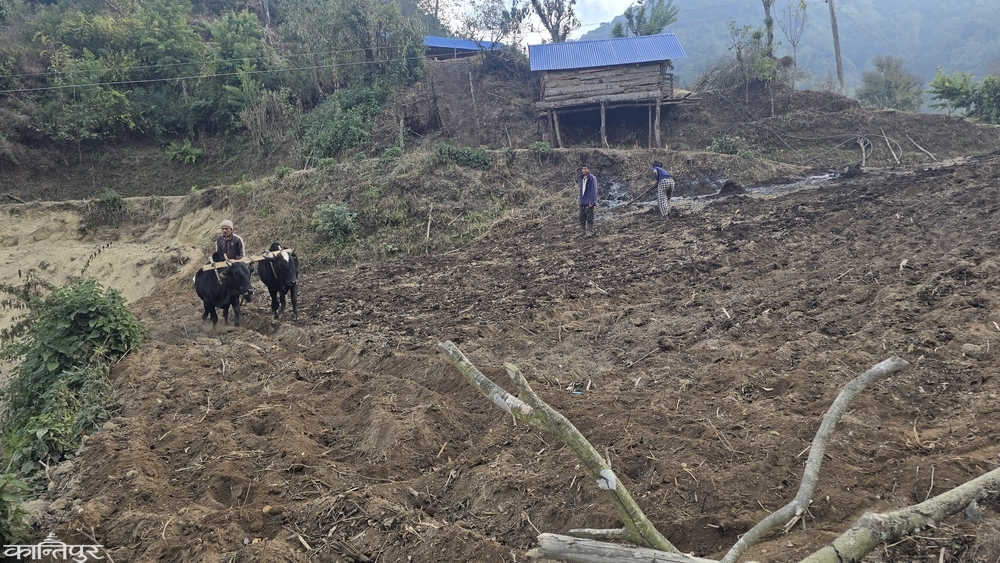
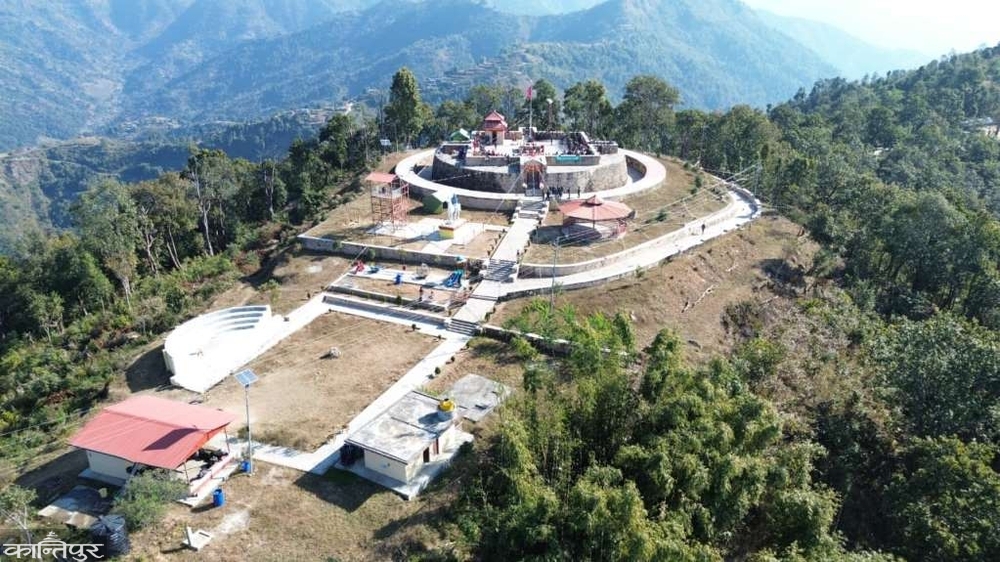
According to the National Census 2078, 13.9 percent of the people in Udayapur migrated due to the problem of drinking water. Locals complain that they have to walk for 3 hours to get drinking water in the village. They have to get up at 5 am to get water from a well that is an hour and a half away, and they have to spend 3 hours a day to get drinking water. Due to the shortage of water, children here have had to miss school many times. Residents around Tapli Pakhari, the best tourist spot in the district, have been facing drinking water problems for years.
The Sunkoshi Lifting Drinking Water Project, which was launched with the aim of providing clean drinking water to the residents of Rautamai, Tapli and Limchungbung rural municipalities of the district, has been stalled due to the negligence of the contractor company.
The project was agreed to be completed by the Government of Nepal at a cost of Rs 1.58 billion, 9.655 billion by Ashad 30, 2082, but more than half of the work has not been completed by the deadline. The work was progressed under Scheme 1 of the Sunkoshi Drinking Water Project so that 3,272 households in Limchungbung rural municipalities 1 to 5 and wards 1 to 3 of Rautamai rural municipality could enjoy drinking water facilities.
Similarly, under Scheme 2 of the plan, the project, which was started so that 17,879 consumers from more than 3,000 households in Tapli rural municipalities 1 to 5 could enjoy clean drinking water facilities through 6,327 taps, is currently stalled. Sujit Mahato, field engineer at the Biratnagar office, said that the project has been prepared targeting a total of 37,020 consumers from 6,327 households in all three municipalities.
Project chief Chowk Prasad Dhital said that the remaining work has been delayed as the government has not ensured additional budget for the project. ‘We have to walk for 3 hours just to get drinking water. When we carry water in a jug, our legs get tired when we go uphill,’ said Bishnumaya Pariyar, 62, of Katari Municipality-10, Ramche. She said that since the age of seven, she has been spending 7 hours a day for drinking water. ‘Now I am old, my body has stopped supporting me, I cannot walk properly,’ she laments.
104 households in Ramche, including Bishnumaya, have to walk for 3 hours downhill to reach the Sunkoshi River for drinking water. ‘We have to carry water 3/4 times a day to feed ourselves, feed our livestock, wash dishes, and use the toilet, and we have to wait our turn at the well,’ said Dhankumari Pariyar of Ramche. ‘We were born and raised in this place. Now where will we go in our old age?’ She said that many locals have migrated from Ramche due to the compulsion to spend half a day for drinking water.’
During the election, all the candidates made election slogans to provide drinking water to Ramche, but after winning the election, the residents of Ramche complain that everyone ignores it. Narmaya Sunuwar of Ramche says, ‘Candidates for all levels of elections at ward, municipality, province, and center make speeches that solving the drinking water problem here is their first priority, but no one comes back after winning the election.’
Ward Chairman of Katari Municipality 10, Kshetra Bahadur Khadka, said that it was not possible to supply drinking water to Ramche because the settlement was located far above the water source. ‘There were efforts at the municipal and provincial levels to supply drinking water to Ramche from the Sorung River, but it was not successful due to the high altitude and the long distance,’ he said. ‘Since the ward chairman is the closest representative of the people, I should be the one to take the most abuse. It is not possible from the ward budget. The provincial and central governments did not show interest,’ he said.
The work of the Sunkoshi Lifting Project, which was started in 2079 BS to supply drinking water to Ramche, was affected because the structures of the project were washed away by the flood of Asoj 11 last year, said Katari Municipality Mayor Rajesh Chandra Shrestha.
Problem of school dropouts
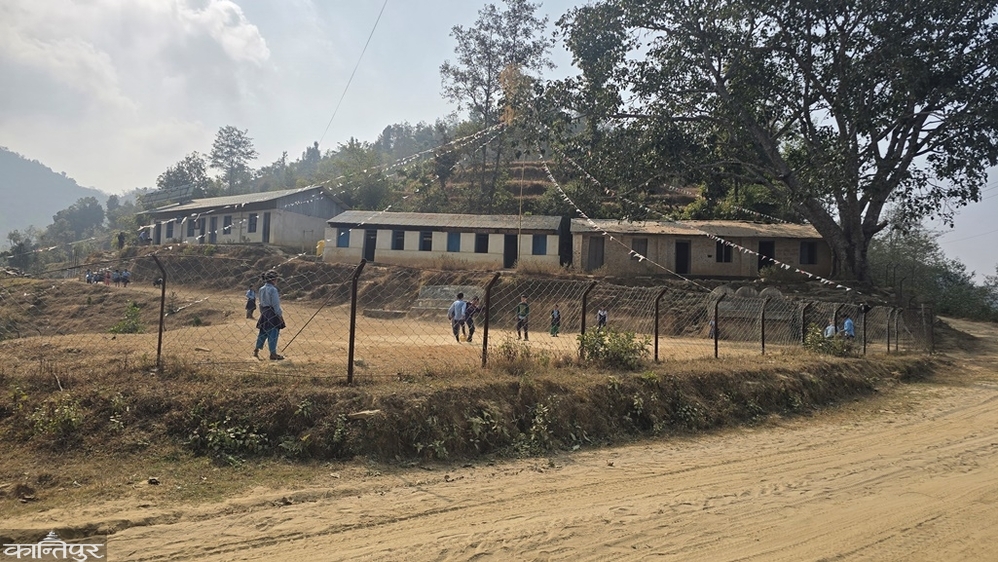
Children from poor families in the hilly and rural areas of the district tend to drop out of school early. Students from grade 8 to higher grades have been found to be dropping out of school and moving to Kathmandu, Biratnagar, Pokhara and other places in search of work. Local level statistics mention that there is a problem of dropping out of classes in the upper areas of Tapli, Rautamai, Udayapurgadhi, Limchungbung and Katari municipalities of the district.
There are 333 basic level and 115 secondary schools in the district. There are nine disability-friendly schools in the district. Children in the hilly areas are still forced to walk for 1 to 1.5 hours to go to school. During the rainy season, children's education is affected due to rivers and floods. A report published by the Informal Sector Service Center (INSEC) states that schools in the hilly areas lack adequate facilities such as clean drinking water, child-friendly toilets, disability-friendly classrooms, science laboratories, libraries and computer labs.
105 hectares of forest destroyed in the name of airport construction, cattle grazing for 4 years
Even after 4 years of cutting down 105 hectares of forest for the construction of the airport, there is no decision on the construction of the airport. Although 156.11 hectares of forest were cleared in the Shivalaya Religious Forest, Kang Community Forest and Motihayi Community Forest in Triyuga Municipality 1 and 2 of Udayapur, the area has been converted into grasslands.
Ghanendra Shrestha, Chief of the Division Forest Office, Gaighat, said that permission has been given to clear 156.11 hectares of forest for the construction of the physical infrastructure of the Sagarmatha Domestic Airport. It is said that the cut wood from the forest has been taken by local consumers through the community forest group and the excess wood has been sold elsewhere. Wood is still kept here and there in the airport construction area. Wood that has been left neglected in the grasslands for a long time has started to deteriorate. Both the Community Forest and the Division Forest Office do not have accurate data on how much wood was distributed to consumers and how much was sold during the felling.
The grassland that has been converted into cattle grazing is now at risk of encroachment due to lack of protection. Although Gaighat of the Division Forest Office said that the land has been transferred to the name of the Civil Aviation Authority, Dubindra Prasad Baral, head of the Land Revenue Office, Udayapur, said that the land has not been registered in the name of Sagarmatha Airport. “The land in that place has not been registered in a way that keeps records in the Land Revenue Office,” he said. Since the ownership of the grassland that was left desolate after the trees were cut down has been transferred to the Civil Aviation Authority, the responsibility for its protection is also the responsibility of the Division Forest Office, said Shrestha, head of the Division Forest Office.
According to him, the trees in the forest area were cut down after an agreement was reached between the Ministry of Forest and Environment, Department of Forest and Soil Conservation and the Civil Aviation Authority of Nepal on 24th Magh 2078 in accordance with the Forest Act 2076, Forest Regulations 2051 and the Procedures for the Use of National Forest Areas for National Priority Projects with Standards 2076.
Locals have alleged that the area has now been converted into grassland after the then government deforested a large amount of land without planning and without any planning. Rudra Adhikari, a local who is also the treasurer of the preliminary committee formed to provide local support for the construction of the Sagarmatha Airport, said that the forest area was deforested in the name of the proposed Sagarmatha Airport based on the preliminary phase of the airport construction, based on the 'pre-feasibility' study report.
He said that the locals are now grazing cattle and buffaloes in the grassland where the candidates used to promise to build the airport by clearing forests during the elections. Kushalbabu Basnete, President of the Community Forest Users Federation, Udayapur, said that it is sad to make the forest area desolate without preparing the DPR of the settlement plan.
The blacktop of the 46-kilometer road from Katari to Ghurmi in Udayapur has collapsed and the residents of this area have been suffering for a decade due to mud during the rainy season and dust during the winter. The dust has also seriously affected the health of the locals. Lil Bahadur Khatri of Patnabhanjyang said that even though this highway in Udayapur-2 has collapsed and deteriorated for decades, the stakeholders have not paid attention to it.
Fear of elephants, rain and snow in winter
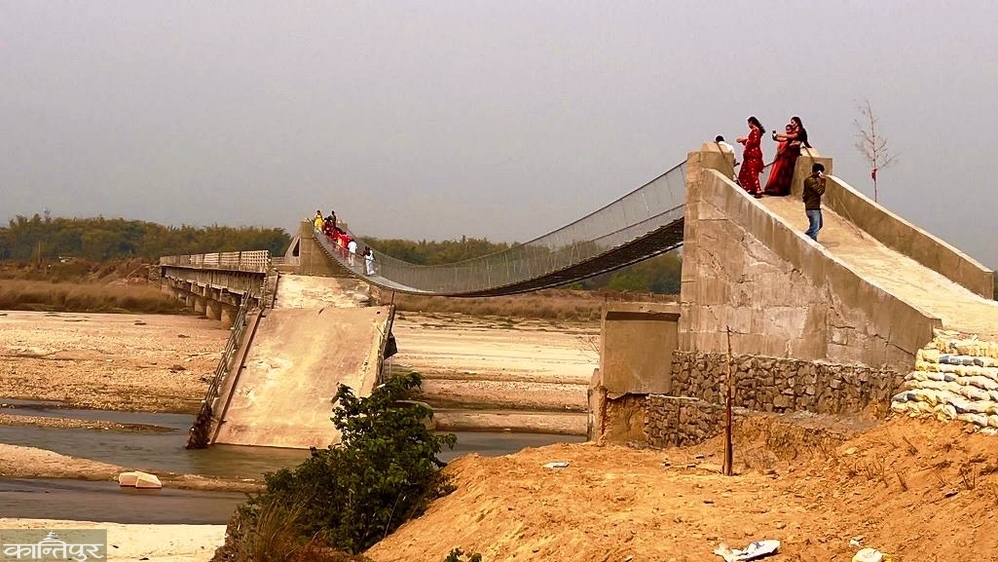
You can reach Sri Lanka Island by crossing the suspension bridge over the Gideri River from Bandanda in Belka Municipality-2 in Udayapur. After crossing the bridge, Tetru Rajbashi has been living in a house with a bamboo roof and a thatched roof. His permanent address is Prakashpur in Sunsari. Rajbanshi, who is harvesting vegetables, says, "We are busy in the rice fields all day, but at night the elephants come and destroy everything. Not only the crops planted in the rice fields, they destroy people's houses, some have even taken their lives." He said that after working in the fields all day, he cannot even sleep peacefully at night.
The fear of elephants is the main problem of the residents of the island. There is a fear of elephants in winter and of koshis in the rainy season. After the water flow in the Gideri river increases, it is not possible to cross even from the suspension bridge. During the rainy season, those who live on the island are confined to their villages. Therefore, they buy essential food, salt and other materials before the onset of the rainy season. There is no possibility of reaching a health facility from this settlement for delivery at that time. ‘During the rainy season, many women give birth at home, and the village midwife serves them during that time,’ said Suraj Mahato, who lives in Ramnagar on the island of Sri Lanka. ‘To reach the health post, one has to cross the Gideri river and reach Bhagalpur, three kilometers away, which is not possible during the rainy season,’ he says.
There is a Ramjanaki Basic School on the island of Sri Lanka. Where education is provided up to grade 5. But students are not seen much. Locals graze cows and buffaloes in the school premises. It takes 1 hour for children from the island to reach Bhagalpur Secondary School in Belka Municipality-2. Since family members are busy with farming, Vijay Mahato of Ramnagar says that they also send their children to work in the fields rather than school. "Parents here are not interested in sending their children to school so that they can do housework and cook while they are busy in the fields," he says.
Even the telephone does not receive good reception on the Sri Lankan island. Locals say that the tower installed in Bhagalpur is providing 2G service that can only be used for phone calls. The only option for drinking water is water. They also face problems due to the problem of water drying up in winter. Ward Chairman Prem Dahal of Belka Municipality-2, which has more than 2,000 households, said. According to Ward Chairman Dahal, only 300 people in the Ramnagar area have voter ID cards. Ward Chairman Dahal said that residents of that area should come to the polling station at Saptakoshi Secondary School in Belka Municipality-2 to vote.
Other related news
Humli awaits roads, electricity and health facilities
Chitwan's election issues: parks, river erosion and infrastructure
Palpa's agriculture and tourism sector overshadowed by lack of infrastructure
Obstacles to Achham's development: incomplete infrastructure, unemployment and migration
Jhapa at the crossroads of economic, social and cultural transformation
Bajura residents await a change in the identity of the 'poor'
Sunsari's two faces: developed cities, backward villages
Population declining in Ramechhap, development infrastructure incomplete
Bajhang: A district trapped by problems in a mine of potential
Lack of employment and infrastructure Gorkha villages are emptying
Dhankuta is becoming a bridge connecting Madhesh and Himalayas
The same scourge is always in Mahottari of Madhesh - floods and drought
Migration will decrease, potential for herbs and tourism in Dolpa
Dry port and Mahakali corridor show promise in Kanchanpur
Monkeys hinder farming in Baglung preparing to export meat to China
Province capital Surkhet is facing a lack of infrastructure
Monkey terror and lack of infrastructure are emptying villages in Syangja
Development infrastructure is increasing, youth are struggling to survive in Makawanpur
Development is insufficient in Dang, the capital of Lumbini
Hopes that infrastructure expansion will reduce migration in Dadeldhura
The face of Lamjung is changing with hydropower and tourism
Tanahun: A confluence of natural, historical and rural tourism