Rustom told Kantipur, ”A person can reach the highest peak of their life, and that peak does not have to be in the Himalayas.”
We use Google Cloud Translation Services. Google requires we provide the following disclaimer relating to use of this service:
This service may contain translations powered by Google. Google disclaims all warranties related to the translations, expressed or implied, including any warranties of accuracy, reliability, and any implied warranties of merchantability, fitness for a particular purpose, and noninfringement.
Russian ex-soldier Rustam Nabiyev, who lost both his legs when a military barracks collapsed in Russia in 2015, has surprised the world by climbing Mount Everest, the world's highest peak, using only his two hands.
Rustam is the first person in the history of mountaineering to reach the peak of Mount Everest using only his hands, despite not having both legs. He started climbing Mount Everest this time on the occasion of his 34th birthday.
He achieved success after about a week of hard work on the 3-4-day Everest climbing journey for ordinary climbers. A video of Rustam climbing metal ladders installed in dangerous sections like the Khumbu Icefall with his hands is currently going viral.
He, who is missing part of his lower body, climbed Mount Everest on Wednesday morning. The world's media has given space to his success. Nepali mountaineer Lakpa Sherpa, who created history by climbing Mount Everest the most by a woman, has called this unprecedented step by former Russian soldier Rustam a unique example of the triumph of human will over physical limitations.
Hari Budhamagar, a former Gorkha soldier from Rolpa, who lost both his legs below the knees in the war in Afghanistan in 2010, set a record for climbing Mount Everest in the double amputee above the knee category with the help of an artificial leg (prosthetic) in 2080 Jestha. Rustam has surpassed this record.
Rustam, who returned to Kathmandu after climbing Mount Everest, returned home via Istanbul on Tuesday morning via Turkish Airlines. Earlier, in an interview with Kantipur, he said that climbing Mount Everest is like the ultimate test of body and mind for an ordinary mountaineer. For him, who moves forward on his hands, every meter is like a big battle.
When asked about the most difficult moment of the journey, Rustam said without hesitation, 'The most challenging route was definitely the Khumbu Icefall, which I crossed in 15 hours. You can imagine how difficult it is for an ordinary climber. The second most difficult stage was the journey from Camp 3 to Camp 4. Where it took me more than 14 hours.'
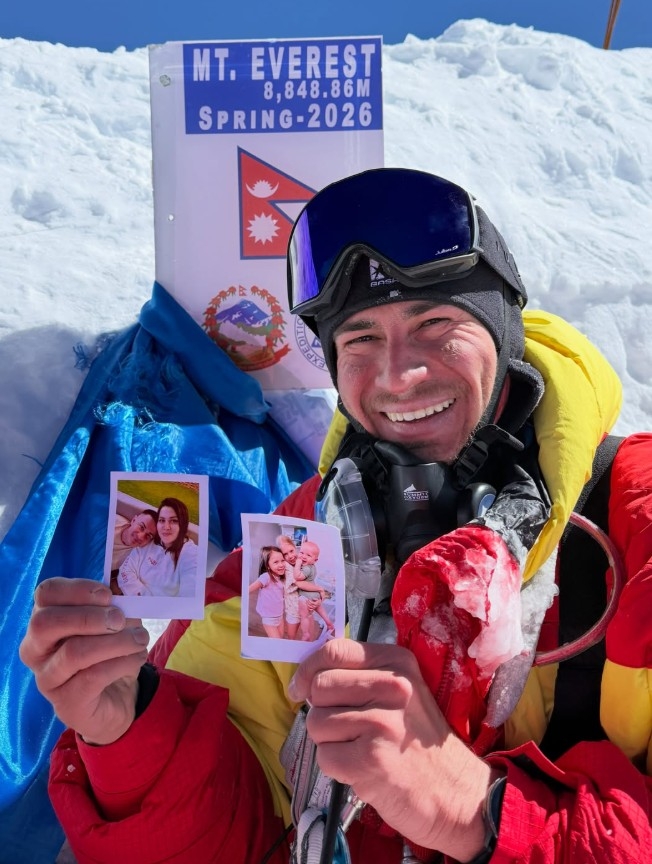
Rustam reached the world's highest peak at 8:16 am (Nepalese time) on Jestha 6. However, reaching the peak was not the only success as many thought, descending from there safely was even more dangerous.
'The descent is always considered the most difficult. Because most climbers die during the descent,' Rustam said, 'I gave more importance and attention to the descent than the ascent. Because I have no legs, descending is very difficult both physically and mentally. I had to constantly hold myself with my hands to keep my body balanced on the snow wall and rocks and to prevent slipping. This created a lot of and constant stress on the body.'
Rustam required great caution in every move. Physical pain was not only increasing. I was also equally afraid for my health. 'Walking on one's hands is not natural for the human body. Anything could happen to the body at such a height, so I always kept these risks in my mind.''
'What next after Everest?' To Kantipur's question, he said, '7 peaks of the seven continents.'
He has already climbed Mera Peak and Manaslu in Nepal. This time, Everest is Rustam's third big success.
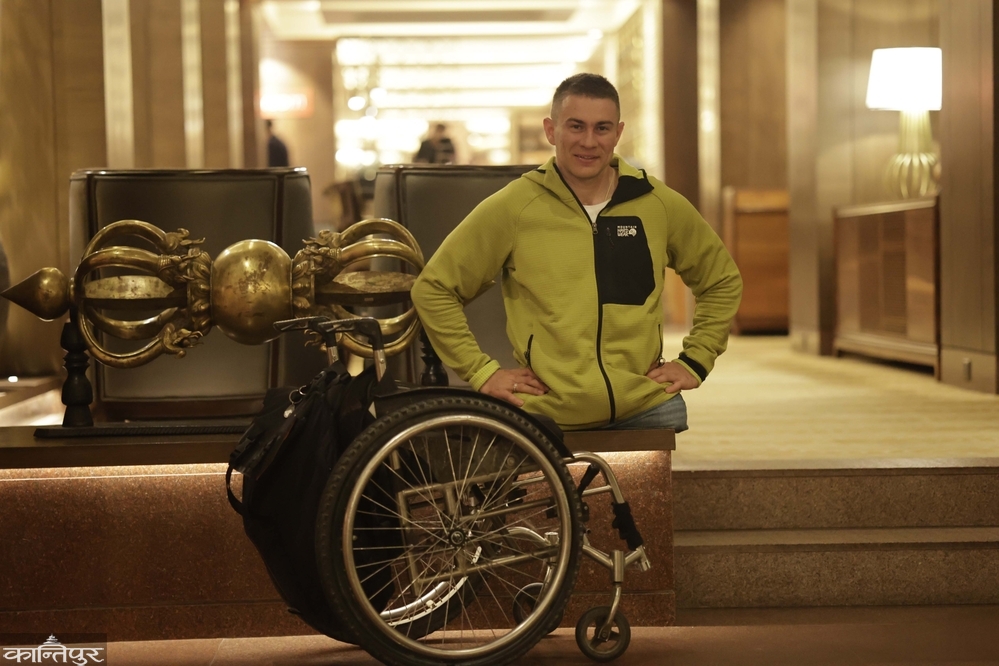
However, this athlete's dream is not limited to the Himalayas. His main goal is to complete the climb of the world's prestigious 'Seven Summits' (all seven highest peaks of the seven continents). Now he has only three peaks left to climb, one in North America and one in Australia/Oceania. He was a parajumper while serving in the military. He lost both his legs in a fall accident at the army barracks in 2015.
'Why did you choose the mountains of the 7 continents?' When asked by Kantipur, he said, 'Because it is a real and achievable goal for me in mountaineering. The plan to climb 14 mountains higher than 8,000 meters in the world is very difficult for me. Because each climb takes a huge toll on my health and I need a long period of rest and recovery.'
There is also a deep social message hidden behind these records. Rustam emphasizes that his example is for every person in the world who is going through difficult situations in life. 'My message is not only for people with disabilities. It is for every person in the world. We all have to face difficult situations at some point in our lives. As long as a person is alive, he says, he can change his situation.
'Even if you fall, it is possible to get up again. A person can reach the highest peak of his life, and that peak does not have to be a mountain. The important thing is to find a passion or goal in your life that can bring you back to life and make it beautiful again,' he says.
Talking about the social challenges faced by people with disabilities around the world (both in Nepal and Russia), Rustam stressed the need for a change in society's perspective. 'First of all, we are also human beings. No matter what injuries we have on our bodies, we want to live, make our identity and do something. Society often distrusts such people,' Rustam said, 'Sometimes people with disabilities have achieved more astonishing successes than completely healthy people. We want equality and respect in society. We are not a separate class or a separate group.'
Rustam says that this successful journey to Everest would never have been possible without his support team. Five experienced Sherpas were deployed to support him. Two were with him at all times, while one was constantly checking his oxygen levels.
Rustam had climbed Everest under the management of the Seven Summits Club. 'Sherpas are truly amazing and incredibly strong people. Without their help, no climb is possible. Whether the climber is healthy or physically disabled,' he said, 'I completely entrusted my life to the experience and skill of those Sherpas. I am deeply grateful to them for returning safely and achieving my goal.'
Rustam also has very sweet and emotional memories of Nepal. Recalling an incident in Lukla during the climb, he said, 'I was walking on the road. There was a little girl. She looked at me very curiously and came close and kissed me on the cheek. For me, that kiss was like a blessing from God.'
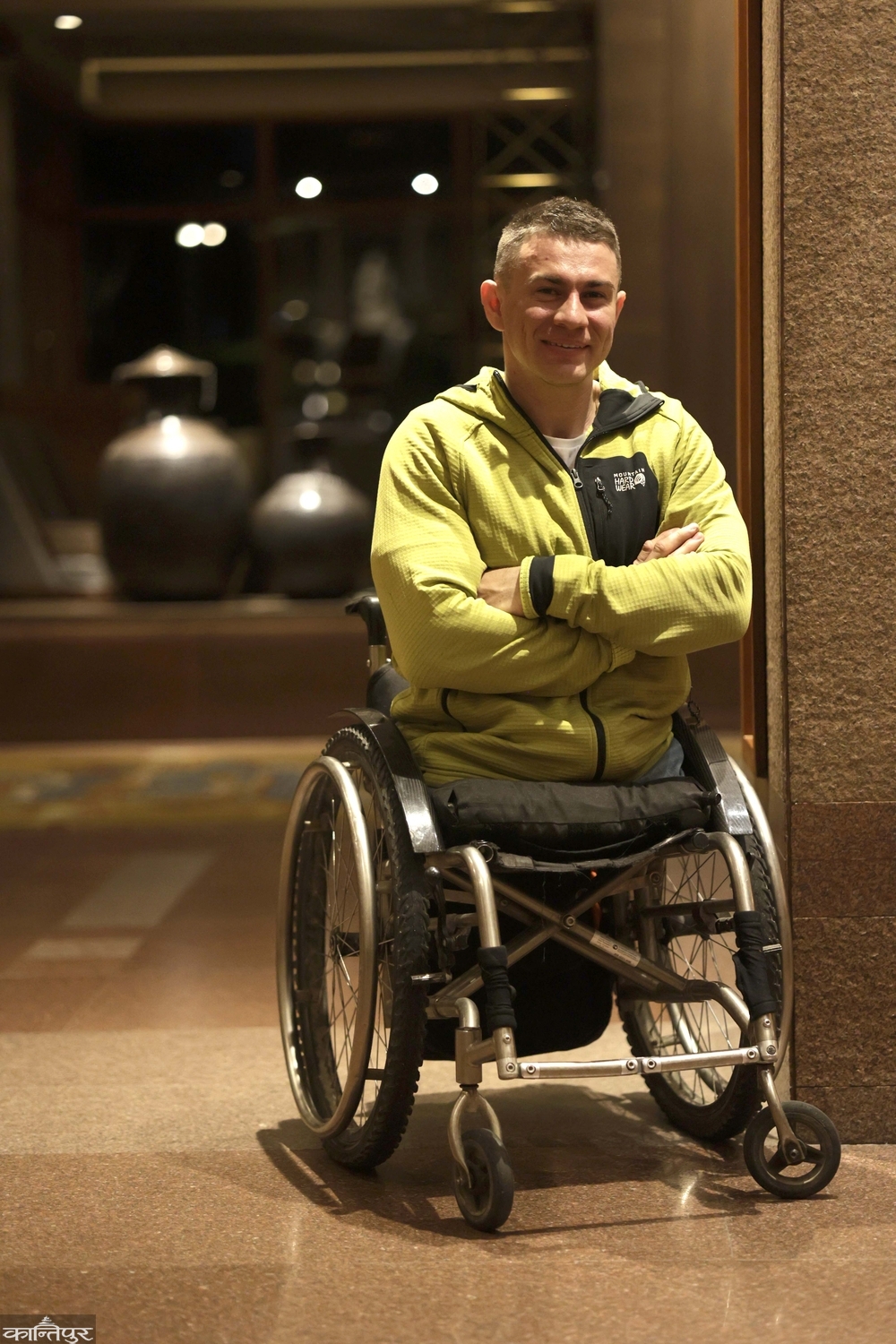
Towards the end of the conversation, he remembered his daughter and wife waiting for him in Russia. He expressed his desire to return to the bosom of his family as soon as possible. His wife is also interested in mountaineering. They have previously climbed Mount Elbrus and Mount Kazbek in Russia together. Rustam has two daughters at home, aged 8 and 11 months.
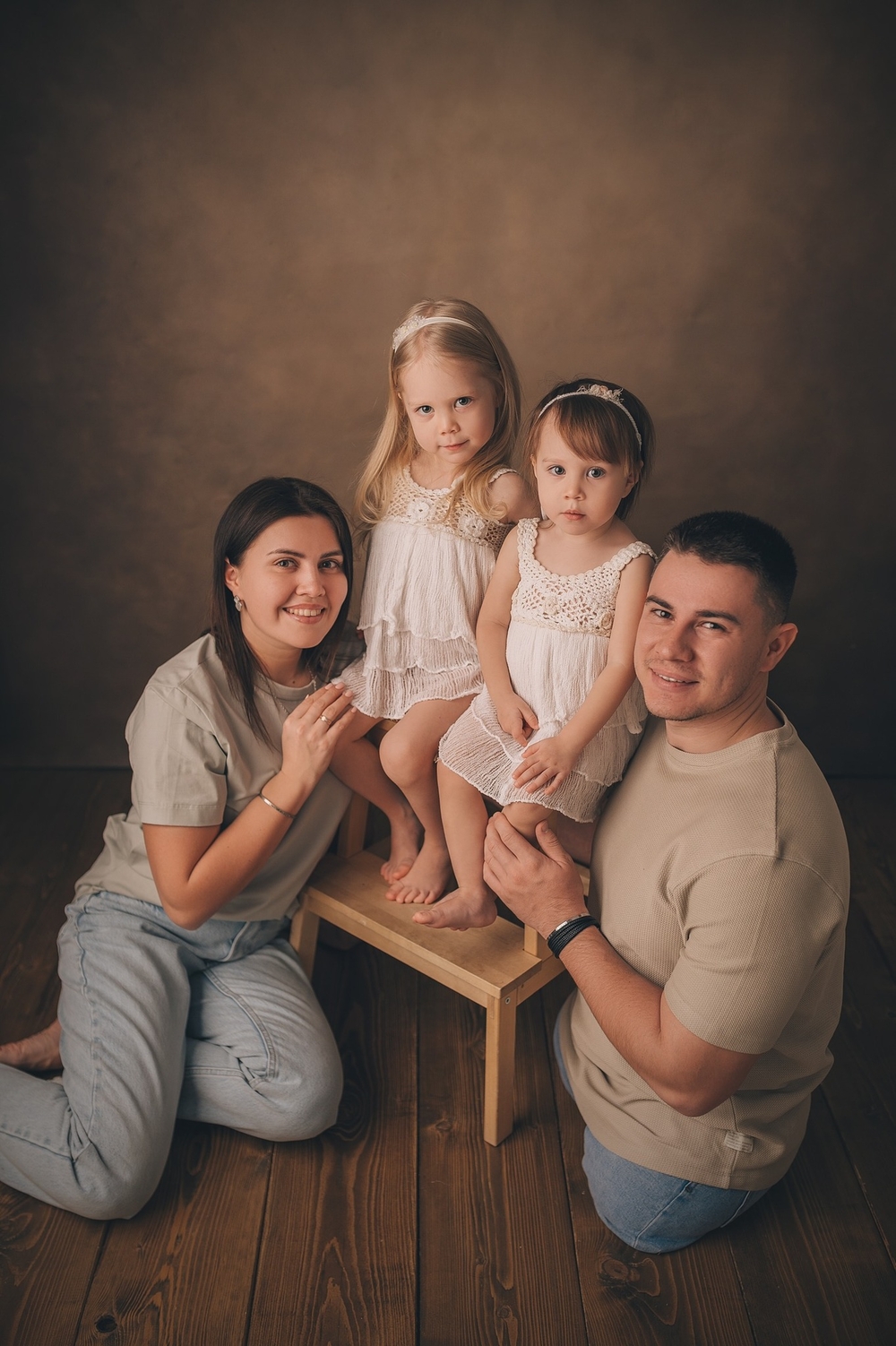
The eldest daughter is now able to understand, 'How dangerous is this Everest trek for dad?'. Recalling the moment he watched a documentary about Everest with his daughters at home before coming to Nepal, Rustam said, 'My daughter saw the body of a dead climber near the summit of Everest in the video and asked in fear, 'Dad, who is this?'
Before setting off on his journey, he jokingly said, 'Oh, this uncle must have been very hot, and he is sleeping there happily without his clothes, my daughter!' But she had come to understand her daughter. She was very worried about him and kept calling. He was seen telling his daughter and family about his situation on his mobile phone.
While packing his mountaineering gear and belongings, a picture and a letter from his eldest daughter Sofia became the biggest inspiration and blessing for Rustam throughout his Everest journey. The letter read, 'My father will touch the peak of Everest with the strength of his two hands.'
In the end, those hands truly worked a magic on the world. Rustam proved that nothing is impossible for a person with true self-confidence and strong will.
