We use Google Cloud Translation Services. Google requires we provide the following disclaimer relating to use of this service:
This service may contain translations powered by Google. Google disclaims all warranties related to the translations, expressed or implied, including any warranties of accuracy, reliability, and any implied warranties of merchantability, fitness for a particular purpose, and noninfringement.
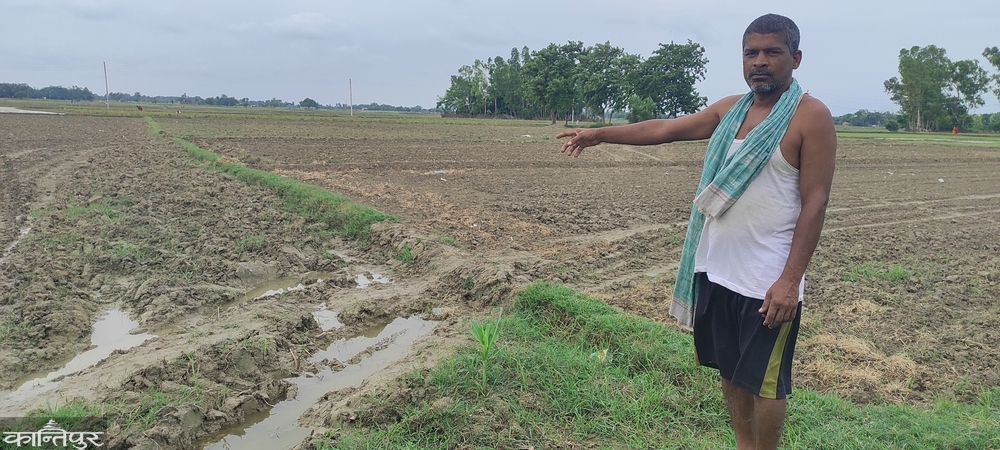
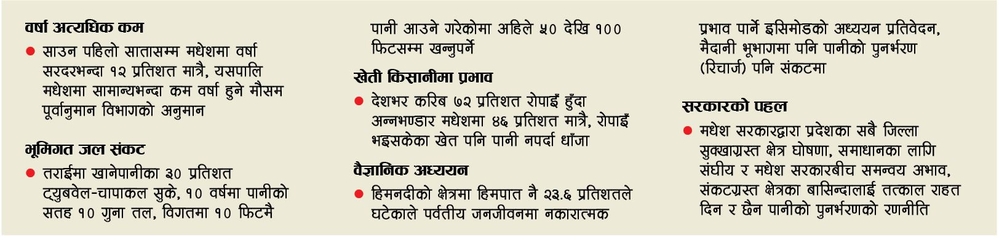
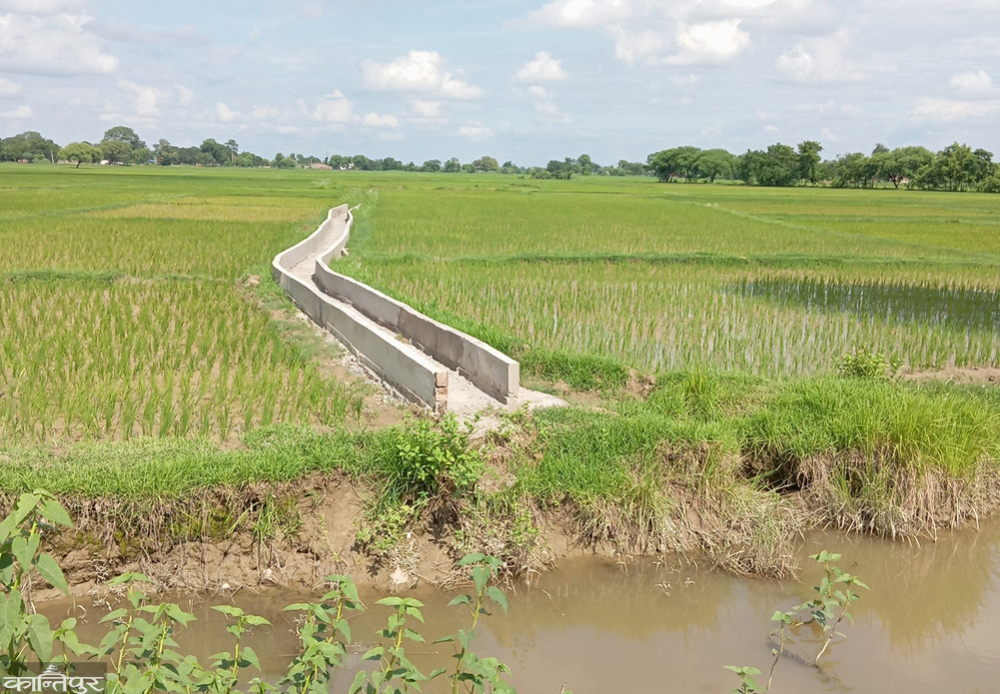
Even after the first week of July, there has not been enough rain in the Terai region, which has not only dried up the rivers, but the underground water sources have dried up and there is a shortage of drinking water. Due to lack of rain and irrigation, planting has not been done significantly in Terai. Due to lack of water, even in the place of planting, the rice fields have started to break.
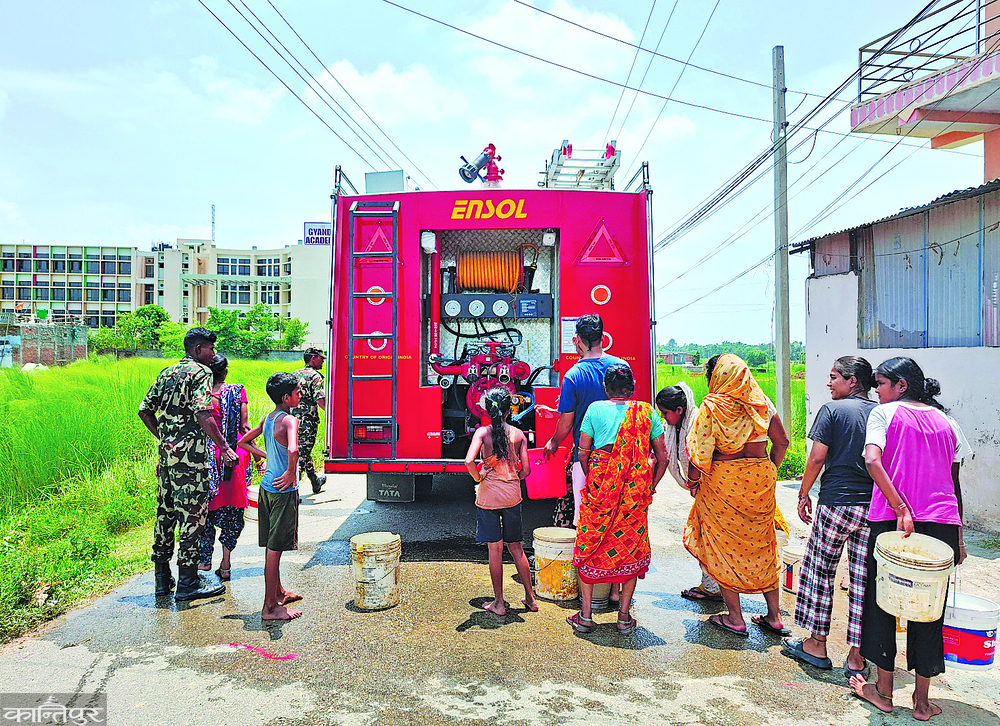
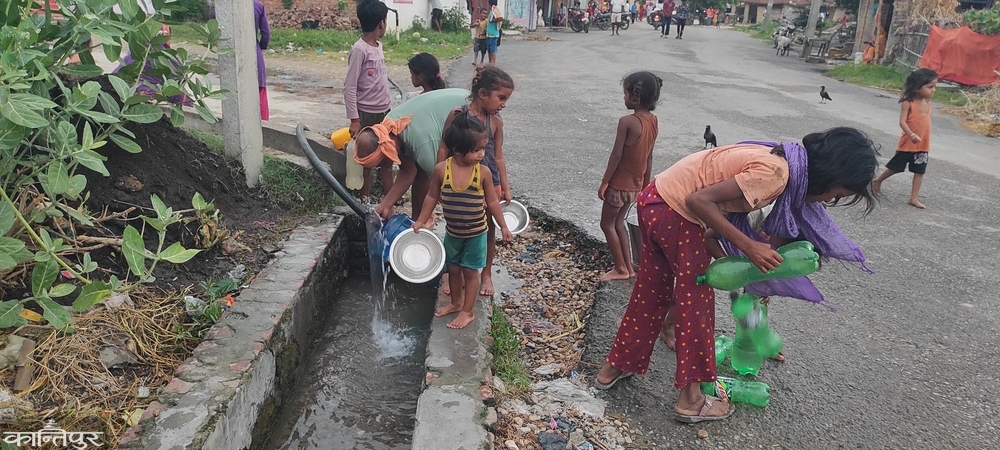
The sources of water in Terai are wells, wells and chapakals. All these three traditional systems are now useless. After Baisakh, the water crisis has deepened since last June in Madhesh province, which relies on a single system of drinking water company for water. The Madhesh state government has declared drought-affected areas due to drought and water crisis due to lack of rain even in the mid-rainy season. Also, to avert the water crisis, the state government has started distributing water to slums from fire engines and tankers.
68-year-old Amarendra Mahato of Janakpur-2 remembers the past when water came easily from the chapakal buried at 60 feet. At that time, there was no chapakal in every house. The water of one chapakal buried in toll-basti was sufficient for everyone,' he says, remembering the 40s, 'there was no need to stand in line, nor wait for a turn.'
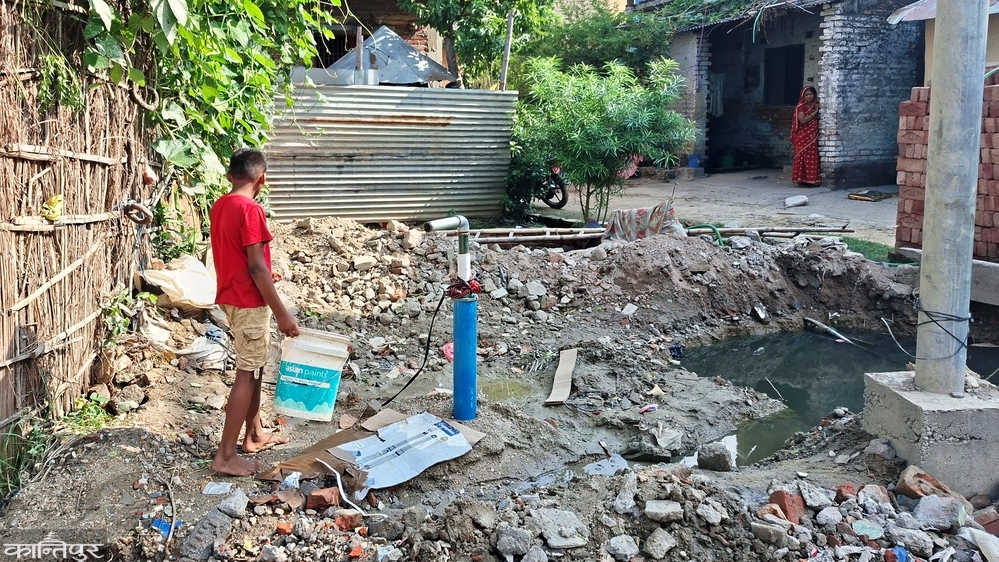
The amount of arsenic in the water coming out of the chapakal buried at low feet was high. "The murky and yellow water started coming from the chapakal buried at 40-60 feet. As arsenic will affect health, it was buried because 120 feet would bring good water," Mahato said. "Now the chapakal buried under 450 feet has dried up. There are 150 families living in Dhangadhimai Municipality-13 Bharnaini of Sirha.
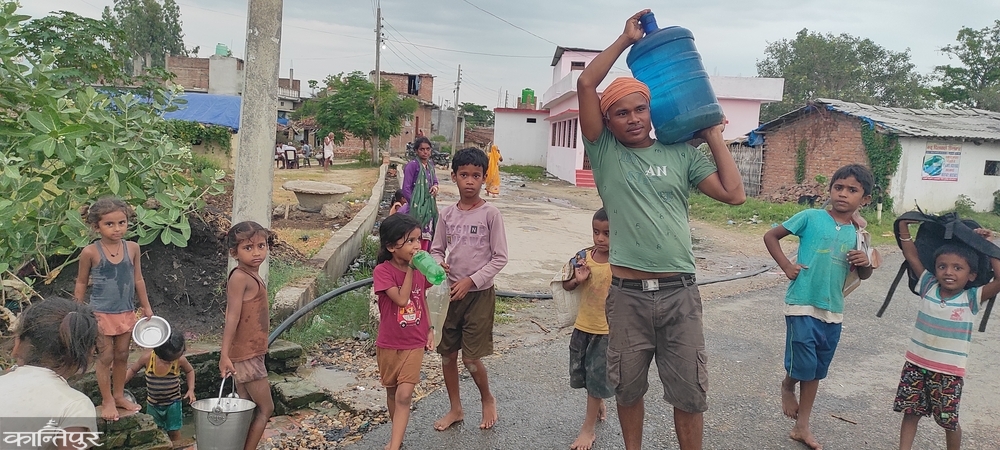
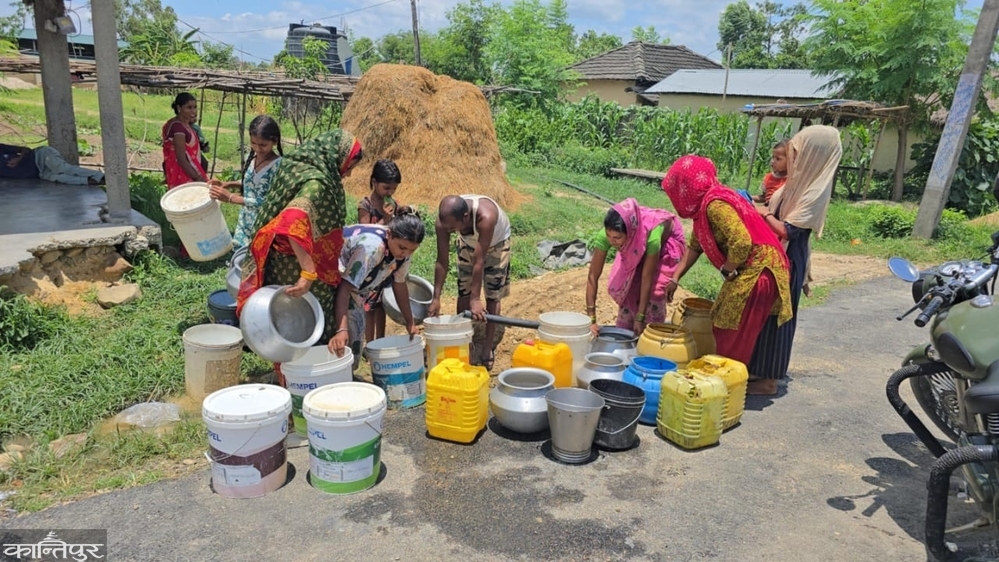
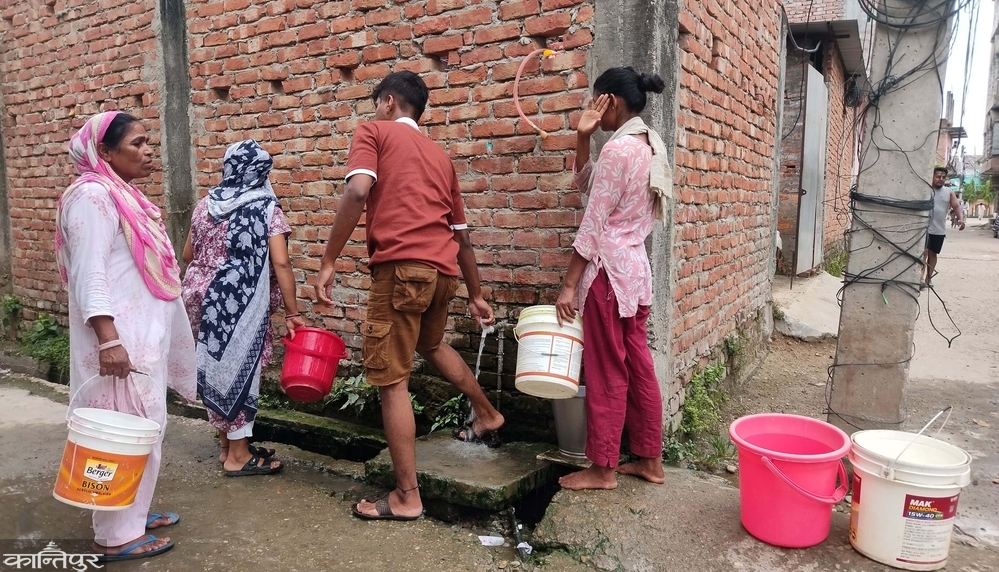
The settlement has been consuming water from two boreholes of the municipality. However, since the last week of June, both the borings have started giving less water, and the locals have to face problems. Local Devaki Mochi says that after the water stops flowing in the stream, they go to the same place where it is boring. "Still, it's not easy to get water, it takes half an hour to wait in line," she said, "Nowadays, we worry about water early in the morning."
 According to Suraj Mahara, a local resident, the water level has gone down in this area and when there is a drought in recent years, the same problem is repeated. "Water has become a major problem for us lately," he said, "The leaders keep making promises, but the problem has not been solved." Suryaman Tamang, the ward president of Dhangadhimai-13, said that an overtank has been built in this area and now the pipeline expansion is pending.
Drought and water crisis in Madhesh has deepened due to exploitation, forest destruction, extreme mining of rivers and streams, irrigation system, according to analyst Chandra Kishore. He says that the water crisis will not be solved by the water supply ministry digging boreholes, the water supply institute by expanding pipelines and by burying chapakal deeper. "Drought and water crisis in Madhesh cannot be solved by distributing water in fire engines or tankers," he said. It seems that the local level, the state government and the federal government have to work in a package.'
Chief Minister of Madhesh Satish Kumar Singh says that the drought and water crisis in the state is the result of mistreatment of Chure area, forest and river channels for many years. "In order to solve the drought and water crisis, we have to go for immediate and long-term planning," he said.
'We are taking initiatives to bring the concept of making water reserve tanks and storing rainwater when the local level passes the map,' Chief Minister Singh said, 'Programs are also being prepared in the process of recharging water. We are also asking for 2/4 big package plans related to this from the federal government. We will go to the implementation of the plan soon.''He said that if 'groundwater recharge' could not be done, there would be a bigger problem.
Dhanja in the field, worry about saving crops
Birgunj Mahanagar-17 Aloon farmer Brijeshwar Sah Kanu is now worried about saving the paddy crop. The water has dried up in his field, which was planted two weeks ago. "When will it rain and our worries will be over," he said. Most of the farmers in the southern part of Parsa have a similar situation. The rice paddy of the farmer who has not been sent for planting has started to dry in the field.
Some farmers have not planted their crops since there is not enough rain in June, and those who have planted are not able to save their crops. Ramjeevan Thakur, head of Krishi Gyan Kendra Parsa, said that only 80 percent planting has been done in the district. He informed that two people from the Federal Ministry of Agriculture came for inspection on Sunday. "Their report can make some decision about the relief given to the farmers here by the federal government," he said.
The problem of underground water resources in West Terai too
The problem of drought has increased in West Terai too. Water crisis is increasing in West Nawalparasi, Rupandehi, Kapilvastu, Dang, Banke and Bardia of Lumbini region. Pralhad Chaudhary of Marchawari-6 Piparhawa in Ruppandehi said that since there is no rain in Chapakal, they have to go to the village to collect it. He used to extract underground water till a decade ago for agriculture and drinking water, now he gets stressed after the onset of summer. "Earlier, when 100 feet was buried, water would come out, now even if it is 500 feet deep, it does not come out," Chaudhary said.
According to Arjun Kurmi of Lumbini Cultural Municipality-1, although there are chapakals in every house in the village, water is not coming from all of them. "Nowadays, the line of the villager gets stuck in the water stream," he said, "There has been such a problem in the village for 4/5 years."
Most of the areas in Bardia are facing water problem, which has not been able to plant in many parts of the district. By the first week of July, it has rained only sporadically. Due to the lack of rain, even the rice that was planted earlier has dried up in areas without irrigation facilities. Akbar Ali Dhobi, water engineer of Gulria Municipality-8, said that even after burying 20 to 35 feet earlier, water was still flowing in Chapakal. "Nowadays, we have to bury more than 35 feet," he said, "The tap water dries up in the summer." According to the Integrated Agriculture and Livestock Development Office in the district, 50,150 hectares of dry rice are cultivated in Bardia. So far only 92 percent planting has been completed. Sagar Dhakal, head of the office, said that the problem is not in the rains but in planting.
 Conservationist Dr. Hemsagar Baral recalled that in 2005, after a hundred-foot pipe was buried at the Lumbini Buddha Garden Resort, water gushed out of the tubewell. Chapakal, which extracted water by burying 500 feet of pipes, also dried up this time, he said, and the underground water was not recharged. According to him, the forest area was destroyed in Terai districts including Ruppandehi. Concrete structures were raised. In addition, such a problem has arisen after the speed of development and construction in the Chure area as well. "There is less rain in places where there are no trees," said Baral, "the more desertification occurs, the less rain there is." He said that forests should be grown in Ruppandehi even if it is done by planting trees around Tinau, Danav river and river.
President Chure Terai-Madhesh Conservation Program Head of Butwal Ananath Baral said that due to the encroachment of the Chure area, it has become dry due to lack of water. Along with this, he said that water could not be recharged due to forest destruction. "The process of demolishing Chure by using dozers is continuing," he said. According to him, such ponds have been constructed in Tulsipur of Dang, Ghorahi sub-metropolitan and Lamhi municipality, Sainamaina of Rupandehi, Wanganga of Kapilvastu, Sunwal of West Nawalparasi and Kalimati of Salyan.
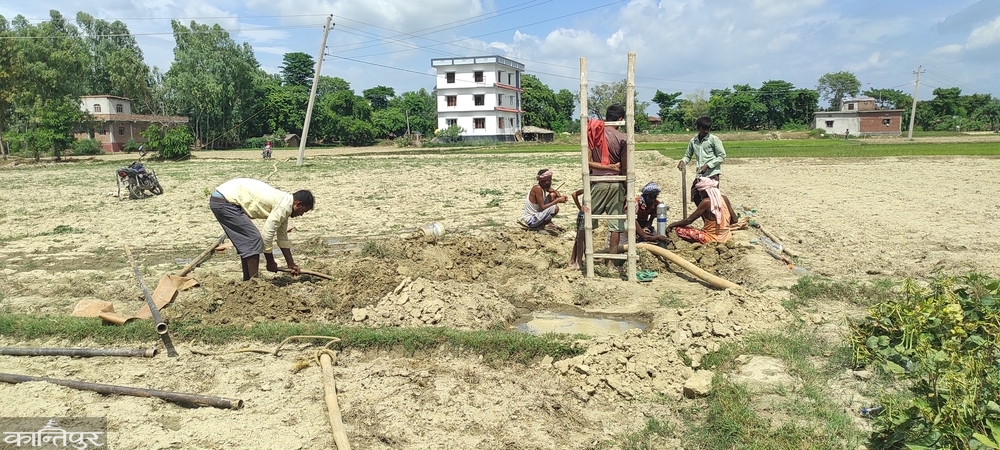
Even in Kanchanpur, the underground water level will be very low during the dry season. Locals say that till a few years ago they had to bury chapakal up to 20/25 feet where the water was only 15/20 feet. "There is not much difference, but the water level has decreased by two/four feet in some places," said Tej Pahri, who has been working on drilling and boring for three decades.
According to Pahari, now a pipe has to be laid at a depth of 40 to 60 feet for Chapakal in Chure Phedi. After moving from Chure to the south, water comes even when the pipe is only 20/25 feet. Similarly, for the cello tube well, Pahri says that 40/50 feet of pipe should be laid. "In other times, the water resource has not decreased much, it is sufficient," said Vivek Bista, head of Nepal Water Supply Institute, Mahendranagar, "In dry season, there are reports of water shortage from some places or dry tube wells."
According to him, pipes have to be laid from 100 to 200 feet for deep tubewells and 40/50 feet for cello tubewells. But he said that there is no study on how the water level is decreasing. Drinking water company is distributing drinking water through pipes in the wards of Mahendranagar market area of Bhimdatta Municipality.
Rain very low :
Rainfall in Madhesh is only 12 percent above normal till the first week of July, this year the weather forecast department estimates that rainfall will be less than normal in Madhesh
Underground water crisis: