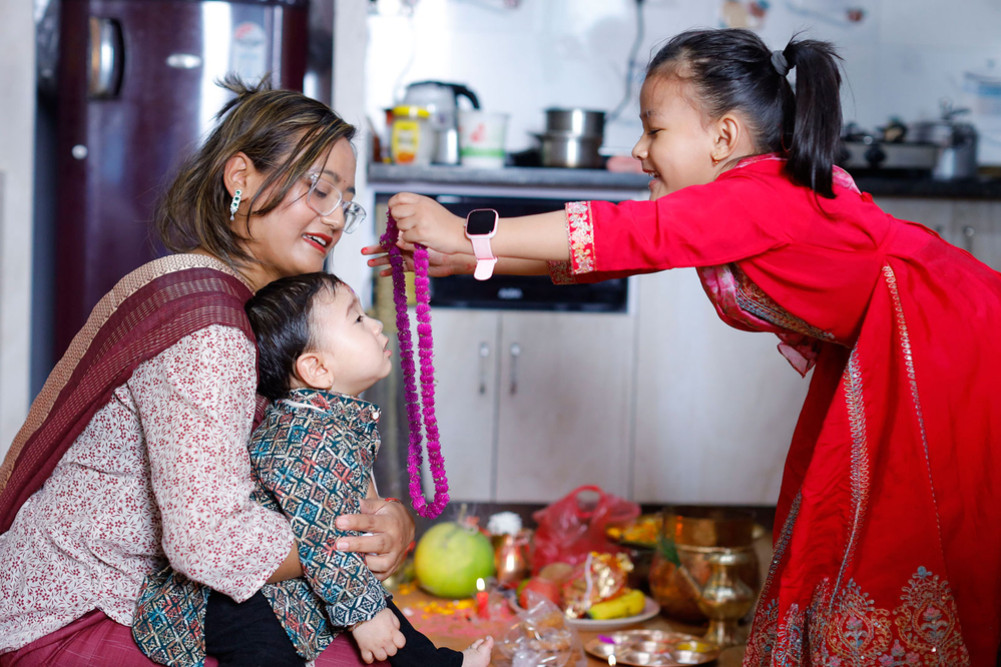
When we search for the story of Yama and Yamuna, which is associated with the Bhaitika that we have heard for ages, we reach the Rig Veda. The dialogue between twin brothers and sisters written in the Rig Veda discusses the social norms, systems, and family values determined during the Vedic period.
We use Google Cloud Translation Services. Google requires we provide the following disclaimer relating to use of this service:
This service may contain translations powered by Google. Google disclaims all warranties related to the translations, expressed or implied, including any warranties of accuracy, reliability, and any implied warranties of merchantability, fitness for a particular purpose, and noninfringement.
The story of Yama and Yamuna: In Ekadesh, there was a mighty man – Vivaswan, i.e. Surya. He was married to the peaceful and gentle daughter of Vishwakarma, Sanja. Vivaswan and Sanja had three children: a son, Vaivaswat Manu, and twin daughters, Yama and Yami. Yami is also known as Yamuna, Vaivaswati, and Kalindi.
Unable to bear the heat of her husband, Sanja left home and left another woman, Chhaya, to take care of her husband and children. While living together, Vivaswan and Chhaya had three children - two sons: Shanaishchar and Savarna Manu, and two daughters: Tapati and Bishti. Stepmother Chhaya did not treat Sanja's children well and lovingly. Her father was not aware of this, but one day, Vivaswan suddenly heard her stepmother Chhaya scolding Yama cruelly.
Only then did he realize the truth and Sanja felt the pain of loss. Feeling remorse, he went to his father-in-law Vishwakarma to take his wife Sanja. Vishwakarma knew the reason for his daughter's return. Vishwakarma calmed down Vivaswan's heat by explaining it to him. And, Vivaswan made Sanja happy and brought him back home with him (Vishnu Purana 3.2. 2–8).
Even before the noun returned, Yama, fed up with his stepmother's behavior, left his father's house and went to do penance. He worshipped Brahma.
Brahma, pleased with Yama's penance, gave him the post of Lokpal, the kingdom of Pitrulok, and the right to decide on religion and unrighteousness as a boon (Padma Purana). After receiving the blessing, Yama did not go to his father's house and remained busy with his work in Yamapuri. Since he decides on religion and unrighteousness, he is also called Dharmaraj and the god of death, justice and religion.
After a long time, Yamaraj came to his father's house to meet his parents. Yami saw a beautiful young man coming to her house from afar. Seeing Yama's attractive appearance, Yami was attracted to him. When she reunited with her brother, who had been separated in childhood, after a long time, Yami did not even recognize her own brother. Seeing the attractive young man coming to her house, she went closer. The following conversation took place between them (Rig Veda, Yama Yami Sukta):
Yami: O young man! I am alone in this vast world. I am looking for a friend. You accept my friendship.
Yama: I am a friend, but I cannot be your lover. You are my sibling, so you are unfit for that.
Yami: Although it is not possible for mortals, it is possible for the gods. For the sake of our children and the increase of the lineage, you must accept me.
Yama: This cannot happen. You and I are siblings born from the same umbilical cord. In time, such a time may come when brother-sister or sister-brother will be bound in married life. But, now, that is not possible.
Yami: What is the use of such a brother if his sister becomes an orphan and suffers? You must accept me.
Yama: Don't say that! Marrying a sister is a sin. Oh my lucky sister, your brother does not want to and cannot do such an unrighteous act against religion.
Yami: You did not understand my heart. I felt very sad. I wanted to embrace you like a vine or a rope around a tree.
Yama: Sister, you will have to accept someone else as your life partner. He will embrace you like a vine. He will love you and you will love him and this will be an auspicious relationship.
...
Special five days of the month of Kartik: Yama Panchak
In the Padma Purana, the five days from Kartik Krishna Trayodashi to Kartik Shukla Dwitiya are considered very sacred. During this time, it is auspicious to light a lamp or lamp to dispel the darkness in any place, such as a house, courtyard, Goth, temple, road, square, crematorium, etc. Even if there are ghosts of ancestors who are wandering aimlessly in the mortal world without being liberated, they will be liberated and go to the ancestral land.
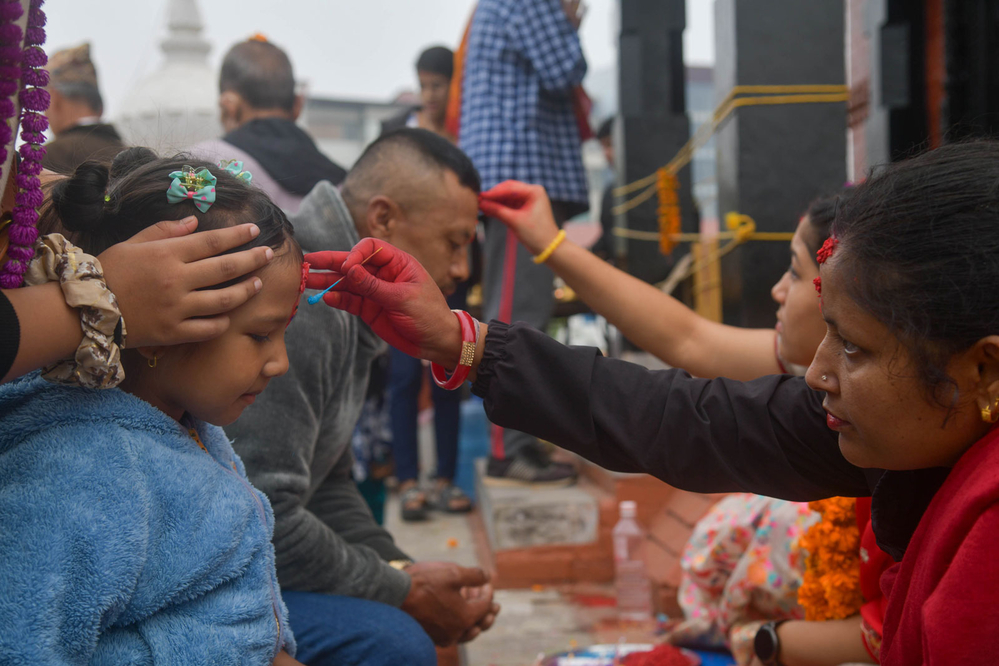
When the first day of the Yama Panchak arrives, one should remember Yamaraj and light a lamp on four dark evenings in total. On the Chaturdashi day, one should bathe remembering Yamaraj and offer tarpan while remembering the names of Yamaraj. That is why this day is also called Naraka Chaturdashi. According to the Panchang, on the third day, i.e. on the day of Aunsi, men should offer tarpan and shraddha to their ancestors and feed them with food to Brahmins, and women should worship Lakshmi in the evening or Brahma Muhurta.
On the day of Pratipada, cows, bulls, etc. should be worshipped. On the fifth day, Yamaraj should be worshipped. On this day, Yamaraj went to the house of Yamuna and ate food. On that day, all the creatures in hell were liberated from sins. Therefore, if men go to the houses of their sisters and sisters and eat happily on this day, they become liberated from sins.
It is considered best to eat from the hands of siblings, but if there is no sibling, eating from the hands of maternal uncle, aunt, daughter of a maternal aunt or other related sister increases health, happiness, destroys enemies and removes fear. Brothers should also respect the hospitality of their sisters and give them gifts.
...
These two above-mentioned instances are taken from the Rigveda and various Puranas. When it comes to the antiquity of Hindu scriptures, the oldest scripture is the Vedas. Rahul Sankrityayan has stated that the time of the Vedas was 1150 BC and has called that era the Copper Age. The Vedas are the creation of the Aryans who settled in the Sapta Sindhu at that time (Rigvedic Aryans). Over time, the Brahmanical texts, the Aranyaka texts and then the Puranas were created after the Vedas.
References to Yama and Yamuna are found mentioned only once in the Puranas after the Vedas. Yami is called Yamuna and Kalindi in the Puranas. Although they are descendants of the radiant Sun, both Yama and Yamuna are depicted as red-skinned. The Bhagavatam mentions Yamuna many times. In its 83rd chapter, Yamuna does penance to get Krishna, and after knowing that Krishna came to Arjuna and accepted her as his wife and told him that she would become a servant to expand Krishna's house.
She is depicted as wise and intelligent. In some places, it is also mentioned that after Yamaraj rejected her, she melted into a river out of shame. Also, in India, it is believed that if brothers bathe in the Yamuna river or in the house of their sisters on the day of Bhaitika, their life expectancy will increase.
...
What is religion?
Religion is an invisible institution that is influential, prominent and has a wide-ranging impact on a society. Religion dominates almost every level and stratum of society and gives it a special shape. Religion regulates the relevant institutions of society (such as administration, justice, community and individual). Religion molds all these four bodies into the key of its principles.
Therefore, the religious beliefs, festivals and customs of any society paint a clear picture of the history and beliefs of that civilization. Religion is multidimensional or has various aspects (such as beliefs, practices, religious institutions, followers and religious stories) that play a supporting role in keeping the particular religion alive and running. Therefore, the existence of a religion cannot be understood by looking at its followers alone. Religion lives in a triangular belief system of individual, social and institutional.
Religion never remains static. Like all other elements in the world, it is also changeable. Culture, stories and ecological contexts play a special role in its change. Therefore, in a way, the established intellectuals, respected or influential people of the society have a special role in such cultural changes.
Because culture, stories and circumstances are under the control of those established people. However, another important issue is that religious change does not happen overnight. It is a change that occurs gradually and very slowly. Even the person who initiates it may not see this change in his lifetime, and sometimes such religious changes may be completely different from what he expected.
Therefore, religion is not just about offering flowers and observing fasts in temples. 'Dharma' is a word with a special meaning and a diverse role. In the dictionary, the meaning of religion is found in various ways depending on the context (such as morality, actions prescribed by scriptures to attain God, beneficence, duty, communal beliefs, pious deeds, natural qualities, etc.).
Or, let's say, religion is also a rule or policy that regulates social order. Human behavior that is determined to bind a certain community to rules for social order and harmony was given the name religion. Therefore, the purpose of every religion in the world is also social harmony and order, but the styles and processes of that order became different according to the place and community.
...
The study of myths and legends associated with Bhaitika provides special guidance in understanding the relationship between brothers and sisters in Hindu civilization and the family values associated with them. When we search for the oldest text in which the context of Yama and Yamuna, which we have repeatedly heard, is associated with the Bhaitika of Tihar, we reach the Rigveda.
The dialogue of twin brothers and sisters mentioned in the Rigveda helps us to know about the social norms and systems determined during the Vedic period, the relationship between brothers and sisters, and the family values determined by the Rigveda. There is a culture of marriage between maternal uncles and paternal aunts in various cultures of the world. With some exceptions, such marriages are prohibited in Hindu society and social laws also punish such incidents as illegal.
Even the practice of changing not only surnames, but also gotras is common in this sect. Hindu civilization is a community with a vast area and a large population. Therefore, even in small Nepal, the Hindu customs of Madhesh, hills, east, west and valley may differ according to culture and the customs of Bhai Tika may also differ due to geographical distance and cultural differences. However, basically there is similarity in the festivals.
In summary, these stories, customs and culture about Bhai Tika established the following social values and beliefs in Hindu society and gave them continuity:
- If there is no sibling, Bhai Tika should be performed even if a sister is made, which will increase the small family and increase social harmony.
- The daughters would feed the brothers sweet dishes and the brothers would give gifts and both would demonstrate their respective skills (because in ancient times, women stayed inside the house and only men did income-generating work. This may be different in the current context).
- On the pretext of Tihar, the economic system of the society would be strengthened by traveling and practicing business and mobilizing money.
- Sisters do not have to feel alone, the arrival of brothers will increase their dominance and their heads will be held high.
- Tihar will be an occasion for brothers and sisters to meet, and this will strengthen family relations.
- The renewal of relations will also have a positive impact on the mental satisfaction and health of the person concerned.
- The occasion of festivals will provide an opportunity to eat sweet dishes, which will fulfill the essential elements for the body.
The concept of brother-sister relationship has been established in Hindu society through the commentary created by these Vedic-mythical contexts. However, we are currently seeing a different contemporary scenario. Why only Bhai Tika? For the past few years, the custom of celebrating Tihar by wearing Didi-Bahani Tika or those who do not have sisters and brothers have started.
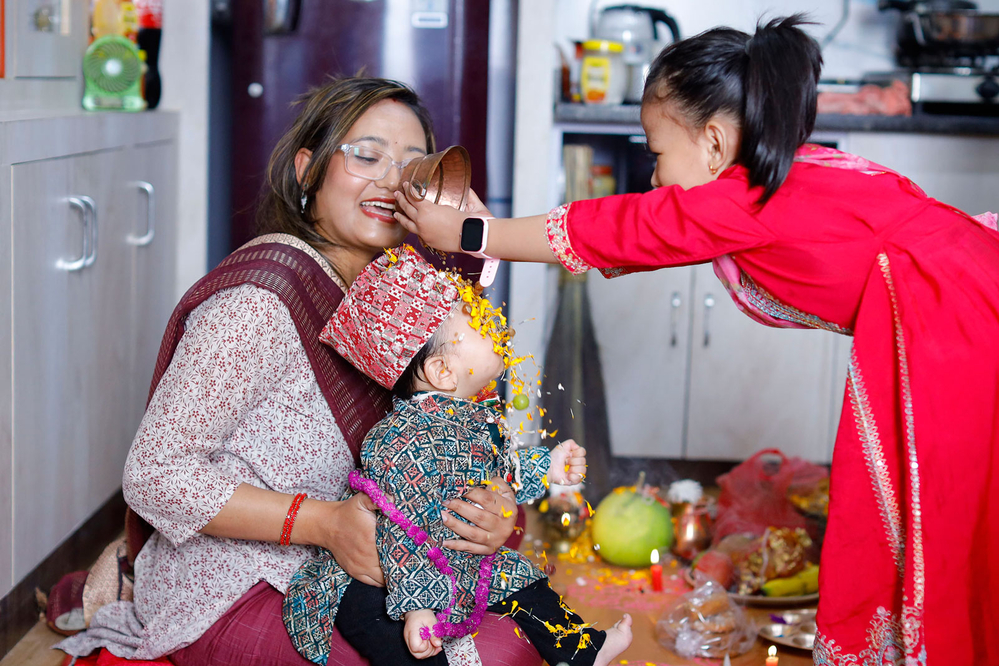
The mythological stories and theories that confirm this new practice of ‘Didi-Bahini Tika’ and ‘Daju-Bhai Tika’ are yet to be written. Now, hundreds of years later, the next generation will definitely include these topics when conducting a sociological study of Tihar.
No religious festival increases social harmony, love, and goodwill. No one has seen the world after death and we do not get to experience the virtues gained from it, nor is there any evidence of it. However, in the world that we see, family, relatives, society, neighbors, and friends from near or far gather for any festival and religious activity. On that occasion, they exchange joys and sorrows, share meals.
This brings relationships closer or renews relationships. Social harmony is the main means of moving any country or society forward. Business also increases on the pretext of festivals and it also helps the economy of the society: new utensils are bought on Dhanteras, gifts and food to brothers and sisters, and precious metals are bought and sold during Lakshmi Puja since ancient times. Like other festivals, Tihar is also a special festival to increase family harmony, love between brothers and sisters, and love and intimacy between the married family of girls who have moved to another house after getting married and their maternal family.
Whatever may be said, the religious texts till now have been written by men. If they had been written by women, their commentary could have been turned in a different direction. The story of the relationship between the couple could also be connected to the story of the sun and the noun. The heat of the sun here can also symbolize the oppression and oppression of the husband, which is why many wives in the society left their husbands' homes and went to live with their mothers.
कालान्तरमा पतिलाई यस विषयको आभास भएर सूर्य संज्ञालाई लिन गएको र विश्वकर्माले पतिपत्नीको सम्बन्धबारे ज्वाइँलाई बुझाएर फेरि छोरी पठाएको भाष्य पनि बन्न सक्थ्यो । यो सबै समाजका बोली बिक्ने बुद्धिजीवीको कलमको कमाल हो, जसले अदृश्य रूपमा सामाजिक संरचनाको बिँडो थामेको हुन्छ । कालान्तरमा यी विश्वासहरू समयसँगै परिवर्तन हुँदै जालान् र नयाँ–नयाँ भाष्यहरू जन्मेलान् ।