As the formal menu of forty-four dishes evolves as civilization expands, food connoisseurs have long been attracted by the eighty-four-dish plate.
We use Google Cloud Translation Services. Google requires we provide the following disclaimer relating to use of this service:
This service may contain translations powered by Google. Google disclaims all warranties related to the translations, expressed or implied, including any warranties of accuracy, reliability, and any implied warranties of merchantability, fitness for a particular purpose, and noninfringement.
Chaurasi dishes are the rich cultural splendor of Nepali society, a wonderful and delicious tradition! It's not a food-chapter issue—a confluence of civilisations, cultures and life-philosophies, where dishes become celebrations. Chaurasi Vyanjan is a combination plate of 84 types of dishes. A comprehensive food course! A cultural school, where the knowledge-world of flavors meets.
The centuries-old culinary tradition has its own menu of eighty-four dishes. Newa: The rich tradition of Chaurasi cuisine is also deeply connected in food and culture. One giant platter of rich flavors and colors—fourty-four dishes. Connoisseurs say - this plate is the pinnacle of taste, rarely seen in Nepali kitchens, but lives in the letters of memory! Suppose this is a culinary laboratory, where various forms and colors of grains appear. It seems that this is a balanced arrangement of thali food.
The dishes on the eighty-four-cuisine formal menu expanded by human civilization continue to change. Since the black and white era, people have been changing the menu of dishes according to their taste and craft. Food connoisseurs have been attracted by the eighty-four dish platter for a long time.
Food-methods have changed, but its methods and basis are connected to Vedic cooking. Along with epic stories of life, wisdom, creation, death and salvation in Sanskrit literature, cooking and food culture are also discussed - 96 arts, 64 arts, 32 sciences!
The number 84 has a special symbolic meaning in Hindu religious texts. 84 tells the overall story of a person's life cycle. Those scriptures say – Jiva and Atma take birth in 84 lakh yonis. And the eighty-four dishes are the amalgamation of those eighty-four lakh cyclical forms of life, i.e. soil, water, grain, taste, smell, juice and the specific package of art. It is also a mirror of Nepali cultural beauty and consciousness, where faith and labor travel together.
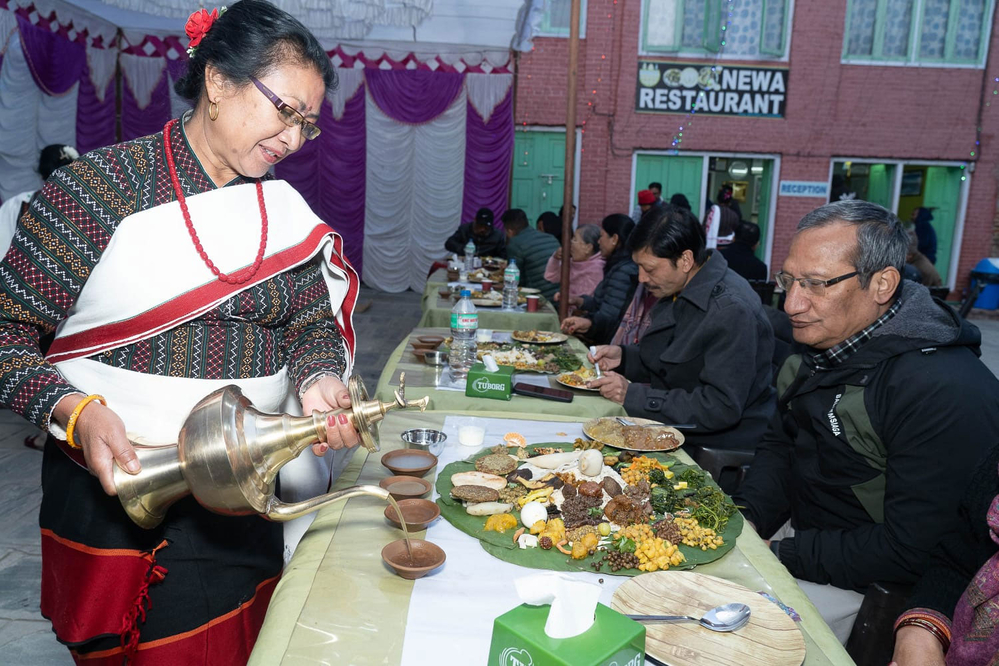
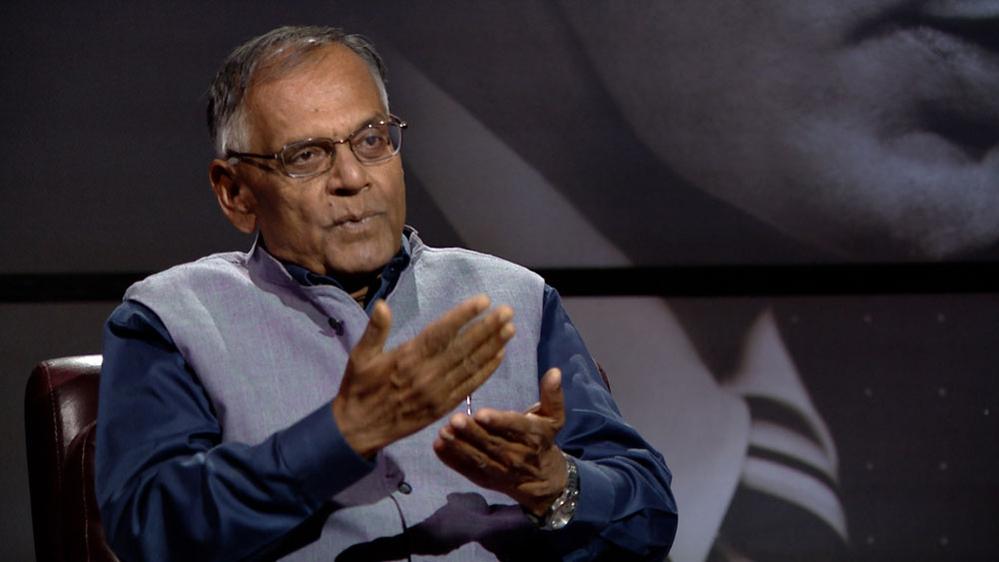
In these eighty-four dishes, the delicious aroma of people's skills and culture can be found at the same time - says social analyst CK Lal. It is said that life is attained only after 84 lakh yonis. Therefore, everything that is edible to all living beings is also suitable to be offered to deities. Symbolically, if Rajsi is 84 bhogs, Tamasi is 84 dishes. Ultimately it is prasad that humans accept,” says Lal. Eighty-four consonants are inextricably linked - with people's emotions and memories. Rice tells the story of fertility, milk of purity, meat of prowess, sweets of happiness, pickles of rasik or fun serofero, which is the original spirit of Nepali society.
...
A kitchen or dining room where food is being cooked is very pleasant. Each dish has a distinct aroma as it cooks. Actually food has its own melody and music. The world was not created by miraculous events alone. Since time immemorial, along with the cycle of nature, the taste of quality food has given harmony to the society.
Food and cooking have been satisfying the human senses for thousands of years. The rich tradition of food has created a rich human history. The man who is cooking is a sincere seeker, who is waiting for a taster. The rhythm of taste, nutrition and satisfaction of food has united life and society.
The human body depends entirely on food. At the center or most specific events of his life is food and only food. However, there is no rhythmic sequence of meals in life. After the food ovens started burning in the civilization, the life-cycle of people also revolved in the cycle of Satvik, Rajsi and Tamasi foods.
Over time, food traditions have blended with man's amazing skill and culinary skills and his tongue has acquired a wonderful taste. The thousands of menus of that traditional cuisine also have the deliciousness of eighty-four dishes, which add color and excitement to celebrations and festivals by becoming special food platters. Chaurasi Vyanjan is a unique artistic form of worship in the history of man. And, its taste-satisfaction is the road connecting the dynamic civilizations of people.
During festivals we cook many types of food and desserts at once. We call it 'Chaurasi Vyanjan'. There are alive in the pages of history - the stories of eighty-four dishes in the palace of the Maharajas! Tilasmi Legends and myths have been saying that the Maharajas used to enjoy the taste of eighty-four dishes on a golden plate with a silver spoon. It tells the story not only of the kitchen, but also of the palace. What is the menu of eighty-four dishes that arrived at this crossroads of time with the story of the Maharajas?
Food scientist Narayan Ghimire's book 'Gaonle Dasain-Tihar, Chaurasi Vyanjan and Someras' has published that long list of Chaurasi Vyanjan. In Ghimire's study, the standard text of Ayurveda is the recipes based on the Charaka Samhita – the Fourty Four Recipes. He has written, "In the process of developing the art of making special dishes and presenting them in a special way by institutionalizing your best skills, learning from mistakes, and developing advanced methods, Chaurasi dishes emerged as the vast, unique and excellent food of that time. According to
Ghimire, food is not only classified according to the role of food in the body, but it also describes the code of consumption, nutritional properties and health.
has its own brand of Chaurasi dishes with Sattvic, Rajsi and Tamasi qualities. "Having less salt, oil and spices in food is sattvic food - it is natural food that retains the nature of taste." Associated with royal rule, it naturally adds ghee and marmalade is commonly used. Tamasi khana gives immediate response. Like: onion, garlic, mushroom, pickle etc.,' says social analyst CK Lal.
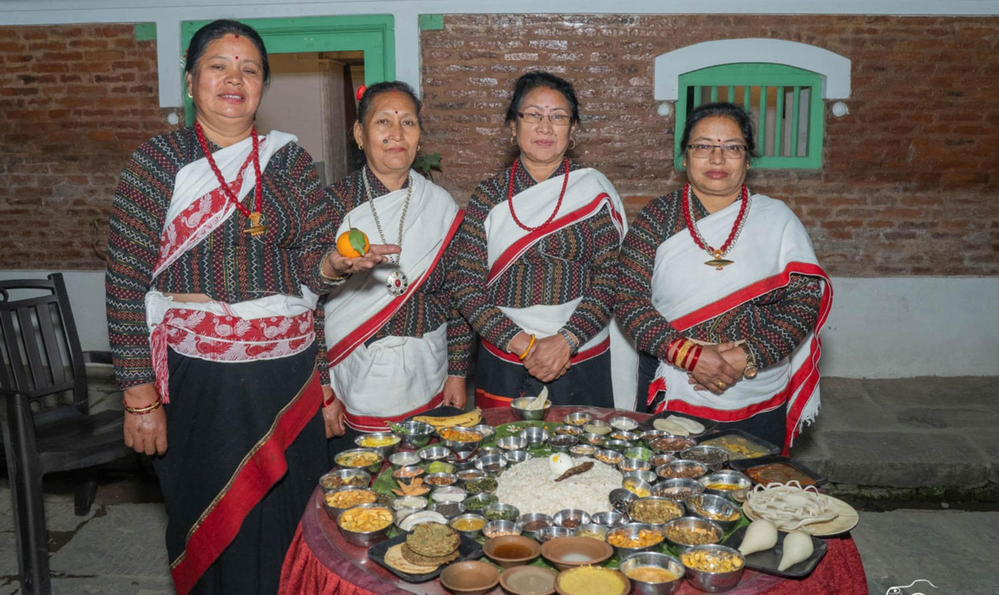
Nepali society is based on some myths. Many stories and myths are told/heard about Chaurasi Vyanjan too. Lord Krishna used to eat eight kinds of food eight times a day. Angered by Indra, the rain god, Krishna raised the mountain for 7 days. The custom of offering the 56 types of food that he was allowed to eat for 7 days in Gobardhan Puja is still maintained in some places," says Lal. "The Vaishya community, who traveled all over the Indian subcontinent and traded, took the 56 meals to 84 meals, 4 to 500 years ago, i.e. around the 16th century." The concept of eighty-four dishes came after the tradition of rejoicing in festivals. "During the war, it was necessary to use mentally energizing and non-toxic foods. Aphrodisiacs, mental energy boosters, self-esteem-providing vegetarian and non-vegetarian dishes were demanded in the celebrations of winning the war.
On birthdays, auspicious dates, pujas, the custom of consuming 56 bhogs in the form of Devasi vegetarian thali was established. Experts who saw the Annaprasad field of palaces and soldiers believed in the Annapana method of the Charaksamhita Sutrasthan of Ayurveda,'' it is written in his book.
6 flavors (sweet, sour, salty, bitter, sour and bitter) must be involved in the forty-four dishes, and water is considered a substance or drink that must be in the background to feel all the flavors, says Narayan. The main quality foods in Chaurasi cuisine are - millet, groundnut, sugar, Khasi-goat meat, cheese, ghee, wheat, milk and chilli etc. And, it contains 20 quality foods. They have different tastes. The eighty-four-cuisine menus vary over time, with no consistency. An extended menu of eighty-four dishes has been prepared in Ghimire's book 'Gaonle Dasain-Tihar, Chaurasi Vyanjan and Someras'. Let's see that sample menu -
Jhol :
1. Kanika's Jhol, 2. Gundruk and Soybean Jhol, 3. Potato-mustard soup, 4. Milk Corn Soup, 5. Walnut and Cauliflower Soup, 6. Parsi, potato and coconut soup, 7. Changra's leg—ras, 8. Pina bag, 9. Jhol of Karkala, 10. Sighing. Snack:
1. Duck's tail, 2. Barley seven, 3. Bunnel Dameco, 4. Roasted goat's blood, 5. Sapu Micha, 6. Roasted goat's heart, 7. Goat roasting, 8. Mushroom Sandheko, 9. Fish, 10. Twelve, 11. Fapar's bread, 12. Bird, 13. Fried shrimp, 14. Siraunla, 15. Battai burnt, 16. Fried duck eggs, 17. Malpua, 18. Pooja, 19. Badam masala, 20. Phapar's flower, 21. Rabbit fever, 22. Gundruk-Bhatmas Sandheko, 23. Celeroti and 24. Potatoes and chickpeas. food:
1. Plain rice, 2. Maize rice, 3. Jogibhat, 4. Pile of fapar, 5. Mustard greens, 6. Fenugreek-potato, 7. Pakku of goat meat, 8. Red beans and potatoes, 9. Kalij meat juice, 10. Bunnel Tareko, 11. Banana and cheese vegetables, 12. Black meat dal, 13. Potato-Cauli, 14. Mismas vegetables, 15. Ramtoria and potato vegetables, 16. Potato-Jira, 17. Chicken meat, 18. Red pavement of Usine, 19. Yam and potato, 20. Asafoetida musuro dal. pickle :
1. Cinque Achar, 2. Banana, potato and cucumber pickle, 3. Sidra pickle, 4. Hemp pickle, 5. Timmur and chilli pickle, 6. Salam's Pickle, 7. Pickle of laziness, 8. Sandhe's ginger, 9. Bhogteko Achar, 10. Nibuwa pickle, 11. Lemon pickle, 12. Khalpi, 13. Bunga and banana pickle, 14. Lapsi pickle, 15. Mango pickle, 16. Amaranth pickle, 17. Golvenda and coriander chutney and 18. Mula Achar. Gulio :
1. Panchamrit, 2. Sago pudding, 3. Sesame pudding, 4. Talk, 5. Curd curd. Drinks:
1. Shilajit Syrup, 2. Pepper and sakhkhar syrup, 3. Satu Sarbat, 4. Milk tea, 5. Pale tea, 6. Suraras, 7. Betel nut, betel nut, cardamom, cloves, sukumel, fennel, bozo and tobacco. 56 Khichdi, basmati pulao, poppy seeds, paneer, beetroot, which are in the list of indulgences, are also mixed in eighty-four dishes. Cigarettes, tobacco, drinks like bindi and alcohol are also included in the menu of eighty-four dishes. According to writer/cultural scholar Sourav, there is no formal menu of Chaurasi dishes.
'Chaurasi Pooja' is performed when a person reaches the age of eighty-four years, when he sees a thousand full moons. A person's age reaches 84 years only after seeing a thousand full moons. On the occasion of Janko, 84 dishes are prepared,” says Saurabh, “but there is no official list of the famous dishes. Because the dish is prepared according to the taste of the one who is being served. Since eighty-four dishes are prepared according to the different interests of the people who will be served, there should not be a formal list of dishes.'
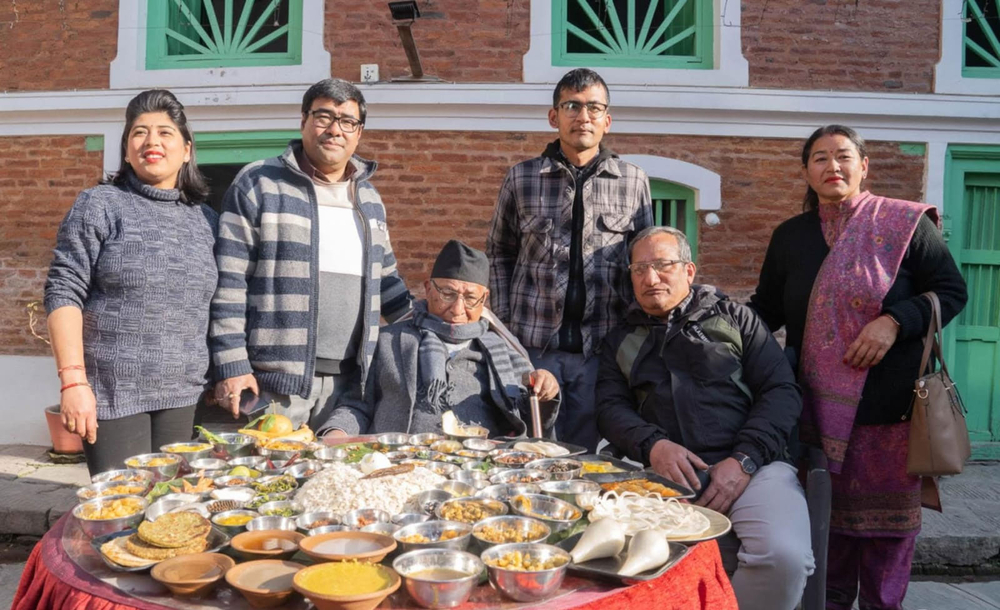 Is it possible to eat all the dishes of Chaurasi Fouryanjan-thali in one plate at the same time? Food scientist Narayan Ghimire says, 'Eighty-four dishes are not prepared or cooked with the idea of eating all the food. From the given food, eat as much as you like. According to Ayurveda, one-third of the food we put in our stomach should be solid, one-third liquid and one-third empty. The
was famous. It is a cultural practice to offer eighty-four dishes to Gurumapa in Tundikhel during Pahanch: Hre ie Horse Jatra.
Joshinani Heritage Homes & Newa: Restaurant, Kirtipur is packed with Newa: A huge platter of eighty-four dishes. Its owner, engineer Sharadmangal Joshi (50), converted the 150-year-old house from Jijububa's time into Heritage Homes — 4 years ago. Joshi says, 'We have prepared and fed the common people thousands of times the eighty-four dishes that the kings and maharajas take.' The guests eat the delicious meal by slathering on the sukul. Newa: Fourty-four dishes are on the menu - 40 varieties of beef dishes, based on traditional Newari culture. Sharadmangal says that this menu was popular in the palaces of kings and maharajas of the Malla period. So this is the official Neva menu, with eighty-four dishes.
The chiura is placed on the plate first, then the wave 84 dishes. All the 84 dishes are cooked in the name of deity – Indrayani, Brahmayani, Kali, Bhairav, Kumari, Ganga…. There are 13 dishes symbolizing Ashtamatrika. You have to order 3 days in advance to taste the eighty-four dishes at this home. Women skilled in the art of cooking prepare eighty-four dishes for a special customer in 3 days of hard work. On Prithvi Jayanti every 27th of January, Holmes invites to eat eighty-four dishes by cutting a ticket. The operator is not in a hurry to sell tickets at this time. "Sat, raj, tama, these foods contain all the nutrients needed by the body," says Joshi, "these dishes give energy to the tissues of the body, awaken the senses." Once, when a team from South Korea came to Nepal, they came to this Neva restaurant in Kirtipur looking for eighty-four dishes and traveled around the country with food stories. After the footage was aired on the TV there, some groups sometimes come to Nepal from South Korea to eat eighty-four dishes and return the next day. Lakhs welcome him with a dance — Joshinani Tim. Newa: Sharadmangal is extremely happy that Chaurasi-fouryanjan is becoming an 'international brand'. In this way, four four consonants are rotating. The world of taste is exciting the newa: eighty-four dishes are on the menu—
mysia (roasted mass), kasusia (roasted small plantains), musyasia (roasted soybeans), konalsia (pea-like greens), chukhilu, dhaughasa (yogurt), tukra, khapi, chapi (parsley sprig), wauncha (mustard greens), chimhukan (small mushroom), waon mhukan (green mushroom), simhukan (small mushroom), Palu (ginger), takupalu (big piece of ginger), gunhucha, saki piece (piece of ginger), sokan (dried crab), chikugu saki (small piece of ginger), dhalay, bali, amla (amla), satbasi, amali (lopsi), malta (chilli), kassuo (kassu bara), mayo (meat bara), tusipuo (crab). Bianko Bara), Bhutuyamio (bodi dish), Kasoo, Chakuo (rolled bread), Thusao, Chichindao, Chatan Mahri (Chatamri), Chammahi, Soomhi, Yahmahri, Thumhri, Lochamhi (uncut Yomri), Makumhi (a type of sweet bread), Pachintamahi (a type of sweet bread), Sri Mahi, Pa Mahi, Dhwajamahri, Pau Mari, Chamahni, Ma Mahi, Tvon Chhatra, Shaf Mahri, Kunhu Palu, Kunhu Khapi, Kunhu Chapi, Kunhu Bun, Dhabun, Simal, Pachai, Micho, Tuk, Sobso (a green), Lain Khapi (a piece of radish), Lai Palu, Taru (Yam), S.P., Kasu, Hal, Gul, Naxqua Sakhi, Tu (Guggles), Killi), Kero, Visal (Killi), Birds), Killi, Bairs, District, Haluli, Haluputal and Staff. Stormy-Break. The guest is pierced while heaving big-grandi-Nepalese: 400-scale dishes. For example, this consonant is punished to the bride and bride, a bride and brown in marriage. & Nbsp;
,, is missing this practice at present. According to place or caste, it can be different from the discussion. Charges of rental disinvestment traditions carrying huge dimensions of food-cultures are now becoming 'strings' strings' strife' style 'and' ancient 'in intensitive Nepali society and style. This collective labor and art is broken by fast-Food age. Outlines, dismissal, is to disappear a splendor and distinguished social share. This recipe is a museum – of tradition and taste. It only stays alive - cultures and praises.
Fourteen Echoan: The world is the
food of the grain is what is the meals. & nbsp;? Food is generally considered as a source of energy and nbsp;. The mouth jumps, the abdomen digests and fights, fighting, and running power and nbsp ;.. The strategies of living in the world is active & nbsp;. But, there is no order of food than food and is the same as a happy;.
food satisfies 5th and nbsp;. If the food is getting the sound, the ears seems to sound - Praskukukur, a plant, splitting, split spilled in why! Every kind of food cooked a person's own music and nbsp;. The second eye see & nbsp;. Traditional kitchen and modern open kichesin & nbsp;.
& Nbsp; Eye experiences color, shadow, shadow, light & nbsp ;.. The beauty of trillion dimensional art is entered in the platter and the third of the three-dimensional arts of the three-dimensional art is in a articular art. Third nose finds aromatry or smells of smells - tea different, the absurd and nbsp of meat Tactile tacts in the fourth; Lexishes the skin and nbsp;.. Cold, heat, soft or harder & nbsp;. Hands are lips and tongues when tipped by hand eating by hand. The last fifth finds the taste of sweetie, salty, bitter, bitter, tremo and dramo and nbsp;. The tongue can taste the proportion of everyone and Nbsp ;. Then the colors are omnishly sweet food! is said to have an account of the nature of food and nbsp;.. Low salt, oil, spice is accounting & nbsp;. Natural food that suits the nature of taste! The majestic acts related to the rule & nbsp ;.
is addicted by it, grows and nbsp;. Mercleslas is the general use of: The ratio change is and nbsp. Dinear for those who have to pay immediate response to immediate response ;. Five substance of life (blood, mouth, sweat, sweat, urine or workers) & nbsp;. Din is these five massage and nbsp;. The province is important for the blood to the blood & nbsp; 5.. The majestic dish supports attitude, the mouth of the mouth is important and nbsp;.. Stopped and semen are predominant among those who fight and nbsp; 5 Tamasi food is suitable for her & nbsp;.
ARRANS ............. looks in animal husbandry and agriculture and nbsp;. Then the process of temperature begins the process of transforming the majestic;. The slaughter was also sacrificed with a radius and nbsp;. Thousands of years ago Buddha and Mahavir comes & nbsp;. The state of Majestic food was started by Sadaja, Dedicine, Narabuli, animal sacrifices, and NBSP;. Peace, Nimisa Age is that I & NBSP;. We come to the fourth stage we-for-laws, ie in the phase of Charwak philosophy ;.
gets perfection in this period, where there was no taxes of fish, meat, alcohol, and NBSP;. Earth, water, fire, and air be covered with the scripture is not accepting sky and NBSP;. As the digestation, as much as the digestive is the food deserved for the dine; Then 2,000 years ago is spreading and nbsp;. Some of the radic traditions and some chantily philosophy is & nbsp;. Shiva Kameshwar is said to be God's name. All men of Kathmandu, woman, and Nbsp;. It is the millen creep, yea & nbsp;.
Mencies Devironment Devironment Devyam, Mean, Mean, Mean, Mean, Mean, Devising, dear and Nbsp ;.. And, here's all the relative and Nbsp; 8.1200-1300 years ago, there is the origin of Shankra Privacy & Nbsp ;.. He impacts Buddhism and the influence of Buddhism and Nbsp for the influence of bright religions. And, don't find the way of uniting the veteternism and nbsp;. Rewritten the importance of the province food & nbsp; 5 Ramanujhachajhaki of 900 years ago is rise and NBSP;. He added power juice in the symbolic meal of Syncracharya, and nbsp as a vegetarian;.
was 700 years ago, police came and he brought Durts and nbsp;... If God and creation are separated, and Nbsp ;. Through devotion, we can reach the time of devotion, so if you need devotion and Nbsp ;. Devotion of pitying, music and juice is and nbsp;. 56 Deception has come from this period and nbsp; 5 God Brothers Krishna used eight types of food 8 times daily and nbsp;.. Rejocent for 7 days for seven days, and Nbsp;. The 56 type of puppy released him on 7 days, may be somewhere in order to offensive "food. '
and Communities Breasthavory - Balastaryvi-Krishna Banka, Krishna Banka Dhanist Master and Nbsp to spread the Ganga Madhi ;. He made a mixture of Tamasi and Maji, but established the food for moving the vegetarian trends. The most community community of the entire Indian financial affairs, is in the same time, and Nbsp 56 patients at 84.. After that, vegetarian 84 dual practice came into practice - 4 to 500 years ago, in the 16th century and Nbsp;.
Magar regime is weak in the spacecraft and nbsp;. Tribal and Janajati culture are mixed for 400 years ago and Nbsp;. The kings began to support the faithful religion. Vegetar 84 Bhag Traditions for 84 Consparities & Nbsp ;. Fifty Eclipse synagogue was already in the face of the Mahavarati segments of Nepal since Kashmir and nbsp;. There was also widespread in Kaloja and Tantamimthilath Banga & Nbsp ;. Mixed 84 dishes began to make senses, and Nbsp;.
says that only 84 million vigories are a life and NBSP;. So whatever you are hungry, goddess is worthy of all such things, and Nbsp ;. Symbolically Rajurti, if the famine was staged, 84 consonant & nbsp;. Ever finally accepted by man is the Prasudish and Nbsp ;. The history of the grain, geography, and sustained seeds of creation, that is, in a series of creation, the minimum-Breakin 'of Gogddi-Breakin' Govindimmerimwemev.. Vehicle Getbage Prasada Prasads & Nbspa;.
(Social analyst Sex Based on Conversation of Sick Red)

