Despite the government's huge investment, controlling the number of malnourished children is becoming a challenge. Although the government is spending lakhs of money every year in every district to end malnutrition among children, the number of malnourished children has not decreased.
We use Google Cloud Translation Services. Google requires we provide the following disclaimer relating to use of this service:
This service may contain translations powered by Google. Google disclaims all warranties related to the translations, expressed or implied, including any warranties of accuracy, reliability, and any implied warranties of merchantability, fitness for a particular purpose, and noninfringement.
Shivam, the 29-month-old daughter of Narayani Tharu of Kusumkhola, Ribdikot Rural Municipality-5, Palpa, weighs 7.8 kg. A two-and-a-half-year-old healthy child should weigh 12 kg and be 33.5 inches tall. Due to the lack of nutritious food, gluttony has also been observed in girls.
Kusumkhola Health Chowki has referred him to Poshan Seva Kendra Khasyauli, which treats severely malnourished children without hospitalization. After looking at the condition of the girl, the center referred her to the Child Nutrition Rehabilitation Community Health Center operated by the United Mission Hospital in Tansen. Narayani, who lives in someone else's house, could not even take her daughter there for treatment.
'We have to send her to Lumbini Provincial Hospital,' Malati Vick, focal person of Outpatient Treatment Center (OTC) of Khasyuli Primary Health Centre, said, 'We have asked her to take her to the nutrition center operated by First Mission Hospital to get advice.' But mother Narayani has not taken her daughter Shivam anywhere. Due to poverty, his family came here from Bardia to work and live in someone else's house. Vic said that the Tharu family could not feed the girl due to financial poverty. Health workers say that the child should be admitted to the hospital because he cannot even swallow the food he has eaten.
One-year-old Lisma Mashrangi Magar of Rambha Rural Municipality-1 Hungi has been kept in the Child Nutrition Rehabilitation Community Health Center for two weeks and fed nutritious food as she is not of age-appropriate weight. Chola Darlami of the center said, "When she was brought here, she didn't even put her feet up properly." There has been a lot of improvement now.'' Parents left the house and went to work as wage laborers and because they could not give time, they were not able to gain weight according to their age. Lisma's weight should be 10 kg and was only 8.5 kg.
In Ribdikot rural municipality-1, there are also other children who do not reach their weight according to their age . Due to the lack of balanced nutritious food, some children have been found to be underweight for their age. Hari Bahadur Kumal, head of Khya health post, said that some children who were underweight for their age had been treated.
According to the Family Health Profile, the number of children under 5 years of age in the district is 13,381. According to Vishwa Newpane, the program officer of the Health Office, in the last financial year with the help of the Lumbini Provincial Government, the problem of malnutrition was found in 112 children out of 8 thousand 729 who participated in the search for malnourished children from 10 local levels.
in which there are 69 people with moderate acute malnutrition and 43 people with severe acute malnutrition . According to the data, 184 moderately malnourished people and 41 severely malnourished people were found on the basis of height and weight according to official Neupane. He said that the nutritional status of children in Nisdi and Purvkhola Rural Municipality is satisfactory.
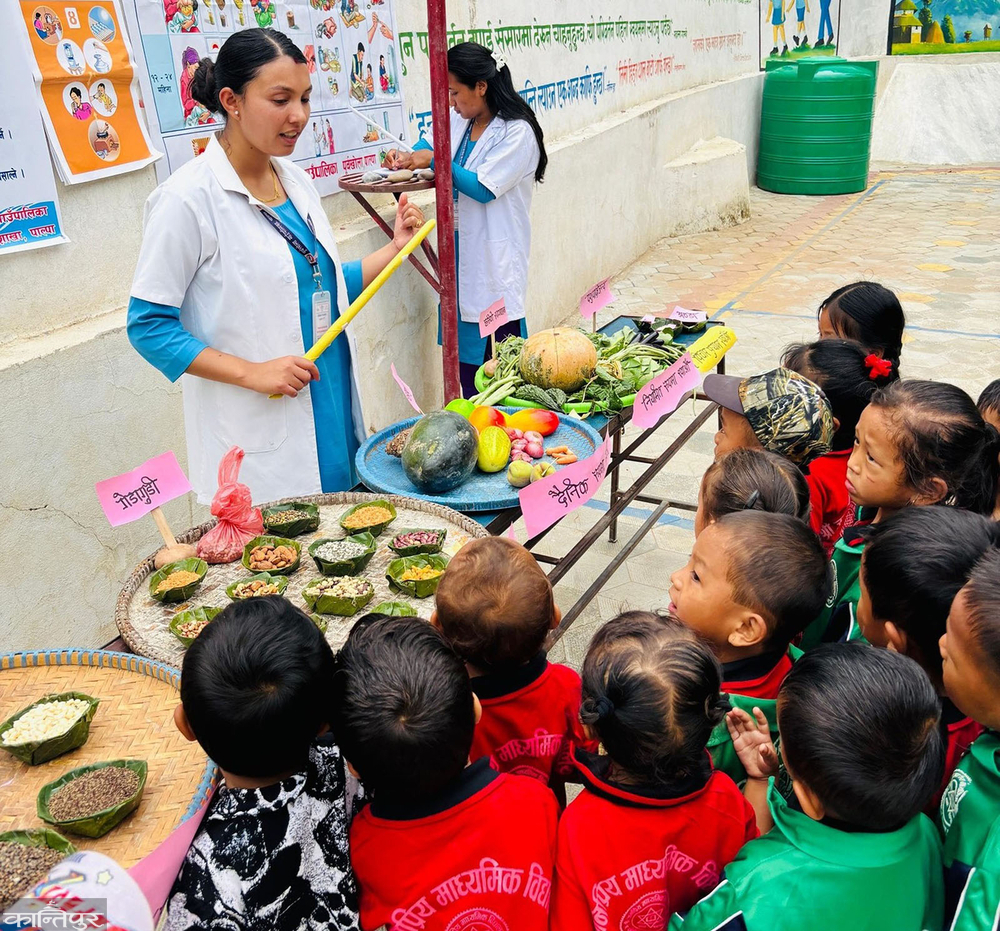
It has been found that children with malnutrition problems in the district have large heads, small bodies, and do not weigh according to their age . A baby should normally be 3 kg at birth. Looking at the average weight and height, a child's weight in one year is 9.2 kg and height is 29.2 inches. A two-year-old child should weigh 12 kg and height should be 33.5 inches. A three-year-old child should weigh 14.2 kg and have an average height of 37 inches. A four-year-old child should weigh 15.4 kg and be about 39.5 inches tall. A five-year-old child should weigh about 17.9 kg and have an average height of 42.5 inches.
Health professionals say that children may have nutritional problems if they do not get nutritious and balanced food during pregnancy and delivery. According to health workers, malnourishment at growing age has a bad effect on physical and mental development as well. Children with malnutrition problems will be more at risk if they are not kept in nutrition homes and if they are not treated, they will be at risk . Till last year, there were Nutritional Treatment Centers (OTC) at 12 locations in 10 municipalities in the district. This year, the health office has added 8 centers.
Despite the government's huge investment, controlling the number of malnourished children is becoming a challenge. Although the government has been spending lakhs of money in each district every year to end malnutrition among children, the number of malnourished children has not decreased.
The provincial, federal and local governments have been conducting various programs to improve the condition of undernutrition, stunting and underweight in children. According to the Health Office Palpa, in the financial year 2081/82, there was a budget of 4.3 million to prepare a family health profile for the regular monitoring of mothers and children under two years of age who are in complex conditions at the community level. A budget of 17 lakh 40 thousand has been spent for the search of malnourished children through health workers. 5 lakh for orientation on integrated management of acutely malnourished children. 150,000 has been spent for the orientation of health workers of related drug stores, hospitals, and pharmacies for breastfeeding promotion. 1 lakh has been spent for writing on the walls of community schools by preparing information about the newspaper and its effects on health . 150,000 has been spent on nutritious food exhibition and training in schools. There was a budget of 3 lakhs for the orientation of health and nutrition programs to health teachers in schools.
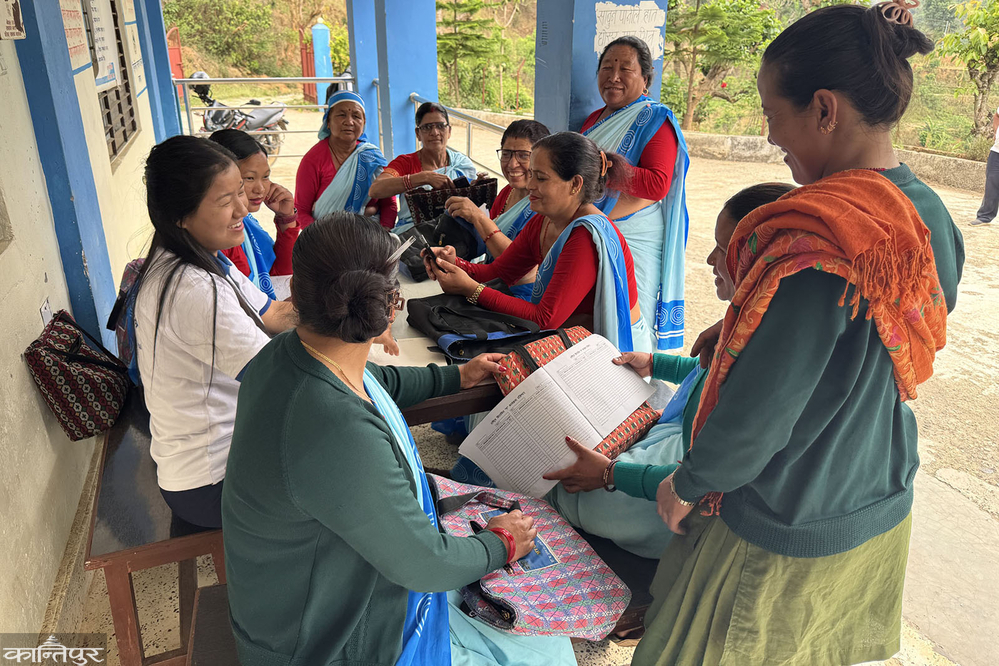
The Acting Head of the Health Office, Tuk Prasad Pokharel, said that 6.3334 thousand has been spent in the budget of 6.450 thousand under the health and sanitation program. Earlier in the district, various non-governmental organizations, including Suahara, also spent a large budget for improving nutrition. The number of malnourished children has not been reduced every year according to the investment. It is claimed that the data that comes out is only of children who go to be tested in government health institutions . "We have gathered mothers and children under the age of 5 in each ward and checked them," said Neupane, an officer of the health office, "Those who have not been called may have missed out, otherwise they have been asked to inform everyone."
Purvkhola rural municipality of the district has declared all the wards to be nutritionally friendly with its own investment. According to Mohan Dhakal, head of the health branch, various awareness programs are held through all the health posts. From which children have become accustomed to eating nutritious food . The municipality has allocated an annual budget of 1 lakh for that. Sunil Adhikari, Head of Health Branch said that Ribdikot rural municipality has spent 4 lakhs. In almost all municipalities, their own municipality spends from 1 lakh to 4 lakh for nutrition. In addition to the local government, the federal and state governments have been investing in this program.
In the data of the health office, Pokharel, the Acting Head of the Health Office Palpa, said that the problem of malnutrition among children living in urban areas is higher than that of rural areas.
Health Office Palpa also checked the malnutrition situation in 4 thousand 831 children across the district in the fiscal year 2080/81 . During the same examination, 7 children from Tansen and 13 from Rampur were found to be severely malnourished. In the previous test, 28 people were severely malnourished. In recent times, the number of malnourished children is increasing due to foods like patru food, noodles, chowmin, biscuits, mums, cold drinks, chips from the market rather than the traditional ones, said the chief officer of Ribdikot rural municipality health branch. In order to improve the condition of malnutrition, health workers suggest to eat traditional food, home-made food, green vegetables and fruits .
Children with severe malnutrition are sent to the rehabilitation center for treatment. They have to be treated in a nutritional treatment center for three months with their parents. Nutritious food is served there as per the schedule . But taking malnourished children to treatment is a problem. Due to economic and social conditions, some people cannot stay outside the house for a long time . Parents complain that some of them do not know about the treatment of malnutrition and the right to feed nutritious food.
Krishna Bahadur Rayamazhi, Ward President of Rambha Rural Municipality-4 Humin, said that many problems such as those who were not vaccinated during pregnancy, did not give birth in a health institution, and poor economic conditions, may have caused the families of malnourished children.
Health education administrator and spokesperson Netralal Aryal of the provincial health directorate said that a special grant of Rs. According to him, about 60 million is being spent every year in Lumbini under the nutrition program of the state government. He said that 14 hospitals in the province have breastfeeding counseling services.
"What is the status of child education and nutrition at the school level, along with the accounting program, treatment will be done," he said, "There is a program to identify and treat malnutrition as soon as possible." Spokesman Aryal said that there is also a program to use the vegetables produced from school karesabari for lunch in the current financial year. He said that nutritional rehabilitation centers are operating at Lumbini Provincial Hospital Butwal, Rapti Provincial Hospital Dang and Bheri Hospital Nepalgunj for the treatment of children with early malnutrition. Bishnu Prasad Bhandari, president of Rambha rural municipality Palpa, said that the use of junk food, ie Patrukhana, is increasing the problem of malnutrition by neglecting traditional nutritious food. "We have tried to promote healthy food," he said, "There is a plan to make it mandatory for students to eat home-made food." However, it is difficult to improve the situation of malnutrition in families facing poverty and deprivation. By 2030, the government aims to reduce obesity to 15 percent, obesity to 4 percent, and underweight to 10 percent.
Also read related news published in Ekantipur about malnutrition:
Malnutrition among 1,670 children in West Nawalparasi


