We use Google Cloud Translation Services. Google requires we provide the following disclaimer relating to use of this service:
This service may contain translations powered by Google. Google disclaims all warranties related to the translations, expressed or implied, including any warranties of accuracy, reliability, and any implied warranties of merchantability, fitness for a particular purpose, and noninfringement.
What is the happiness of the citizens of the ground level? What is the difficulty they are experiencing now? And what are their happiness and dreams? To understand this, we started the 'Gharkarch' column 100 days ago. Every day we published the stories of the grassroots citizens in their own language and style.
From Taplejung in the east to Dadeldhura in the far west, hundreds of citizens of different castes, religions, castes and economic backgrounds shared with us the joys and struggles we have tried to understand the dimensions of the lives of the citizens at the ground level.
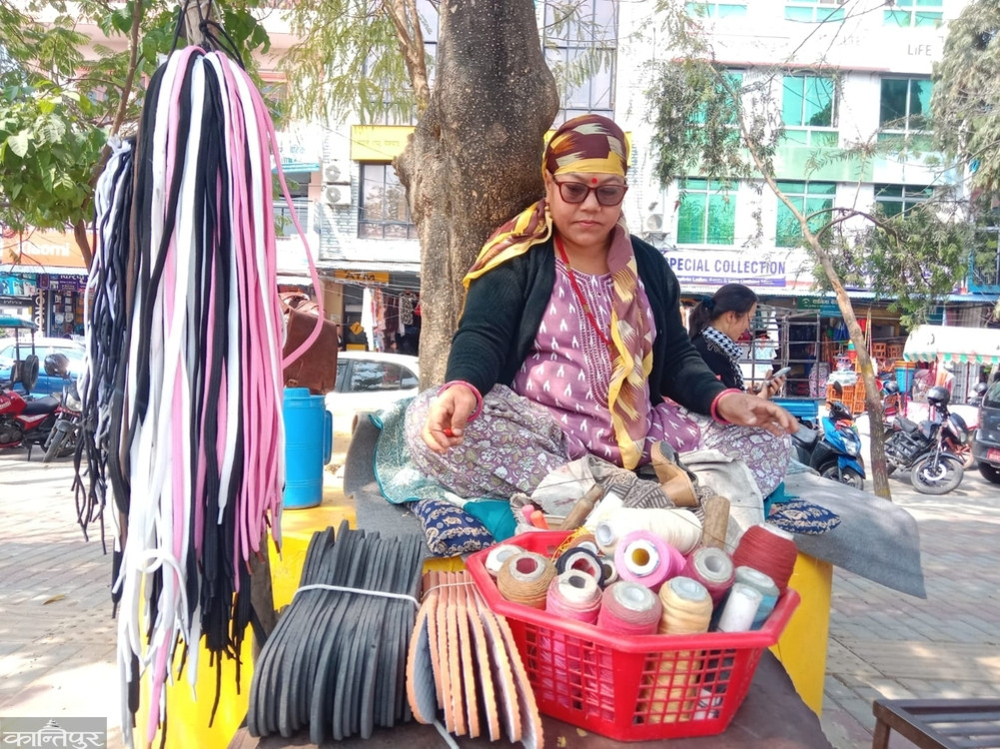
From sitting on the side of the road burning corn in the hot sun, burning rice pitch to selling kulfi on the road to satu sarvat, from making a living by weaving and selling doko namlo to driving an auto rickshaw, from porters to jammies and traditional professions, we have published the story of household expenses in the meantime . It was found that the citizens of the ground level, who are living the life of struggle every day, were the most worried about how to make salt-oil joho, how to pay for their children's school expenses and how to take medicine.
Deepa Sarki of Banke Kohlpur 11 who says that life is running like torn shoes-sandals Deepa Sarki To Meenamaya Kumal of Gorkha Municipality-7 who is working night and day to raise the medical expenses of her sick husband It seems that the desires are spent in the struggle of raising essential household expenses . Most of the citizens of the ground level did not only express their sorrow for not being able to fulfill even their basic desires, but also expressed their despair for the future . Hard work to raise children's education expenses and the suffering of the struggling characters is also the same. But such characters seem to be living in the hope that their children will do well tomorrow and live a happy life. of Birganj-23 Vijay Prasad Koiri 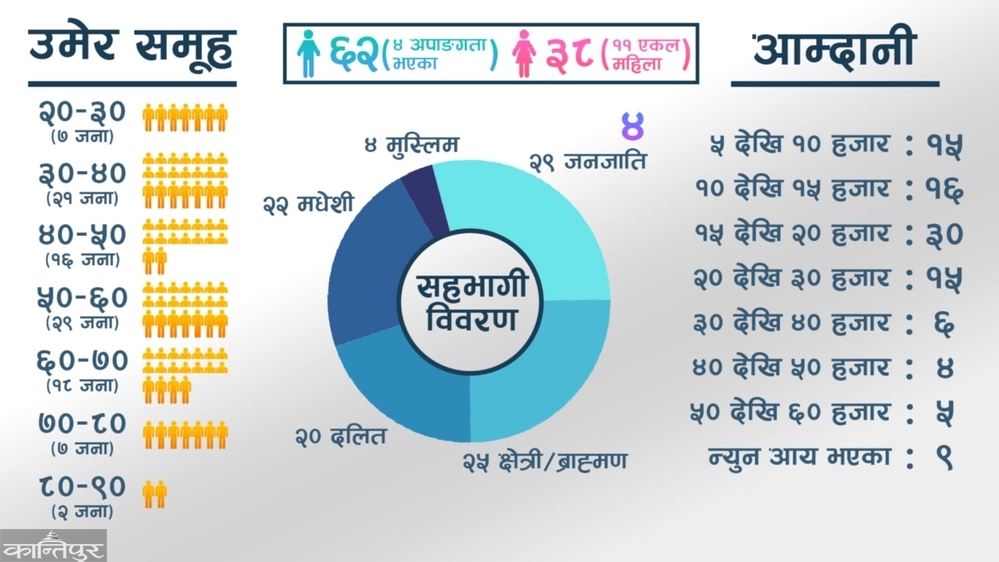
is selling vegetables in a basket to raise the expenses of his four children's upbringing and education in addition to the treatment expenses of his asthmatic mother and heart patient wife . She has only one dream, to complete the education of her eldest daughter who is studying health assistant. Vijay has the same story, Rajkumar Mahato of Morang's Biratnagar-6 also
. The difference is, Vijay sells vegetables in a cart, Rajkumar sells gram in a cart. Like Vijay, Rajkumar who is selling satu and supporting the family of 9 is also concerned. Because, the treatment expenses of the father who had paralysis 2 months ago has become the most expensive issue for him. Like Vijay, he is taking care of all the household expenses for the education of his son studying in class 7 and daughter studying in class 1. He is sweating even in the hot sun with the hope that if he could teach his children as he was told, the sorrows of life would be reduced. In this column, from the 73-year-old
Chandra Bahadur Shrestha
to the 83-year-old Chetnath Dhakal , the struggles of the senior citizens are covered from the struggle of household expenses to their understanding of life. The story of the struggle of those who are separated from their families due to various reasons and are living alone seems to be more profound . Such characters were found to be struggling with aging and increasingly expensive household expenses. Chetanath, who was born in Dhading, has been making a living by selling water and other snacks on the streets of Kathmandu for 12 years. They say, "I have become like the sun on the hill". Now there are no such dreams. That's it - don't eat by shaking hands with anyone. Don't be insulted by anyone in this old age.' 73-year-old Chandra Bahadur Shrestha from Bungkot, a childless Gorkha, is a representative character who is struggling with the sorrows of old age. Due to the loss of sight in both eyes due to old age, more sorrow has been added to his life . He thinks that he is like a character who is waiting for death to spend a month hoping for old age allowance and buy salt and oil with the same amount. He says, "After losing the cooked rice, he is now fed up with life." But what to do? There is no time to die, so no matter what happens, I was not satisfied.' In this column, we have included the story of the struggle and courage of 11 single women in running a household. The face of the Nepalese society becomes pale when listening to the struggle of women who have lost their husbands within a year and a half of their marriage. 65-year-old Sanju Devi
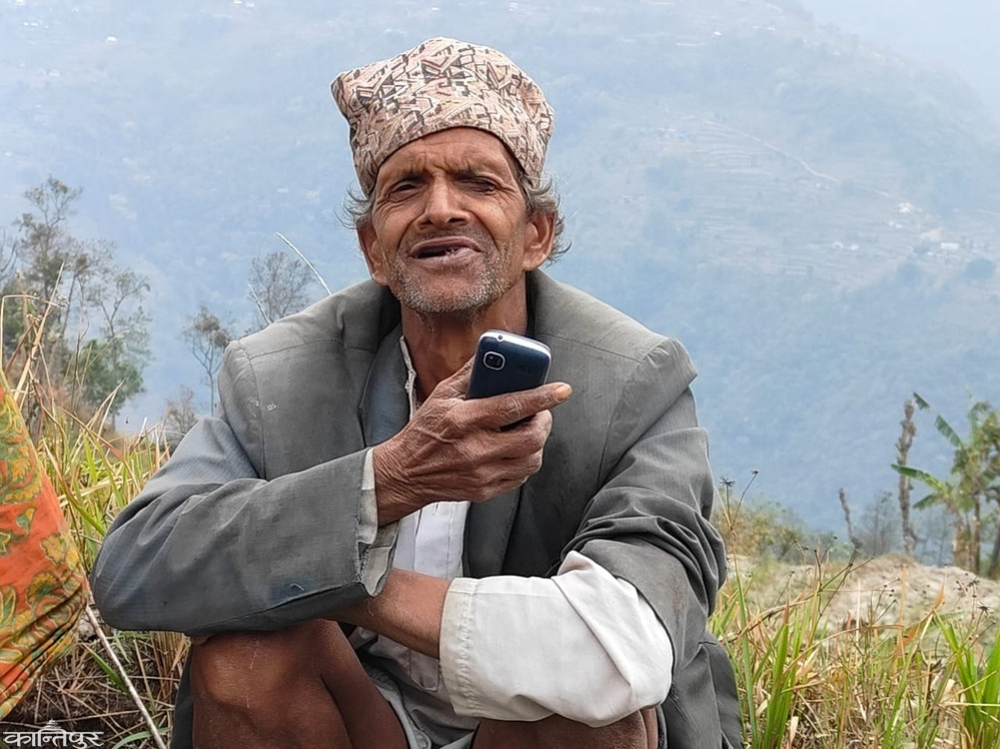
from Kalaiya sub-metropolitan city of Bara
has been in constant struggle to raise 3 children in memory of her husband for 17 years . In the tea shop of Chapro, she is struggling with the rising cost of tea by boiling tea and raising her dreams of a house that cannot be fulfilled in her lifetime. She says, "Because I spent my life as a homeless person, I feel like I would have been given my own house." Have your own small concrete house even if it is on two land plots. Where I can live peacefully . I only see Sapna and Bipana sleeping in their own concrete house . How many survivors now! 80-year-old Bhuntimaya Bassel of Gorkha Ghairung is living in her old age with the pain of losing her husband 10 years ago. She says, 'I feel like I would die of joy if I could pay off the debt incurred while building a house, paying the rent and treatment of the elderly.' In the column, 38 women and 62 men told their struggle stories of managing household expenses. It is not only clear how the people suffering in such a struggle are suffering, but also what their dreams and desires are. The struggle of 38 Dalits, 11 single women in the column for household expenses seems to be more complicated than others . It is known from their stories that the suffering, struggle and dreams of the citizens of the ground level have their own rhythm . About which the entire government seems to be oblivious.
Hetaunda resident Ramchandra Rammoksha He has been sewing shoes-sandals by sitting on the side of the road for 46 years. But he is not able to fulfill his own wishes and dreams. Although it has been years since the marriage of three daughters, he is not able to pay the marriage loan. He says, "It's been three years that I haven't bought new clothes because of the burden of house expenses, loans and interest." This year's winter was cut by the old Bakla clothes.'
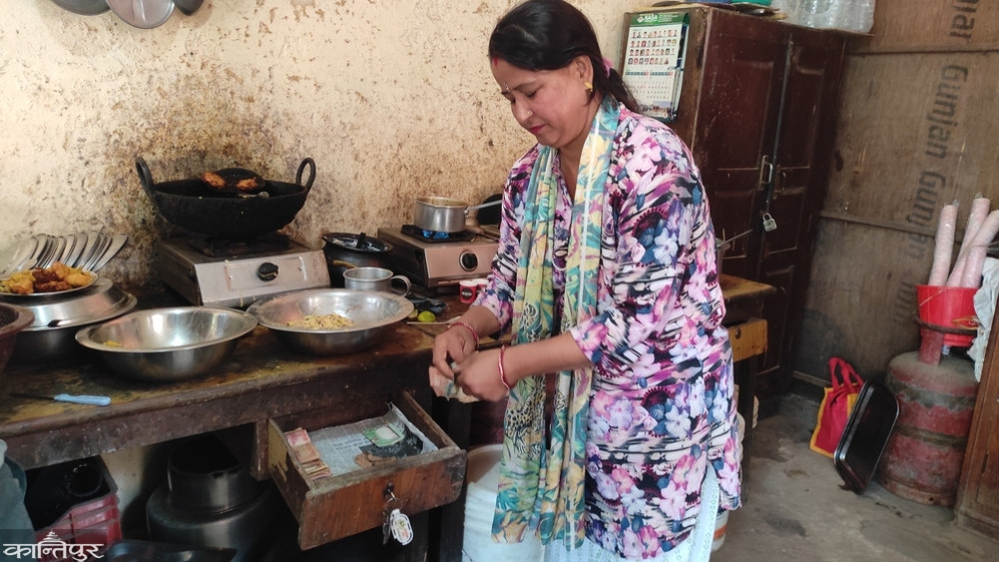
45-year-old
Intaj Ali Manihar of Gulria-8 in Bardia has been running Tanga for 20 years. Even though it is pleasant to the listeners, the tune of sorrow in his life has been the same hoarse for years . The worry of not being able to keep the family happy is eating him up. They say, 'Eid day also passed without passengers. I could not feed the children with clothes and good food even during the great festival.'' Even after years of constant suffering, he blames fate for not being what he expected. He says, "When I was little, I thought that I would grow up and earn a lot and live happily." That dream never came true. Maybe this is my destiny.' Many characters who are struggling to meet their household expenses are fed up with not being able to fulfill even the smallest desires. 31-year-old Shobhana Pariyar, who lives in Surkhet, Birendranagar,
narrates the sorrow of a family of 6 living in one room because there is no money to pay the rent. She says, 'You always have to eat meat and buy clothes.' The kitchen is empty when there is none.' The characters included in the household expenses column have also said that even those who are working continuously have to struggle to fulfill their small desires. 33-year-old Vishnunath Yadav, who has been selling sugarcane juice at the padsari of Butwal-Belhia road in Rupandehi for four years, says that every month, he worries about paying his son's monthly school fees of 5,000 and room rent of 3,000. As all the earned money goes towards household expenses, he is forced to kill even small desires from time to time. They say, 'I want to eat meat, but money is not enough.'
72-year-old Gune Tharu from Lumbini has been cleaning around Tilaurakot (ancient Kapilavastu) for 13 years. He said that he has not bought new clothes for four years due to lack of money, and he is making a living from the donations given by the donors. He says, "I haven't worn new shoes for 6 years". Sometimes I feel that God is collecting my money.'
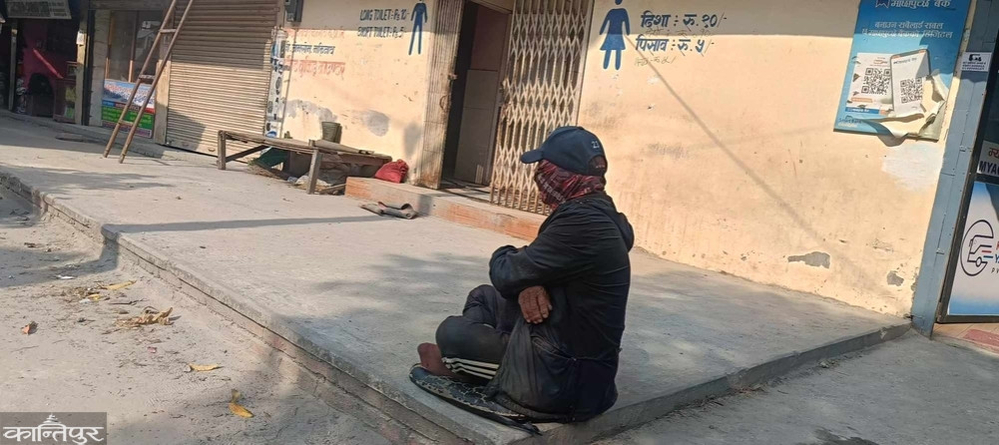
61-year-old Bam Bahadur Gandharva of Zarayotar, Arun Rural Municipality-6, Bhojpur, who weaves sarangi and earns his living. are . All have traditional occupations and skills but are worried about not having enough income to cope with the rising costs . Bam Bahadur, who has been playing sarangi for 45 years, seems to be afraid of the suffering of his own life. He says, "I have saved 2/4 thousand for the treatment-expenditure of the patient." But if you get a serious illness, there is no other option but to go to bed.' People who have small businesses seem to be more optimistic about life than those who are doing traditional occupations, who are dependent on farming or animal husbandry, or who are dependent on wage earners. Those who are involved in the enterprise say that they have been able to fulfill their small wishes, and they have been able to afford their household expenses easily. Chamu Tharu of Rupandehi who started driving e-rickshaw after working in the police for 17 years
. Everyone has shared the story of the struggle of doing Ilam and the lack of suffering from it. Be it the story of Chamu, who earns 2000 a day by driving an e-rickshaw, or the story of Bishnumaya of Tanahun Vyas, who is paying her son's school expenses and the monthly rent of 12,000 for two rooms and 10,000 for the kitchen, or the story of Manmati Chaudhary of Dang Garhwa, who saves 10 to 15,000 a month by selling tea snacks. Although there was a small story of shortage among those with enterprise and skills, the ever-increasing burden of household expenditure was seen to be less. The sorrows of people's lives are not about not being able to fulfill their desires or not being able to eat delicious food or not being able to go anywhere. Instead, they are worried about how to raise the cost of medical treatment and how to handle their children's education and behavior. Although it seems that some people are bothered by the problem of not having their own house, they were found to be living in a dream that their dream of living in their own house will not come true. Rising costs, lack of accessible education and health care have been seen to have added the most burden to the poor. Participants in the
statistics 62 men, 38 women participated in the
Gharkarch column. Among the participating women, 11 were single women and 4 of the participants were disabled . There were 29 people from the tribal community, 25 from the Chhetri/Brahmin community, 20 from the Dalit community, 22 from the Madhesi community and 4 from the Muslim community . Among the 100 people included in the household expenses column, except for 9 people who did not have a fixed income, they earned a minimum of 5 to 10,000 to a maximum of 60,000. Out of which 76 people have come less than 20,000 . Those with an income of less than 20,000 and living in a dera were seen as struggling to meet their household expenses, while those who earned less than 20,000 and had their own homesteads were relatively less worried about their household expenses . Those engaged in entrepreneurial work were found to earn comparatively better than those engaged in farming or traditional occupations/businesses. Likewise, the income of those who are engaged in both professions of husband and wife was good, while single women, disabled and elderly citizens abandoned by their children found it difficult to meet household expenses and had to live without their desires . All the content published in home expenses column in the link below https://ekantipur.com/Ghar-Kharcha

