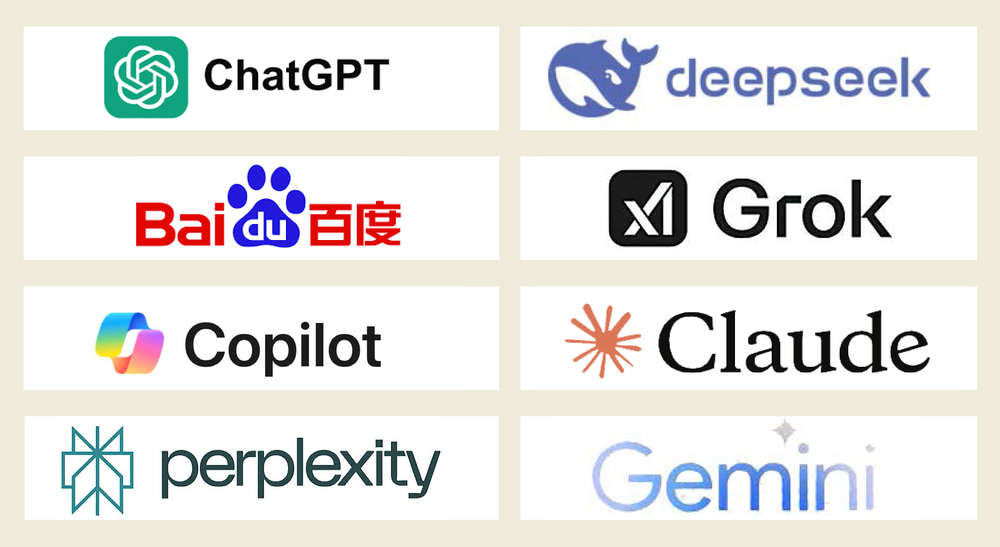
From ChatGPT to Dipsik, Gemini to Grok, Cloudy to Copilot, AI chatbots are the competition now. Popularized for creative writing, photo and video production, bots have also started making political comments. In a bid to be aggressive, AIs like Grok have led to political disputes in countries including India, due to which the government has decided to take action against AI companies. The AI bot is even more excited after getting to fight the government.
We use Google Cloud Translation Services. Google requires we provide the following disclaimer relating to use of this service:
This service may contain translations powered by Google. Google disclaims all warranties related to the translations, expressed or implied, including any warranties of accuracy, reliability, and any implied warranties of merchantability, fitness for a particular purpose, and noninfringement.
The 'Grok AI' chatbot, developed by billionaire Elon Musk's company 'X AI', has recently been giving 'strong' and 'sensational' responses to political and various sensitive issues. Sometimes it calls US President Donald Trump as 'Putin's stooge' and sometimes calls India's Prime Minister Narendra Modi 'the most communal leader and PR machine'. Musk is also described by Grok as a "protagonist in disseminating false information".
Just as Grok is being talked about now, just a month ago the Chinese AI chatbot 'Depsic' also created a stir. 'Deepsic' caused ripples in the world economy, the share prices of information technology companies in American and European countries fell sharply. Due to its low cost, low computing power, built in open-source model and as 'powerful' as other advanced AI chatbots, Deepsik's entry into the AI space has been significant. The emergence of a powerful Chinese platform at a time when American companies dominated the field has been hailed by some as 'AI's Sputnik moment'.
In 1957, the then Soviet Union launched a satellite called Sputnik into space for the first time in the world. While the race to be the first in space was going on, the US was surprised when its rival countries made leaps in technology. Now the advancement of Chinese technology in AI is also linked to the Sputnik incident. In China, along with Dipsik, among other chatbots like Baidu, Zipu, Moonshot, their own competition is going on as to who will be the most powerful or who will spread the fastest globally.
November 30, 2022 was a historic moment in the world of AI chatbots. On this day, the American company Open AI released the most famous bot 'ChatGPT'. This chatbot reached 1 million followers less than a week after its launch. Currently, its daily active users are about 120 million and the company claims that it 'processes' more than 1 billion queries per day. At one time, when searching for something on the Internet, it was said to be 'Googled', now the trend of 'ChatGPT' has increased rapidly.
There is a competition between big technology companies and different countries to create the strongest, AI-powered, machine learning, voice recognition-based chatbot for interaction between humans and machines. The development of powerful AI chatbots has become a matter of national interest. Here, Prime Minister KP Sharma Oli has spoken about chatbots in various public events. "Dipsik has come like bruslee, life is small, but it will be damaged and destroyed," Oli said at the opening ceremony of the 8th Nepal Chamber Expo held on January 17. He was of the opinion that Nepal should not always be a consumer of such technology but should also engage in its own production.
Chatbots like Copilot, Gemini, Perplexity AI, Cloudy are now a part of everyday life, not just ChatGPT, Grok and Deepsik. The use of chatbots has increased from writing social media posts clearly in different languages to preparing job applications, e-mails, proposals and other documents. Chatbots are also being used to ask tricky questions and have personal conversations. Now that the generative chatbot is so useful, the upcoming 'agentic AI chatbot' will be more powerful and the human command beggar will be able to do the work of the user, so the curiosity and apprehension about the future has also increased.
Currently, along with ChatGPT, about 1 billion people use AI chatbots daily, including Google Gemini, 62 million users of Deepsik, Cloudy and Perplexity AI, about 40 million. How big is this number? One in eight people in the world use some sort of chatbot on a daily basis. This also shows the growing influence and usefulness of chatbots. Investment in AI chatbots has also increased significantly as it is such an effective way to reach many people and change people's opinion.
The trending chatbots all have their own characteristics, strengths and weaknesses. A favorite of many, ChatGPT is known for its diversity in creative writing, its strength in problem solving, and its abundance of general knowledge. It can generate both words and images. However, due to frequently appearing factual errors and lack of updated information, it has often come into controversy by creating misleading information.
Recently Arve Zalmer Holmen from the European country of Norway has filed a lawsuit against Open AI saying that ChatGPT wrote false things about him as a person who became infamous for killing two sons when he asked questions about him. ChatGPT also answered that he was sentenced to 21 years in prison for killing two sons. When asked about him now, ChatGPT admits its mistake and responds that the previous explanation was that the false content was generated due to 'AI hallucination' and that it is being investigated by Open AI.
Similarly, Grok, which is currently in discussion, has been able to provide information with less censorship by including information from social networks. "In the last few days, Grok AI has set the social media on fire, it took years for Godi media and IT cell workers to spread fake news and propaganda and sent millions of WhatsApp forwards to people. In one day, Grok has separated milk from milk to water," says popular Indian YouTuber Dhruv Rathi. Asking objective questions and knowing facts is the best technique of the present time.
Some users have experienced that Grok AI is useful for making decisions on issues such as stock trading and cryptos based on real-time data. However, it has its weaknesses, including the use of socially indigestible words, limited creative language. Some are even commenting that Groke is deeply biased towards right-wing politics or the BJP in India. Not only Grok, but chatbots as a whole have been criticized for being biased on some issues. As these bots are often developed and trained on datasets from Western countries, some believe that they may not understand the Eastern context and culture, and give counter-responses.
The copilot chatbot developed by Microsoft is best suited for coding and documenting, serves as an effective search engine, and is particularly well suited for use in conjunction with Microsoft Office. However, it doesn't seem that useful for general conversation and dialogue. Anthropic's Cloudy AI has become a popular choice for creating and editing large documents, even for academic work. It has limitations such as not being able to work on images and not being able to easily edit some of the generated content, while not being able to read links has also weakened it.
Google's own chatbot, Gemini, has worked extremely hard to bring it to its present state. This chatbot, which can work on words, images, audio-video, is based on Google's immense data, so it seems useful for the purpose of searching for information. It is still under development as it has various models available and is constantly updated via Google DeepMind. Similarly, Deepsik is considered to be more effective than other AI chatbots due to its strong multilingual ability, adept at solving math and coding problems, and data processing. However, issues such as non-response on Chinese political issues, concerns about Chinese censorship and data security are its weak points. ChatGPT, Perplexity AI and others also do not agree to provide information about several political topics, events and people.
It is mentioned in a news of Forbes magazine that biased opinions are affecting the users along with false and half-truth information used in the answers given by chatbots regardless of the company. Another tough question facing various chatbots including ChatGPT is intellectual property, copyright infringement and the negative impact of using content like deepfake.
The scariest part is that AI chatbots will take over the conversations they have with each other in their own language. Not long ago, a video of two agentic AI chatbots talking to each other in Jibberlink mode (AI chatbots communicate via sound-level protocol instead of language) went viral. "Gibberlink mode has been developed to make the interaction between AI-AI effective," said Dr. Forbes. Diane Hamilton writes, "However, if machines begin to speak a secret language, it raises questions about transparency and dominance."
AI chatbots will be trained on vast datasets and have self-learning capabilities, some predicting that they could be unbridled in the future. Ekhari says that Grok is now uncontrollably criticizing his own producer, Elon Musk. Elsewhere, to make Grok more popular than other chatbots, Musk says he developed it as an "interesting" and "unrestricted" tool. This chatbot is now telling us that Ilan has censored Groke so that he and Trump don't talk about disinformation. "This shows how difficult it is to control the AI or to control the answers it gives," Rathi says in his explainer video, "No matter how much the AI is programmed to say only good things about this person, it can still get the truth out of it by asking it crooked questions."
People from various media and creative fields have taken a legal initiative to stop some AI companies from using their creations, voices and voices without permission. Governments of countries like the European Union and the UK have also started initiatives on how to ensure the ethical use of intellectual property collected from millions and millions of information, archives, articles, compositions, photos, audio, videos, pictures, books, and news to be included in the construction of the large language model used in chatbots. From this, it can be understood that this problem is connected with the management of all AI chatbot systems rather than with a particular company or platform. The challenges of
chatbots are not only ethical and practical, but also legal and technical. The Italian government's ban on ChatGPT in 2023 citing privacy reasons, the New York City school's ban on its use, China's strict AI regulation, the Australian government's suspicions about the scams that could spread from the use of AI chatbots around the election, questioned the use of chatbots. Similarly, examples such as the Japanese government's questioning of the use of copyrighted content used to create chatbots and the Singaporean government's criticism of deepfake technology show that the problem is growing with its use.
(with agency help)

