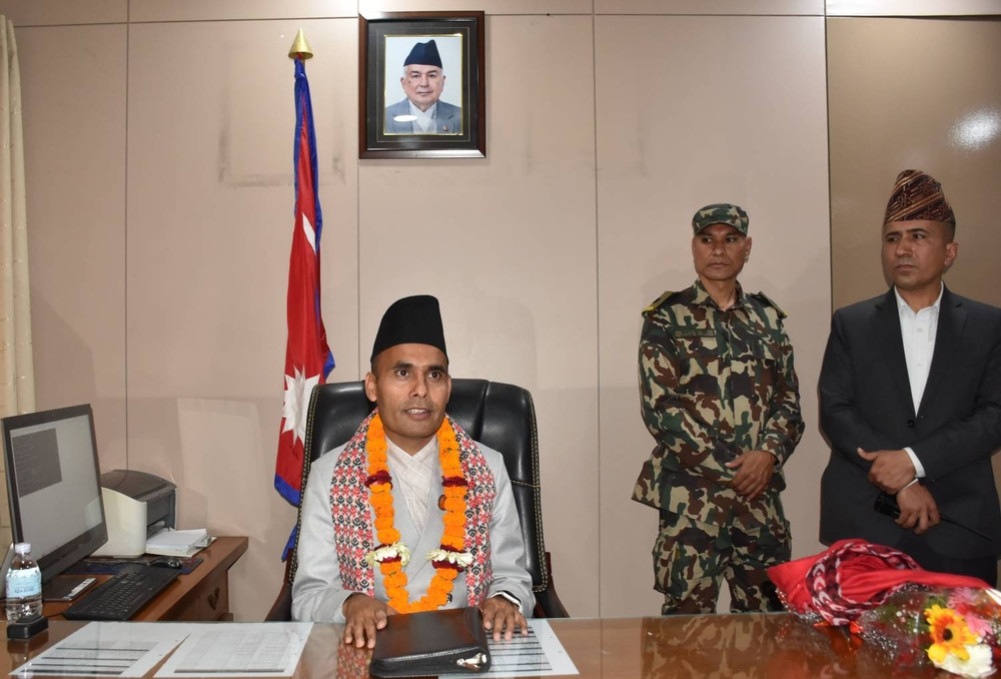
He is under pressure to play a decisive and transparent role on complex issues such as social media, digital taxes, employee management, and data security.
We use Google Cloud Translation Services. Google requires we provide the following disclaimer relating to use of this service:
This service may contain translations powered by Google. Google disclaims all warranties related to the translations, expressed or implied, including any warranties of accuracy, reliability, and any implied warranties of merchantability, fitness for a particular purpose, and noninfringement.
The report of the High-Level Inquiry Commission formed to study the incident of Bhadra 23-24 has pointed out the ban on social media as the immediate cause of the movement. The report mentions that the movement took place after the then government closed 26 existing social media platforms, even though the main reason was corruption and misgovernance.
Although the ban on social media was lifted at that time, the issue of its regulation and management has not been resolved. Bikram Timilsina has come to the responsibility of moving forward by overcoming all these problems. Timilsina, an experienced academic and media professional, has been appointed as the Minister of Communications and Information Technology in the government led by Balendra Shah.
He has been responsible for the policy leadership of large infrastructures and structures such as Nepal Telecom, Ncell, Printing Department, Post Office, Film, National/International Information Technology Platforms. Experts and stakeholders have pointed out that the tax disputes and regulations that have been brewing for years will be challenging for him as he does not have the managerial experience of such large entities.
Experts say that regulating and managing social media may be difficult for him. At the same time, some social media platforms have also taken a stand on the issue of taxes. Video sharing app TikTok is refusing to pay VAT in Nepal. It is refusing to pay a separate tax, saying that Google and Apple have already paid it.
US President Donald Trump has also been warning that he will take strict action against countries that impose a digital services tax (DST). Nepal has imposed a 2 percent DST and a 13 percent VAT on technology companies. Finding a middle ground between international pressure and internal regulation on this issue will be a test for the new minister. ‘The regulation of social media is currently in a very shaky state, no political party has a clear view on this in its manifesto,’ says telecommunications expert Ananda Raj Khanal, ‘International platforms have their own interests and concerns, they do not want to easily come under tax or strict regulation. But, if they come, come, or I will close them down.’ He pointed out that diplomatic dialogue is needed to make platforms have contact persons in Nepal and to make them dignified. However, it is considered that he may face a challenge as he does not have experience in handling international and diplomatic complexities.
Minister Timilsina seems to need deep technical and legal understanding to resolve telecommunications issues that have been simmering for years, such as Ncell’s license renewal, Nepal Telecom’s billing system, Internet service provider taxes and poll disputes. According to expert Khanal, the sector is currently in an ‘existential crisis’. Any decision on such a highly politicized and controversial issue risks being drawn into controversy, which will test Timilsina's experience and 'expertise'.
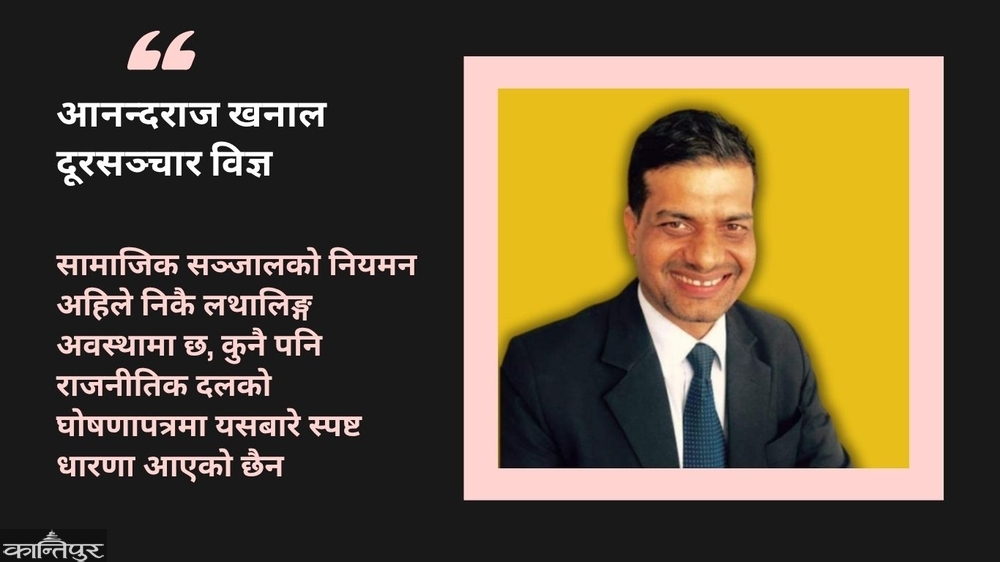
'The Ncell issue will be very complicated for him, if Ncell plans to operate only until 2029, he will not invest further,' he said, 'Without investment, the quality of service will deteriorate and ultimately the people will be cheated.' This will also send a negative message to Nepal's image for foreign investment at the international level. It is necessary to take timely decisions on license renewal and ownership transfer as per the law.'
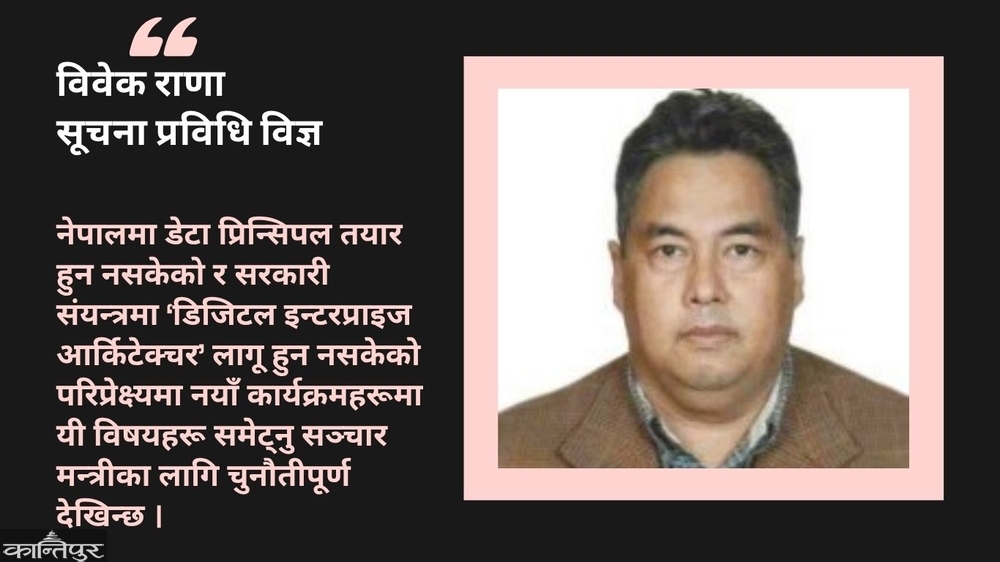
Information technology expert Vivek Rana says that since Communications Minister Timilsina has to perform not only the internal work of the ministry but also the role of government spokesperson, his responsibilities will be complex and challenging compared to other ministries. ‘There are many departments under the ministry, including film, digital, broadcasting, etc. Since time needs to be given to all of these, the minister should take special time to pay sufficient attention to the digital sector,’ he said, ‘Although we have tried to do a lot of work in the field of digital and technology, we have failed in many things. Our main weakness is that we have not been able to learn from past failures. We have been repeating the same work for 15 years, but apart from starting new projects, there has been no concrete progress. The first suggestion for the new minister is to seriously review the mistakes made in the past 10/15 years. ’
Experts point out that it is challenging for the Minister of Communications to include these topics in new programs in the context of the fact that ‘data principles’ (data principles) have not been prepared in Nepal and ‘enterprise architecture’ has not been implemented in the government machinery. ‘Failure teaches more than success in IT and developing the ability to learn from that failure is a challenge for the new minister,’ said expert Rana, ‘We do not have that habit.’ Also, the biggest thing is to instill trust in technology among citizens. For that, the state should guarantee the authentication and security of digital records. Until an environment is created where people can use technology confidently, it will not be successful.’
The RSVP’s manifesto sees the communication and information technology sector as the main link in good governance. The party has put forward the concept of ‘face-less’ and ‘paperless’ administration by 2087 BS, where there is no need to visit the office to avail government services. For this, it has promised to completely integrate the ‘Citizen App’ and the national identity card and end the mechanism of intermediaries in services such as land revenue, transport and passports. If this commitment is implemented, the current cumbersome situation of having to submit paper evidence in digital services, as pointed out by expert Rana, can be expected to improve.
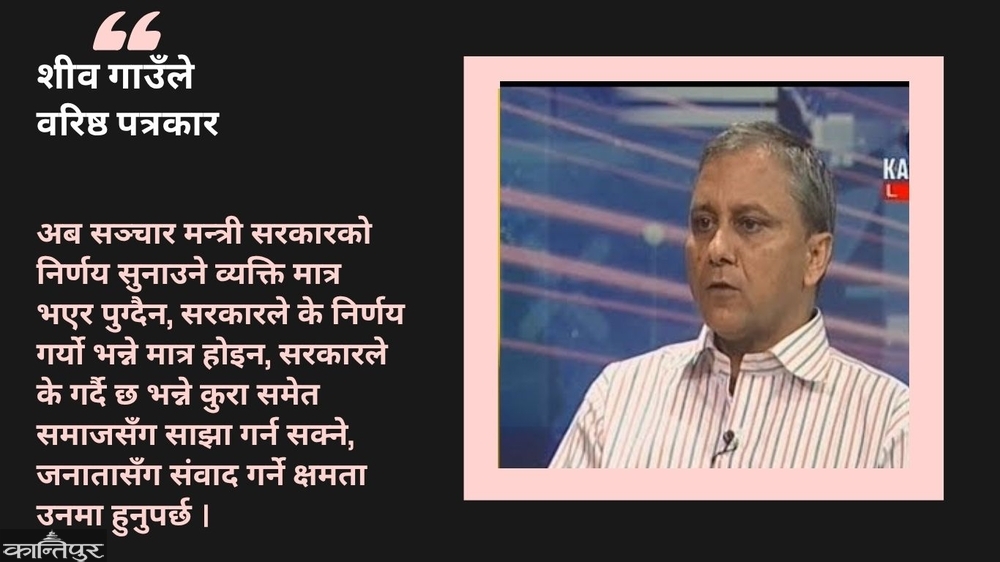
Senior journalist Shiva Gaunle points out that the Minister of Communications has the main responsibility of taking policy leadership of major infrastructures such as telecom, printing, postal services, films, advertising, and cyber security. He suggests that the new minister should have the ability to communicate with the society about what the government is doing rather than just saying what it has decided. ‘The new minister is not enough to be a person who just announces the government’s decisions, he should have the ability to share with the society not only what the government has decided, but also what the government is doing,’ says Gaunle. ‘The need of the hour is for a leadership in the Ministry of Communications who understands the concept of advancing democracy through two-way communication with the society. When such leadership comes, not only the media personnel but the country’s democracy will benefit.’
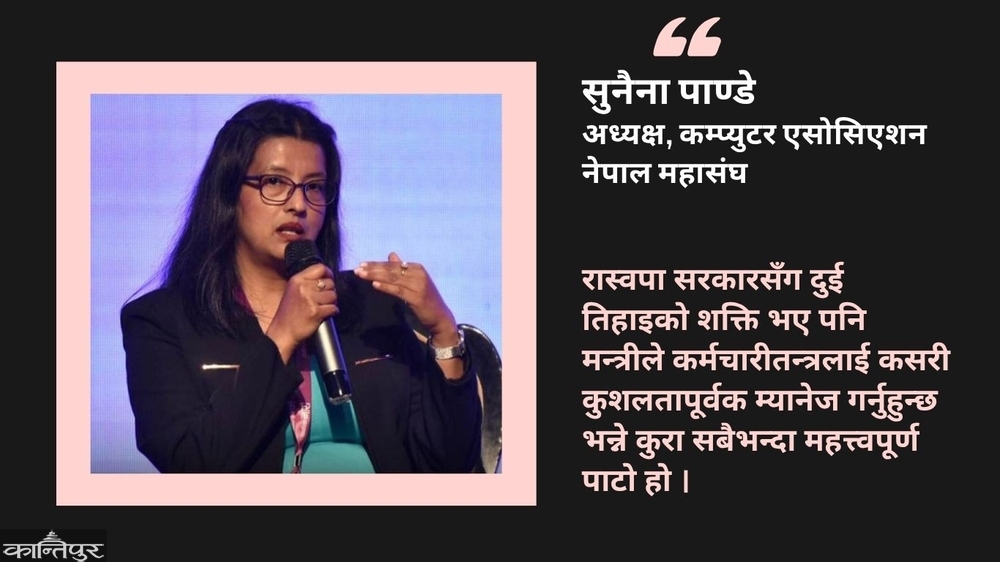
Sunaina Pandey, president of the Computer Association Nepal Federation (CAN Federation), is optimistic about the new government. She mentioned that although the Rashtriya Swayamsevak Sangh (RSS) government, which has a two-thirds majority in parliament, will have an easier time in policy formulation and decision-making, the role of the bureaucracy will be important in implementing it. “Even though the government has two-thirds power, the most important aspect is how efficiently the minister manages the bureaucracy,” she said. “Only if the minister further trains or increases the efficiency of the bureaucracy and moves forward in effective coordination with them, the desired results can be achieved.”
Pandey suggested that the ministry should fulfill its goals to make the digital economy dynamic and improve the business environment. Noting that many IT businesses have closed down due to losses after the Corona pandemic, and many have not been able to pay taxes and loans, she opined that the government should bring a relief policy to save businesses. Pandey pointed out a major problem of taxation in the IT sector. ‘IT companies operating within Nepal are forced to pay the highest tax, outsourcing and freelancers have been given some concessions,’ she said, ‘We demand that the 5 percent TDS deduction should be matched not only in income tax but also in employee wage tax. The lack of facilities to get bank loans without collateral or on an operational basis in the IT sector has made it very difficult for entrepreneurs to expand their businesses.’ According to
experts, the pledges and manifestos of other parties including the National Independent Party have not been able to identify the real and fundamental problems in the technology sector. Stakeholders have stated that Nepal’s current data security system is very weak and weak, and they have mentioned that a large investment is needed in it. In addition, they warn that Nepali entrepreneurs will lag behind in the future if skilled manpower is not prepared immediately in the field of AI. According to telecommunications expert Khanal, even though modern words like 'blockchain' are included in such documents, there is no solid basis and plan to resolve the legal, policy and operational ambiguity seen in the telecommunications and information technology sectors.
Stating that there is currently a balance between government and private sector service providers in the telecommunications sector, citizens are getting cheap services, experts have also pointed out the challenge that the new leadership must play a role in balancing this competitive market to ensure quality and cheap services in the market. 'Currently, many corruption cases have come to light in agencies under the Ministry of Communications such as Nepal Telecom, Telecommunications Authority, and Printing Department, and the Authority is also looking into it,' said an expert. 'In this situation, the morale of employees has declined, they are afraid to work, and this sector seems to have become a hotbed of corruption. The challenge is for the new leadership of the Ministry of Communications to increase the morale of good employees and reduce corruption here.'
Telecom expert Khanal has advised the minister to issue a white paper with courage to resolve the issues in this area. ‘Before taking any decision, a white paper should be issued after investigating the facts to inform the public about what the problem is and what the facts are,’ he said. ‘In matters like the Ncell scandal, it should be made clear through a white paper whether there was actually mischief or it was just a matter of taxes. It is necessary to bring out the previous situation and weaknesses before bringing up the issue of taxes after ten years. Why problems like repeated internet shutdowns on the same issue arose and who the officials who did not make decisions should also be brought out through a white paper and a brutal review of the weaknesses of the state should be made.’
000
Timilsina is an academic and a person with experience in the media field.
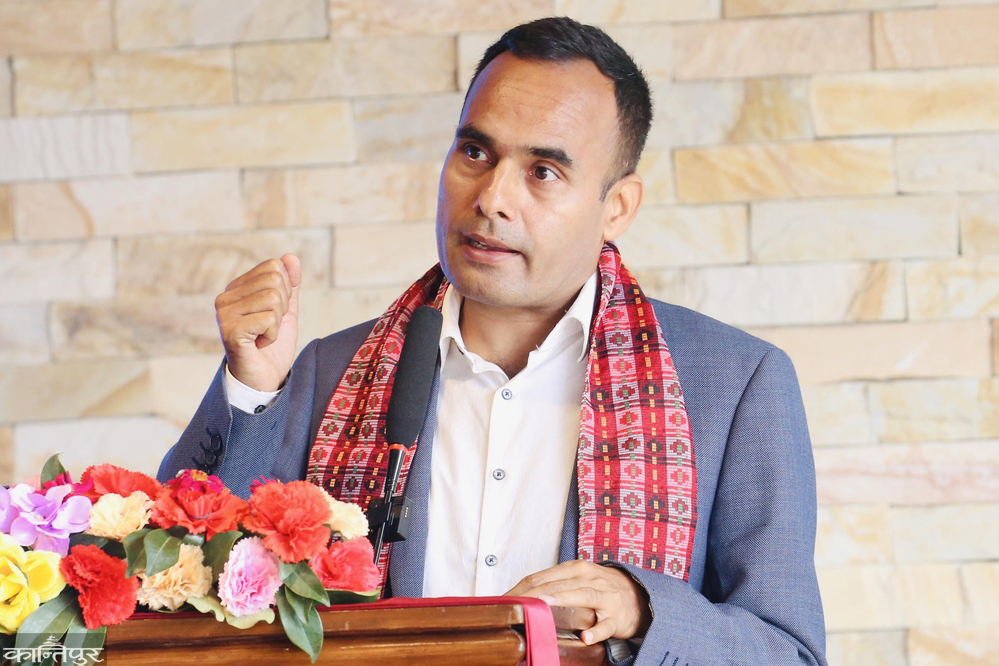
Timilsina, who became the RSVP candidate in Nuwakot-1, defeated Congress's Prakash Sharan Mahat and became an MP. He worked as a program producer and presenter at Radio Sagarmatha for about 9 years. He worked as an executive editor at 'Nepal Express', which is operated from Australia, and as an editorial advisor at 'South Asia.com'.
He has a PhD in politics and international relations from Griffith University, Australia. His dissertation focused on the topic 'The role of external forces in Nepal's peace process'. He has a master's degree in English from Tribhuvan University and an advanced master's in international studies from the University of Queensland, Australia.
Timilsina, who joined the RSVP and started active politics about two years ago, defeated experienced leaders like former Finance Minister Mahat from Nuwakot-1 in his first attempt.