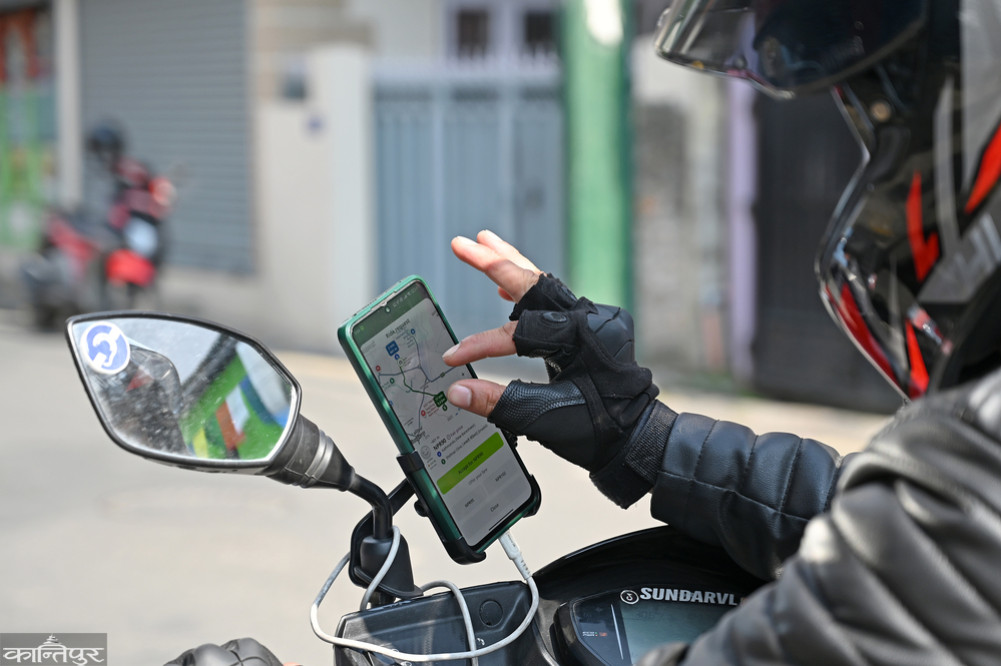
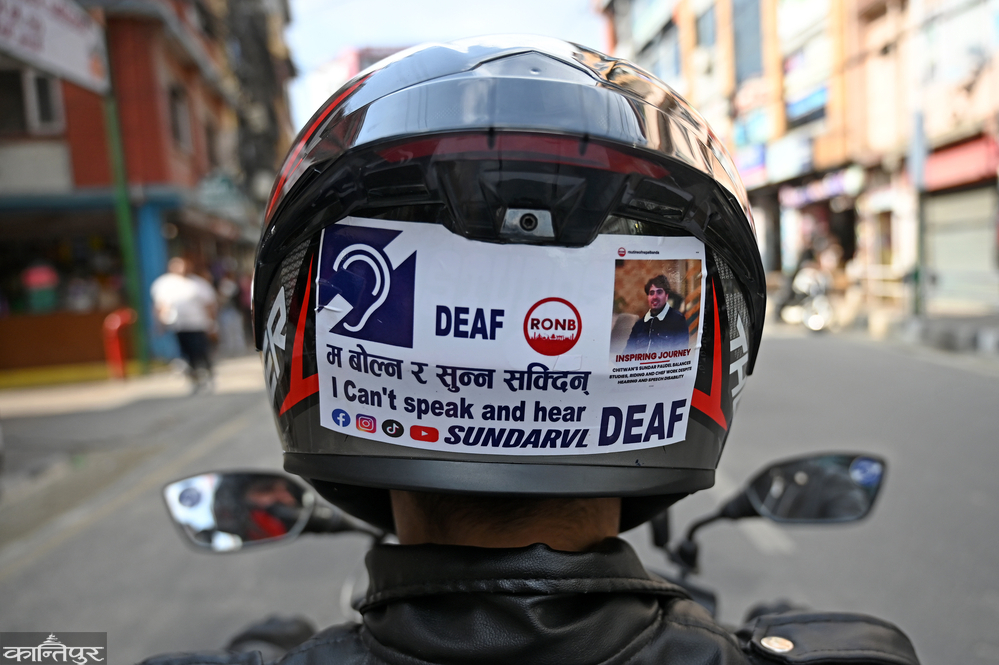
Thousands of young people like Ganesh are walking the streets under mental and financial pressure due to the policy gap between traditional labor laws and modern digital businesses.
We use Google Cloud Translation Services. Google requires we provide the following disclaimer relating to use of this service:
This service may contain translations powered by Google. Google disclaims all warranties related to the translations, expressed or implied, including any warranties of accuracy, reliability, and any implied warranties of merchantability, fitness for a particular purpose, and noninfringement.
The self-immolation and subsequent death of Ganesh Nepali from Mugu, who earned his living through ride-sharing on the streets of Kathmandu, has exposed the insecure side of the booming information technology-based profession or digital gig economy in Nepal. Drivers who work at their own risk and investment are suffering on the streets without the assurance of a minimum income.
Experts point out that thousands of young people like Ganesh are running on the streets under mental and financial pressure due to the policy gap between traditional labor laws and modern digital businesses.
Pathao Bike driver Sujan Magar said that the incident of Ganesh's self-immolation in front of the Passport Department deeply traumatized him. 'It cannot be said that our day will not come, I am even afraid to go out on the streets these days,' Magar told Kantipur, 'Especially when I go to Sundhara and Bagbazar areas, I get scared as soon as I see the traffic police.'
Sujan has been doing this work for two and a half years. He says that ride-sharing and delivery drivers have been particularly affected by the recent proposal to increase the fines for violating road rules and impose stricter rules on drivers.
‘We are getting news that the traffic police are collecting fines ranging from 2.4 million to crores of rupees a day, which is frightening,’ Sujan said. ‘Now that the target of fines is high, checks on the roads have also been tightened. We riders have to walk the same road up to 10 times a day. Every time we go out on the road, we are afraid of how many times we will get caught.’
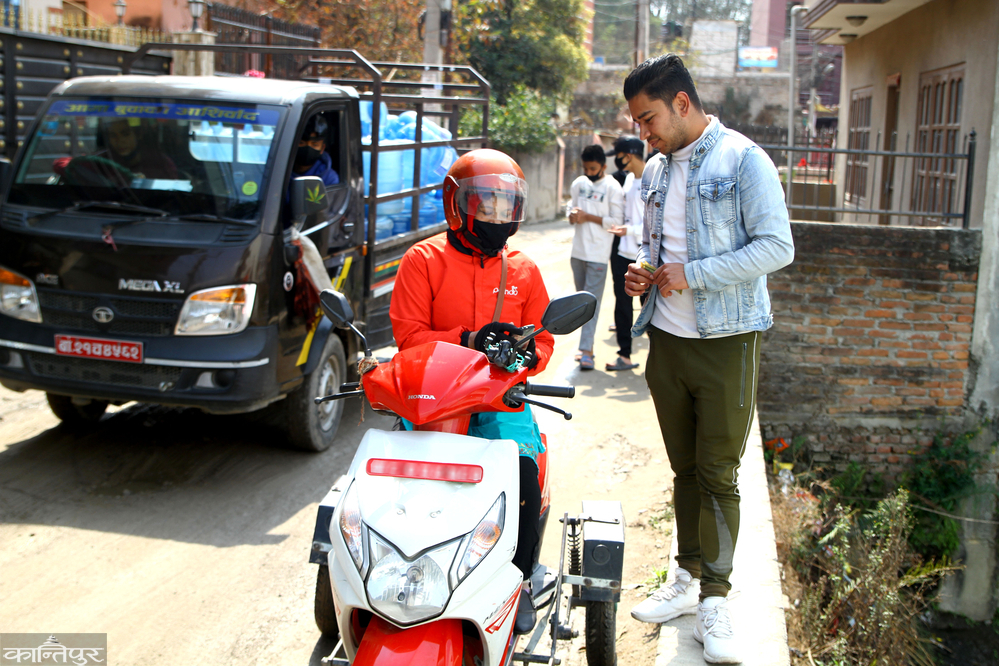 Riders have also been continuously expressing their grievances on social media regarding this issue. They have been complaining that they do not stop their motorcycles in traffic jams, but the police sometimes give them tickets while they are on their motorcycles and speak rudely.
Taxi driver Ram Thapa described working in the driving area of the Kathmandu Valley as a ‘curse’. “What we are feeling now is that working in the Kathmandu Valley or in the driving sector of Nepal is like a curse,” he said. “There are many things lacking for drivers here. And, being involved in this profession is becoming very difficult and challenging.”
Riders are also unhappy with platform operators like Pathao, InDrive, and Yango, not just the dispute with the police. Riders complain that the platforms use them as a means of making profit rather than as members of the company and are reluctant to even consider drivers as their ‘active members’ during times of crisis.
Hundreds of riders plying the roads are carrying the same pain and anger as Ganesh Nepali, says Muktinath Phuyal, founding chairman of the Independent Drivers Foundation. According to him, there was great financial and mental pressure behind Ganesh dousing him with petrol and setting him on fire.
‘He had just taken out a new motorcycle on loan, and he had the responsibility of his sick mother and family at home on his shoulders,’ Phuyal said. ‘In such a situation, when the Metropolitan Police tried to fine him Rs 1,000 by locking the wheels, he could not bear the stress, which triggered him. This incident has exposed the essence of the entire driver community.’
According to Phuyal, this sector has now become very unhealthy. With the advent of new platforms, the fare rate of ride sharing has decreased by 60 percent in the last two years. Phuyal pointed out that although the decrease in fare rate benefits the customer, it is becoming fatal for the driver.
‘The price of petrol, inflation and maintenance costs of bikes have continuously increased,’ he said. ‘The net amount that goes to the driver has shrunk due to the 10 to 15 percent commission taken by the companies and the taxes imposed by the government through the budget. Today, even though one Ganesh Nepali lost his life, thousands of riders are depressed.' Phuyal said that since the government has not made a law on ride-sharing, companies have set arbitrary rates and the police are behaving like criminals, those involved in this profession are going through mental stress.
In the budget and economic bill for the fiscal year 2083/84, the government has proposed two taxes, bringing the ride-sharing sector under the formal tax net for the first time. By amending the Value Added Tax Act, the government has implemented 5 percent VAT on ride-sharing services and has introduced a rule requiring 1 percent advance tax deduction on the income of riders. They said that this will reduce the total income in the hands of riders.
The government should not just tighten the rules and regulations, it should also provide appropriate alternatives. ‘It is true that you cannot park wherever you find it, but at least the government should provide access and options for parking in various places,’ said Yeshu Thakali, Managing Director of Pathao Nepal. ‘Rather than just tightening the rules, the government needs to pay attention to the necessary infrastructure and options for riders. We are also making our riders aware. We try to facilitate, but the role of the state is important for overall management.’
When all three major platforms were contacted to understand Ganesh’s situation, all of them responded to Kantipur that he was not seen as ‘active’ in their systems. The companies have said that they have no direct technical and professional involvement in this tragic incident, based on his recent trip record and long-term inactivity seen in the app.
Yango Nepal Chief Santosh Pandey also said that Ganesh is not an active driver on Yango. “He has not been active on our platform,” Pandey said. According to an InDrive representative, he had taken only a limited number of rides on its app. InDrive has called him a “part-timer” and mentioned that he was not an active driver.
Drivers complain that ride-sharing platforms never stand by their side and turn away when they are in trouble. Representatives of the rider and driver union have criticized ride-sharing platforms for trying to shirk their responsibilities in Ganesh’s incident. Rider Sujan complains that as soon as any untoward incident occurs, the companies give a ready-made response saying, “He was not active on our platform” or “He was not online at that time.”
He said that this is not just a company but an old trend of all ride-sharing platforms. “If a driver has taken only one ride a day or if our name and number are registered on their platform, the company must consider us as its members or employees and take moral responsibility,” he said.
Drivers say that taking ‘offline rides’ is not a desire but a compulsion. “It is wrong to drive offline, but when the ride does not come on the app and we do not have money to pay for petrol, we are forced to take risks,” said a driver from Lamatar. “There is no proper parking arrangement on the road. Even while dropping or picking up passengers, the police have been stealing keys and behaving rudely. The fine rate has been made so expensive that sometimes we have to pay a fine that is more than the price of the motorcycle. I drive a bike worth 50/60 thousand, it is impossible for me to pay a fine of 10/15 thousand.'
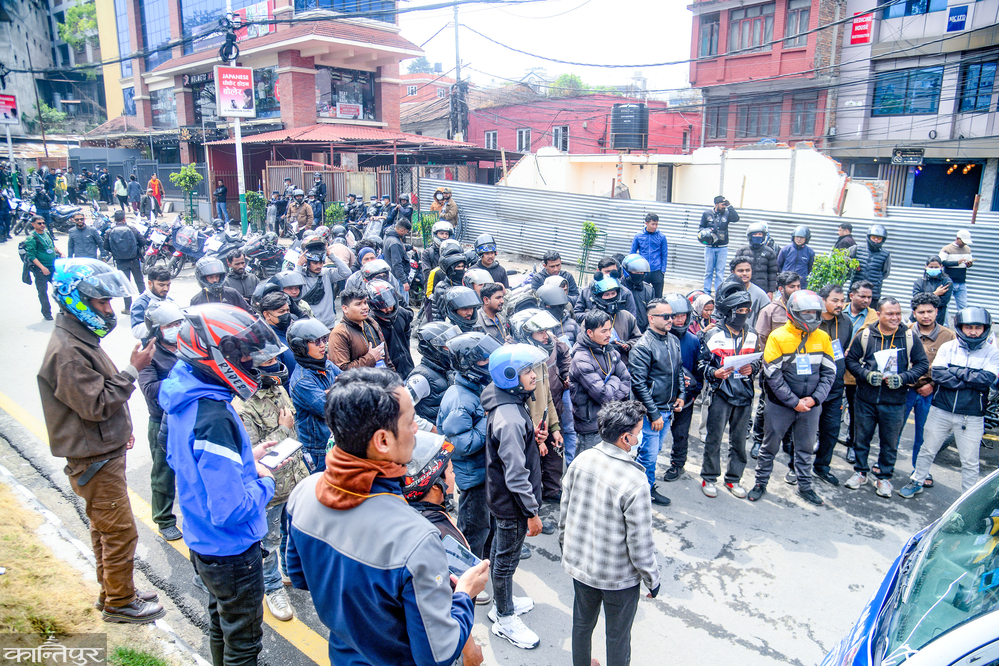 Manohar Adhikari, an expert on the digital gig economy, says that a new policy framework is needed along with the existing labor law amendment to address jobs created by the digital gig economy such as ride sharing, food delivery, courier, online business, and virtual assistant.
'The digital gig economy has some good and some bad sides, the good side of it is that it gives the working people the opportunity to work independently,' said Adhikari, who is also the founder of Foodmandu, 'However, the challenging aspect of gig work is the lack of income and job security. Gig workers do not have a fixed minimum income, which can have a serious financial impact on their lives.'
As the trend of working for short periods of time has been increasing in the job market recently, Adhikari suggests that practical provisions should be brought in while making laws keeping this issue in mind. Manohar says that when employees who work for a short period of time are included in facilities like the social security fund, they do not even realize that the fund money is their own.
‘Gig workers do not come to work for a long time, they work for a week or a month or two and leave, there is no point in including them in the social security fund. But it is not possible without it,’ he said, ‘Once they are included, money is accumulated in the fund, which they can withdraw only after 60 years. They have to work for two months, the company has given them money. But since they come after 60 years, they do not feel that they have received that money. It is necessary to find a practical solution to such issues.’
Ganesh Nepali’s death has exposed the situation in this sector and the unsafe working conditions of drivers. Drivers complain that companies are engaging in ‘price wars’ and setting arbitrary fees, considering riders as means rather than their employees, and showing a tendency to withdraw their hands in times of crisis. The suffering of hundreds of Ganesh Nepalis who are roaming the streets does not seem to be decreasing until the government provides proper alternatives and regulations. Such incidents have created deep resentment among ordinary drivers towards the state and the system.