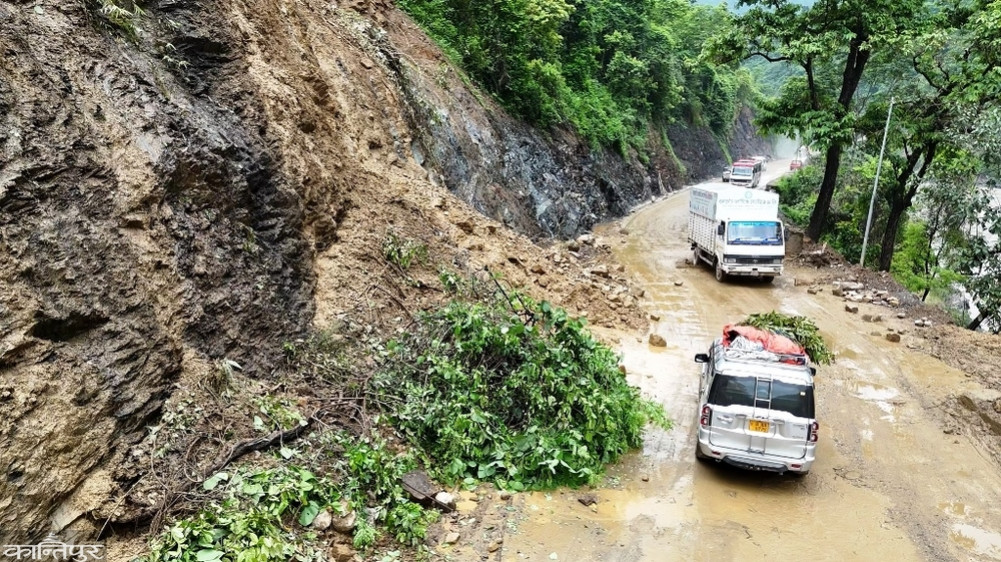
The threat of floods, inundations, and landslides has increased across the country since the onset of the monsoon, but a lack of preparedness and resources has added to the challenge of risk reduction.
We use Google Cloud Translation Services. Google requires we provide the following disclaimer relating to use of this service:
This service may contain translations powered by Google. Google disclaims all warranties related to the translations, expressed or implied, including any warranties of accuracy, reliability, and any implied warranties of merchantability, fitness for a particular purpose, and noninfringement.
The risk of disasters has increased across the country with the onset of the monsoon. Residents of coastal areas are worried after the water level in rivers and streams has risen. Residents from the Terai to the Himalayas are in fear of suffering damage from landslides, erosion, and flooding. However, the concerned bodies have finally started showing interest in disaster management after the onset of the monsoon. Sarkorwala says that due to lack of resources, the focus is only on response rather than disaster preparedness.
The Karnali and Babai rivers flow through Bardiya in the western Terai. Many places are inhabited on the banks of these rivers. Settlements in the coastal areas are often submerged due to the rise in the river level. Apart from these, Aurahi, Budhikulo, and Mankhola also submerge settlements. All eight municipalities in the district are affected by floods. The risk remains as the embankments to prevent floods have not been completed. The District Disaster Management Committee has estimated that 5,707 people (1,200 families) will be affected by monsoon-related disasters in Bardiya this year. According to the committee, Thakurbaba Municipality is at high risk and Geruwa, Rajapur, Gulariya and Barbariya are at high risk. Chief District Officer and committee chairman Gogan Bahadur Hamal said that there is continuous coordination between the municipality, province and the union to reduce risk. ‘We are holding continuous meetings and discussions with the local level, security agencies and related bodies,’ said Pradya Hamal. ‘The disaster early warning system has been made effective by identifying areas affected by floods, inundation and erosion.’ He said that information is being continuously obtained by getting updates from flood monitoring centers connected to the Karnali, Babai River and Aurahi.
Traditional methods have been followed for disaster prevention in Kapilvastu. Apart from discussions and meetings, attention has not been paid to mobilizing resources. The meeting of the District Disaster Management Committee held on Wednesday has decided to adopt vigilance. Chief District Officer Janardan Gautam said that the proposed draft of the monsoon preparedness and response plan has been approved. ‘The disaster preparedness and response plan made last year has been approved with amendments,’ he said. ‘It has been decided to be prepared by gathering resources for disaster management after discussing with the district’s concerned organizations and local level chiefs.’
The district is at high risk of floods and inundations due to large rivers and streams. Due to the dams built and being built by India on the border, many Nepali territories are also inundated during the rainy season. Although the local level and concerned offices have identified the risks and decided to adopt vigilance and preparedness to prevent human and material damage, no plan has been made. Which places and settlements are at high risk? They are not even identified. Precautionary measures have not been taken by identifying the most affected areas. The District Disaster Management Committee does not have a budget for pre-preparedness. ‘We are ready to adopt precautions,’ said Assistant Chief District Officer Bhavishwar Ghimire, ‘We have instructed the security agencies and municipalities.’
More than 6 dozen settlements under 10 local levels of the central hilly district of Salyan, which is at high risk of floods and landslides, are at high risk. After the risk of disaster increased due to daily rainfall, the District Disaster Management Committee has started preparations for mitigation. The committee has gathered the necessary materials for relief and rescue after holding a meeting.
Dozers, excavators and JCBs have been arranged to immediately open the main and auxiliary roads of the district. Chief District Officer Mahendra Kumar Sapkota said that the Nepal Army, Armed Forces and Police are conducting pre-preparedness exercises to immediately rescue those injured in the disaster. A place has been identified to accommodate families displaced by floods and landslides. Disaster management committees have been formed in the municipality and even in the ward for immediate rescue. He said that a budget of Rs 2 million is coming to the disaster management fund. ‘In case of a major incident, the budget may be insufficient,’ he said, ‘and demands are made accordingly.’ The municipality has also been allocating budget to the fund.’
The Disaster Management Committee has prepared a monsoon response plan to minimize the damage caused by highway obstructions and disaster-related incidents in Palpa. Since the monsoon has started, the Monsoon Preparedness and Response Plan, 2083, has been approved for pre-preparedness and response, keeping in mind the possibility of road and highway obstructions, as the monsoon has started. Preparations are being made to open the roads immediately as landslides are possible at Siddhababa, Dobhan, Hindekhola, Churchare, 24 Mile, Pipaldanda and Tansen-Gulmi Roads.
According to Assistant District Attorney Subedi, all the concerned bodies will implement the work as per the action plan. In the case of Dobhan-Ramdi section and Bartung-Ridi section of Siddha Highway, he said that the Road Division Office, Palpa will keep dozers and excavators ready at at least four places. All 10 local levels of the district have been requested to propose and allocate sufficient budget for disaster risk reduction, search, rescue, relief and reconstruction and rehabilitation, and local disaster management funds, said Chief District Officer Bhavishwar Pandey.
Identification of vulnerable areas
Disaster contact persons have been designated in Gulmi after identifying disaster-prone areas, along with mobilizing security personnel and volunteers. Basic necessities have been provided. The Disaster Management Committee has identified flood and landslide risk areas and designated shelters for the general public. A monsoon-related emergency and response plan has been prepared. The district administration has stated that teams from Nepal, the Armed Police Force and the Nepal Army have been kept on 24-hour alert.
Kamal Sen Oli, the administrative officer of the district administration, has designated disaster contact persons at the local level and is also collaborating with non-governmental organizations including the Red Cross. The river banks are flood and landslide risk areas. Potential areas have been included under the disaster preparedness and response plan. However, there are no such different awareness, vigilance or resettlement programs in these areas.
There are one flood, 15 landslides and 35 fire potential areas in Resunga Municipality in the district and 10 flood, 15 landslides and 34 fire potential areas in Musikot Municipality. There are one flood, 18 landslides and 17 fire potential areas in Chandrakot. Gulmi has included a disaster preparedness and response plan that includes 6 floods, 7 landslides and 8 fires in Satyawati, 2 floods, 6 landslides and fires in Rurukshetra, 2 floods, 2 landslides and fires in Chhatrakot, 6 landslides and fires in Gulmidurbar, and 1 landslide and fires in 23 areas in Dhurkot Rural Municipality. There are 19 landslides in Madane, four floods, eight landslides and fires in Malika, no risk areas in ISMA Rural Municipality, and one landslide risk in Kaligandaki Rural Municipality.
Urgent to be alert
With the onset of monsoon, there is a risk of flooding in the river banks in Gorkha. The highlands are vulnerable to floods and landslides. The administration has urged citizens to be alert. Deval, Ghattekhola, Nyagachet, Pati village, Pangsing village of Chumanubri-3, Lokpa of Ward 6, Lar village of Ward 7 are at high risk of floods and landslides.
The village municipality has already arranged for relief, rescue and other materials for disaster preparedness.
The people's representatives of the ward, police, rural municipality and district administration office have been urged to inform. One and a half dozen settlements in the district are at risk after the earthquake. Some settlements at risk of floods and landslides have been relocated. The Disaster Risk Reduction and Management Committee has been urging people to be vigilant as there is a risk of floods in the riverbanks as well. The District Disaster Management Committee meeting has urged the municipality to identify such settlements and inform them if they need to be relocated to protect them from disasters. The decision was taken at the meeting of the Local Disaster Management Committee and requested to send it to the committee for further necessary process.
Assistant Chief District Officer Netra Prasad Sharma said that the local level has also been asked to make the necessary physical and financial arrangements for the operation of the Local Emergency Operations Center. ‘We are trying to make the municipal-level disaster management committee active, coordination is being done at the municipal level to manage resources and necessary budget,’ he said.
Lack of resources
With the onset of monsoon, the nearly 90-kilometer area of the Prithvi Highway and Tribhuvan Highway, which are considered the lifelines of the country, is seen as high risk. Despite making a disaster preparedness and response plan, the district is not in a position to face a major disaster due to lack of sufficient resources and resources. Although the committee coordinated with all local levels last Monday to prepare for risk reduction and response, most local levels have not taken it seriously.
The main and internal roads of the district are at risk of landslides. Large rivers and steep streams like Trishuli, Aankhu, Budhi Gandaki are the main problems. Various areas of the Nagdhunga-Naubise-Muglin road section and Malekhu-Dhadingbenshi road section have been placed on the extremely sensitive list.
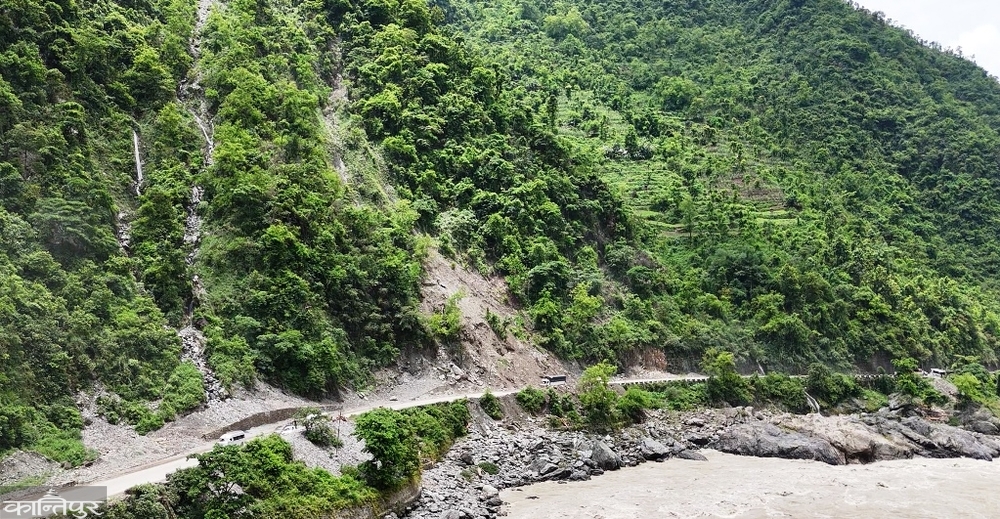
The Jhyaple Khola, Khatripauwa, Sikre Khola, 4 Kilo and 9 Kilo areas under Dhunibenshi Municipality and Thakre Rural Municipality and the places near Bandre Bhir, Krishna Bhir and Jawang Khola in Benighat Rorang Rural Municipality towards the western section are at risk of being blocked at any time during the rainy season. In rural areas, various parts of the Dhadingbeshi-Tipling road, Thulo Khola-Lamidada road and Malekhu-Salyantar road section are at high risk of floods and landslides.
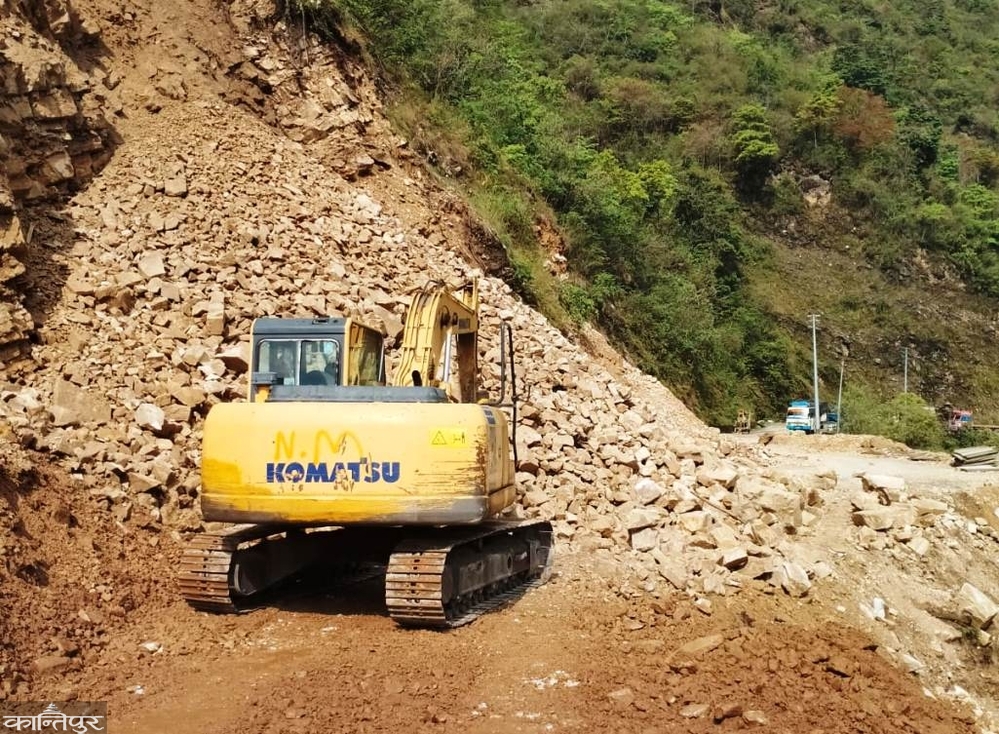
Keeping in mind the risk, the district administration, security agencies and the Road Department have kept equipment and technicians like excavators, backhoe loaders and tippers ready at risky places to adopt precautionary measures and immediately open the road as soon as it is blocked, said Chief District Officer Laxmi Pandey Gautam.
Kakakul in winter, floods in monsoon
Most of the residents of Parsa, who are forced to endure the scarcity of drinking water every winter, are worried that they will be displaced due to inundation and erosion after the onset of monsoon. With the onset of monsoon, the risk of disasters in the district has become high. Assistant Chief District Officer Binod Kumar Pokharel said that after the meeting of the Chief of the Office of Asar, the local level has been directed to prepare for the risk of floods and landslides by writing to the local level.
The District Emergency Operations Center is active 24 hours a day and it receives information related to disasters and informs the Central Emergency Operations Center. In addition, the center collects information about the risk of possible disasters in the district and provides advance warning to the locals. In addition, if any disaster occurs in the district, the National Disaster Risk Reduction Management Authority is also informed, he said.
The authority also works to raise awareness about the risk of further disasters in the district. In addition, the District Disaster Management Committee, coordinated by the Chief District Officer, works from rescue to relief distribution. The committee has a budget of about 9.8 million rupees available this year. Pokharel informed that since the last two years, local levels have started allocating a separate budget for disasters by forming their own disaster management committees. He said that Parsagarhi Municipality and Chhipaharamai Rural Municipality in the district are working in an exemplary manner through the disaster management committees.
60 out of 61 wards at risk
The District Disaster Management Committee held in Taplejung on Tuesday has placed 60 wards, excluding Phungling Municipality-5, on the flood and landslide risk list. Chief District Officer Shivaraj Sedhai said that Sirijanga-8 Yamphudin and Phaktanglung-7 Olangchungola are at risk of avalanches. He informed that 47 types of equipment are in stock to deal with disasters and 143 people have been trained and kept ready to be deployed.
Nepali Army and Armed Forces The Disaster Management Committee says that the police headquarters are in Phungling and the army is under construction at the hydropower plant, the Armed Police Force has a base camp in Maiwakhola Rural Municipality 1 Dhunggesanghu, Sirijanga Rural Municipality 1 Sinam and Faktanglung 7 Olangchunggola, so the manpower that will be mobilized as needed is in place. In addition, there is a District Police Office in the district headquarters, Sirijanga 4 Tellok and Athrai Tribeni 4 Change.
Since the people's representatives who can prepare for disasters are at the local level, the local level representatives informed the Disaster Management Committee meeting that everyone has allocated a budget for management. Sedhai said that a commitment has been received from the federal and provincial governments that there will be no budget problem. Sigdel of the administration office says that 18 ambulances, 1,217 health workers and 253 places have been secured as places to keep those who are at risk and those rescued in disasters.
Low budget for preparation
With the onset of monsoon, districts including Jhapa and Morang in the east are again at high risk of natural disasters such as floods, inundation, river erosion, lightning, windstorms and road blockages. Stakeholders say that disaster incidents and the damage caused by them have been increasing in recent years as the pattern of rainfall has become irregular due to climate change. However, despite the increase in risk, the necessary budget and resources for appropriate preparation are still not sufficient.
The District Disaster Management Committee has implemented the monsoon preparedness plan. Work is underway to identify vulnerable settlements, possible relocation, determine safe shelters, manage rescue materials, establish an early warning system and coordinate with security agencies. However, district administration officials admit that all these efforts have not been as effective as expected due to limited resources. According to Morang Chief District Officer Yubaraj Kattel, the District Disaster Management Committee does not have a separate budget for preparedness. ‘We do not have a separate budget for preparedness,’ he said. ‘How can we make effective preparedness without a budget?’ According to him, about 1.5 million rupees have been received from the Home Ministry this year. Of this, 500,000 rupees have been allocated for the purchase of boats and about 1 million rupees for the purchase of other rescue equipment.’
In Morang, the areas around Kesaliya, Singhiya, Lohandra, Bakraha, Chisang and Budhiganga rivers are at high risk. In Jhapa, the areas around Kankai, Mechi, Biring, Kamal, Deuniya, Ninda and Mawa rivers are at high risk of flooding and erosion. Settlements in Kachankawal, Gaurigunj, Jhapa Rural Municipality, Barhadashi, Kamal, Shivasatakshi and Gauradaha have been facing flooding for years.
According to Jhapa Assistant Chief District Officer Anjan Neupane, there is no separate budget available for preparedness except for the 1.5 million rupees received from the Ministry of Home Affairs. 'The amount of the Disaster Management Committee fund cannot be spent on preparedness,' he said, 'The government's investment in risk reduction is still not sufficient.'
Local levels in both districts are identifying vulnerable settlements, determining safe locations, updating disaster response plans and conducting public awareness programs. Armed Police, Nepal Police, Nepal Army, Nepal Red Cross, local volunteers and various non-governmental organizations have been kept on standby for rescue and relief. Preparations have also been made to monitor river water levels, weather early warning, emergency contact system and mobilize search and rescue teams.