476 families were displaced from Shantinagar, 162 from Gairigaun, 143 from Thapathali, 77 from Gothatar, and 13 from Manohara. They have been accommodated at the Radhaswamy Satsang Vyas Ashram in Kirtipur and various hotels in Kathmandu.
We use Google Cloud Translation Services. Google requires we provide the following disclaimer relating to use of this service:
This service may contain translations powered by Google. Google disclaims all warranties related to the translations, expressed or implied, including any warranties of accuracy, reliability, and any implied warranties of merchantability, fitness for a particular purpose, and noninfringement.
It was 5 pm on Sunday. The Dasharath Stadium was already submerged in the heavy rains of Vaishakh. There were wet blankets scattered around. There were many dirty faces around.
Even though he was soaked in the rain, 53-year-old Pakacha Tarim Kasai was sitting there without caring. Not only were his face wrinkled with age, but also the deep emptiness of a man who had been robbed of everything was evident. When a dozer ran over a settlement on the banks of the Bagmati in Thapathali on Saturday, he not only lost his clothes, but also lost his wife, who was always with him in good times and bad.
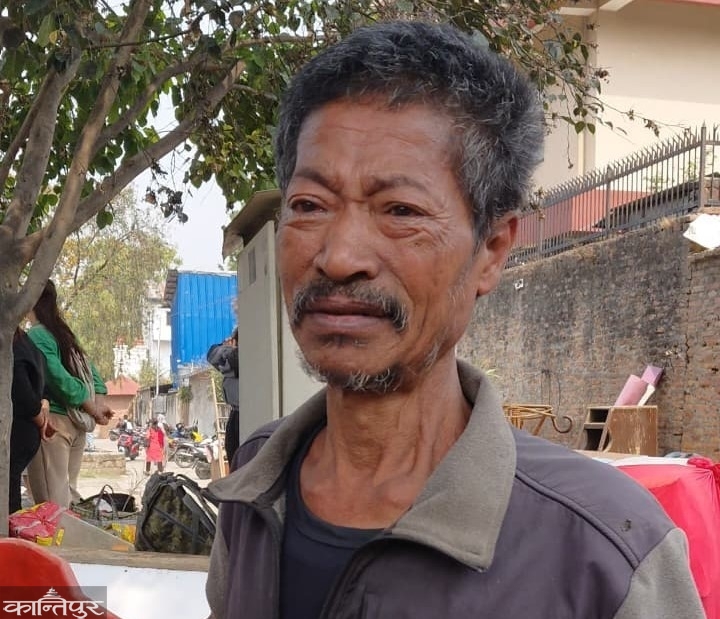
He had reached the stadium on Saturday. Around 9 pm, when they tried to take him to Balaju in a metropolitan vehicle, he did not see his wife Pushpa. They started searching in panic but did not find her anywhere. The police put him in the vehicle, saying that they would find his wife soon. Standing at the door of the car, he asked the police, ‘Where is my wife? How can I go without her?’
When the Metropolitan Police said they would send him, he got into the car and left. Even after reaching the ‘Mission Baglung’ hotel in Balaju, he kept looking at the door all night, waiting for his wife, but she did not come. He pleaded with the police who arrived there, and pleaded with the hotel owner with folded hands. After much pleading, someone told him, ‘Your wife has been admitted to another hotel.’
‘How can you calm down at a time like this without listening to your wife? Only after the police spoke to me on the phone did I breathe a little and lay down with peace of mind,’ he let out a long sigh.
The butcher couple does not have a mobile phone, so they are even more lonely and helpless in this city of technology. ‘I woke up in the morning and came here (stadium) again in search of my wife.’ I came to know that she was heading towards Kirtipur,' he said.
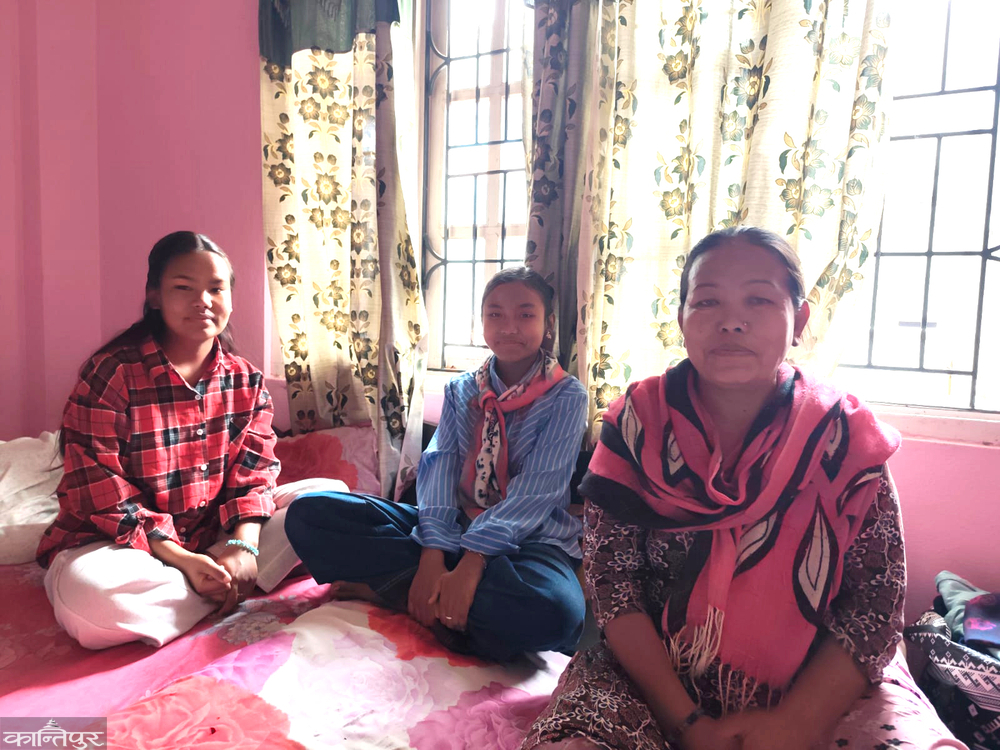
Kumari Tamang used to trade vegetables in Baneshwor but the Kathmandu Metropolitan City closed it down. She had kept the two lakh rupees saved from the vegetable trade in a cooperative. The people of the cooperative fled. The house she had been living in was demolished by a dozer on Saturday. She says, 'Even if it was small, the government would have given a red certificate.' She was pleading with the Kathmandu Valley Development Authority employees to send her to Kirtipur. But even after 5 pm, there was no sign of her being taken.
32 squatters who lost their homes on Saturday were taking shelter at Hotel Tokyo Town in Machhapokhari. 48-year-old Kumari Tamang was found with her family among those taking shelter. On Saturday morning, Kantipur reached Kumari's house before the dozer entered the squatter settlement in Thapathali.
Kumari, who was suffering from the pain of losing her home, told us with a sigh, ‘I raised my children here, suffering. Now what will I do if they suddenly leave?’ She was sobbing as she said this. A sick grandmother had come to Kumari, who was living with her husband, three daughters, and a grandson, to seek shelter just a few days ago. She was worried, ‘What will happen to us now?’ The previous day, Kumari had removed the roof of the house.
What did her family, who were living in a roofless house, know that it would suddenly rain at night? ‘We slept soaked all night. The little grandson and grandmother were in pain,’ she said, wiping her wet eyes. Before Kantipur could let out her sigh of sorrow, a dozer arrived with security personnel in front. The dozer started demolishing the house. What happened to Kumari's heart, which was collapsing along with her house? Where did their cries go? We did not get to witness it. The security personnel forcibly removed the media personnel.
On Sunday, the Thapathali settlement was deserted. The huts that had been there since Saturday were in ruins. Clothes, old photos and wooden items were scattered around the place where Kumari's house was. Then the Kantipur team started searching for those who had left the settlement and gone to temporary shelters.
By chance, Kumari, who was found in the hotel town, had just woken up from her sleep. After remaining silent for a while, she started telling the rest of Saturday's tragedy. The house was found on the ground, but the love of the little chickens she raised was there. She spent the whole day wondering where to take them. Before sunset, she reached her relatives, crying, ‘Please don’t keep these until my arrangements are made.’
Before 5 o’clock, the Metropolitan City vehicle took them to the Dasharath Stadium. She stood in line to register her name. ‘It was raining. We stood at the stadium for 3 hours,’ Kumari said. Till then, she had not decided where to go. Around 10 o’clock, the Metropolitan City vehicle took her to Machhapokhari.
Kumari’s family is restless. Her little daughter should now be admitted to class 8. She used to study at Vishwa Niketan Secondary School in Tripureshwor. ‘I have neither a place to live nor a place to study,’ Kumari said, looking at the face of her daughter sitting next to her. The daughter had said only in the morning, ‘I can’t go to a new place and make friends, I won’t study.’
The slum is moving in Kumari's eyes. There was their society. There were scattered neighbors. There were people who stood in difficult situations. 'Who has gone where now? Everyone has been scattered,' said Kumari, who was lost in the slum. Kumari's daughters also lost their friends. Now they don't know if they will meet or not.
A rumor spread in the shelter in the morning, 'If someone finds land in their name, they will have to pay for all the money they have spent living and eating here.' Hearing this, many people were scared and left in the morning. Kumari was also in doubt about what to do. 'Where should we run away? If we don't run away, they will hurt us,' she said.
Kumari's ancestral home is in the upper part of Sindhupalchowk, which is under the forest. ‘The land there is very steep . The sun rises at 10 am and disappears at 3 pm . The land is not in my husband’s name,’ she told the story of the land she had not yet acquired . Her in-laws have not made a deed of ownership in the name of their sons . ‘There is no basis for saying that it is ours . If we take it out now, it will be a catfight,’ said Kumari .
Born in Sindhupalchowk, Kumari came to Kathmandu when she was 12 years old to weave carpets . She initially lived in a rented house in Kathmandu. The landlady would not allow a family with many children to rent a room. ‘We were evicted because they use a lot of water and have many guests . Then we reached Thapathali,’ she said .
That part of Thapathali was thick with bushes . She was afraid to even walk alone . Kumari and her neighbors uprooted the bushes . In some places, they filled the soil and made it habitable.
Kumari was initially afraid to build a house there. But her mother-in-law and the committee said, ‘They said they would give the land title deeds later. It will be done when it is built.’ They took a loan of about 3 lakh rupees and built a three-room house. But the house was demolished within 4-5 months of construction. After that, they started living in a small hut. The flood also damaged the house. They took out another loan and repaired the house.
Kumari used to trade vegetables in Baneshwor. But when Balendra Shah became the mayor of Kathmandu Metropolitan City, her business was taken away forever. She had saved 2 lakh rupees from her business in a cooperative. One day, when she went to get the money, the cooperative had fled. Now she has neither savings nor cooperative documents. ‘When the flood entered the house, those documents got wet,’ she said.
Kumari's husband is a security guard in a company. He is currently homeless and has not been able to go to work. The company does not know about this. 'I am afraid that I will lose that job too,' she said.
She does not know where the government will take her now. 'I wish the government had given me a red certificate even though I was young,' she says with a glimmer of hope, 'If they had known in time, there would have been some solution! Now the government should investigate properly and provide a permanent solution to the real squatters.'
Some squatters had gone out on Sunday to look for their lost belongings. Some were at their regular work. Indra Bahadur (name changed) was found having lunch at the Mission Baglung Guest House attached to Tokyo Town.
Indra Bahadur, his wife and grandson were accompanied by two girls from another family. ‘The parents of these children have gone home to look for things,’ Indra Bahadur said.
67-year-old Indra Bahadur, who raised her children by working hard, had a big heart this time, ‘I must have built 30-40 houses for others, but this time I don’t have my own.’ They have a grandson who should be admitted to grade 5. His son and daughter-in-law are staying with a friend.
The Indra Bahadur couple have kept their grandson with them. ‘It was time to admit him to school, but how will we teach him now?’ Indra Bahadur’s wife was shocked.
They lived in Gairigaun in Shantinagar. ‘The house we lived in was built with our blood and sweat.’ I used to build and paint houses,' Indra Bahadur said, 'We collected bricks, cement and other things that were thrown away and saved a little money to build that house. If we had a lot of money, why would we be so sad? But now everything has been demolished.'
They did not expect the dozer to come on Saturday. They had estimated that the goods would be moved by the next day. But suddenly the dozer stopped in front of the house. 'I walked all this time without even taking a single piece of clothing. When I saw the house destroyed, I went crazy,' Indra Bahadur's wife said.
Indra Bahadur had moved to Kathmandu around 2050. He did not own any land in Solukhumbu. 'There is no property left in our ancestors' names. Earlier people used to raise cattle and live and eat in the forest. They would have been better off keeping a cowshed than having land. But when they stopped keeping a cowshed, all those forests became government property,' Indra Bahadur told the story of being landless, 'I was not educated, so I came here and did whatever work I could. From carrying heavy loads to cleaning and building houses.'
They wish that the government does not do more injustice. 'We are not criticizing the government, but they should make arrangements for us to live safely. Don't make us miserable,' he said in a humble manner.
29-year-old Sushila Rai was feeding her 2-year-old son. She started telling her sad story to Kantipur, 'Earlier, I used to live in a rented house with my sister. I went to Iraq to earn some money and build my own house. I worked in a hospital there and after a lot of hard work, I earned 5-6 lakh rupees. But happiness is not written in my destiny.’
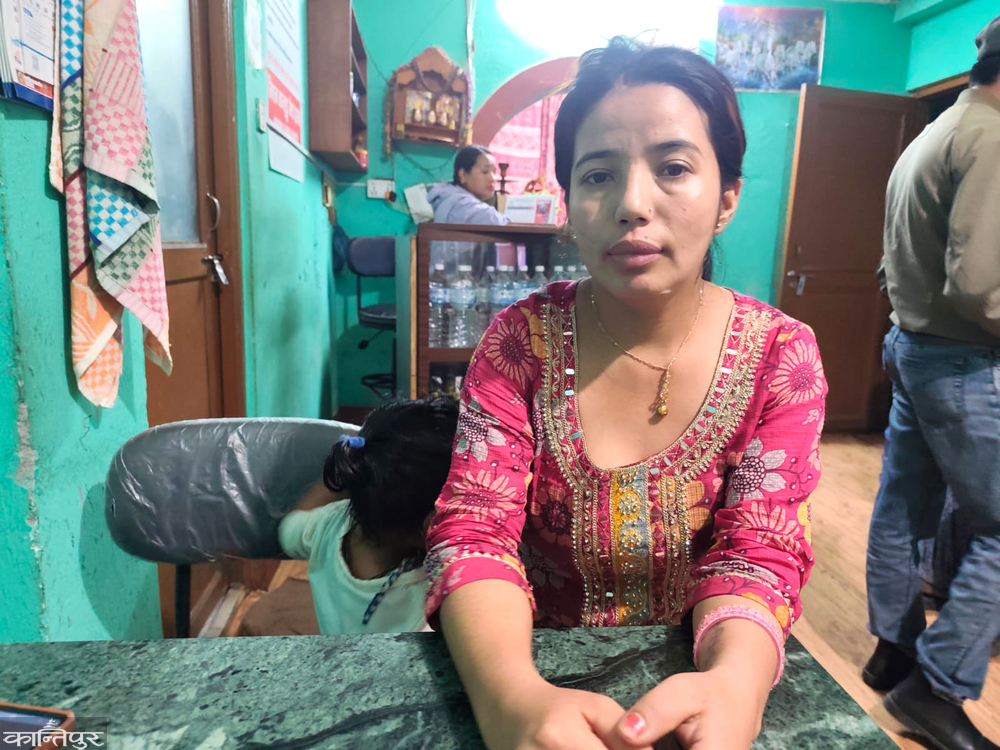
Sushila paused for a moment. Then she continued, ‘While abroad, I developed a problem with my chest and had to return to Nepal less than two years later. I had two breast surgeries before getting married. With the money I earned abroad, I bought land in a squatter settlement for Rs. 250,000.’
A man had given her the land by taking money and promising to prepare a deed of sale. She thought, now she would have land in Kathmandu. ‘That man disappeared later. Even when she searched, she couldn’t find him,’ she said.
She got married. Her husband was a cook. They built a house in the settlement. ‘We thought – this is our home now, this is where we will spend our lives.’ I never thought I would have to leave like this,' she said with a dark face.
On Saturday, she was holding her son as the bulldozer demolished the house. 'I couldn't get any clothes, utensils, or food out. Everything was gone before my eyes. I was stranded in the rain carrying my child. Even when I called the municipal vehicles, no one helped me,' she said.
Sunday was also rainy. Neither she nor her son had enough clothes to protect them from the cold. Now she doesn't know where she will go. 'Neither my husband has land, nor my family's. I need a place to live,' she said pleadingly. 'I can make a living by washing other people's dishes, but how can I live on the streets with this child?'
Sangeeta Singh, 40, has been living in a cramped room in a hotel in Balaju since Saturday. Sangeeta's daily life for the past few days has been filled with tears and confusion. She has been living in a small room in Shantinagar, Kathmandu, paying a monthly rent of 6,000 rupees, while on the other hand, she has the responsibility of raising her three young children in Thaplo, and on the other hand, she has the responsibility of looking after the land that was razed by a bulldozer.
Sangeeta had entered Kathmandu 17 years ago, dreaming of a golden future. After her family did not accept her because of her inter-caste love marriage, they ran away and entered this strange city. Initially, when she lived in Narayanthan, her husband worked as a house painter, while she worked as a bricklayer. 'After the birth of her first child, the landlady did not let us live there and we moved to Shantinagar,' she says, recalling the past. 'At that time, the room rent was only 4,000, and while both of them were working, the stove was burning.'
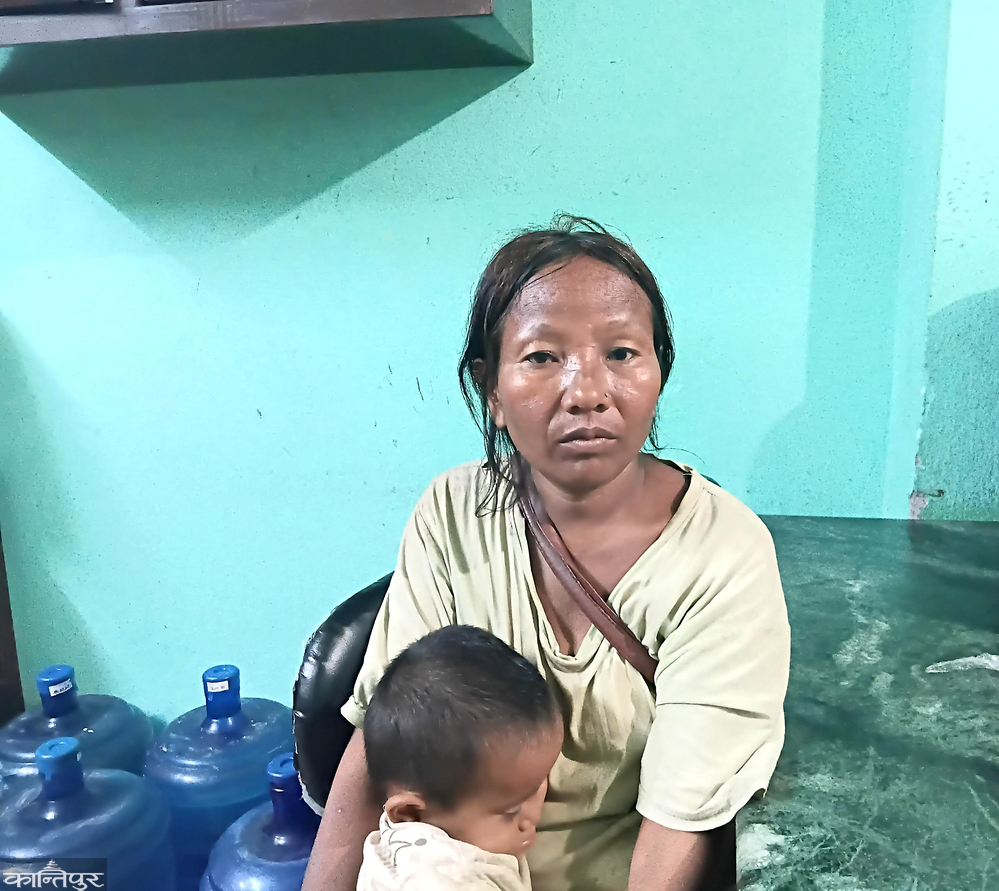
But times were not always the same. After the contractor did not pay her husband on time, they began to struggle to make ends meet. Due to the increasing debt, Sangeeta's husband was forced to go to Saudi Arabia just 5 months ago in search of employment. The entire responsibility of raising and educating her three children fell on Sangeeta's shoulders.
'It has been very difficult for him since he has also been in a supply company there (Saudi Arabia). There is no good work, the salary does not come on time,' she sighed, frowning, 'I have three children, I wake up early to see their faces, they all depend on me. How can I feed them alone?'
After it was confirmed that the dozer would be running in the house she lived in Shantinagar, she searched the streets of the city for three days continuously, looking for a room. But the bigger the city, the smaller the hearts of the people here seemed to her. As soon as she saw the little children, the family immediately said 'no'. 'They wouldn't give us a room after seeing the children, I barely found one in one place, and then they refused to give us another room because there were too many children,' she said with tears in her eyes. She is wandering around with her 18-month-old baby in her arms, hoping to find somewhere to stay.
Sangeeta's two children, aged 7 and 8, studied at the nearby 'Koseli' school. It was a school run by an NGO, where the school provided everything from paper and pens to lunch and snacks, which was a great relief. 'The school is opening from tomorrow,' she said, pointing to the two children who were giggling nearby. 'I don't have an address, where can I keep them, how can I send them to school?' मेरो त दिमागैले काम गर्न छाडिसक्यो ।’
काठमाडौं उपत्यका विकास प्राधिकरणको तथ्यांकअनुसार शान्तिनगरमा ४७६, गैरीगाउँमा १६२, थापाथलीमा १४३, गोठाटारमा ७७ र मनोहरा टोलमा १३ परिवार यसरी नै सडकमा आइपुगेका छन् । उनीहरूलाई प्राधिकरणले कीर्तिपुरस्थित राधास्वामी सत्संग व्यास आश्रम र राजधानीका विभिन्न सस्ता होटलमा रात बिताउन पठाउने मेसो मिलाइरहेको छ ।
प्राधिकरणका इन्जिनियर डोरकाजी श्रेष्ठका अनुसार आइतबार साँझसम्म सम्पर्कमा आएका मध्ये ३३ घरपरिवारलाई कीर्तिपुर र ६२ घरपरिवारलाई विभिन्न होटलमा पठाइएको छ । उनका अनुसार अन्य परिवारलाई पनि होटलमा पठाउने तयारी थालिएको छ । होटल व्यवसायी महासंघका अध्यक्ष टीआर भण्डारीका अनुसार बालाजु, गोंगबु र मित्रनगरलगायतका क्षेत्रमा करिब ७ सय जना बसोबास गरिरहेका छन् ।

