According to the data of the health office, the problem of malnutrition is more common among children living in urban areas than in rural areas, the main reason of which is the effect of junk food.
We use Google Cloud Translation Services. Google requires we provide the following disclaimer relating to use of this service:
This service may contain translations powered by Google. Google disclaims all warranties related to the translations, expressed or implied, including any warranties of accuracy, reliability, and any implied warranties of merchantability, fitness for a particular purpose, and noninfringement.
A doctor couple from Birganj came to the Nutrition Rehabilitation Center at Narayan Hospital in Birganj on Sunday with their only child, an 11-month-old daughter. According to the age of the couple's daughter, a doctor working in a separate hospital in Birgunj, should have weighed at least 7.5 kg, but it was only 5.5 kg. Sarita Yadav, head of the center, asked the doctor couple about the food they were giving their daughter and the amount of nutrition in it.
In that sequence, it was found that the food of that girl was high in protein and low in carbohydrates. In addition, Yadav held that the taste of the food served to the girl did not match and the schedule did not match. "The doctor couple was giving their daughter food that did not taste sweet, high in protein and low in carbohydrates in the name of healthy food," says Yadav. The weight of the son is 10 kg and the height is 88 cm. Daughter's weight is 6.5 kg and height is only 77 cm. She gave birth to these twins in her sixth pregnancy. Earlier there were only 5 daughters. Now he has 7 children including 6 daughters. Do not have your own farm. A husband employed in an industry has no employment after the industry is closed.
In both these cases, the financial status of the parents and the number of children are different. It has been found that even the doctor couple did not give their children general information about the amount of food and the nutrition found in it, so their children became victims of malnutrition. It has been found that Rita Devi could not give nutritious food to her children due to poverty and lack of awareness. Yadav, the head of the center, also says that the lack of knowledge about nutrition among the parents and the tendency to not pay attention to the problem of malnutrition until they see it in the body of the children has not reduced malnutrition in children.
She said that the problem of malnutrition among children is increasing due to the tendency of parents to give more prepared food like noodles, biscuits, masham, chowmin. The tendency of some parents to send such prepared meals to their children in the school tiffin has resulted in malnourishment in the children. She said that some children who come to the
treatment center come back to the center malnourished even after returning home from the center healthy. In this way, due to the tendency of not paying attention to children's diet, it seems that the problem of malnutrition in Terai-Madhesh is being created more by the parents. The data of the
center for the last 5 years shows that instead of decreasing, the problem of malnutrition is increasing every year. Of the 142 children admitted to the center for treatment in 2020, 131 were severely malnourished. Out of 136 admissions in 2021, 114 were severely malnourished. In 2022, out of 190 admissions, 157 were severely malnourished. In 2023, out of 196 admissions, 158 were severely malnourished.
In 2024, out of 175 admissions, 157 were severely malnourished. Apart from this, the local level of the district has run an 'Outpatient Therapeutic Center' for the treatment of malnourished children. Raju Sah, head of health division of Birganj Metropolitan Municipality, says that this center is operating in 8 wards of Birgunj Metropolitan Municipality - 14, 18, 19, 20, 21, 25, 28 and 30.
has given the responsibility of head of paramedics nursing and AHEV as focal person in the center in each ward. The metropolis has given 7 days of training to its 66 human resources to bear the responsibility of the center. In addition to this, every month vaccination campaign, vitamin 'A' and 'Albendazole' feeding campaign, pregnant women who come to village clinics, health posts, and children who come with women who come to get family planning tools are also checked to determine if they are malnourished.
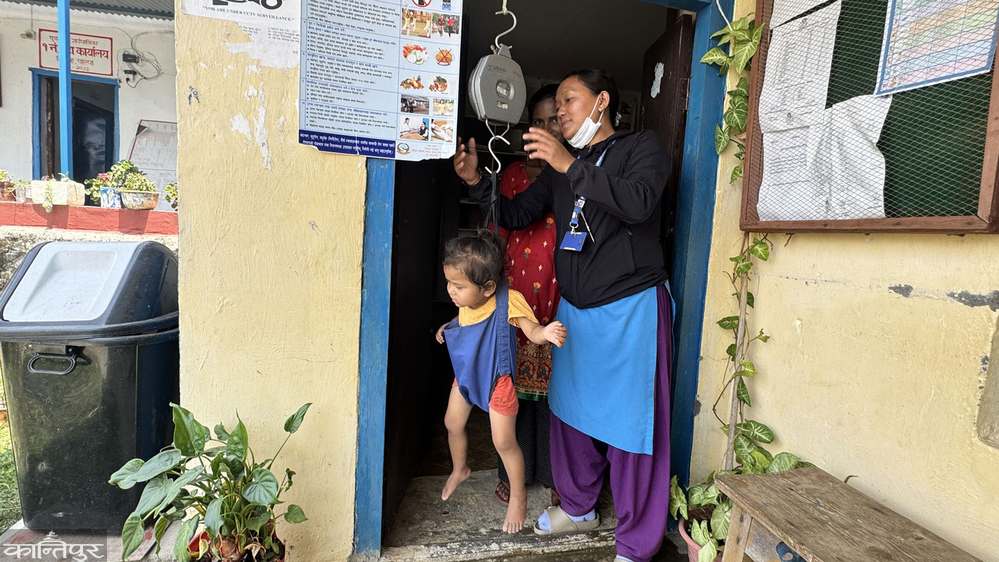
Children who come in contact with the center are assessed for age by measuring their weight and arms to determine if they are malnourished. Children diagnosed with malnutrition are given ``RUTF'' in the form of nutritious food under their supervision. Along with this, 'Shakti Vita' which contains micronutrients is also given. Their health status is checked every seven days. Sah says that if he is not healthy for 42 days, he will be referred to the nutritional rehabilitation center at Narayani Hospital in Birganj.
District Health Office Officer Anil Mishra said that there are 45 'out-patient therapeutic' centers in various municipalities of the district including Birganj metropolis. There should be such a center in every ward, but the local levels have not been able to make full arrangements for it. Currently, there are 5/5 centers in Thori and Jirabhavani Rural Municipality, 6/6 in Jagarnathpur Rural Municipality and Parsagadhi Municipality, 2/2 in Patervasugauli and Sakhuwaprasauni Rural Municipality, 4 in Bahudarmai Municipality, 1 in Pokhria Municipality, 1 in Kalikamai Rural Municipality, 2 in Dhobini Rural Municipality and 3 in Chhipharmai Rural Municipality.
According to the latest standards of the World Health Organization, the problem of malnutrition in children is determined if the weight is not according to the height, says Yadav, the head of the Nutrition Rehabilitation Center. She said that there are 3 types of malnutrition in children which are usually stunted and hungry, underweight according to age and lack of micronutrients. Generally, the height of a newborn baby should be at least 50 cm and the next year should be 25, the third year 12.5 and the fourth year 12.5 cm, she said.
annual expenditure of millions, the problem of malnutrition is the same
Narayani Tharu's 29-month-old daughter Shivam of Ribdikot rural municipality-5 Kusumkhola in Palpa weighs 7.8 kg. A healthy two-and-a-half-year-old child should weigh 12 kg and be 33.5 inches tall. Due to the lack of clean food, girls are also voracious. He was referred by Kusumkhola Health Chowki to Poshan Seva Kendra Khasyauli, which treats severely malnourished children without hospitalization. The Center has referred the girl to the Child Nutrition Rehabilitation Community Health Center operated by the United Mission Hospital in Tansen. Narayani, who lives in someone else's house, could not even take her daughter there for treatment.
'We have to send her to Lumbini Provincial Hospital,' Malati Vick, the focal person of the Outpatient Nutrition Treatment Center (OTC) of Khasyuli Primary Health Center said, 'We have asked her to take her to the nutrition center operated by the First Mission Hospital to get advice.' But Narayani has not taken her daughter anywhere. Due to poverty, his family came here from Bardia to work and live in someone else's house. Vick said that the Tharu family could not feed the girl due to financial poverty. Health workers say that the child should be admitted to the hospital because he cannot even swallow food.
One-year-old Lisma Mashrangi Magar of Rambha Rural Municipality-1 Hungi has been kept in the Child Nutrition Rehabilitation Community Health Center for two weeks and fed soft food because she does not have the appropriate weight for her age. Chola Darlami of the center said, "When she was brought here, she did not even put her feet up properly. There has been a lot of improvement now.'' Parents left the house and went to wage labor and could not give time to them, so they could not gain weight according to their age. Lisma's weight should be 10 kg, but she was only 8.5 kg.
According to Family Health Profile, the number of children under 5 years of age in the district is 13 thousand 381. Vishwa Neupane, program officer of the Health Office, said that in the search for malnourished children with the help of the Lumbini provincial government last financial year, out of 8,729 children participating from 10 local levels, 112 children were found to be malnourished. Of which 69 are moderately malnourished and 43 are severely malnourished. Officer Neupane informed that according to the data, 184 moderately malnourished people and 41 severely malnourished people were found based on weight and height. It has been found that children with malnourishment have large heads, small bodies, and age-related weight loss.
Babies usually weigh 3 kg at birth. Looking at the average weight and height, a baby should weigh around 9.2 kg and be around 29.2 inches tall in one year. A two-year-old child should weigh 12 kg and height should be 33.5 inches. A three-year-old should weigh 14.2 kg and have an average height of 37 inches. A four-year-old should weigh 15.4 kg and be about 39.5 inches tall. A five-year-old child should weigh about 17.9 kg and have an average height of 42.5 inches.
Health workers say that children may have nutritional problems if they do not get nutritious and balanced food during pregnancy and delivery. According to health workers, malnutrition at a growing age has a bad effect on physical and mental development as well. Children with malnutrition problems are more at risk if they are not treated in nutritional homes. The district had nutritional treatment centers (OTC) at 12 locations in 10 municipalities till last year. This year, the Health Office has added 8 more centers.
Despite the government's huge investment, controlling the number of malnourished children is becoming challenging. Although the government has been spending lakhs of money in each district every year to end malnutrition among children, the number of malnourished children has not decreased.
The state, federal and local governments have been running various programs to improve the condition of undernutrition, stunting and underweight in children. According to Health Office Palpa, in the financial year 2081/82, there was a budget of 4.3 million to prepare a 'Family Health Profile' for the regular monitoring of mothers and children under two years of age who are in complex conditions at the community level.
17 lakh 40 thousand budget has been spent for the search of malnourished children through health workers. 5 lakh for orientation on integrated management of acutely malnourished children. 150,000 has been spent for orientation to the health workers of related drug stores, hospitals and pharmacies for breastfeeding promotion.
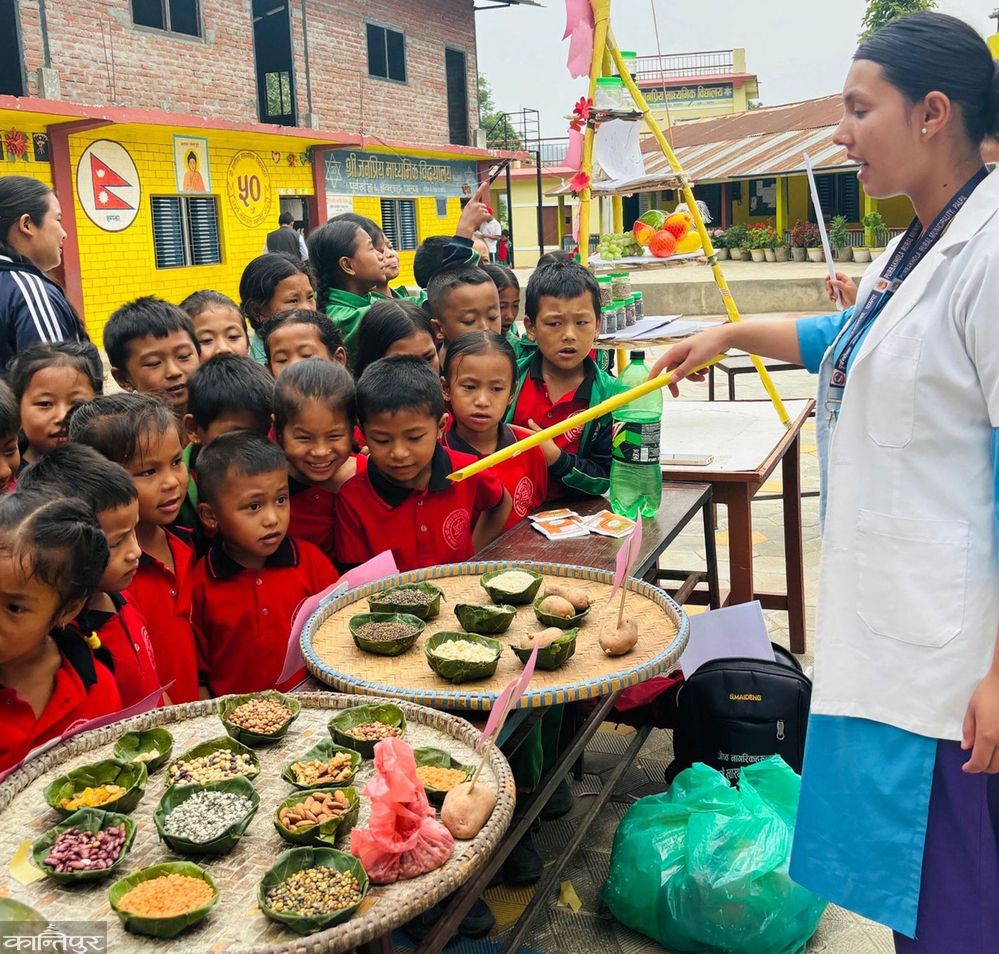
Prepared information about junk food and its health effects and spent 1 lakh for writing on walls in public schools. 150,000 has been spent on healthy food exhibition and training in the school. 3 lakh budget for orientation of health and nutrition programs to health teachers in schools.
The Acting Head of the Health Office, Tuk Prasad Pokharel, said that 6.3334 thousand was spent in the budget of 6.450 thousand under the health and sanitation program. Earlier in the district, various non-governmental organizations, including Suahara, also spent a large budget for improving nutrition.
The number of malnourished children has not been reduced every year according to the investment. It is claimed that the data coming out is only of children who go for testing at government health institutions. "We have gathered children under 5 years old and mothers in each ward and examined them," said Neupane, the officer of the health office.
Purvkhola Rural Municipality of the district has declared all the wards as nutrition-friendly with its own investment. According to Health Branch Head Mohan Dhakal, various awareness programs are held through all health posts. Due to which children have become accustomed to eating nutritious food. The municipality has allocated an annual budget of 1 lakh for that. Sunil Adhikari, Head of Health Branch said that Ribdikot rural municipality has spent 4 lakhs. In almost all municipalities, their own municipality spends from 1 lakh to 4 lakh for nutrition. In addition to the local government, the federal and state governments have been investing in this program.
According to the data of the health office, the problem of malnutrition among children living in urban areas is higher than that of rural areas, so the effect of junk food (junk food) may be the effect of the health office of Palpa, Pokharel said. Health Office Palpa also checked the malnutrition condition of 4 thousand 831 children in the district in the year 2080/81.
During the same examination, severe malnutrition was observed in 7 children from Tansen and 13 from Rampur. In the earlier tests, 28 people were found to be severely malnourished. In recent times, the number of malnourished children is increasing due to foods such as noodles, noodles, chowmin, biscuits, cream, coke, lage from the market rather than the traditional ones.
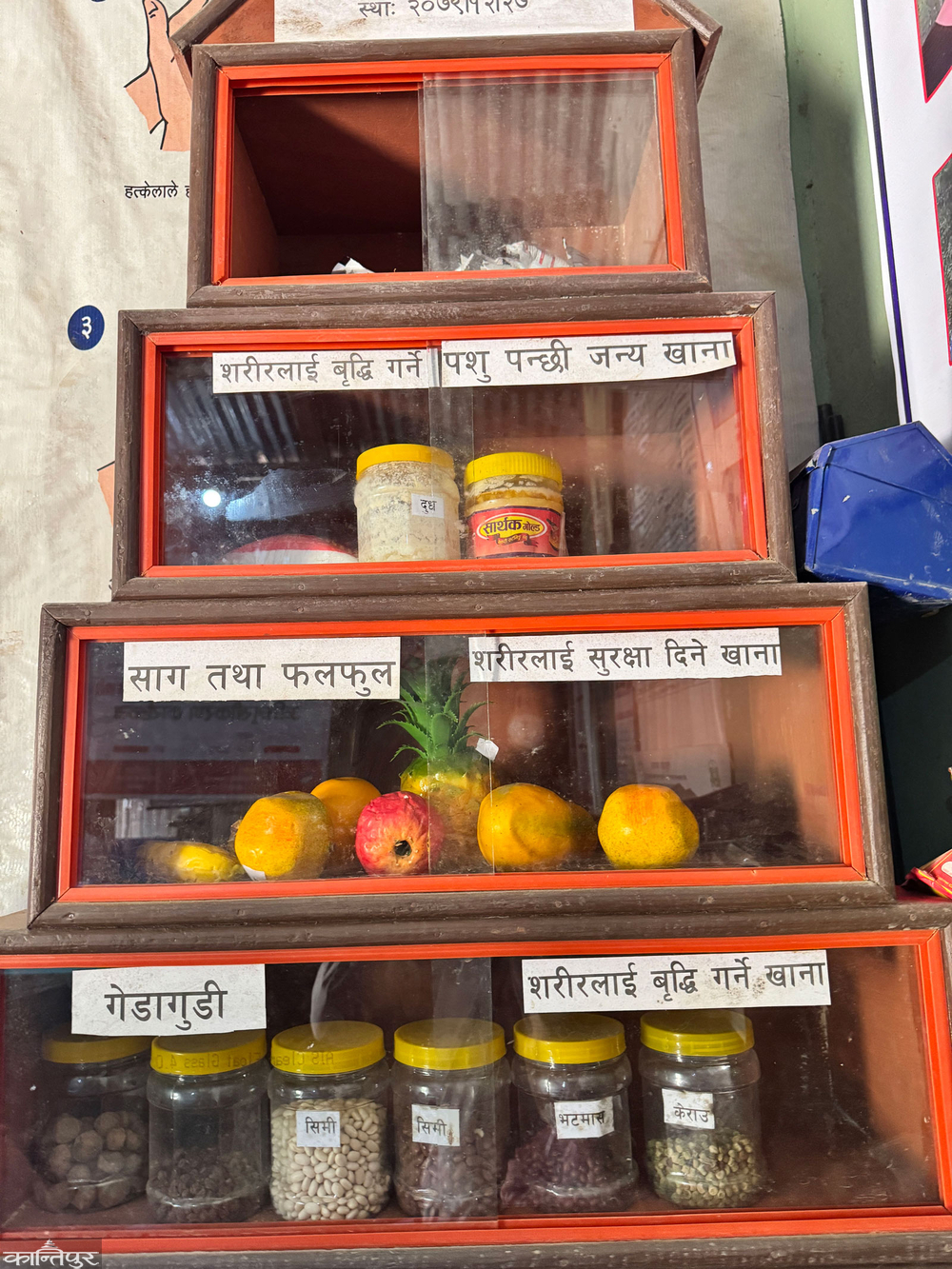
In order to improve the condition of malnutrition, health workers suggest to eat traditional food, home-made food, green vegetables and fruits. Severely malnourished children are referred to rehabilitation centers for treatment. They have to be treated in a nutritional treatment center for three months with their parents. Nutritious food is served there as per the schedule. But getting malnourished children to treatment is a problem.
Due to economic and social conditions, some people cannot stay outside their homes for a long time. Parents complain that some do not know about the treatment of malnutrition and the right to feed nutritious food. Ramma Bahadur Rayin, Vshi Bahadur Rayin, said that the family of malnown children could be caught in pregnant, health institutions, poor economic conditions, and NBSP;
-BREAK SPECIAL SPECIAL DIeen's Procession Directoes said that the current nutritional Redemption Directorate has been obtained with a special service generosity and spokesperson. According to him, 60 million has been spent 60 million every year under the nutrition program in Lumbini. He said that the breast-hospital service was in 14 schools of the state. "He said," He said, 'He said,' I said, 'I am "in identity identity and treatment of malnutrition.' & Nbsp; Spokesperson of Spokesperson of
schools said that the nutrition education program program was conducted through health workers. He also said that the program was also used for the social lunch in the current fiscal year. He said that the child's province hospital Dang and Very hospital Nepalgungunj is operating on Lumbini Regional Dang and Very Hospital Hospital Nepalgunj. & Nbsp; Chairman of Ramuva village Palpa, chairperson of Ramva village Palpa, said that the use of malnutrition and traditional nutritious food increases malnutrition. "We have tried to promote there," he said. However, poverty and lacking family is difficult to improve malnutrition. The government is aimed at 10 percent of Pukocrats, Paddoshapana, and reduce weights to 10 percent in 4 percent.

