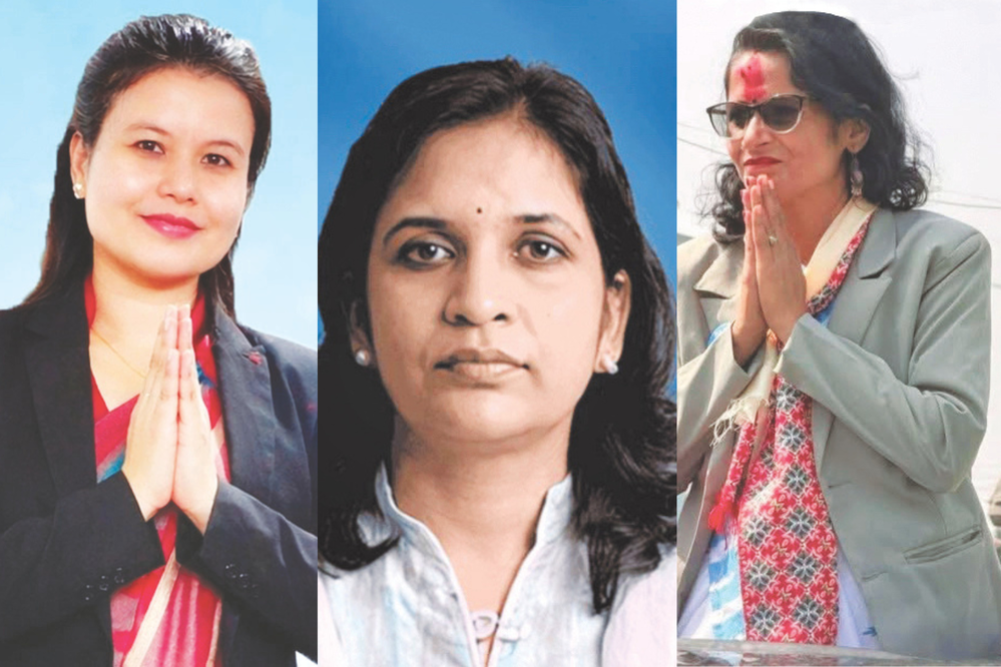
In the 21 Falgun 2082 elections, three Madhesi women from the Rashtriya Swayamsevak Sangh (RSS) defeated their nearest rivals by a wide margin. Asha Jha was elected from Morang-5, Pushpa Kumari Chaudhary from Saptari-1, and Gauri Kumari from Mahottari-4.
We use Google Cloud Translation Services. Google requires we provide the following disclaimer relating to use of this service:
This service may contain translations powered by Google. Google disclaims all warranties related to the translations, expressed or implied, including any warranties of accuracy, reliability, and any implied warranties of merchantability, fitness for a particular purpose, and noninfringement.
Sitadevi Yadav and Chitralekha Yadav of the Nepali Congress are the Madhesi women who won the direct election from Siraha. After leaving the RPP and joining the then Madhesi Janadhikar Forum, Renu Yadav not only won the election from Saptari, but also became the vice-president of the party.
In the 2079 general election, UML's Julie Mahato won the direct election from Dhanusha and Jwala Sah from Bara. Kiran Yadav of the Nepali Congress, who was a candidate from Mahottari twice, also failed in the 2082 election. Although 33 percent participation of women in parliamentary politics is ensured, Madhesi women are reluctant to contest the election directly, but if the party has to field a candidate, there is a tendency to field 'unsafe' areas. It is a great courage for Madhesi women, who are attracted to proportional representation, to dare to contest the direct election.
In the 21 Falgun 2082 election, three Madhesi women have won by a wider margin than their nearest rivals. Coincidentally, all three female candidates are from the National Independent Party (NISP). Amidst the 'Balen Lahar' in Madhesh, 42-year-old Asha Jha from Morang-5, 36-year-old Pushpa Kumari Chaudhary from Saptari-1, and 54-year-old Gauri Kumari from Mahottari-4 won the election by a wide margin.
Jha was a new face for Morang-5, which has a majority Madhesi community but mixed population. Jha defeated veterans and old candidates including Shiva Kumar Mandal of the NCP who had already won the election from that area, independent candidate Yogendra Mandal who won the 2059 election, and Rajkumar Yadav of JSP Nepal, and won the election by making the new face candidate of the Congress, Phul Kumar Lalbani, her closest rival. She got 30,434 votes while her closest rival, Lalwani, was limited to 9,415 votes.
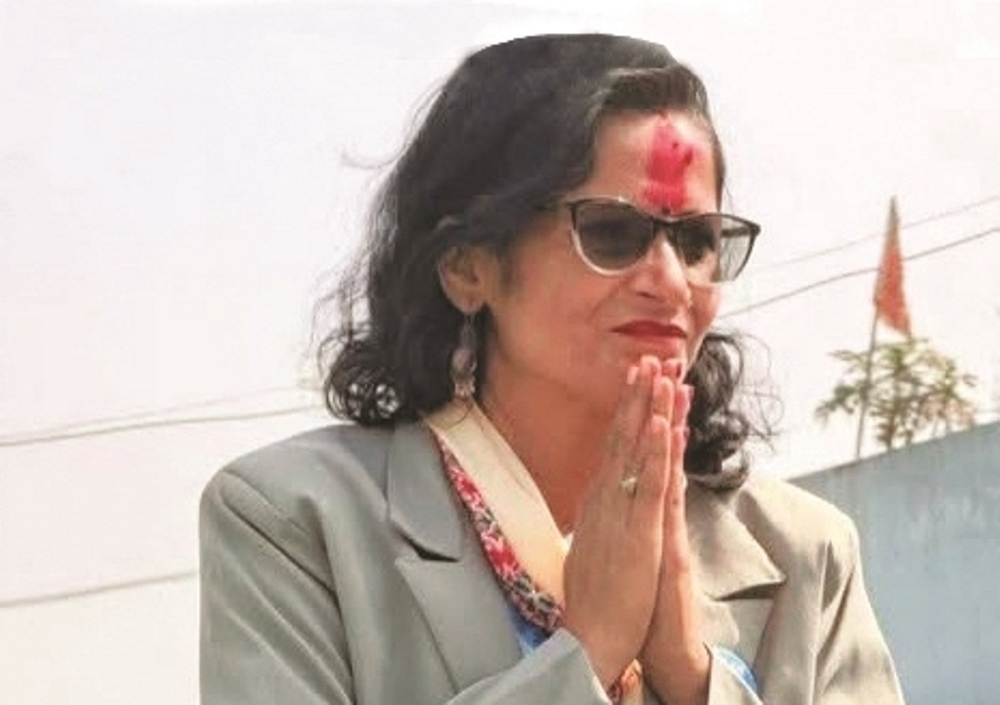
Active in various social and public health campaigns for about 16 years, Jha has made a name for herself as a female leader who works directly with the community. She was active in campaigns for women empowerment, health awareness, youth employment and social awareness. This experience and credibility gave her a different identity among the voters and paved the way for her to climb the ladder to parliament. ‘Because I worked in the social sector, I did not have to face many questions or criticism from the voters,’ said Jha, ‘I had heard that it is difficult for Madhesi women to contest elections directly, but I did not feel that way.’
She had been associated with ‘Gayatri Parivar’ and had been running programs related to moral and cultural education. She has organized various social and spiritual awareness programs and played an important role in volunteer management and community coordination. Her active participation has been seen in campaigns such as social reform, environmental protection and community awareness. Through the 'Madhesi Mahila Nagarik Samaj', Jha had been raising issues related to the rights, legal awareness and citizenship of Madhesi women. Jha, a graduate in education, promised to continue raising her voice on the issue of Madhesi women in the House of Representatives.
000
Mahottari-4 has its own story and suffering. This area, which is determined by including the south-western rural areas of Mahottari, is lagging behind other areas of the district in terms of basic needs. Mahottari-4, which includes all wards of Samsi Rural Municipality, Sonma Rural Municipality, Ramgopalpur Municipality and some wards of Aurahi Municipality and Manarashiswa Municipality, is also weak in development infrastructure. Education, health and employment, which are the weakest links in the Madhesh province, are becoming more common problems in this area.
The candidate elected by the voters of Mahottari-4 in the 2074 elections, Dr. Surendra Yadav of JSP Nepal, was the Minister of State for Health in the federal government for a long time. Mahendra Kumar Raya of the Nepali Congress, who won the 2079 and previous elections in 2056, has become the Assistant Minister for Industry, Commerce and Supplies. Saroj Kumar Yadav of the UML, who won the Provincial Assembly from (A) of Mahottari-4, also became the Chief Minister of Madhesh Province for a while. A new face, 54-year-old Gauri Kumari Yadav, emerged from Mahottari-4, which has 107,606 voters, in the 21 Falgun 2082 election. She got 30,132 votes, beating the veteran candidates of that region by a wide margin.
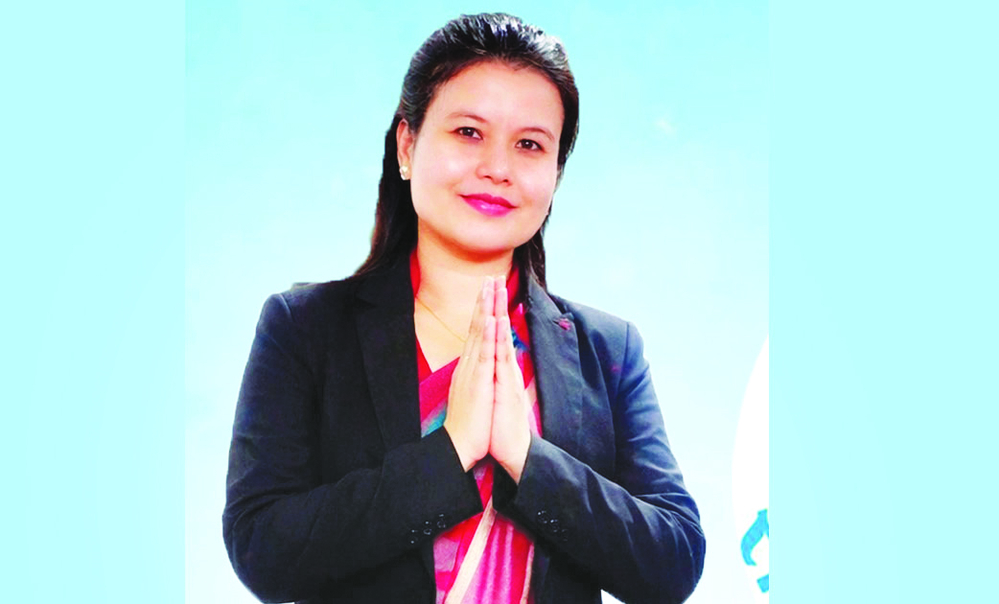
The winning Rashtriya Swayamsevak Sangh candidate Gauri's closest rival, Dr. Yadav of JSP Nepal, was reduced to 8,742 votes. Mahendra Kumar Raya of the Nepali Congress was limited to 6,944 votes. Although the UML candidate Neelam Adhikari was a new face, she could only get 6,192 votes. Bharat Prasad Sah, who resigned from the provincial parliamentarian and became a candidate from the NCP, could only get 5,336 votes.
Gauri, a resident of Sangrampur in Samsi Rural Municipality of Mahottari, grew up in the local environment. She is closely familiar with the social structure, geographical conditions and life of her area. This experience has established her as a leader who understands local problems and finds solutions. Gauri has studied up to the certificate level in the Faculty of Science. She says that she has made education and social awareness the basis of her public life. ‘There are problems in Mahottari-4.’ I am familiar with many problems,’ said Gauri. ‘In Madhesh, there is a mentality that only men can solve problems.’ I have resolved to break that.’
Stating that she will continue to raise the issues of women empowerment, good governance and social reform, she said that she will now take those agendas to the policy level through Parliament. Gauri's political journey is connected to a new political trend. She showed her activism by joining the National Independent Party with the slogan of alternative politics and transparency. Despite having to compete with candidates from established and influential parties in the election field, Gauri said that voters trusted her because she based her agenda on education, social awareness and change. 'I especially understand that we should go for an educated female leadership,' says Gauri, 'I was successful in attracting voters with that alternative approach.'
000
The biggest problem of Saptari constituency No. 1, which touches Udayapur district through Beltar to the southern part of Saptari, is the flood, inundation and erosion of Saptaki. Voters in the coastal areas are grappling with this problem more closely, and illiteracy, poverty, unemployment and health complications are more painful than the suffering of Saptaki.
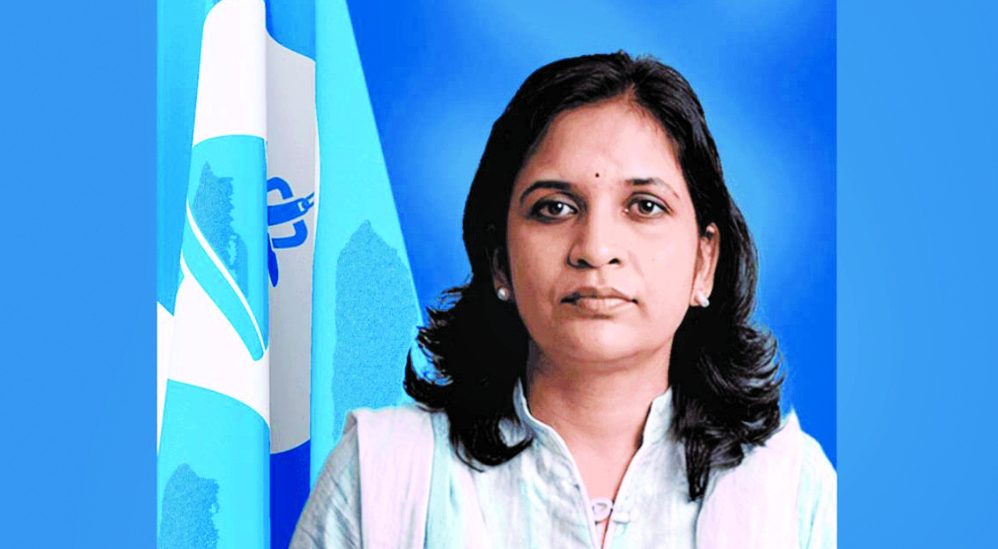
Saptari-1, formed by merging Saptakoshi Municipality, Agnisair Krishnasawaran Municipality, Tirhut Municipality, Kanchanrup Municipality and Hanumannagar Kankalini Municipality, has 119,043 voters. In the 2048 election, Hiralal Chaudhary of UML, in the 2051 and 2056 elections, Jayaprakash Gupta (Anand) of Congress, in the 2064 election, Hemraj Tated of Madhesi Janadhikar Forum, in the 2070 election, Manpur Chaudhary of Maoist, in the 2070 election, Suryanarayan Yadav of Federal Samajwadi Party and in the 2079 election, Nawal Kishore Sah Sudi of Janata Samajwadi Party were elected from Saptari-1. After the multi-party system, Saptari-1, which gave a chance to candidates from almost all parties, has also trusted Pushpa Kumari Chaudhary of Rashtriya Swayamsevak Sangh (RSS) with a large number of votes in the 2082 election.
Rashtriya Swayamsevak Sangh (RSS) Chaudhary won by getting 38,195 votes. His nearest rival, Sumit Kumar Sah of Swabhiman Party, could only get 7,847 votes. UML's senior leader Sumanraj Pyakurel came third. Janmat Party President Dr. Jayakant Raut, brother of CK Raut, came fifth. Chaudhary Anami, from Theliya, Kanchanrup Municipality-11, Saptari, is a graduate. Born on 5 Mangsir 2046, she was previously a proportional candidate from the Rashtriya Swayamsevak Sangh in 2079. However, she was ranked fifth on the Tharu list and could not become an MP at that time.