Raithane food festival, research, writing and promotion work are now taking place in some places within the country as well. However, until this effort is continuous and organized, this heritage of taste will be lost forever!
We use Google Cloud Translation Services. Google requires we provide the following disclaimer relating to use of this service:
This service may contain translations powered by Google. Google disclaims all warranties related to the translations, expressed or implied, including any warranties of accuracy, reliability, and any implied warranties of merchantability, fitness for a particular purpose, and noninfringement.
Nepali Raithane food is not cooked in the shiny kitchen of a star hotel, but in the clay oven of the countryside. Be it a pile of phapar or gundruk pickle, bhakka, kaguno, unadi bread, wachipa, falgi, kinama, yomari, chiluk, ghopla, dhapra, ghungi...! These dishes are not only a taste, but also a symbol of the soil's aroma and identity.
In these plates, an interview with geography, signs with weather and intimacy with the community are mixed . The real taste of Nepalese food is flourishing in this soil and culture, from Kechna to the top of Everest, from Kakdvitta to Mahendranagar and from Taplejung to Darchula.
Bakka is a familiar dish in the kitchen of Jhapa's royal community. But they have another interesting dish, Khari Saag . The bottom of Athiya banana is dried and made into ash and greens are prepared by mixing it with juice. According to Raithane food entrepreneur Kedar Sharma, no other ash brings that flavor and energy . This knowledge has been handed down for generations, not a new invention.
Rajvanshi cuisine has a hint of Bengali flavor, as their style of cuisine matches that of West Bengal . In the mountains, the food of the Sherpa community is energetic and nutritious, thukpa, mashm, potato roti, rikikul, chyang and hot ghee tea are the main ones . 'Champa' (satu) and 'phaplo' (corn) are sown for winter . The tradition of preserving corn is the same among the Sherpas and Karnali of the East, but the style is different. The Jumlis make the 'Kole' dish by growing the dried corn in the okhal .
The tradition of preserving food by burying it is still alive in Jumla. The practice of 'curd burying' started by Ramakant Acharya around the year 2026 has now been revived by activists like Elamka Sharma . In a trial conducted five years ago in Jumla and Ilam, curd that had been buried for months had a sour taste, but the experience was interesting .
'Wachipa' is a special dish in the Kirant community. Wachipa is prepared by roasting local chicken feathers and mixing them with spices. Another important food is 'kinama', which is made by 'fermenting' soybeans. According to another operator of Raithane Khanal, Prashant Khanal, it has direct signatures with Japan's Nato and Thailand's Thuwano. Another popular dish is 'Yangben', which is prepared by boiling the plums found in the vegetation of the high Lekali area in gray water and mixing it with blood/meat.
Newari and Thakali cuisine have familiar flavors but Manang's 'Chilluk' (a dish made by drying yak fat) and 'Chinti' (yak's blood) are considered special. 'Dhapra' is prepared from the soup of phapar leaves.
Raithane food is not only meat, there is a variety of wine. Ayala of Newar, Mahua of Tharu and Gusli liquor . Gusli is made from mango koya flour, mahua from fruits like cherry . The tribals of Terai prepare liquor by using the Raithan technique by 'fermenting' various fruits and grains .
Nutritionist Dr. According to Aruna Upreti, Raithane food is not only about taste and culture, it is directly related to health . Grains, vegetables, herbs and spices produced in a way that is in harmony with nature are sources of nutrition. Materials such as millet, sorghum, maize, gundruk, chino, kaguno, sisnu, ghat, soybean, copper, and timur are rich in fiber, iron, calcium, vitamins and antioxidants, which increase immunity and keep the digestive system healthy . Helps prevent diabetes, high blood pressure, obesity and heart disease. She says, "Raithane food is beneficial from the economic and health point of view". Because it is cheap and effective.'
Tharu kitchen cold soil, sweet taste
Among the tribal communities, Tharu are considered to be the best in food. Their festivals, daily life, yams and traditions all revolve around food .
Tharu community has a tradition of eating four times a day . In the morning basi ganas (light snack), followed by 'kalwa' (breakfast), afternoon 'midhani' (light snack) and at night 'berry' (meal). At night, alcohol and meat are served as a special snack. Bam Bahadur, a Tharu folk poet of Rupandehi, says, 'Meat, fish and alcohol are indispensable in our food.'
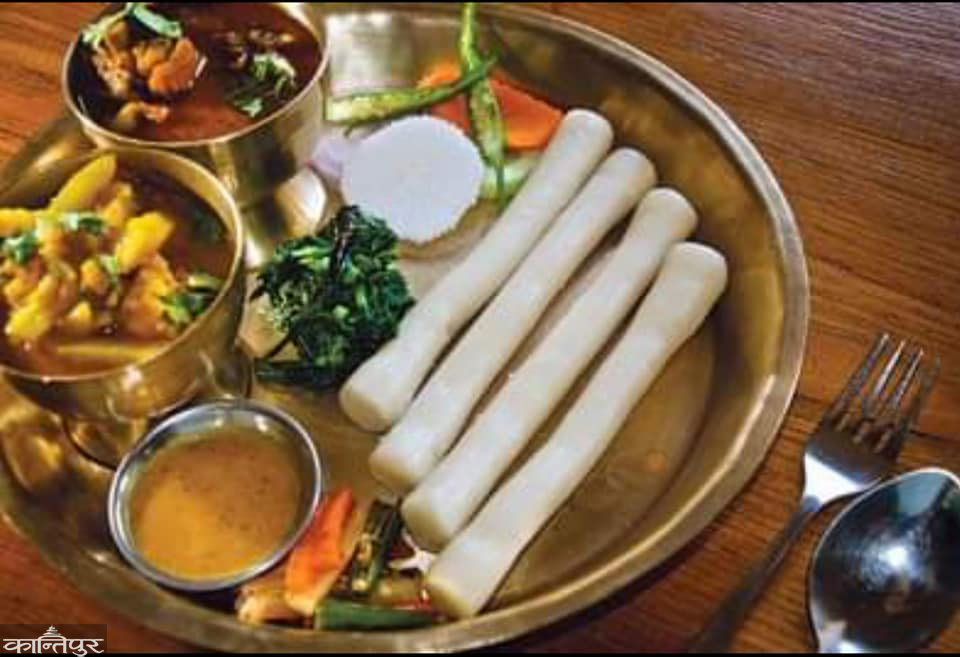
In Tharu Sumdaya, wine made from various grains is tasted like rat, gangto, and bam fish. But the taste of Tharu food is not limited to liquor and meat. It combines the gift of nature, the creativity born of hunger and the memory linked to tradition. Dhikri Kharia, Andik Baria, Ghungi are not just the menu of a hotel, they are the identity of Tharu life .
In this community spread from Jhapa to Kanchanpur, along with the geography, the taste and style of food also changes . The Tharu of the East and the Tharu of the West do not have the same language, nor the taste of the kitchen . Not only from one Koshi to another, but also among the Tharu groups within the same district, there are different tastes of food and different customs.
Tharu scholar Krishnaraj Sarvahari says, "The lifestyle of the Tharu community has a deep connection with forests, rivers, and fields". The same relationship is reflected in their food. Bagiya is the favorite dish of Tharus in the east, while Dhikri is more popular in the west. Although both are made from rice flour, there is a difference in taste and style of preparation. Bagiya is prepared by steaming vegetables or a knife inside, like Yamri of Newars.
Dhikri is made by kneading rice flour into a round or round shape, and steamed and eaten with pickles or vegetables . "It's not just a taste, it's a food that carries intimacy," says Adhyeta Sarvahari. There is a saying in the Tharu community, 'food burnt on leaves not only preserves the taste, but also the memory.' Maas dal, wheat-rice flour, garlic-ginger, turmeric, chili and other spices are ground in the leaves of the crab. The leaf is 'rolled', stretched, cut and only after frying and turning golden, it is placed on the plate . Andik Bariya is another simple yet delicious dish of the Tharu community . A small roti is made by mixing egg flour and sugar, after frying in oil, it swells .
Ghungi (or 'ghongi') is a favorite food of both East and West . These small creatures found in the river are used to chew the soil by scattering rice grains overnight. It is then cooked in a spicy broth with spices, onions, tomatoes, garlic, and rice flour.
Today, these village dishes are not only limited to the village stoves, but have also started entering the menu of big restaurants in the city . According to Raithane Khana activist Kedar Sharma, Tharu and other tribal tribes are rich in folklore and biodiversity.
History hidden in Raithane flavor
There is not enough basis to tell when the history of Nepali Raithane food began. But one thing is clear, it is related to human history . Whenever, wherever he migrated, he made his culture of taste in association with the nature, soil, climate and biological diversity of that place.
From the mountains to the Terai, from the east to the west, different castes, tribes and communities created dishes according to their customs and seasonal products. In the Himalayas, the combination of jumli marsi, phapar, sisnu, potato and herbs created a deep tradition of taste . Madhesh decided his taste by making rice, milk, pulses and vegetables as the main basis .
Nepal's food story is different from political history. Kirant period, Malla period, Shah period or Rana period . In all these periods, food served as a tool to identify class, culture and power. The Malla rulers incorporated the cuisine of the Newar community in a classical form . Through the Rana rulers, foreign styles were introduced, the canteen dishes started entering the palace .
Things were completely different from village to village. The folk life there preserved the food in the traditional style . Kedar Sharma, a scholar of Raithane cuisine, says, 'The history of food is not found in books, but in the soil.'
In 2076, he toured 48 districts tasting Raithane dishes in the year 2076, tasting Raithane dishes. He adds, 'Rather than who ate what, where did that person live, what was the biodiversity there, what was the folk technology, determines the origin of Raithane dishes.' Whether or not, the sink method. All these are traditional techniques .
Sharma is also concerned, 'When the biodiversity and folk techniques disappear, Raithane food will also disappear.' So he is now planning to promote Kiranti food dishes on Mundum Padmarg. How to protect and promote
?
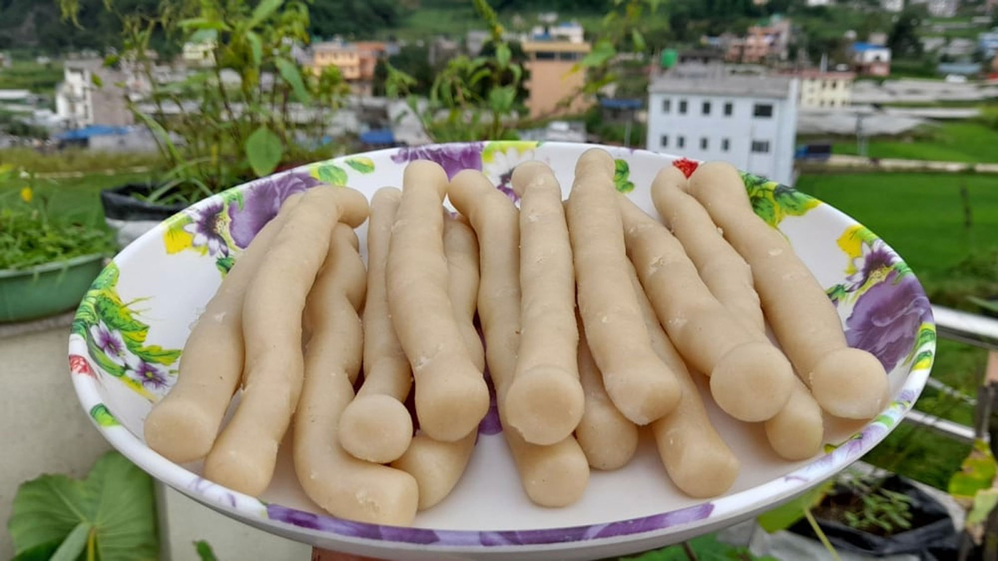
The Nepali Raithane Food Festival held in Beijing, the capital of China on 7th Baisakh, tried to spread the aroma of Nepali taste on the international stage. Original dishes like Yomari, Juju Dhow, Kaguno Kheer, Chatamari, Choila, Kachila, Bara, Gundruk and Mustang Aloo were introduced through the program.
Even within the country, recently efforts are being made at various levels to protect and promote Raithane food . The wave started by the Raithane Food Festival in Jhapa a few months ago has now reached other districts. In collaboration with the local level, civil society and the private sector, an initiative is underway to re-identify Raithane taste.
Raithane food activist Sharma argues that the food can only be saved by bringing it to the market, not by keeping it in a museum. "Until Raithane food reaches the market, its preservation is not possible," he claims, "the time has come to stop looking at food only as a culture and consider it as an economic resource."
Prashant Khanal, another activist of Raithane Khana, has been searching, tasting and writing original dishes for a decade. The food blog 'The Gundruk.com' started by him in 2013 brought the variety of Nepali food into the digital world. A year and a half ago, he has published a book 'Timmur' with recipes of Raithane dishes.
"Raithane food is not only about taste, but also the history, geography and identity of the community," says Khanal, "It is important to collect and respect the knowledge we have been eating but wasted." In it, he has tried to cover all the Raithane dishes of all castes . He says that dishes like Kanchemba of Thakali community, Rikikul Roti of Sherpa, Butter Chukouni and Batuk (Fulaura) are the most demanded. "Preserving our taste means preserving our society, agricultural system, lifestyle," he says.
These dishes, which have different tastes and preparation methods depending on the location and community, are not only a means of food, but also a gateway to cultural heritage and economic potential. Raithane foods, which are ingrained with Nepal's regions, castes and geography, are disappearing. Some have lost their names, some are still living in Kuna Kandra . But, even they are not safe anymore .
The Ministry of Culture, Tourism and Civil Aviation has claimed that it is engaged in conservation, promotion and marketing of endangered food. Alok Prasain, leader of the working group formed by the ministry and campaigner of Raithane food, says, "So far, more than 40 percent of Raithane food has been lost". We have to run to save the remaining 60 percent.'
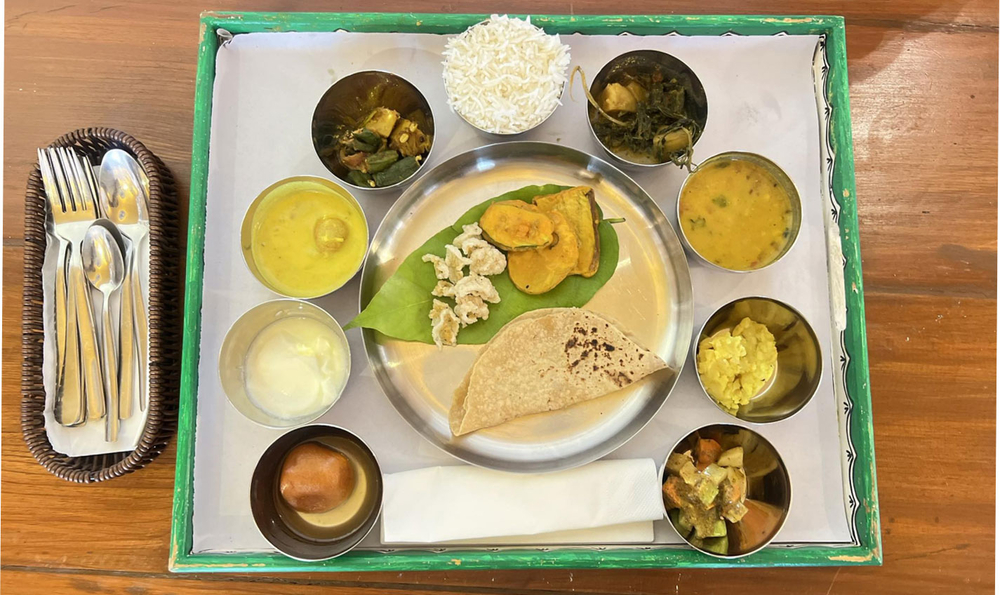
He has been searching, studying and analyzing Raithane food across the country for one and a half years. He shares his experience, "The problem was seen in food production, marketing is also weak". It is becoming difficult to save as the food does not find a market. According to
Prasain, the dishes that the caste used to make, have now become a victim of their changed lifestyle. He adds, "When they left the village and went to the city, they also left their food, and the taste of our tongue started to change as Raithane food could not compete with the imported dishes."
There are 142 castes in Nepal. Most of them each have their own distinct dishes, cooking styles and cultural meanings. There is not only taste in that food, but history, tradition and lifestyle are also dissolved . Now a campaign has started to bring those dishes to the menu of the city . According to Prasain, efforts are being made to include Raithane food in the menu of star hotels including Kathmandu, Pokhara, Chitwan, Jhapa. He claims that it can not only preserve food but also create jobs.
Prasai says that if Raithane food reaches the market, farmers will be encouraged to increase their production, self-employment based on local skills will also be developed. "Raithane food should not be kept in museums as cultural heritage, it is time to bring it back to our kitchens," he says.
Raithane food festival, research, writing and promotion work is being done in some places within the country. However, until this effort is continuous and organized, this heritage of taste will be lost forever!
...
Raithane food menu
Limbu/Rai – Kinama, Wachipa, Sisnu Jhol, Yangben-Faksa
Tharu – Ghungi, Bagia, Gangto, Kharia, Gasira Fish, Kachari, Baria, Chichar, Dhikri, Sidrak
Rajvanshi – Bakka, Fish-Muri, Khari Sag, Pith, Puwa
Sherpa – Falgi, Towa, Rikikul, Champa, Ghee Tea, Faplo
Newar – Yomri, Bara, Juju Dhau, Choila, Kachila, Fini, Khude Roti
Thakali – Kanchemba, Jhilinga, Chiluk, Dhapra, Chinti
Gurung/Magar – Phapar Roti, Sis Jhol
Jumli – Marsi Bhat, Gundruk, Anadi Bread Stores, Shatuk Tamang Tamang Tamang Tamang Tamang Tamang, Sandhi, Conduk, Conduk, Sundar, Sundays, Potato-Bark Raute - Apples - Apple Sukoti, Wild potatoes, Vegetables
Khas / Arya - Chim, Kick, Khatna, Shaking, Shakhi, Shatakas Sukuti, Barley's Lamb, Rot

