The mouth-watering craving for rich, balanced and tasty Thakali food, which started from the Thakkhola of Mustang, has become the identity of Nepal and is spreading all over the world.
We use Google Cloud Translation Services. Google requires we provide the following disclaimer relating to use of this service:
This service may contain translations powered by Google. Google disclaims all warranties related to the translations, expressed or implied, including any warranties of accuracy, reliability, and any implied warranties of merchantability, fitness for a particular purpose, and noninfringement.
After going down Sinamangal, on the left side of the road leading to old Baneshwar, on the second floor, you can see - 'DDS Thakali Kitchen.'
Sometimes there is such a crowd in the evening that it is difficult to get inside as it is outside. Even those who walk in do not get an empty chair/table. Sometimes they have to return hungry when the channel gate is suddenly locked because they are not able to enter.
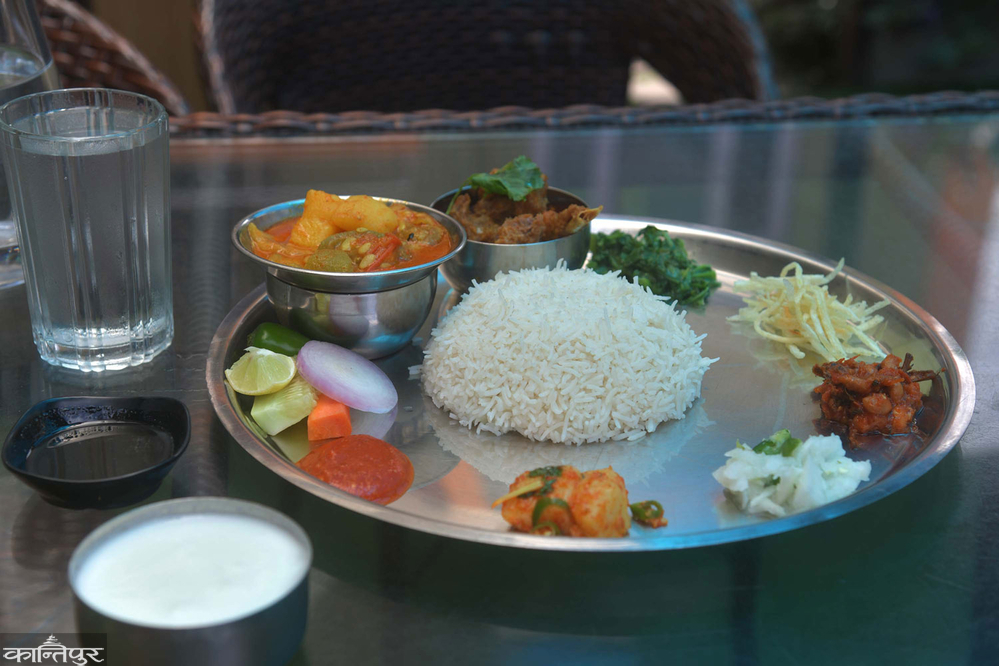
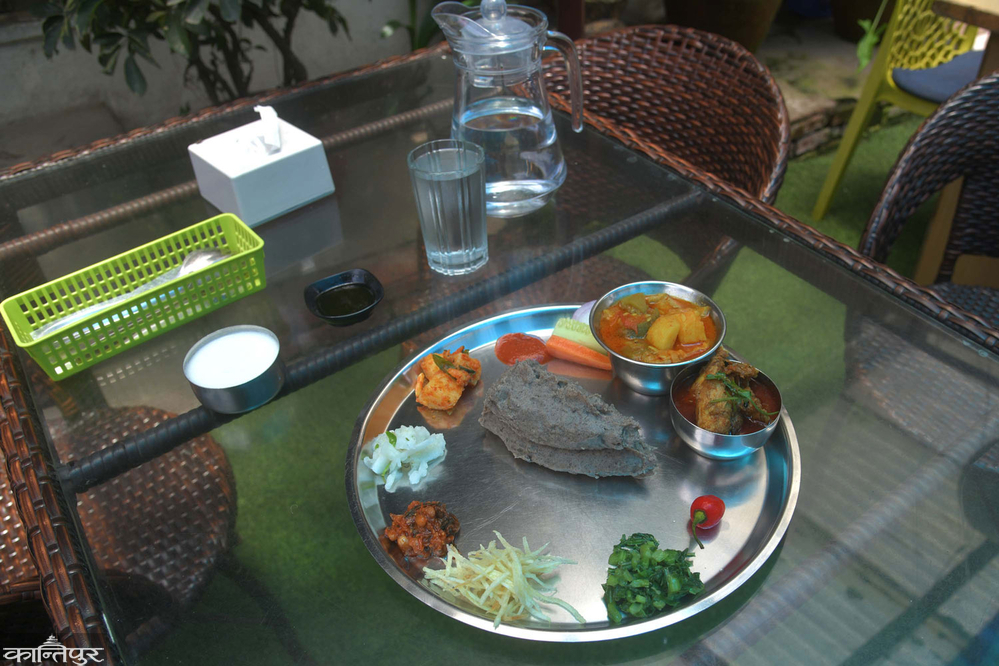
The main attraction here is the 'Thakali Khana Set' only. Nothing special. Served on a brass plate, mouth-watering mounds or steaming local ghee-drenched rice. Jimbu Jhaneko Mustang's Raithane Bodi Dal or Mass Black Lentils flavored with ginger and pure ghee. Pickle with Gundruk and Timur. May the hatred of the village be erased.
chicken in local Thakali flavor. Garnish of Raithane khanki with Himalayan herbs and yarcha pasture grown changra or yak sukuti, boar dish, Zhwainkhatte prepared from pure millet etc. These dishes make your mouth water.
64-year-old Krishna Gauchan, the founder of this kitchen, which started two decades ago, says, ``Sometimes there is a rush of customers like a flood. From 5 pm to 12 midnight, the customers are still busy even when the rice is cooked. Even when they close the door, they are asking from the courtyard saying, "Sahuji, is there food?" The gate should be closed and food should be served.'
Leyte Thakali Kitchen in Naxal in Kathmandu, Mantra in Jhamsikhel, Jimbu in Meenbhavan, Mustang Thakali in Buddh, Tukuche Thakali in Gairidhara all have to face crowded kitchens with families like DDS in Sinamangal on holidays.
Krishna is the president of the regional committee in Kathmandu of Thakali Seva Samiti established in 2040. He is engaged in the protection and promotion of his community's art, culture, food, etc. He is surprised to see the 'craze' of local/foreigners towards Thakali food in recent years.
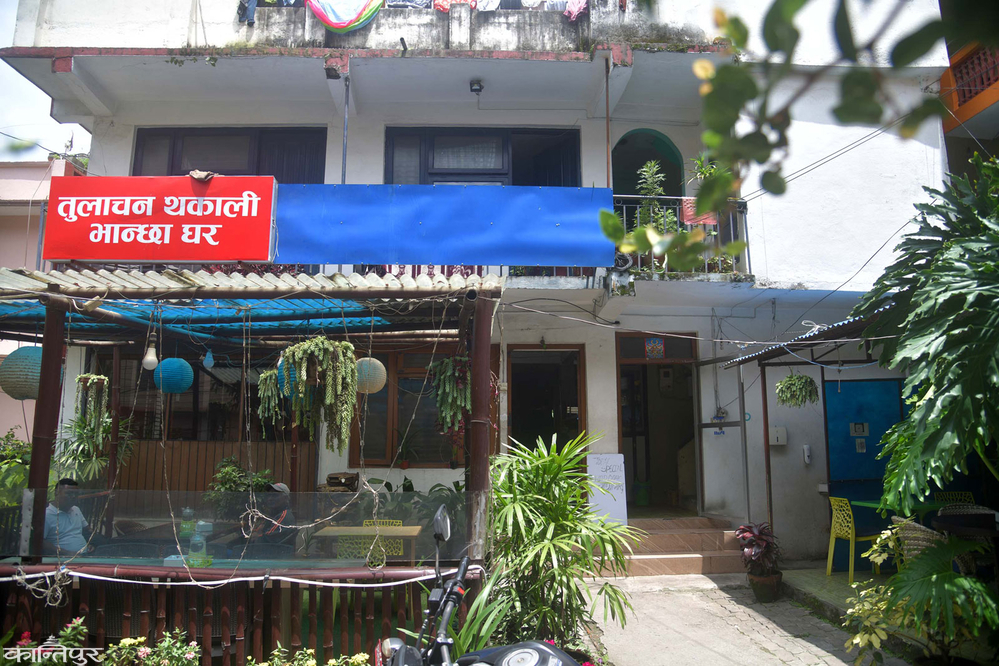
'When Tukuche Thakali was opened in Darbarmarg/Uttaradhoka in the 40s, it seemed that only the elite Saharias entered,' Krishna said, 'Laylin Sherchan started Thakali Kitchen in Thamel around 50 years after Tukuche. Later he expanded its branch to Sundhara. The Thakali kitchen that I opened is the third in Kathmandu.' Krishna entrusted the cooking in that kitchen to his wife Poonam Tulachan.
When Krishna opened a kitchen in Sinamangal in the year 2058, Renudevi Tulachan also opened a kitchen in Tinkunne Garigaon. In the early years, a plate of rice with local chicken jhol was available there for Rs 65. "At that time, 2/3 people used to come to eat Thakali food," Renu's son Rakesh said, "Now we have fed Thakali food to 250 people a day." Now a set of local chicken meat and rice costs 500 rupees.'
Now, Thakali kitchens are not only in Kathmandu, Pokhara, Butwal, but in all seven provinces. As the Nepalese spread in the diaspora, Thakali kitchens also expanded. Thakali food, which originated in Mustang's thakkhola, has reached the city of Manhattan in America today.
Tezendra Tulachan, president of Thakali Samaj Pokhara, says, "Earlier, Thakali used to go down to Pokhara, Butwal, Kathmandu to spend the winter from October to February. Wherever they went, they used to trade food.' According to him, in Thakali's kitchen, sukuti of Changra pastured in the Himalayas was cooked, Himalayan herbs were used in it, and pulses soaked in Chaunri's ghee were used. Raithane liquor was sold from apples, barley and lice. Tejendra says, 'After the time of King Mahendra, when the Thakalis came out of Thakkhola in search of opportunities, food became an identity and spread to the villages and towns.'
According to Gajendra Tulachan, central president of Thakali Seva Samiti Nepal, during the Nepal-Tibet war (1788-1792), the Gorkhali army used to travel back and forth to Tibet through the old trade route of Mustang, Tukuche, Thasang region. At that time, Thakali, who had a good knowledge of the geography, climate and Tibetan language, played a great role in guiding, translating and gathering information for the Gorkhali army. Later, Jung Bahadur Rana built four forts from Tukuche to Ghasa and gave the local Thakali the red seal.
Those who helped in the war also received the title of Subba. Diplomatic relations improved after the war. Thakali played a leading role in business operations. After that, this route became a path for mules from Pokhara, lahure from Batauli, tourists, etc. "It seems that the current homestay (Gharbas) started a century ago in Thakali," said President Tulachan, "Earlier there were no hotels like now." Thakali welcomed guests from outside into his home. Takali khanki chakhae.'
Now Thakali's kitchen is slowly getting under the control of Gairathakali. Now the kitchens are scattered. The practice of keeping workers from other communities has also started to be seen in the kitchen," said Munu Gauchan, the owner of Lete Thakali Kitchen in Naxal, "Thakali food is especially tasty. The hospitality of the Thakali community is also full of heartiness.'
According to Gajendra Tulachan, who migrated from Myagdi and lived in Bhotebhal, Kathmandu, during the Rana period, when Thakali migrated from Thakkhola to operate copper and iron mines in Mygdi, Baglung, Parbat, Kaski, the aroma of Thakali dishes also spread. "Nowadays, fatigue everywhere, fatigue has reached the kitchen," he says.
Raithane ingredients found in the Thakali kitchen, Radipakhi made from sheep's wool, wooden sticks, woodwork, tools, and the welcome of the waiter decorated in Raithane clothes give the impression that you have arrived at Thakkhola. But everywhere in the cities including Kathmandu, there are boards that say 'Thakali set is available here', but you can't get the taste of 'authentic' Thakali food in all of them.
Thakali Kitchen Association was established in Kathmandu in 2077 to prioritize clean and orderly kitchens reflecting Thakali culture, original and tasty food, fast and friendly service with a smile and customer satisfaction. "Recently in Nepal, the tendency to open Thakali kitchens without adopting the principles adopted by Thakali kitchens has been increasing," Vivek Tulachan, the president of the association, said, "Some Thakali intellectuals and businessmen active in Kathmandu have established the association to discourage distortion and confusion."
About 70 Thakali kitchens in Kathmandu are working to spread Thakali food in the country and abroad, to maintain the originality and quality of Thakali kitchens and food, to promote the Thakali food market at the national and international level. "We are expanding the brand at the international level through the trademark of Thakali Kitchen by bringing uniformity in the production and service delivery of Thakali food," said Vivek, who is operating T3 Thakali Kitchen at Kathmandu Airport.
Even foreigners who come to visit Nepal forget about other things, but they don't forget to taste Thakali. Timur, jimbu, garlic and local ghee add uniqueness to the taste of Thakali food without too much oil or heavy spices. That is why this food is being listed on the menus of Thakali restaurants in many places in London, New York, Melbourne and Tokyo today.
Many foreign food vloggers and writers praised this dish as 'the taste of the mountains', this dish is not only a taste, but also an identity of Nepalese. This Saturday, don't forget to sit down with family and friends to enjoy a delicious meal in the kitchen, not with a spoon, but with your hands!

