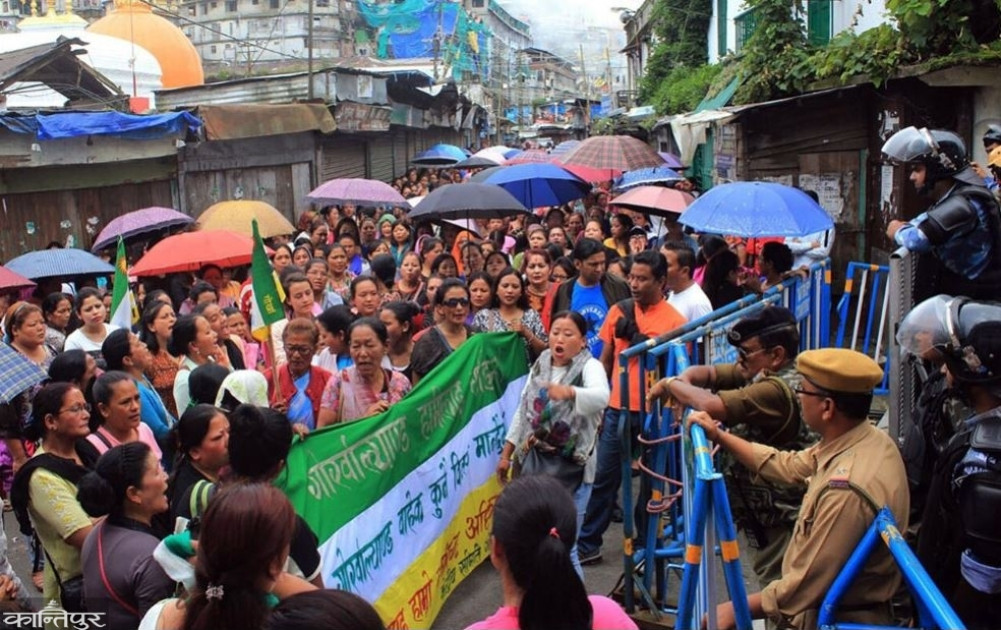
With the BJP's historic victory in West Bengal, Nepali-speaking communities in Darjeeling, Kalimpong, Kharsang and Dooars have revived hopes for the possibility of a Gorkhaland state. But whether or not Gorkhaland will be achieved ultimately depends not on the hills of Darjeeling, but on the political will of Delhi.
We use Google Cloud Translation Services. Google requires we provide the following disclaimer relating to use of this service:
This service may contain translations powered by Google. Google disclaims all warranties related to the translations, expressed or implied, including any warranties of accuracy, reliability, and any implied warranties of merchantability, fitness for a particular purpose, and noninfringement.
An old question has resurfaced in the hills of Darjeeling: 'Will the path to Gorkhaland be opened or not?'
This question is not new. This demand has been rising and falling for more than four decades - there have been movements, agreements, new autonomous structures have been formed. But a separate state has not yet been created. Now that same hope has arisen again - this time for a new reason.
On May 9, 2026, the Bharatiya Janata Party (BJP) came to power in West Bengal with a clear majority for the first time. Mamata Banerjee, who had ruled Bengal for 15 years, was ousted. BJP leader Subhendu Adhikari took oath as the Chief Minister. With this political change, in the Nepali-speaking majority areas of Darjeeling, Kalimpong, Kharsang and Dooars, this result is not just seen as an electoral victory, but as an opportunity to achieve Gorkhaland.
But this hope is not new. The BJP has talked about the rights and entitlements of the Gorkhas in every election in the past, and every time it has come to power, it has faded away. The difference this time is that for the first time, there is a single party at both the Centre and the state, and according to Gorkhaland supporters, there is no excuse anymore. But there are obstacles in the way: geopolitical sensitivities, Bengali political identity, and decades-old unanswered constitutional questions. To understand these obstacles, it is important to understand the history of Darjeeling, because this demand is not a recent one.
Darjeeling first wanted to separate from the East India Company. That was in 1907. After the end of the British Raj in India, the demand for a separate state in the name of a provincial council or Gorkhaland was raised repeatedly. On 22 April 1971, Subash Ghisingh was the person who coined the demand for a separate state as 'Gorkhaland'.
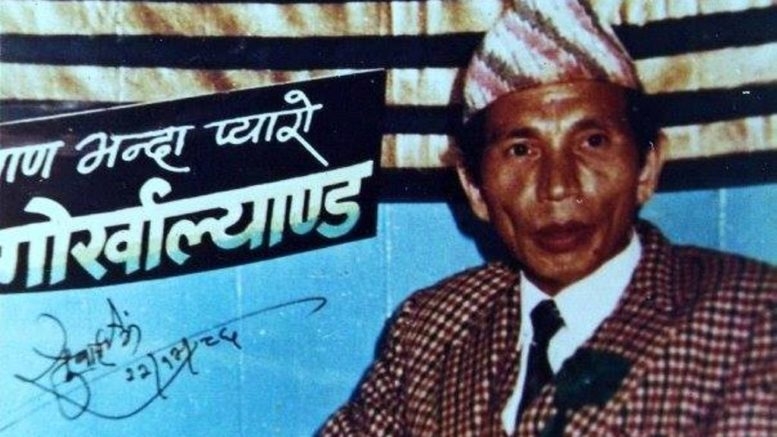
The violent movement that lasted for about two years from 1986-88 under Ghisingh's leadership is considered to be a little more famous. The history of the Gorkhaland movement is more than four decades old. During the movement, around 1,300 protesters have been killed repeatedly, there have been repeated shutdowns and violence, agreements have been reached, and new autonomous structures have been formed. However, a separate state has not yet been formed.
About 1,200 civilians lost their lives in the Gorkhaland movement led by Subash Ghisingh on 5 April 1986. Before that violent movement could reach its destination, it was stopped by the formation of the Darjeeling Gorkha Hill Council (Dagopap) on 12 August 1988 with the autonomy of 11 departments.
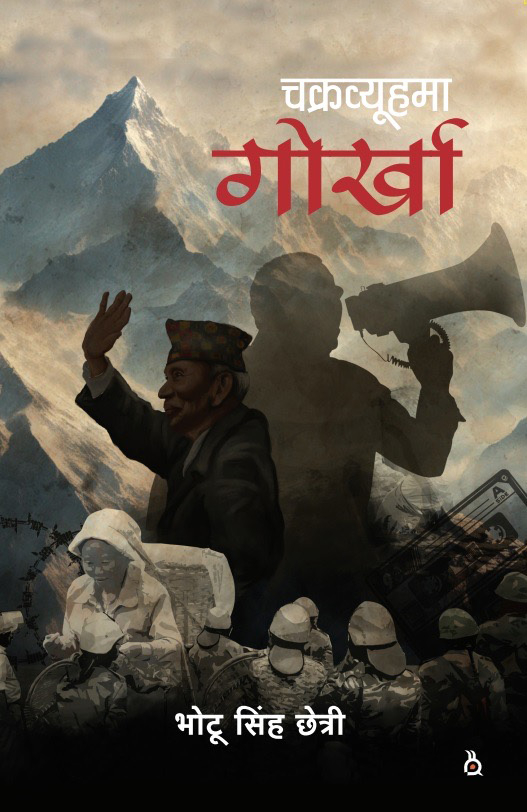
Ghising and the people of Darjeeling enjoyed this structure in return for Gorkhaland for a long time. However, after about two decades, not only did this system start to be questioned, but the demand for a separate state started to resurface. According to Bhotusinh Chhetri, author of the book ‘Gorkha in the Chakravyuh’, Ghising had been in power in Darjeeling since 1988. However, he was ousted from power for a small reason.
In 2004, when preparations were being made for the Dagopap election, the state government postponed the elections and made Ghising the ‘caretaker’ of the Hill Council until the ‘Sixth Schedule Council’ was formed. He spent that time supporting the Sixth Schedule. However, other parties in Darjeeling strongly criticized Ghising’s move. The Sixth Schedule would not be in the overall interest of the Gorkhas and it would only be a matter of finding an alternative to Gorkhaland. However, Ghising left the bill in parliament without getting it passed. Ultimately, that step began Ghising's downward journey.
Amidst that controversy, Bimal Gurung, who was considered his 'right-hand man', left the party. In 2007, when the entire Darjeeling region was rallying for the victory of Darjeeling youth Prashant Tamang in 'Indian Idol', Ghising remained silent. Taking advantage of that silence, Bimal became active in supporting Prashant. 'Public support surged towards Bimal,' recalls the then Dagopap administrator Tenzing Khampache, 'Bimal used that opportunity well.' From there, Ghising's political downfall began.'
Gurung, who rose after Ghising's fall, registered a party called Gorkha Janmukti Morcha on 7 October 2007 and revived the Gorkhaland movement that Ghising had abandoned. The Gorkhaland movement began to intensify on 3 November 2007. On 10 March 2008, the 'Supreme' of the Darjeeling Gorkha Hill Council, Ghising, not only resigned from his post, but also went into exile from Darjeeling and settled in Jalpaiguri. Ghising died in Delhi on 29 January 2015 at the age of 78.
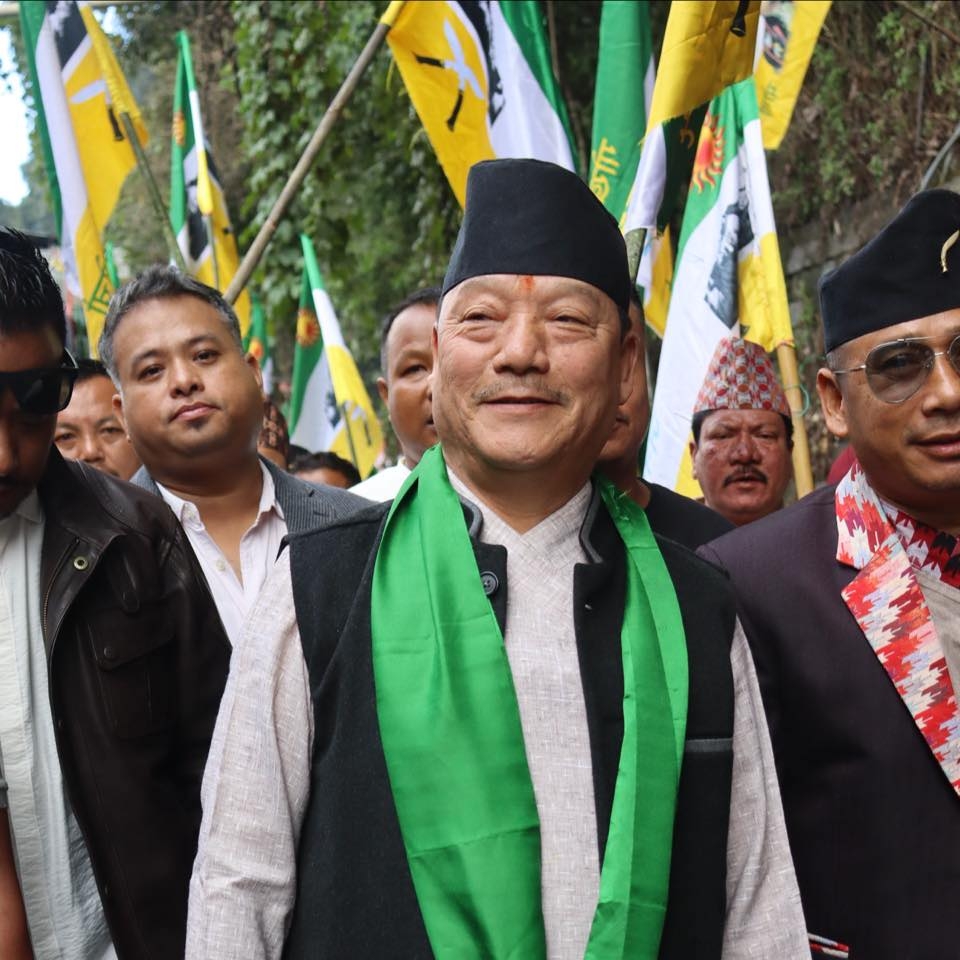
After the Gurung-led movement intensified, tripartite talks were held between the Centre, the state and the Gorkhaland supporters from 2008 to 2011. However, the result remained the same every time. Instead of a full state, some kind of interim arrangement was proposed, and that proposal tried to calm the movement. Protesters like Bimala Rai and Vicky Lama lost their lives, the movement flared up and died down, but the destination remained far away. Finally, on July 18, 2011, after a tripartite agreement, the Gorkhaland Territorial Administration (GTA) was agreed upon.
The Gorkhaland Territorial Administration (GTA) is now in existence in the hills as an alternative to the Gorkhaland movement. It has acquired some administrative and development-related powers in the Darjeeling hills. Some areas like education, agriculture, rural roads, culture, local development are under the GTA.
However, from the beginning, the opposition parties have been calling the GTA ‘incomplete autonomy’. Key powers like revenue, security, land, law-making are still under the control of the state government. Many Gorkha political groups in Darjeeling argue that the GTA does not resolve the core question of identity. That is why the movement has been flaring up from time to time. When the GTA was formed, Banerjee had only been in power in Bengal for two months.
With Banerjee's recent exit from the Chief Minister's chair after 15 years, the demand for Gorkhaland has started to flare up again in Darjeeling. After the Bharatiya Janata Party Darjeeling rose, the demand for a different system to be abolished has started to arise. In it, the pronunciation of Gorkhaland has not been heard from the mouth of any Gorkha leader. Bimal Gurung, who was once 'ready to die' for Gorkhaland, is also ready to put forward the demand for the Sixth Schedule. That is a demand that Subash Ghisingh has been raising for 20 years.
Another chapter of the movement
The background of the latest political explosion in Darjeeling is connected to the language movement of 2017. On May 16, 2017, the Banerjee-led West Bengal government decided to make Bengali mandatory in all schools in the state. It was announced that even private English-medium schools would have to teach Bengali as a second or third language.
The decision was readily accepted in most districts of Bengal. However, the Nepali-speaking community in Darjeeling perceived it as linguistic interference and encroachment on identity. The feeling of ‘forcibly imposing Bengali language’ spread rapidly in Darjeeling, Kalimpong and Kharsang regions. The movement began on 6 June 2017. The movement intensified after Gorkha Janmukti Morcha leader Roshan Giri announced that the decision would not be implemented. However, the movement was not limited to language alone. It revived the Gorkhaland movement that had withered after the formation of GTA. There was also a historical reason for linguistic sensitivity. In India, the Nepali language was recognized in the Eighth Schedule of the Constitution only in 1992. That recognition was achieved after a long struggle.
According to author Subash Sotang, the Nepali-speaking community saw that struggle as a question of its own existence. Therefore, the decision to make Bengali mandatory was not seen by the Gurkhas of Darjeeling as a general educational policy, but as a challenge to identity. On June 9, 2017, while the language movement was raging, the West Bengal government held a cabinet meeting at the Darjeeling Raj Bhavan. The protest turned violent. There were clashes between the police and the protesters. Government property was set on fire. The movement then spread from Darjeeling to Kharsang, Mirik and Kalimpong.
The state government launched a severe crackdown. Eight people were killed during the movement. A shutdown lasted for more than 100 days in the hills. After that movement, Bimal Gurung was charged with murder, arson, sedition and other charges. He went underground. Chief Minister Banerjee dared to make serious allegations that Gurung had conspired with armed groups in Nepal and northeastern India to foment the movement.
The Banerjee government promoted Anit Thapa to weaken Gurung. Later, the Bharatiya Gorkha Democratic Front was formed under Thapa's leadership and the leadership of the Gorkhaland Territorial Administration (GTA) also went into their hands.
Why has the hope of Gorkhaland suddenly faded?
According to Gorkhaland supporters, the current situation has changed. Both the central and state (West Bengal) governments are led by the BJP. In the past, when there were political differences between the central and state governments, the Darjeeling issue was limited to a game of blaming each other. However, that is not the case now, says Gyanendra Aryal, a local from Darjeeling who supports Gurung's Dal Morcha. Aryal says, 'We are confident that the BJP government will help create Gorkhaland.'
BJP has been promising to ensure the constitutional, political and linguistic rights of the Gorkhas in its past election manifestos. On April 21, at an election rally in Kharsang, Home Minister Amit Shah had promised that ‘the Gorkha problem will be resolved within six months of the formation of the government in the same way as the Gorkhas’.
On April 15, at an election rally in Gangarampur, Dakshin Dinajpur, Home Minister Shah had said that the Gorkha problem would be resolved constitutionally, but Bengal would not be divided for that. Shah, targeting the Gorkha community in Darjeeling, had said, ‘After BJP comes to power, we will not only develop an eco-adventure hub in the hilly region, but we will also resolve the Gorkha problem constitutionally, but not by dividing Bengal.’
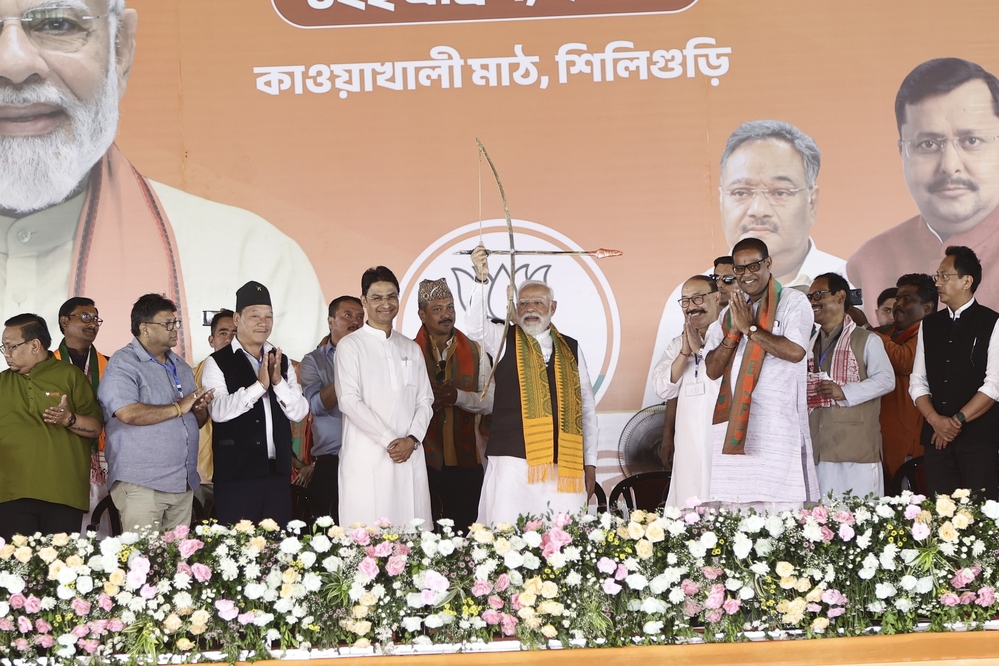
Earlier, Indian Prime Minister Narendra Modi, who had come to address an election rally on April 12, had also said that he would take initiatives for the rights and entitlements of the Gorkha community. Speaking in Nepali from time to time, he said, ‘The solution to the Gorkha problem is not far away.’ Pro-Gorkhaland voters were excited after this announcement by the Prime Minister at an election rally in Morakhali near Siliguri.
Modi had also said during the Lok Sabha elections 10 years ago that ‘the problem of the Gorkhas is our own problem.’ Darjeeling Lok Sabha MP Raju Bista termed the BJP’s historic victory in Bengal as ‘the people’s victory.’ He said, ‘The commitments made by the BJP before the elections will now be fulfilled.’ Stating that the people have given a clear vote for the abolition of GTA, Bista added, ‘Now a new system will come to Darjeeling.’
Many voters in Darjeeling have taken this as a positive sign. Hanok Thapa, a local journalist from Kharsang, says, ‘Earlier, the center and the state belonged to separate parties.’ Now there are fewer excuses. That's why many are hoping that something will change this time.' But some are also disappointed. Manju Pradhan, a teacher from Kalimpong, says, 'Before every election, the issue of Gorkhaland comes up. After the election, the mountains are forgotten again. It cannot be said that the same thing will not happen this time too.'
The biggest political obstacle on the path to Gorkhaland is considered to be the regional identity of West Bengal. According to CK Shrestha, former president of the Indian Gorkha Parishad, the umbrella organization of Nepali-speaking Indians, the Bengali political stream is almost the same on the question of division of Bengal, no matter which party comes to power. 'Even if the BJP government comes to power, the division of Bengal is a very risky issue politically,' he says. 'I am not convinced that Gorkhaland will come as soon as the BJP comes.'
 The West Bengal Assembly passed a resolution in 2023 saying ‘Bang Bhang Hobe Na’ meaning ‘Bengal will not be divided’. This resolution was moved by Trinamool Congress (TMC) MLA Satyajit Varman under Rule 185 of the Assembly. At that time, after some leaders of the Bharatiya Janata Party expressed their desire to make North Bengal a separate state or merge it with the North-East region, the TMC government brought a resolution against it.
The resolution opposed any attempt to divide West Bengal. However, it is not a constitutional amendment or legal provision passed by the Indian Parliament. It is a political resolution passed by the West Bengal Assembly, which expressed a political commitment to the integrity of the state.
The historical background of the slogan ‘Bang Bhang Hobe Na’ is even older. Its roots are linked to the people’s movement against the partition of Bengal by the British government in 1905. After widespread protests, the British government was forced to withdraw the division in 1911. Later, on August 5, 2024, the West Bengal Assembly again passed another resolution in favor of the state's integrity, opposing the proposal to merge North Bengal with the Ministry of North-Eastern Development. After that, 'Akhand Bengal' became an emotional issue in Bengali political consciousness.
Siliguri Corridor: Why is the Center cautious?
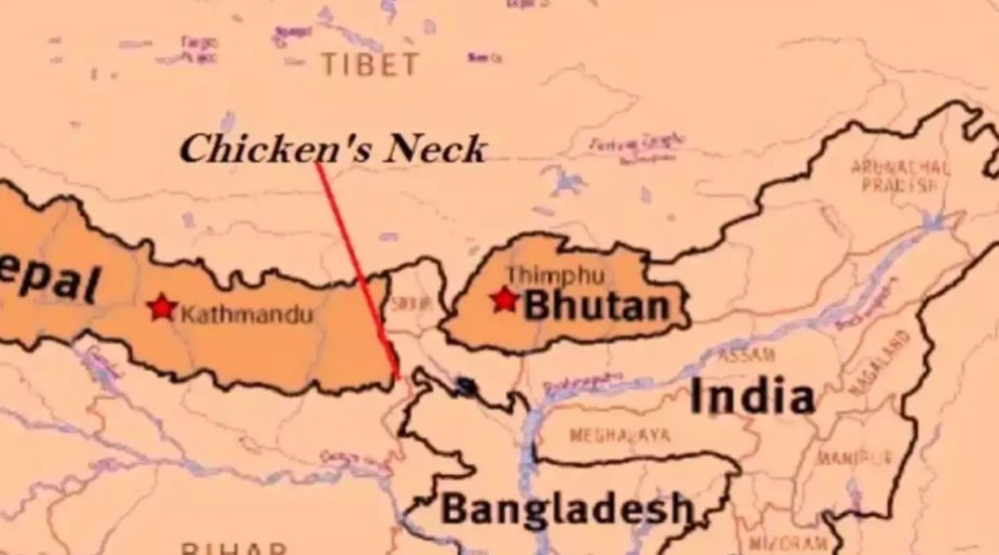
The question of Gorkhaland state formation is not only related to identity or regional politics, but also to national security and geopolitics. The Darjeeling-Dooars region is close to Nepal, Bhutan, Bangladesh and China. The 'Siliguri Corridor' in this region is considered India's strategic lifeline. This narrow strip of land, like a chicken's neck, connects the northeastern states of India with mainland India.
According to political analyst Shrestha, the central government has been considering this region to be administratively very sensitive for this reason. Shrestha adds, ‘It seems unlikely that the central government will rush to create a separate state immediately due to security and geopolitical reasons.’ Another sensitive issue linked to the Gorkhaland movement is the difference between Indian Gorkhas and Nepali immigrants.
The demand for Gorkhaland is not just a question of administrative boundaries - it is also a question of identity. For decades, Nepali-speaking Indian citizens have been viewed as ‘foreigners’ in their own country. According to Assamese journalist Rohit Gautam, the demand for a separate state is partly linked to this sense of insecurity. ‘Gorkhaland is not an administrative demand, but also a demand for the political identity and respect of Indian Gorkhas,’ says Gautam. According to experts, the immediate possibility of a full-fledged state is slim.
Rather, it seems more likely to give more powers to the GTA, increase constitutional protections or expand special autonomous structures. According to poet Raja Puniyani of Sukuna near Siliguri, there is no possibility of getting any additional arrangement other than painting over the old arrangement. ‘If the government wanted it, it could have given Gorkhaland earlier,’ says Puniyani, ‘it has not been given yet because it does not want to.’
A pattern is clear when looking at the history of Gorkhaland - promises before elections, silence after elections, and an interim arrangement in between douses the flames of the movement. Dagopaap in 1988, GTA in 2011, are both examples of this. Now the BJP is at the centre and in the state, and that coincidence has given new hope to Gorkhaland supporters.
But the geopolitical sensitivity of the Siliguri corridor, the deep-rooted sentiment of ‘Akhand Bengal’ in Bengali political consciousness, and the constitutional questions that have been unresolved for decades - these obstacles cannot be removed by a single election. Whether or not we get Gorkhaland ultimately depends not on the hills of Darjeeling, but on the political will of Delhi - and that will has never been fully tested.