Yogamaya cried in the hall while watching the scene where Jeetu was beaten up by the 'villain' in the movie 'Prem Yuddh'. Even when she reached home, she was still crying. She kept abusing the 'villain' who beat her son for three days. She kept saying, 'The one who beats my son?' She also reminded Jitu while shedding tears, 'Oh little one! Don't play a film that is beaten by others!'
We use Google Cloud Translation Services. Google requires we provide the following disclaimer relating to use of this service:
This service may contain translations powered by Google. Google disclaims all warranties related to the translations, expressed or implied, including any warranties of accuracy, reliability, and any implied warranties of merchantability, fitness for a particular purpose, and noninfringement.
At Kiriaputri Bhavan, there is a procession of loved ones who come to meet actor Jitu Nepal. In that crowd, he thinks he is alone, helpless and powerless. Jitu keeps swimming in the memory of his mother. The conflict between life and death keeps repeating in his mind.
In the sky of February, there is a lot of wind. Jitu's heart also felt cold on the day his mother passed away. "It is so thick that it will never go away," Jitu said in the beautiful Kiriyaputri Bhavan in Narephant, "My head felt like falling off." Now I have become an orphan.' After the departure of mother Yogamaya Nepal (1992 March 28-2081 February 4), Jitu felt even the soft sun in the sky like a sharp thorn. There is noise in the middle of the city, the Manohara river flows by the Kiriaputri building. But even in the midst of that noise and commotion, when the flood of Badema comes in Jitu's mind, it sounds like the Manohara of Urle. He is very sad, grief-stricken. "The future without a mother is full of despair," says Jitu, "Until the pain in my heart is gone, sorrow and pain will continue to be friends of life!"
In the eyes of comedians, Jeetu is a magnificent and elegant actor, but in the eyes of his close friends, he is a friendly friend. But, how can a son who has recently lost his mother be happy? He is - speechless, speechless like a child who is speechless. After the day his mother closed her eyes forever in Jitu's language, he is seeing darkness all around this world.
Jeetu shows the life style of small people who are living in real life, suffering, through his films and TV serials. Satire focused on the complex problems of Nepali society is his comic 'content'. His creations are the documents of the times in which the society lives. He is appreciated by the audience for the films 'Chh Ekan Chh', 'Wada No 6', 'Chhakkapanja Series', 'Chh Maya Chhapakkai', 'Jwaiinsaab', 'Karsang', 'Darpanchaya', teleserials 'Twakk Tukk', 'Jeere Khursani' and others. A decade ago, in the 'Jire Khursani' serial aired on Nepal Television, he was a representative character of the depressed unemployed youth of that time, telling the stories of people wearing sunglasses and glasses. Through humor, he joins the serious discussion of youth escapades, their hardships and sorrows. And, in this way, Jitu stood out in the line of comedians.
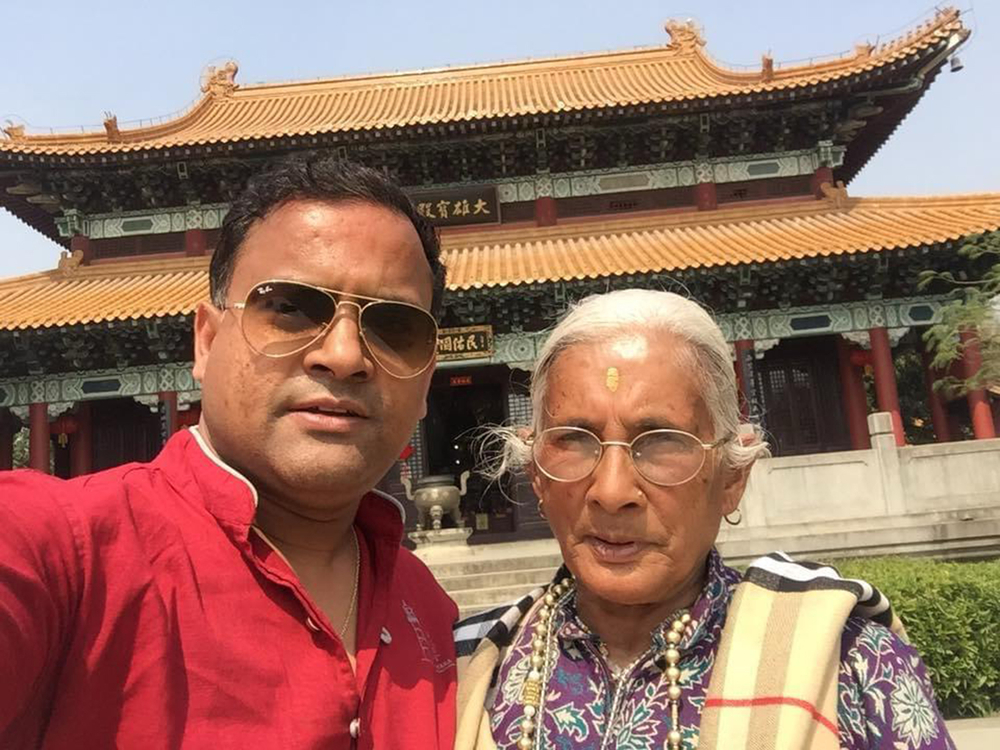
After the death of his mother, Jitu has realized that there is another existence in the human body, perhaps that existence is to be freed from the body and merge into the universe. The light in his face has been extinguished after the death of his mother. Jeethu saw his mother, who was dying of suffocation, slowly dying. In the latter part, Yogamaya Nepal was simply stuck - unable to walk or get up, unable to breathe due to asthma. However, he refused to go to the hospital. Two years ago she had a heart attack, after recovering one day Yogamaya said to Jitu, "The body is burning very much." Bring me some medicine!'
Jeetu said what kind of medicine, mother added, 'What is the medicine that goes up, it was very difficult, how is it yesterday! When you take it, you don't take it.'' She said again one day, 'It was very difficult for the younger one.' Don't give one injection, you will die! He was very upset. Jitu was with his mother at Lokantali's house till one o'clock the night before his death. She begged for water, she ate a bowl. Jeetu kept looking at the window, Yogamaya pretended to be asleep.
Jitu went to sleep thinking 'mother fell asleep'. He came early in the morning and called his mother, "Budhimau, good morning, Hare Krishna." Gotta get up now, get up.' Nasal oxygen, mask was lying on the bed and the machine was running. She was also lying down, a little bit left. The health worker came and said, 'There is no need to take her to the hospital.' There was crying in the house. While washing the feet of his mother who was sleeping in Aryaghat Brahmanal of Pashupati, Jitu thought - Oh! Fire burns in this goda. It happened immediately - hey! I became an orphan again. And again the tears fell. The days after mother left for Jitu were really dark. Jeetu now feels that her mother has decided on a different journey, to a different world.
Yogamaya was of a nature to take pains. She used to say, 'I am old, unable to do anything.' Jeetu tried to make her mother laugh, but she never laughed. He used to say to his mother - Oh old man! What kind of comedian am I? Can't make your own mother laugh? Yogamaya used to say, 'Don't laugh at others.' One day Yogamaya and Jitu
said, 'How many planes have you climbed, I have not climbed.' Ah! Jeetu barely blinked, my mother hasn't boarded the plane yet?
Jitu was going to Bhairahawa as a guest in a Mahayagna. He also took his mother with him. Yogamaya was honored in Maha Yagya by dressing her as ``Mother of Jitu''. While sitting in the same room at the hotel in Bhairahawa, Yogamaya said, 'When you were walking around in a small way, Pandit said that you are the luckiest of your sons. I didn't believe it, I told Pandit that this is the most important thing. But, yes, you are a great artist, little one!' Later, Jitu took his mother to Janakpur as well. After she was 83, 84 years old, Yogamaya said, 'I will die without going to Pokhara.'
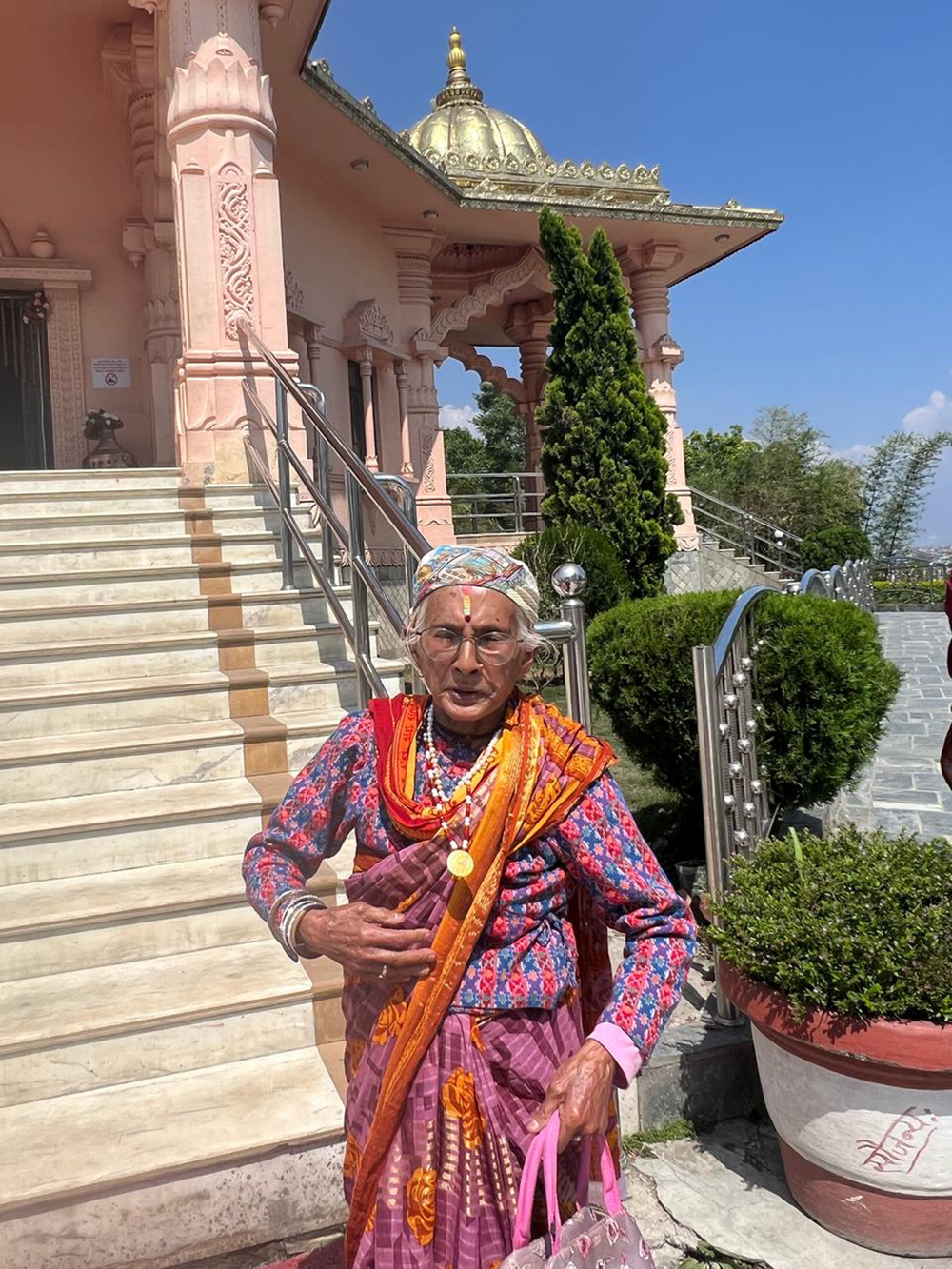
Yogamaya was – Krishna Pranami. She used to say that she should engage in Krishna devotion. She longed to go to Vrindavan, 'You can see Krishna in person there. It's just your karma, you can't go!' Then Jitu took his mother and went to Vrindavan. Yogamaya had to be given oxygen during the last days of her life. Jitu should feed food and apply oil. It should have been said, 'I will play the bhajan on my mobile phone, so eat it, old man'.
should be nurtured exactly like raising small children,'' says Jitu. After the satsang of those days of mother, Jitu realized that children are not only old, but old people are also becoming children again.
Jeetu's mother said, "Get out, don't go away!" It's difficult for me' she said from time to time. When Jeetu went to Hong Kong, he used to say to his mother, 'I am going to Pokhara'. Later, she would find out and scold Jitu - 'Why are you fooling me?' In Jitu's thoughts, understanding and education, mother is the guru of the world. "The teacher who taught us to walk, to speak the first sentence," says Jitu, "My existence is my mother. I am lucky to have been able to serve my mother till my death. They say, 'Even after she dies, even if she pours all the strength in the world, she will not be able to meet her mother. Mother and father are God.'
Jitu used to take mother to Gaijatra programs, she used to be happy. After Jeetu played the 'hero' in the film 'Harry's Pary', Yogamaya responded - 'Are other heroes successful?' There was a scene where Jitu was beaten up by the villain in the movie 'Premyuddha'. Yogamaya is crying in the dark hall while watching the movie. She was crying even when she returned home after watching the movie. Yogamaya continued to abuse the 'villain' who beat her son for three days. She kept saying, 'The one who beats my son?' She suggested to Jeetu with tears - Ah Kancha! Don't play a movie that is beaten by others!
Sarcasm has its own 'signature' of Jeetu's mother's grief. Looking at the Manohara River from Kiriaghar, Jitu says, 'My mother suffered in life and only suffering.' In Jitu's eyes, Yogamaya lived a very sad life. Many times she didn't eat enough, thinking that the children would be hungry. She would return home drenched in snow or drenched in sweat when she went to cut grass, fair-perm or plant fields. Those days are still fresh in Jitu's memory.
Yogamaya used to go to Melapat-Perm, corn-soybean snacks were served at the fair, she would not chew the snacks herself and feed them to her children, she would spread them in the fire thinking that it would lead to sibling quarrels when she divided them. Home is reached after an hour's walk from Kothe Bazaar, 75 km from Kathmandu. He is the youngest son of 5 brothers (Govind (who passed away), Kamal, Ganesh, Meenprasad, Yogaprasad) and sister Urmila.
Yogamaya used to tell Jitu - I went to the fair when you were born, I met you when I returned from the fair in the evening. Jitu also says, "I grew up in sorrow," "My mother brought me up through sorrow." There was also land in the village above, and also in the market below. Manure had to be taken from the village down to the market, grain had to be grown.
Yogamaya was going to Melapat-Perm. Corn-soybean snacks were served at the fair. She would not chew the food herself and feed it to her children, she would scatter it in the courtyard thinking that if she divides it, the brothers would fight, the children would pick it and eat it. Jitu was a spoilsport, a touchy kind. There were cows, buffaloes, goats and chickens in the house. He used to eat lusukka secretly, but after eating it, ghee did not form. He used to steal and eat the sugar that his mother had saved to serve tea for the guests. Then the mother used to beat him, beat him. She beat again, she beat again. It was like a cycle.
Jitu was very missed. While playing, one day he will kick the big brother. My brother is dying, he is dying. "You almost killed my brother" mother beat Jitu crying all day long so that Sumla wakes up. After that Jitu left the house and went to Koldanda. As the evening came, Yogamaya began to panic. She came searching, with a large group of villagers behind her. Jitu snorted - I will find out at home. Yogamaya went home after doing a lot of work. "Mother said to eat corn and corn" but he did not eat. Dam was sitting on Jeetu's back, Yogamaya applied oil and cried herself - ghunkkghunk.
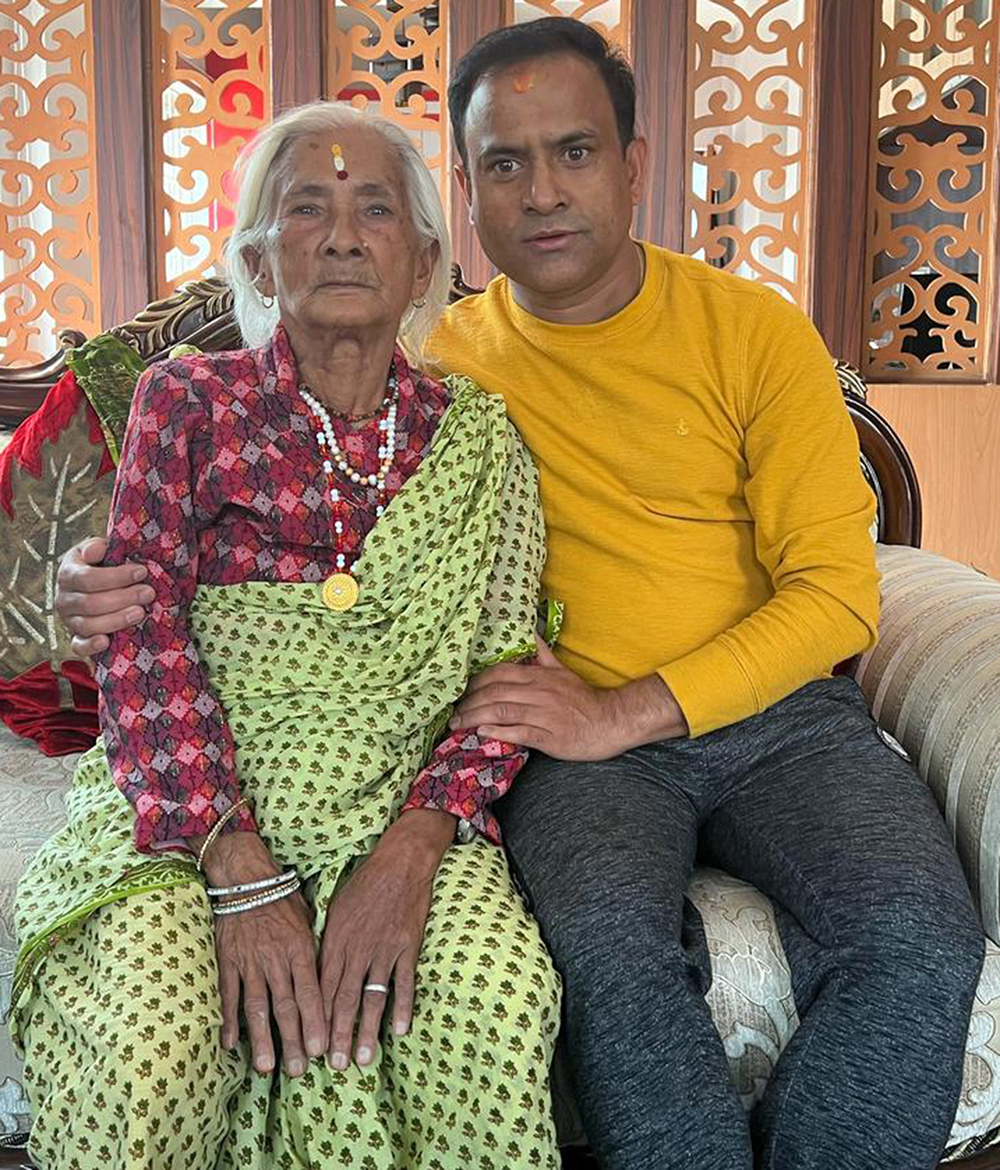
...
He had no sandals on his feet, no moving clothes. He used to go home and school like that. Most of the time was spent in grazing cattle and cutting grass. Going to the fields and forests, bringing apples became his daily routine. No one would ask, 'Should you read or not?' Instead, he would ask - how much grass did you cut today? A heavy load of hay had to be brought before and after school. By the time he got to school, he was halfway through the first grade or the beginning of the second grade.
Jitu could never go to school with only books. The market was downstairs, mother used to say, 'Ek pathi nun lya hai keta when coming back from school!' Books and copies were carried by friends. Earlier, he would go to school by putting manure in the garden. When returning home from school, he had to carry rice by grinding rice or wheat and corn into flour. After reaching home, throw the book, eat bread of koda, corn-soybean and singing songs or reciting the verses of Sundarkanda of Ramayana, go to cut grass with a smile-laughter, climb a tree, pluck apples from Khanayo-peepal-Kutmiro and come home! This was Jitu's rural childhood. Jituka's parents moved the barn downstairs after
. The barn was less than half an hour away from home. Jitu sat in the barn many times. They nailed the cows and buffaloes in the shed, put the clothes and bedding, made a small hut, lit a fire and spent the night and moved the shed after a week. When Jitu was young, he used to go to fairs and help his mother. Jitu used to get very excited when asked to climb a tree. "They used to call me a monkey in the village," he says. Father Sashidhar Nepal used to read Gunaratnamala-Gita at home, Jitu, who had memorized it, would climb a tree saying the verses of Gunaratnamala.
...
When Krishna returned to the village, Yogamaya scolded her very much - where did you take my son? That breath, that las! After returning to Agra, Krishna told Jitu to go home now. And then he returned to Nepal on the way to Gorakhpur - for his mother. He returned to the village as Lahure. On his return, he bought a saree for his mother with the little money he earned. Yogamaya used to smoke cigarettes. When going home from Kathmandu, Jitu used to take gold flake, deurali or yak cigarettes. Mother used to be very happy that "the younger one brought cigarettes" and put it in the potta and smoke it.
Jitu did not return to the village after the Bhadrakali people came to Kathmandu for the wedding of a brother in the village. Jitu met with children's school Nirmal Paudel in Kathmandu. He used to study in Chabhil and worked in a shop in Kathmandu. It was he who advised Jitu to 'not return home and work here'. And, Jitu started working in a cooperative shop in Chuchchepati, started studying Chabhil. Bringing rice, dal, sugar from the food institute, cooking food for moneylenders was his daily routine.
...
Jitule rings Santosh Pant's house 25 times a day to get another role. He used to go to that house - to see if Santosh is his brother. After two months, he got another role. Then Dinesh acted in DC's 'Twakk Tukk', he also got a job as a boomer with a salary of 300 per month. After Jitu's brother built a four-room house in Jadibuti, he started living in Kathmandu with his parents. "After that, I spent a lot of time with my mother," says Jitu. After 'Jere Khursani' became famous, Jeetu often went abroad. "Korea in the morning, Japan in the evening," his mother used to say, "youngster, you won't even be able to ride a plane, how much have you climbed!" Jitu's old memories are reborn as he travels through his mother's memory-geography. He is not reminiscing, rather he is engrossed in the memory of his mother after her journey to the afterlife. Mother and the memories of the village make Jitu Ekohoro. The weather in the village has changed, the people have changed, but in front of the house, the mango tree stands the same, which is the witness of his mother's life and the small world. "I said, don't cut that tree until you die," says Jitu. Jitu is still thinking - I am not a gourd picked by the wave!

