Compared to a decade ago, there have been many changes in Pasgaon, the village has water supply, electricity, roads, mobile-internet, basic education, health system, even those who left the village have become an environment to return.
We use Google Cloud Translation Services. Google requires we provide the following disclaimer relating to use of this service:
This service may contain translations powered by Google. Google disclaims all warranties related to the translations, expressed or implied, including any warranties of accuracy, reliability, and any implied warranties of merchantability, fitness for a particular purpose, and noninfringement.
Until a decade ago, the road did not reach Pasgaon of Lamjung, which is reached after a two-hour nose-shaking uphill climb from the Kaski border crossing the Rudi river. This village, which is located west of Lamjung headquarters, Bensi Sahar, was difficult because there was no direct road connection with the headquarters. He used to walk from Pokhara and reach Pasagaon in a day and a half.
It used to take a day and a half to reach Pasgaon from Bensi Sahar. There were no settlements in some places on the road, thieves and robbers used to be there. The walking path was equally steep and difficult. People didn't walk often.
Earlier, the people of Bhujung, Pasgaon, Singdi who took Indian pension used to go back and forth from Pasgaon to Pokhara. According to Balram Gurung, the former president of Pasgaon Village at that time, people started walking slowly through the Pasgaon road from 2050/55.
'From Bensishar via Bhujung to Pasgaon, Pokhara and from Pokhara to Kaski's Gahte-Rabaidanda, Pasgaon to Bhujung-Ghalegaon, people started coming down to Bensishar. We started giving accommodation to the guests' he said, 'We gave accommodation to the guests because it was a time of conflict or because the army people came and took care of the Maoists, why did the Maoists come and allow the army to come!' The first Pasgaon Festival was organized to invite tourists to the village on 16 and 17 Baisakh 2060 according to the advice given by the residents of Pasgaon. When the
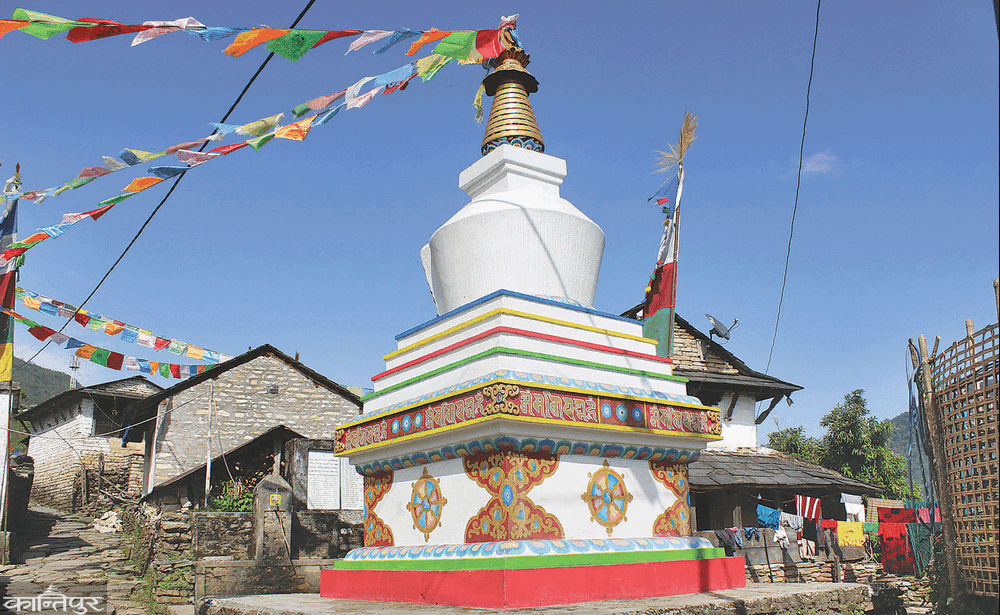
started to grow, the security forces started surveillance. On the pretext of the festival, Maoist activists also started visiting the village. People were scared. On August 16, 4 months after organizing the festival, the then security forces attacked Maoist activists. 11 Maoist workers were killed.
10/12 villagers were also injured. The village became restless, we were scared. After the incident, some people left the village," former chairman Gurung said, "It was difficult to go from house to house. People stopped coming. There was silence in the village. It was difficult to move around the farm. Army and armed police camp was set up for the security of Pasgaon and its surroundings. They returned only after the peace agreement was signed.
Even though the country started to change slowly, the people of Pasagaon could not see the face of development immediately. Recently, the government and various organizations have arranged for water and electricity. 7 years ago, a dirt road was built up to the village. In the last few years, a dirt road reached from the headquarters, Bensi Sahar. There is a school up to 10th standard in the village. There is a health post. The villagers are engaged in the cultivation of cash crops such as cardamom, tea, coffee, kibi.
According to Ward President Manlal Gurung, the face of Pasgaon is slowly changing. After the armed conflict, the Indian embargo tormented. Then the infection of covid struck. The villages here could not get up," he said. "After the construction of the highway, now the traffic has started to increase. Roads are getting better. The bridge has started to be built. The guests have started arriving. We have started giving shelter.'
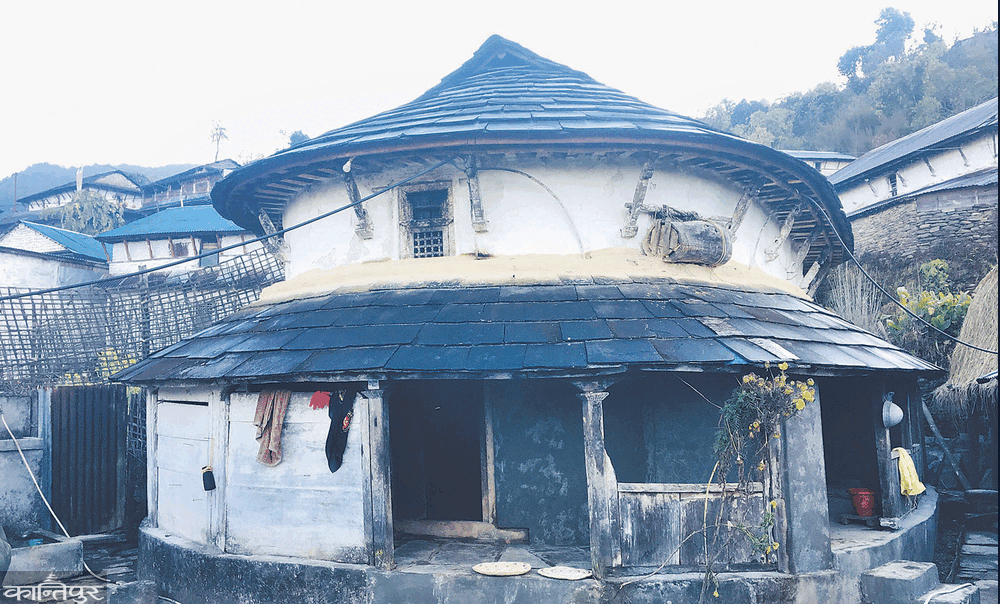
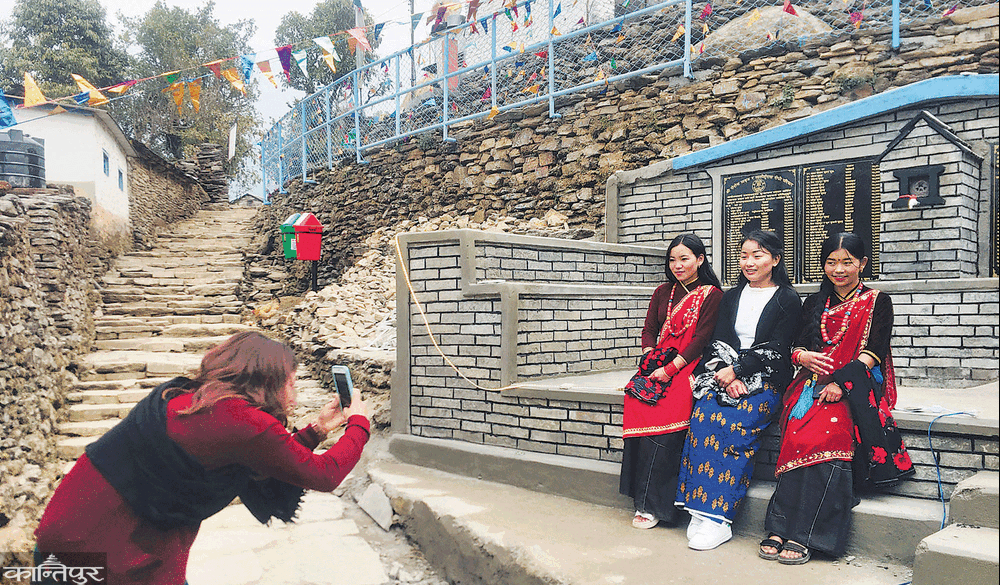
According to Manlal, the people of Pasgaon have organized the festival 14 times in a period of 20 years. Now guests have started coming from home/abroad. According to Yugdevi Gurung, President of Mother Group, the program of cleaning village houses once a week is still going on.
Pasgaon is really worth seeing now. Stone-covered houses, stone-paved roads. "Pasgaon is clean and peaceful," she said. Previously Pasgaon of 6 to 9 wards now belongs to Kholasothar Rural Municipality-6. The construction of tourist structures has started in Pasgaon, which is at a height of 1,650 meters above sea level.
Construction and maintenance of internal roads, sanitation, organized drinking water and toilets are arranged from house to house. Bhupu soldiers of the village along with the rural municipality are working to make the Khomre hill above the village a tourist spot, from where the mountain can be seen from west to east. Not only that, the villages of Manang, Kaski, Syangja, Gorkha, Tanahun are visible.
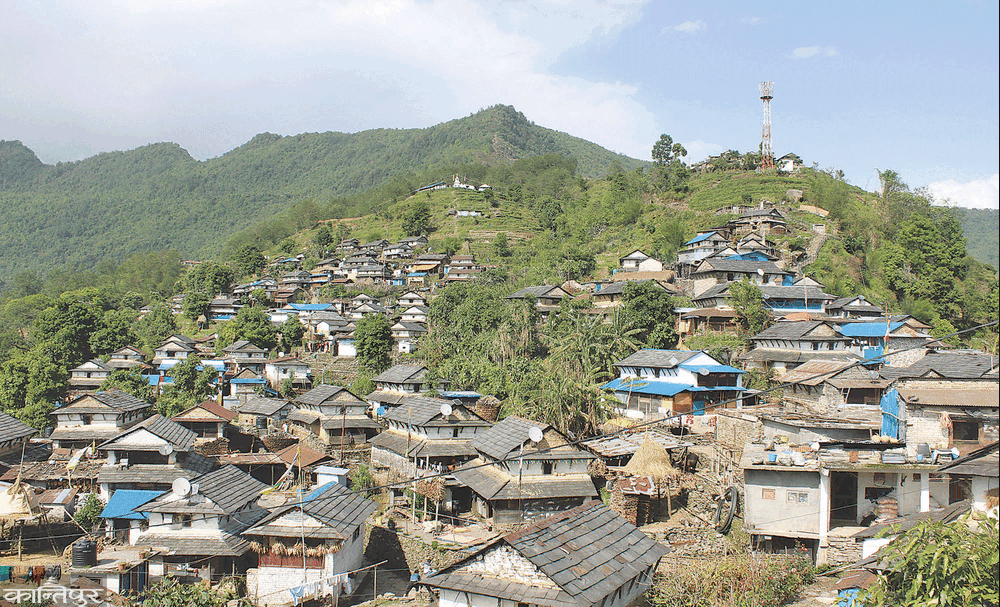
21 homestays have been put into operation in the village to accommodate guests. According to Surya Prasad Gurung, President of Pasgaon Collective Homestay, who is also the Chairman of Kholasothar Rural Municipality, there have been many changes in Pasgaon between a decade ago and today.
'Now the village has water supply, electricity, roads, mobile-internet, basic education and health. It has become an environment for those who have left the village to return," he said. He said that in addition to creating an environment to bring back those who left the village, the 15th Pasgaon Festival is going to be organized on February 18 and 19 to promote the village.
Ekendra Gurung, advisor of Tamu Dhin UK, who is living in UK after Pasgaon, said that the recent development in Pasgaon has proved that the environment of peace and non-discrimination is becoming in Nepal. "Remembering yesterday's conflict, bandh, strike, bombings still makes me feel sick. But now there is a lot of joy when coming to the village. He said, "I am more happy when the relatives who met in the city yesterday are now in the village."
Maya Gurung, the president of Gurung Film Association Hong Kong, who is currently living in Hong Kong after coming from Pasgaon, said that it was an atmosphere of joy when she came to the village. The stone houses in southern Mohoda, revolving house, Gurung Museum, historical and religious places are the must-see heritage of Pasgaon. Anti-social traditions of the village, Huri, collective labor and other customs, mother group dance, youth club cultural dance, Serga, Ghatu, Krishna Charitra, Sarangi, Jhyaure and other dances can be seen in Pasgaon.
According to the local youth Bhakta Bahadur Gurung, Pasagaon is rich in organic food, traditional handicrafts, legendary behavior, lifestyle, nature and culture. "The different types of fruits available in the seasonal forests attract tourists," he said. According to him, there are 163 households in Pasgaon, including Gurung community, Bhujel and Dalit communities.
In recent times, Pasgaon has also become the main departure point of the 'Royal Gorkha Trail' from Pokhara to Manang. This trail covers Pokhara Metropolitan City of Kaski, Madi Rural Municipality, Khwalasothar and Marsyangdi Rural Municipality of Lamjung as well as Manang. Pasgaon can be reached through Maling, Salmevnjang, Ghamrang from Lamjung headquarter Bensisahar. This road is about 40 km. Pasgaon can also be reached from Salmevnjang through pastures and gardens. Pasgaon can also be reached from Bensishahr through Ghalegaon, Bhujung.
Similarly, from Bensishar to Bhorletar Rambazar or from Pokhara through Rambazar via Karapu, Chapa, Geelung to Salmevnjang, you can reach Pasgaon via Charagaon or Ghamrang. From Pokhara, you reach Pasgaon via Bhainse, Thumsikot, Mungribensi, Baluwabensi, Bagand, this road is 47 km. From Kathmandu, passing through Damauli in Tanahun, Lamjung's Duipley, Bhorletar, Rambazar, and passing through Gilung road, it reaches Pasgaon.

