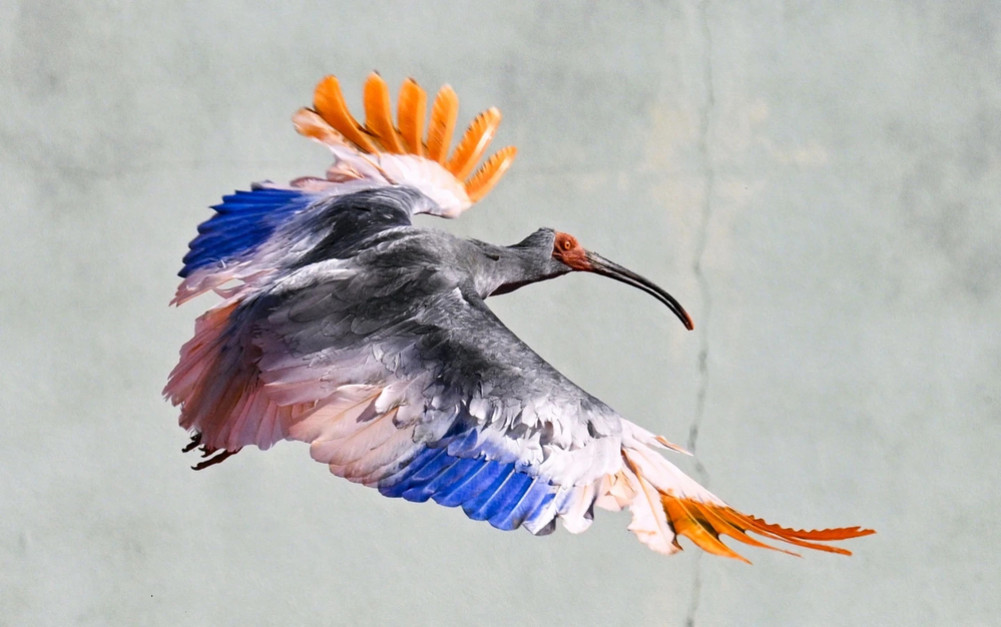
The last remaining ibises of Japan's native species died on Sado Island in 2003. But the species was revived after China helped with a breeding program.
We use Google Cloud Translation Services. Google requires we provide the following disclaimer relating to use of this service:
This service may contain translations powered by Google. Google disclaims all warranties related to the translations, expressed or implied, including any warranties of accuracy, reliability, and any implied warranties of merchantability, fitness for a particular purpose, and noninfringement.
Eight colorful ibises have been released into their natural habitat in Hakui city in Japan's Noto region. The endangered birds were released from their wooden cages into the open sky in a special ceremony held on Sunday. Birds that went extinct decades ago have returned to the Noto region. The release of the birds into the open sky on Sunday is also seen as a good sign for the Noto region, which is currently recovering from the damage caused by the devastating 2024 earthquake. The birds flew into the sky as Japan's Crown Prince Akishino, Crown Princess Kiko and other officials cut a ribbon tied around the cage, as local residents cheered. Overhunting and environmental destruction caused the birds to disappear from the Japanese islands in the 1970s. The last remaining ibises, native to Japan, died on Sado Island in 2003.
However, the species has been revived after China supported a breeding program. According to Japan's Ministry of the Environment, the first 'Japanese crested ibises' were successfully bred in a controlled environment in 1999 from a pair of birds gifted by China.
Since then, breeding and conservation efforts have greatly helped to increase the number of these birds. According to the ministry, 10 birds raised at the Sado Conservation Center were released into the natural habitat of the same island in 2008, where their number has now increased to about 500.
Known as ‘Toki’ in Japan, these white birds are native to East Asia. The orange-pink color under the wings and the bright red spots around the eyes make these birds look very attractive. They are a stork species with a beak.