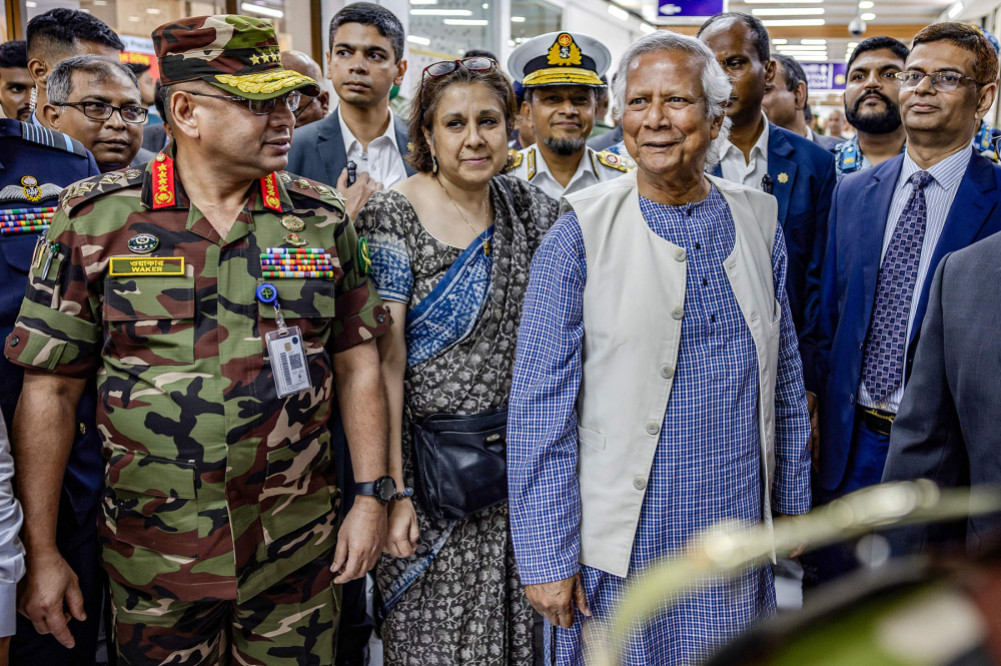
Muhammad Yunus is credited with lifting people out of poverty through microfinance in the 1970s. He has now come to hold the reins of government as a well-respected person to avert the political crisis of Bangladesh.
We use Google Cloud Translation Services. Google requires we provide the following disclaimer relating to use of this service:
This service may contain translations powered by Google. Google disclaims all warranties related to the translations, expressed or implied, including any warranties of accuracy, reliability, and any implied warranties of merchantability, fitness for a particular purpose, and noninfringement.
After leaving the country with Sheikh Hasina Wazed, the reins of power in Bangladesh have been handed over to Mohammad Yunus from Thursday. As the head of the interim government, 84-year-old Yunus has now been given the responsibility to overcome the political transition period of Bangladesh.
After being acquitted on Wednesday of all the cases against him as a bias during Sheikh Hasina's regime, Yunus has now come to the responsibility of running the country . After his swearing-in on Thursday, his formal duties will begin .
During Hasina's reign Yunus Khas, who has faced dozens of cases in the name of corruption and violation of law, poor citizens of Bangladesh and international He is well known and respected in the community for his social campaigns.
Because of that respectable personality, the youth generation trusted Yunus as a parent to overcome the country's political transition period. The leaders of the student movement, which was the factor that brought down Hasina's power, initially promoted Yunus as the head of the interim government. Addressing the demands of the student movement leaders, the Bangladesh Army and Other political parties also prepared to give responsibility to Yunus. Accepting everyone's requests, Yunus is ready to become the head of the government.
Yunus is also a planner of social and economic prosperity achieved by Bangladesh. He played a role in the economic upliftment of many poor people through the establishment of the Rural Development Bank. He also received the Nobel Peace Prize for this work. However, Sheikh Hasina called him a 'poor victim and usurer'. 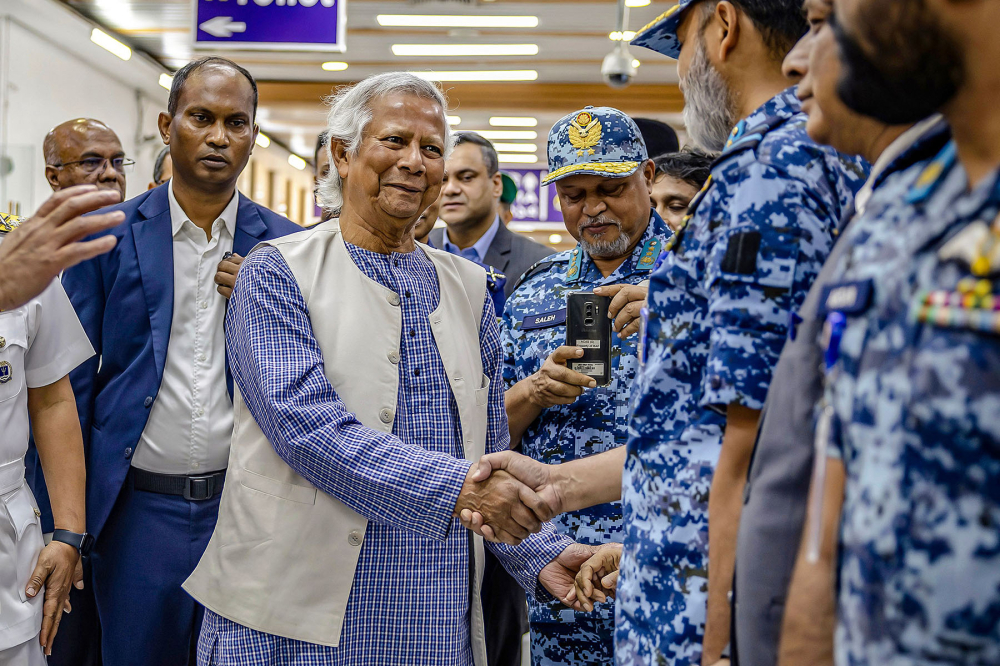
Yunus was born in 1940 in Chittagong. Yunus graduated from Dhaka University in 1961 with a master's degree in economics and also taught at a college in Chittagong for some time. At the same time, he was going to open a packaging industry. In 1965, he received a Fulbright scholarship to study in America and received his PhD from Vanderbilt University there in 1971.
While studying in America, he also got an opportunity to teach as an assistant professor at a university. At the same time, the independence movement was raging in Bangladesh. Staying in America, he led the public opinion formation in favor of the freedom movement. After the independence of Bangladesh, he was appointed to the Planning Commission. But, he could not enjoy there for a long time . Leaving it, he became the head of the Economics Department of Chittagong University.
His micro-finance campaign started with a micro-loan of 30 dollars distributed to 42 very poor women of Zobra village near Chittagong University . The woman's business was making bamboo furniture. With Yunus's faith and perseverance, the campaign began to bear fruit from 1976. In the same year, the government managed to get a loan from Janata Bank to flow to the women of Zobra. The sequence continued. By the time
arrived in 1982, about 28,000 members had joined Yunus' organization, including those who took loans from various banks. Encouraged by the growing network, Yunus decided to start his own bank on 1st October 1983 to provide easy and simple loans to the poor and established Grameen Bank .
Yunus's rural fascination is not limited to financial circles . After the success of Grameen Bank, he did not stop there. One after the other, new programs were launched . Creativity and new thinking are the identity of Yunus . Dozens of campaigns and programs such as health insurance for the whole family for 2 dollars per year, solar kits for 1 million households were conducted under his leadership. (Rural Motso-Fisheries), Rural Agriculture, Rural Software, Rural Cybernet, Rural Knitwear, Rural Telecom etc. he also led. 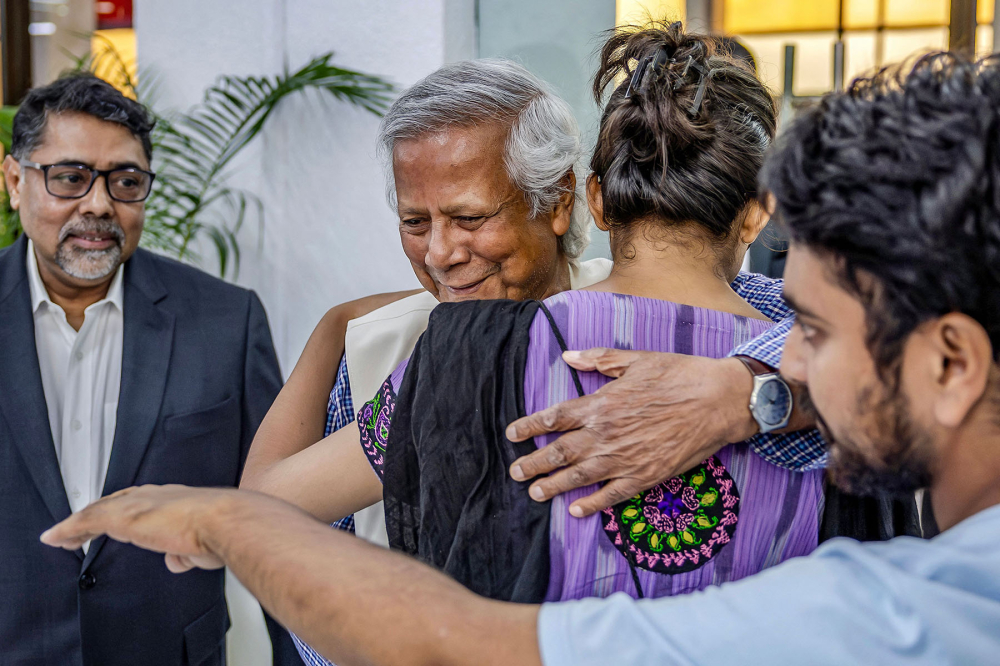
Yunus's rural campaign has become a demand indicator not only for the poor countries of the world but also for some rich countries . 94 percent of the micro loans disbursed by Grameen Bank were disbursed to poor women. Hence Bangladesh is known as 'Home of Micro Credit'.
Soon after the independence of Bangladesh in 1971 Many Westerners expressed their apprehension that Bangladesh could develop. At that time, it was doubted whether Bangladesh could survive as an independent state. But a person like Yunus also played a hand in establishing Bangladesh as a country and disproving the suspicions of the West. Today's Bangladesh is on the way to becoming economically strong. Bangladesh has progressed as a country with strong development and expanding economic capacity in South Asia.
Yunus's campaign also has a hand in proving that women in Bangladesh are the real drivers of development. Most of the workers employed in Bangladesh's textile industry are women. Due to his campaign, Yunus was worshiped in Bangladesh and his work expanded to other countries as well. The list of international awards and honors he has received is a sign of that.
He is one of only seven people to receive the Nobel Prize, the Presidential Medal of Freedom, and the Congressional Gold Medal. Yunus and his Grameen Bank were jointly awarded the Nobel Peace Prize in 2006. The Nobel Prize Selection Committee said that Yunus had given the prize because of his long-term goal of eradicating poverty from the world.
In 2006, the world-famous Time magazine selected him as one of the 12 best business personalities of the past 60 years. In 1984, Yunus was also honored with the Magsaysay Award, which is considered the Nobel Prize of Asia.
Yunus has been honored with honorary degrees from various universities around the world. In 2012, Fortune magazine named Yunus as one of the 12 greatest entrepreneurs of our time. In 2010, Britain's New Statesman magazine ranked him 40th among the 50 most influential people in the world in 2010. Likewise In 2011, another documentary based on his biography, Bonsai People The Vision of Yunus, was premiered at the United Nations. A documentary called 'To Catch a Dollar' has also been prepared on Yunus. His book 'Back to Poor' is also very famous.
The saying that successful people have more enemies than friends is also true in the case of Yunus. On February 18, 2007, when Yunus announced his formal entry into politics with the formation of the Nagorik Shakti (Citizen Power) party, he was attacked from all sides. The then Prime Minister Sheikh Hasina launched a jihad against Yunus.
Politicians including Hasina saw a great danger from Yunus . Why not? Yunus could have achieved any political position if he had the support of millions of Bangladeshis in the Grameen Bank network.
However, as soon as he entered politics, the attacks on him started, Yunus announced that he would take a break from his political journey for the time being. The opposition was not only reassured by the announcement, but a new platform was created to discredit him socially and economically. A link to this was the 'Cut in Micro Credit' documentary broadcast on 30 November 2010 on a Norwegian TV channel.
Based on this, the Hasina-led government ordered a review of Grameen Bank's programs and activities. Soon after, the government appointed Mujammal Haque, a former employee of Grameen Bank, as the chairman of Grameen Bank in 2011. Yunus said he was dismissed from the managing directorship because of his age limit .In the investigation by the Norwegian government, all the allegations against Yunus were proved to be false .
After that many accusations were made against Yunus . He was also accused of tax evasion in 2013. In January of this year, he He was also sentenced to 6 months in prison in a labor-related case. The government accused Yunus of evading taxes on money received from awards, book royalties, etc. But Yunus has been saying that all the allegations are baseless. Before taking over the leadership of Bangladesh's interim government, the labor charges against Yunus were dismissed by the court on Wednesday.
After the initial obstacles on his way to politics, Yunus decided to focus on social and public responsibility work rather than microcredit/microfinance. Started a campaign to make it global. As a campaign, he reached many countries. He arrived in Svedash on Thursday with the responsibility of passing the transition period after the movement changed the power in Bangladesh while he was abroad. Soon after Swedash returned, he said- The benefits of freedom should reach the homes of every citizen. I will take that job .'
(with the help of agencies)