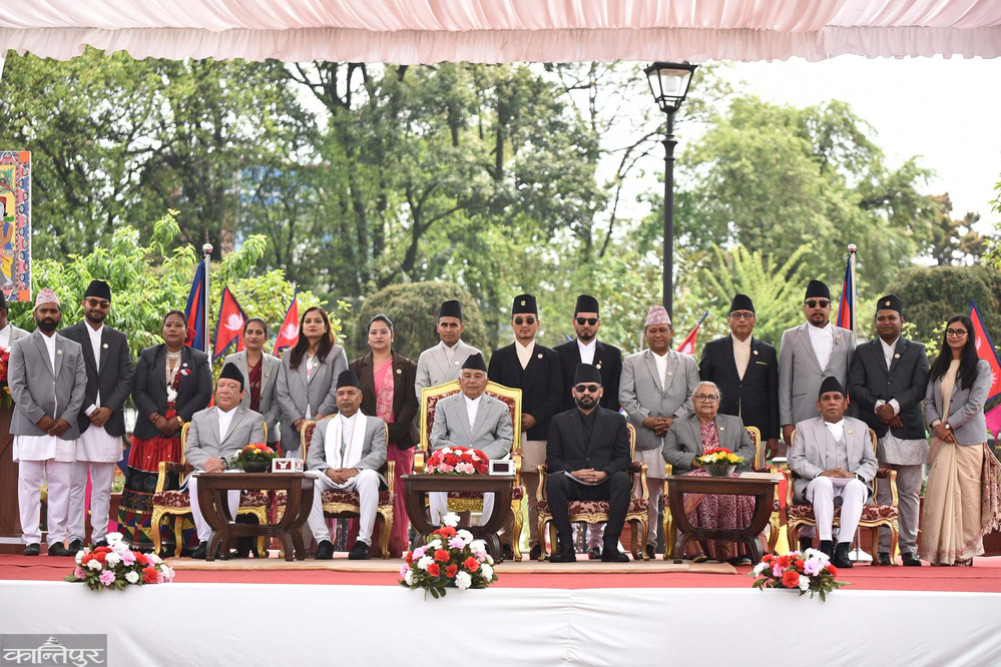
In line with the spirit of the Gen-G movement, good governance, corruption control, efficient government services, economic growth, and employment creation are the main responsibilities of this government.
We use Google Cloud Translation Services. Google requires we provide the following disclaimer relating to use of this service:
This service may contain translations powered by Google. Google disclaims all warranties related to the translations, expressed or implied, including any warranties of accuracy, reliability, and any implied warranties of merchantability, fitness for a particular purpose, and noninfringement.
Senior leader of the National Independent Party, Balendra Shah, resigned from the post of mayor of Kathmandu Metropolitan City and addressed the election meeting of Madhesh Province for the first time on Magh 5, saying, ‘I am a working person. You give me work, I will show it by working. Will you let me work?’
During the election campaign, he had requested work in election meetings of Koshi, Madhesh, Lumbini, Karnali and Sudurpaschim. He had asked for work in those meetings.
With this confidence, voters gave the RSVP not only a majority but also a close to two-thirds mandate in the House of Representatives elections. Shah, who has had the opportunity to lead a powerful government after the founding leader of the Nepali Congress, BP Koirala, has the same large public opinion and the same opportunity and challenge to work according to public expectations.
He has also set the ‘record’ of becoming the Prime Minister in a short period of time in politics. With the new mandate, the Nepali political balance has changed. Traditional parties that have been in power for a long time have been removed from the mainstream, while the Rashtriya Swayamsevak Sangh (RSS) has established itself as the main new power center with almost two-thirds of the number.
Balendra, who became the Prime Minister on the strength of this powerful mandate, currently has a mountain of challenges on his shoulders to fulfill the expectations placed by the people. On the other hand, while maintaining the balance of power in the course of running the state, there is a situation where he has to face many challenges from within and outside the party.
Good governance and service delivery cannot be achieved by one person, but should be achieved through a planned program— Baburam Bhattarai , former Prime Minister In accordance with the essence of the Gen-G movement, good governance, corruption control, efficient government service delivery, economic growth, and employment creation are the main tasks of this government.
Former Prime Minister/Finance Minister Baburam Bhattarai suggests that this work cannot be done overnight, so a planned program should be made. ‘Good governance and service delivery are not something that can be done by one person. What some expect is that direct action should be taken, direct orders should be given and work should be done.’ He said, ‘In a democracy, we should provide sustainable good governance and service delivery in an institutional manner. We should reform the various organs of the federal and provincial governments, the constitutional commission, the judiciary and the security organs in a timely manner. For that, since the government has a convenient majority, it is appropriate to amend the laws, regulations and regulations and go in a long-term manner.’
As Prime Minister Shah said in the Madhesh Provincial Assembly on Magh 5, a situation should be created where the provinces do not have to come to Kathmandu to seek their rights. The view of the Rashtriya Swayamsevak Sangh (RSS) and his own party towards federalism was not clear before.
In the 2079 elections, Shah himself had raised doubts by not voting in the province . The leaders of the Rashtriya Swayamsevak Sangh (RSS) had publicly declared that federalism would be abolished the day the party reached its strength and numbers. Shah, in his address in Janakpur, not only removed the doubts created by the party and himself, but also promised to make federalism empowered . The Rashtriya Swayamsevak Sangh (RSS) has mentioned the issue of amending the constitution for a reformed provincial structure in its manifesto. The common citizen has taken to heart the statement made in the Janakpur assembly more than the Rashtriya Swayamsevak Sangh (RSS) manifesto.
'The province should be made so strong that it is not necessary to go to Kathmandu, all the arrangements should be made here . Kathmandu should not be a place to demand rights, but only to visit Pashupatinath and Swayambhu and to visit,' Shah had said at the time
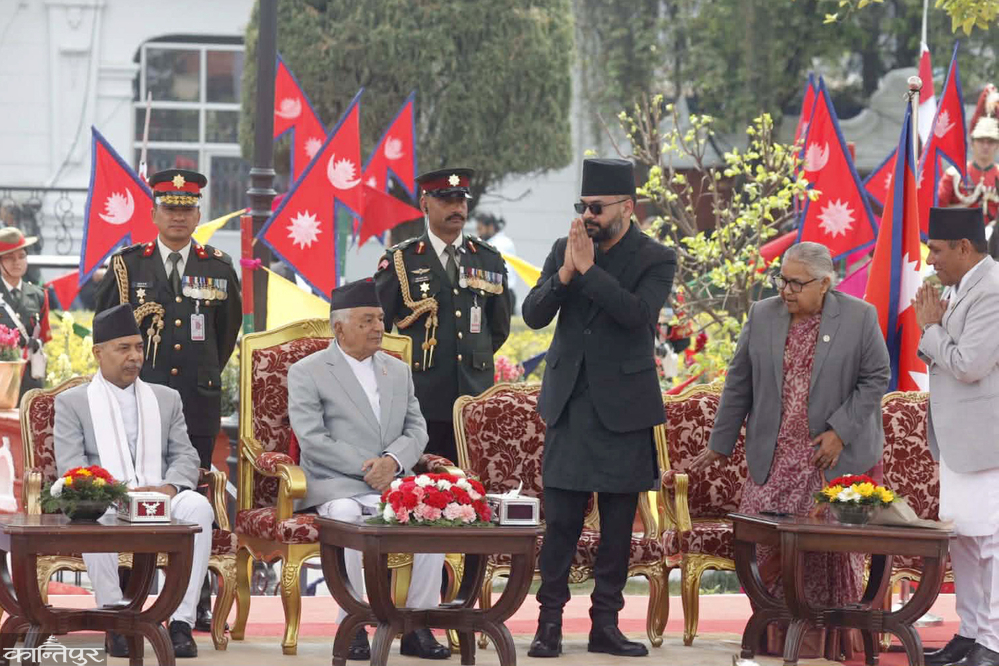
Former Prime Minister Bhattarai says that this statement by Prime Minister Shah is a powerful statement for the implementation of federalism. Government work should be made much easier.'
After the constitution was promulgated by the Constituent Assembly on Asoj 3, 2072, the government changed hands six times between KP Sharma Oli, Sher Bahadur Deuba and Pushpa Kamal Dahal. The old leaders had a tendency to talk about federalism while in the opposition but not to decentralize power while leading the government themselves. As a result, even after 10 years of the country's entry into the federal system, the provincial structure was limited to an administrative unit of the center. The parties failed to enact the police and civil service laws required for the provinces. There is a situation where the federal government has to be asked for help for the transfer of police and employees.
'Why go to Kathmandu today when the Chief Administrative Officer of Janakpur has to be changed? Isn't Janakpur the capital of the province? The province should be made so strong that it doesn't have to go to Kathmandu, all the arrangements should be made here,' Shah had said.
Federalism expert Khimlal Devkota said that the new government has an opportunity to bring the state and local levels to a situation where they can exercise the powers granted by the constitution. ‘The idea that you don’t need to go to Kathmandu to ask for a chief administrative officer means that the officers themselves come to the municipality,’ he said, ‘This aspect needs to be improved. The state and local authorities should make arrangements to exercise the powers they have.’
Khimlal Devkota , Federalism expert The Civil Service Act, Education Act, and Police Act should be made to empower the state. The mindset of the largest government, government, employees, and security leadership should be changed. The leadership of all three levels has a mindset of centralizing rather than decentralizing powers. Without laws, the provinces and local levels cannot be empowered. As a result, federalism has not been fully implemented in practice. There is a need to formulate laws and amend the constitution to empower and make the provinces effective for the new government. The work could not be done according to the spirit of the constitution. Balen should know this. Accordingly, laws should be made to allow the state to exercise its powers—
Devkota says that the new government should take the lead in this as the Congress, UML and Maoists failed to enact the necessary laws for the provinces after the constitution was promulgated. ‘Although constitutionally, the powers have gone to the local level, in the past the Congress, UML and Maoists did not create a situation to use them by making the necessary laws.’ The provinces became weak because they could not exercise their powers, he said, ‘The work could not be done according to the spirit of the constitution. Balen should know this. Accordingly, laws should be made to enable the provinces to exercise their powers.’
Shah, who reached the Prime Minister’s chair with popular votes in a very short period of time after entering politics, faces a big challenge to move forward by tackling issues such as state machinery, constitutional boundaries and political management.
The Rashtriya Swayamsevak Sangh (RSS) is powerful in the federal parliament. However, its presence is zero in a large part of the state structure. There is no RSS government in all seven provinces and 753 municipalities. In a federal system, policy implementation is not possible from the center alone. Provinces and local governments are the main means of administration and service delivery. Provinces and municipalities are the closest governments to the common citizen. Political cooperation between the provinces and local levels is necessary to implement the policies made by the center. Out of the seven provinces, except Madhesh, there is an alliance of Congress and UML in six provinces. Congress is present in all seven provinces. Congress, UML and NCP dominate the municipal governments. If there is no coordination with these old political parties, there is a risk of facing obstacles in implementing the government's policies.
On the other hand, the RSSS does not have representation in the National Assembly. A two-thirds majority in both houses is required to amend the constitution. Furthermore, when amending issues related to the federal structure, the consent of the provinces is also mandatory. The initiative of the Rashtriya Swayamsevak Sangh (RSS) alone is not possible to amend the constitution. It is not easy for the new government to move forward without collaborating with the old parties for constitutional amendment, federalism, governance reform or structural change.
Former Prime Minister Bhattarai said that even if there is a majority government, it can move forward on the path of constitutional amendment by reaching an agreement with the opposition parties. 'A progressive constitutional amendment can be made with the consent of other parties,' he said. 'Therefore, by protecting the four main pillars of this constitution - republicanism, federalism, secularism, and inclusiveness - by amending the constitution as necessary, an environment can be created in which sustainable political stability can be maintained and good governance and prosperity can be achieved.'
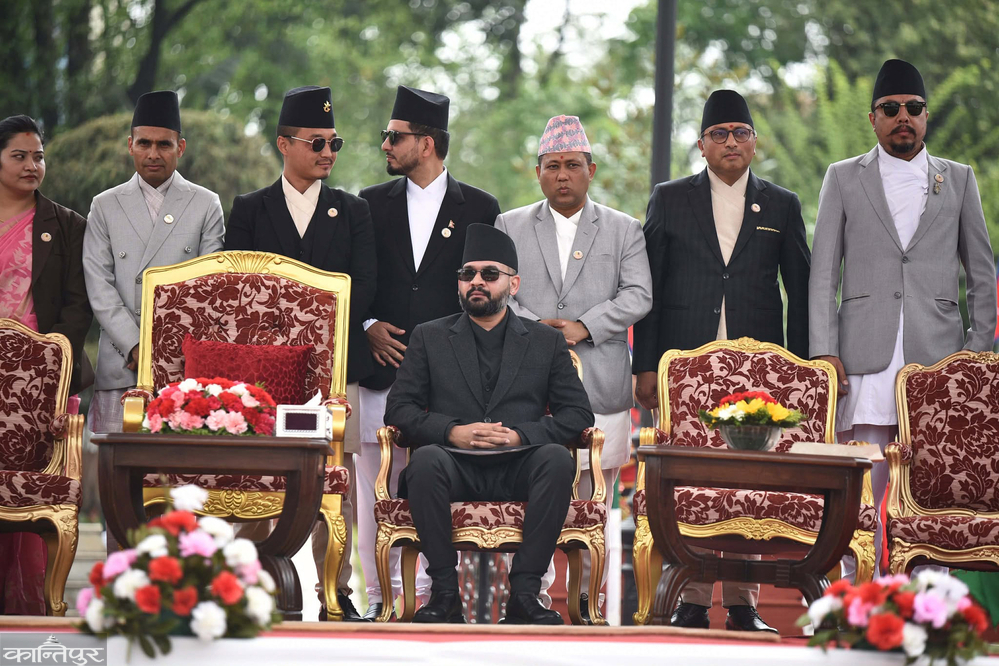
Advocate Semant Dahal says that it would be appropriate for the government to amend the constitution for good governance. 'The constitution can be improved by taking the implementation capacity and inclusiveness of the Constitutional Council together. Are the powers granted by the Constitution to the Authority, the Auditor General, and the Human Rights Commission more or less to maintain good governance? The issue of good governance can be taken forward by amending the powers of the Authority,' he said.
Semant Dahal , Advocate He argues that it is not appropriate to prioritize the issue of governance system and distribution of state power while amending the constitution. 'Because this issue requires serious discussion and consensus among political parties,' he added. It is not appropriate to prioritize the issue of governance system and distribution of state power while amending the constitution —
Despite the change of government, the old regime still dominates all the organs of state power. The influence of previous governments remains in the judiciary, constitutional commission, personnel administration, etc. The officials appointed by the previous government are working in constitutional bodies. The biggest challenge lies in the working style of the traditional administrative mechanism. There is a risk of a conflict situation in the matter of fulfilling the expectations of citizens who want quick results.
The test of the Shah-led government, which came to power by convincing the people that 'the old party did not do it, now we will come and make it happen', has now begun.
The biggest challenge seems to be running the government for five years. No government has been able to complete a five-year term since 2048.
Girija Prasad Koirala, who came to power with a majority in 2048, had to dissolve the parliament and go to mid-term elections amid a power struggle between Ganeshman Singh and Krishna Prasad Bhattarai within the party. After the 2064 Constituent Assembly elections, the Pushpa Kamal Dahal-led government was formed with a historic mandate, but it did not last more than nine months. The Senapati affair led to the collapse of the government.
Although the UML-Maoist alliance received almost two-thirds of the mandate in 2074, the struggle within the party led to the dissolution of the government, the restoration of parliament, and ultimately the split of the party. The government could not last the full term. Experience has shown that the root cause of most of the instability that arises within the government is the power struggle within the party.
In the past, governments have fallen due to internal imbalances, apart from some scandals by the opposition in parliament. If the new government fails to learn from history and prioritize power management, institutional reform, and good governance, there is a risk that the energy of the mandate could soon turn into despair. With the formation of the government under the leadership of Balendra, similar concerns are also being raised about the stability of the government. Concerns are being expressed within the party that there may be a parallel exercise of power between Chairman Ravi Lamichhane and Prime Minister Balendra. How is the balance of power within the party managed? The main concern now is how the party and the government will move forward in coordination. If the coordination between the party and the government weakens, there is also a risk that history may repeat itself. The arithmetic of parliament alone does not provide stability to the government. Amidst multifaceted challenges such as the traditional administrative structure, constitutional system, federal structure, economic limitations, pressure from good governance, and the balance of power within the party, the test of how and at what speed the Shah's governance model will progress has begun. If the new government fails to learn from history and prioritize power management, institutional reform, and good governance, there is a risk that the energy of the mandate could soon turn into despair.
Another challenge for Shah is himself. Apart from nearly three years of experience as the head of the Kathmandu Metropolitan City, he does not have long experience in running a national-level government. However, there is no shortage of leaders who became prime ministers without having any governance experience in the history of Nepal. Merely transforming the working style of the metropolis into a federal government does not seem to be an achievement. It seems that a lot will depend on what kind of advisors he keeps and how much advice he takes.
Implementing the Karki Commission report by taking all sectors of society into confidence can be a big challenge for the government.
On the other hand, it is not enough to manage the country domestically, issues of international relations and balance also contribute to the stability of the government. Then, security policy, economic management, and federal coordination will have to be taken into account.
The traditional administrative structure and complex legal processes have slowed down the delivery of public services. Comprehensive legal amendments are needed to make the service faster and more effective. There are great expectations of good governance and development from the Shah. However, the state’s resources are limited. Revenue collection is under pressure. Development spending is ineffective. Economic growth is slow. In such a situation, he faces the challenge of raising financial resources to implement popular programs. Former Prime Minister Bhattarai suggests that attention should be paid to maintaining balanced relations with two big neighbors. ‘We were between two big countries like India and China, but in the recent phase, the Western powers, especially the US, have become active and are moving forward in various fields. In that context, there is also a danger that a trilateral conflict between big power centers may increase in Nepal. We should keep this in mind,’ he said, ‘Especially with India, there are already border problems.’ We must move towards a solution through dialogue and dialogue.’
Good governance requires laws, institutional reforms, and impartial investigations. In the current system, the decisions of the Council of Ministers are kept within the ‘policy’ sphere. There is a tendency for the political leadership to escape in major corruption cases by considering the decisions of the Council of Ministers as policy-based and only the employees to be prosecuted. To end this, it seems inevitable to amend the law itself. The bill on authority that was brought forward in the past was stalled in the parliamentary committee due to this controversy. Advocate Dahal said that the constitution and necessary laws can be amended to maintain good governance.
The main issue of the Gen-G movement was good governance. People's dissatisfaction with corruption, impunity, and political patronage formed the basis for the emergence of a new political force.
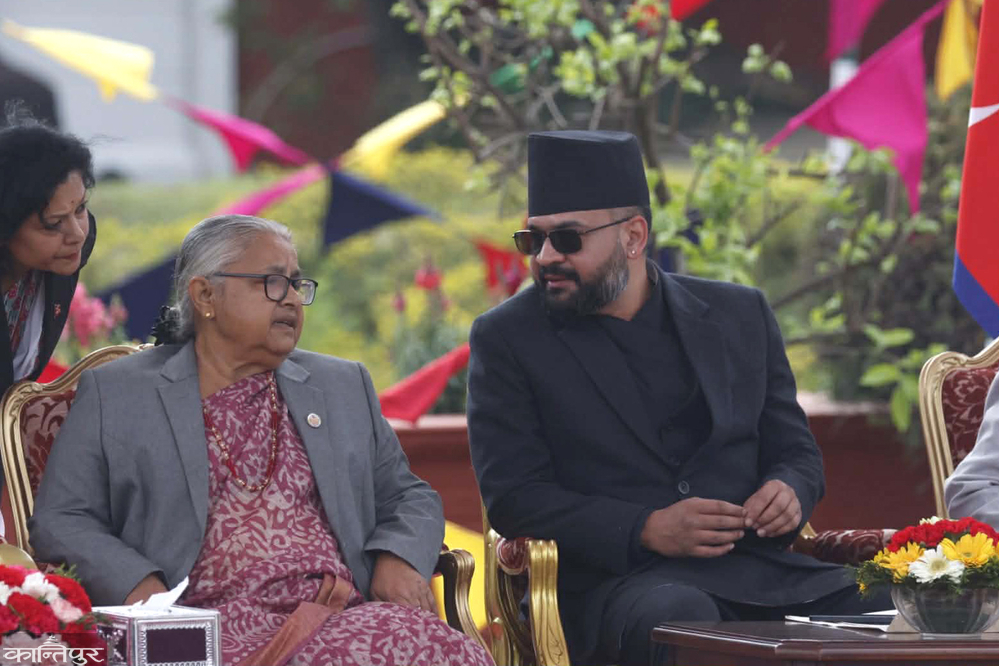
Many are interested in how this government will implement the report of the Gauri Bahadur Karki-led commission formed to investigate the repression of the Gen-G movement on Bhadra 23 and the destruction of the 24th. There is dissatisfaction from political parties and civil society saying that the commission focused on the investigation only on the 23rd incident but ignored the destruction and deaths of citizens on the 24th. It may be difficult for this government to implement the report by taking all sectors of society into confidence.