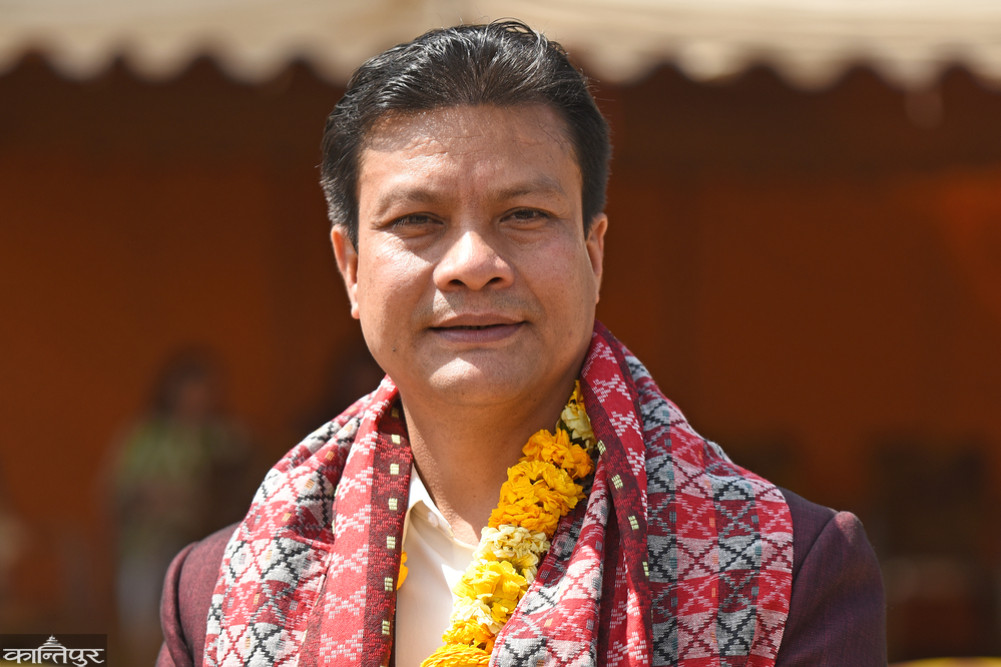
He says that he joined the Rashtriya Swayamsevak Sangh (RSS) by embracing the foundation of Ujjwal Thapa's alternative politics and keeping the agenda of equitable prosperity at the center.
We use Google Cloud Translation Services. Google requires we provide the following disclaimer relating to use of this service:
This service may contain translations powered by Google. Google disclaims all warranties related to the translations, expressed or implied, including any warranties of accuracy, reliability, and any implied warranties of merchantability, fitness for a particular purpose, and noninfringement.
"You are finally a leader," said Ba Lal Bahadur, overjoyed, to Prakash Chandra Pariyar after he was elected as an MP from the Rashtriya Swayamsevak Sangh (RSS) proportional list.
Prakash, who had been facing various ups and downs in alternative politics for almost a decade, was never considered a leader by his father. Instead, he would say, ‘You are trying.’ After the parliamentary journey was confirmed, Lal Bahadur blessed his son and said, ‘This is a big responsibility. Do not rush and work hard. Speak after thinking.’
After receiving his father’s blessings, he went to receive the certificate. While handing over the certificate, his hands suddenly became heavy. His eyelids could not hide his tears. At that time, Bhai Dayaram kept dancing in his memory.
Dayaram had reached Janakpur in the course of monitoring the National Human Rights Commission during the 2062/063 People’s Movement. At that time, he collapsed at the age of 22 and never got up. The pain caused by his brother's martyrdom in the family still lingers. But they also had to fight for his justice.
'The irony is that the Human Rights Commission in which he worked could not understand the meaning of his brother's martyrdom. We had to lobby the Commission and the government for years to establish his brother as a martyr, hold a memorial meeting, award and fellowship in his name,' recalls Prakash.
Was it an attempt to normalize his contribution due to prejudice against Dalits? Prakash wondered.
In fact, many parents lost their lives in the Genji movement. Hundreds lost their loved ones. The injured continued to walk with their wounds. Prakash, even then, thought about his brother who had died in the movement two decades ago every day and thought, ‘Even though the incident is old, the wound is not old.’ That is why Prakash Chandra always connects his political foundation with his brother’s martyrdom. ‘I think that brother’s sacrifice is a main foundation of my political journey to get here.’
There were many congratulations and wishes after becoming an MP. But one friend did not congratulate him. Instead, he gave a harsh response, ‘You should have been an MP a decade ago. Now you have to teach others from this experience.’
The response made him serious. He became more concerned about how to make the time he has with sincerity meaningful. ‘Right now, it feels like millions of people are looking at me through a microscope, where my sincerity and ability will be tested at every step. I have to protect it carefully,' he says firmly.
Prakash was born on Kartik 5, 2033 in Ainselukharka, Khotang. Within a few years of his birth, his family moved to Itahari. There is a story behind moving to Itahari.
His grandfather was known as a leader in the hills. He was not only a social worker, but also skilled in sewing, weaving and playing musical instruments. The same quality was passed on to his father. His grandfather was a band master. He wanted to be active in politics under the then Panchayat system. But he had to work hard to prevent people from the Dalit community from entering politics. After being marginalized, his grandfather and his family moved to Itahari in the throes of that pain. Prakash Chandra's childhood was spent in Itahari. In Itahari, Prakash's father used to sew and weave and do charity work within the Dalit community. When he looks back on his childhood through the eyes of a
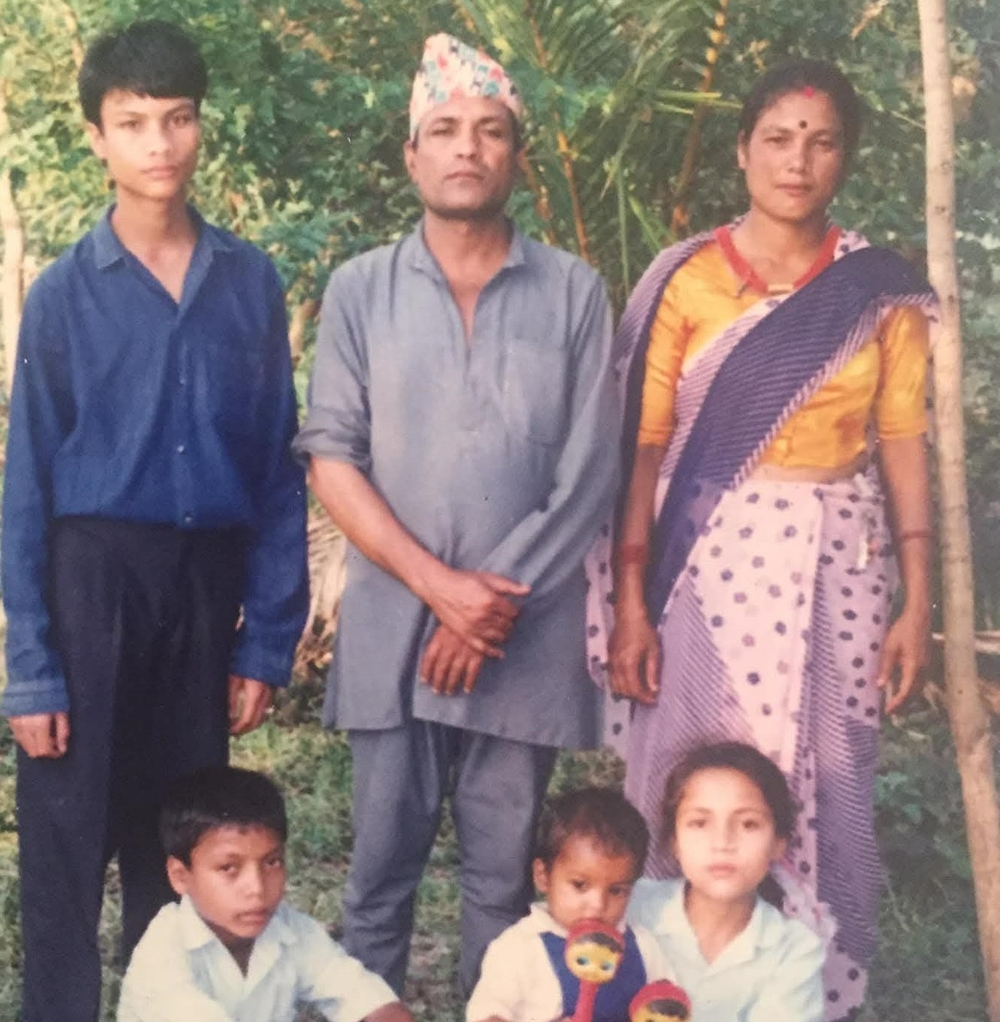 -aged man, he also has unpleasant experiences. Those scenes are never blurred in his memory. They were kept in a different circle during pujas or weddings. Once, Prakash went to his friend's house. The friend's parents scolded their son, using hateful words, saying, "Why did you bring him here?" He was eating. After being insulted, he left the place where he was eating and walked away.
‘For a child, that blow to self-esteem was a greater pain than being beaten,’ Prakash wipes away tears as he recalls those days years ago, ‘These incidents inspired me to read books on equality and fight against discrimination.’
When he was in school, Prakash used to be at the forefront of everything from attendance to oratory. At that time, he had followed two short words a lot. They were – Prada and Professor. After knowing the meaning of those words, he started weaving the desire to become a professor in his life. Prakash Chandra’s father, on the other hand, had a desire to make his son a government employee. ‘He had seen the respect he received in society. That is why he wanted me to become a government employee,’ he says.
He had made him addicted to reading by borrowing a book from the house of his neighbor Baidar’s son during his school days. ‘The first book I read was the Hindi translation of Hitler’s biography. That made me curious about dictatorship and history. But my main interest was in literature and newspapers,' he excavates childhood memories.
In 2045, their house caught fire. He lost his house in Tharara, Itahari in the same fire. He was studying in class 4. He saw his bag and books burning along with his house. 'I tried to enter the fire to save my books and bag, but I was pulled out,' he recalls that smoky day.
Towards the end of that year, he lost his mother Ambadevi Shiva and his sister. His mother was in labor. The mother left the world on the day her sister was born because she did not receive timely treatment. His sister also passed away 15 days after his mother passed away. ‘Even now, when I remember the scene of my grandfather carrying his sister’s body and crying towards the forest, I can’t help but cry,’ Prakash is heard saying in a trembling voice.
He passed his SLC in 2050 BS. He came from Mahendra Multiple Campus in Dharan and passed his BA. While he was studying for his BA, his father bought land in Birat Chowk. The reason was that Purbanchal University was coming there. Lal Bahadur thought that it would be easier for his son to teach at the campus after completing his BA.
Prakash was also good at sewing. He used to sew his own daura-suruwal, pants-shirts and ladies’ kurtas. When he went to college, he would wear the neat clothes he had sewn himself. However, his father stopped him from using the sewing machine. ‘He was afraid that his son would spoil his studies by getting addicted to earning money every day,’ says Prakash Chandra.
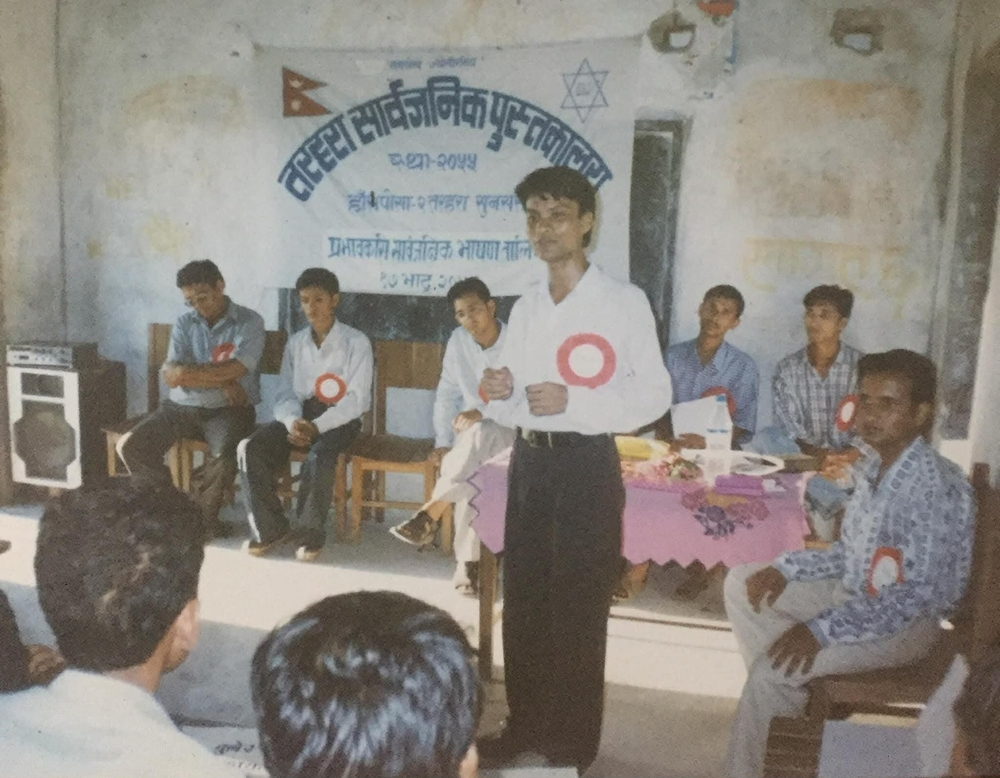
While in Itahari, Prakash Chandra played an important role in establishing the Tharara Public Library. There, they used to spread social awareness by organizing public speaking training, folk dance and elocution competitions. After his BA, he came to Kathmandu. He did his master’s degree in mass communication and journalism.
In 2060 BS, he started journalism at Kantipur Television. Before that, he had worked as a stinger at Kantipur Daily. After being active in journalism for about a decade, he took a break. He worked as a media manager at the Swiss Embassy for three years.
He also went to the US and Australia for fellowships and training. But he did not plan to emigrate there. His belief was, ‘After completing the purpose for which he went abroad, he should return home and contribute to this soil.’
He received the Australian Leadership Award in 2010 for social justice, inclusion, communication and leadership skills. In 2012, he also received the Dr. Ambedkar International Award in Delhi for his contribution to the promotion of social justice and inclusion.
Since the 2072 earthquake, he had been associated with Ujjwal Thapa’s ‘Nepal Unite’ campaign. He became involved in alternative politics in 2073. After the merger of Bibeksheel and Sajha Party in 2074, he became a founding member. The party had started good political practice. But from time to time, Bibeksheel Sajha had internal ups and downs.
In 2079, the dispute within the party reached its peak over the results of the local level elections and Rabindra Mishra’s document. Finally, Rabindra joined the RPP. The party became weaker and weaker. But they were not discouraged. ‘We had shown hope for civilized politics. However, later ideological differences and turmoil arose in the party. The party became weaker due to the death of Ujjwal Thapa and the deviation of the leadership. Nevertheless, we did not let the essence of democratic republic and social justice die,’ says Prakash.
He was the central vice-president in the latest structure of the Bibeksheel Sajha Party. Elected as vice-president at the party’s first general convention, he was also active as the coordinator of the high-level political dialogue committee formed for unity and cooperation with other political forces. In the latter half of 2082 BS, he played a leading role as the main negotiator and proposer in the historic unity process between the Bibeksheel Sajha and the National Independent Party (RSWP).
After the ‘end’ of Bibeksheel Sajha, they were closely following the Genji rebellion and the craze of the Rashtriya Swatantra Party (RSWP). Later, they merged with the RSWP.
‘We never considered the RSWP as a competitor, but rather called it the ‘closest friend power’,’ says Prakash Bibeksheel, the reason for merging with the RSWP, ‘Ultimately, by embracing the foundation of Ujjwal Thapa’s alternative politics and keeping the agenda of egalitarian prosperity at the center, we joined the RSWP.’
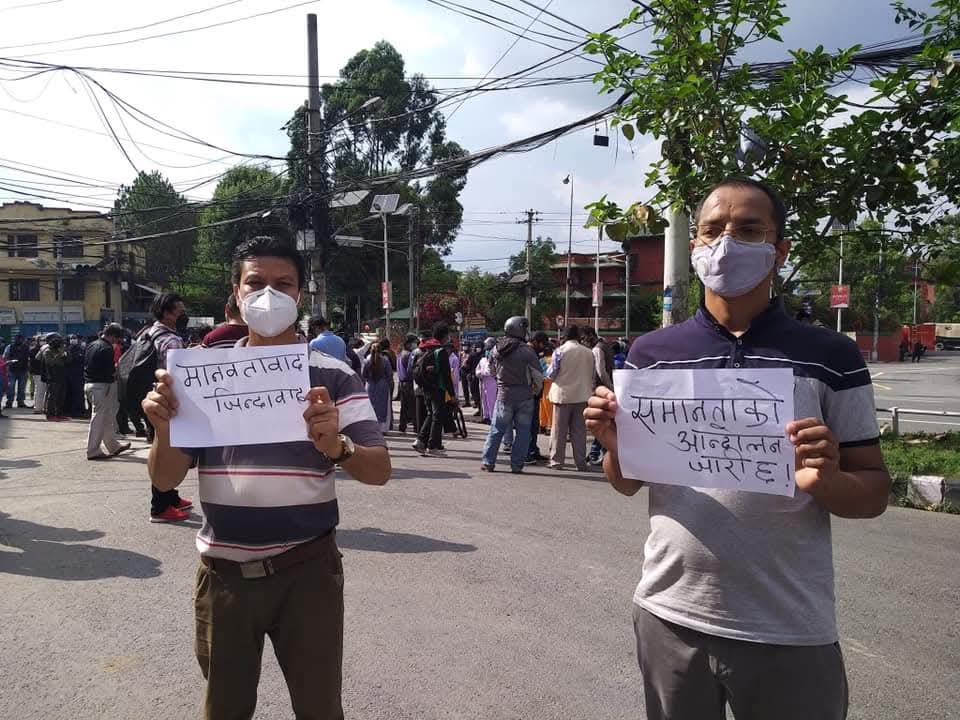
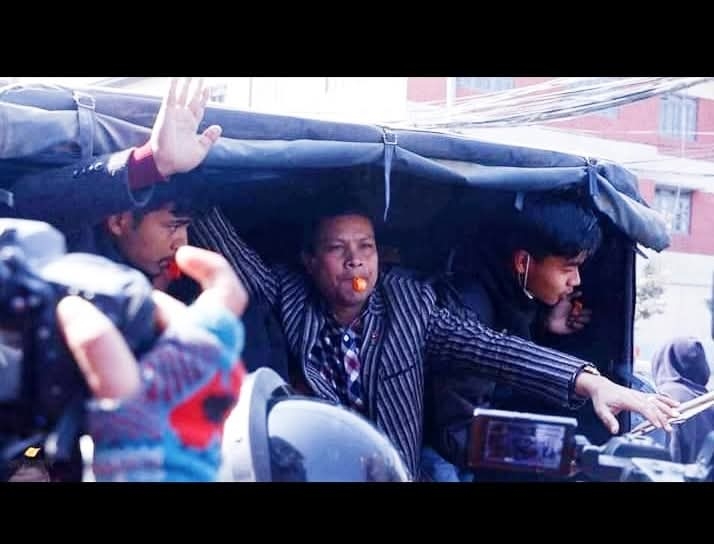
While in Bibeksheel, he stood on every issue, speaking loudly. For example, against the killing of Dalit youths in Rukum on 10th Jestha 2077, he raised slogans on the streets saying ‘Samtavad Zindavad’ from the beginning. Participated in the Masal rally. During the Genji movement on Bhadra 23, Prakash Chandra was on the streets with the daughter of the Genji generation. After the rape and murder of Nirmala Panta, he also stood on the streets demanding justice.
Prakash Chandra, who has been warning the streets through journalism and alternative politics, has now reached the House. The House is a place that approves the suppressed voices of the streets. It draws a map of justice.
What does he want after reaching that responsible place? ‘My first priority will be to amend the ‘Untouchability Offences and Punishment Act 2068’, so that it can work effectively and criminals do not get a chance to escape,’ he promises.
He has some vision. Referring to it as ‘4D’, he explains, ‘Democracy, development, diversity and dignity are extremely important.’ He also tells us about his resolve to work towards making Nepal a respectable middle-income country within a decade.
The people will remember the resolutions and promises he made. How much will he remember? How committed will he be to his promises in parliamentary politics? ‘My new test has now begun,’ he admits firmly.