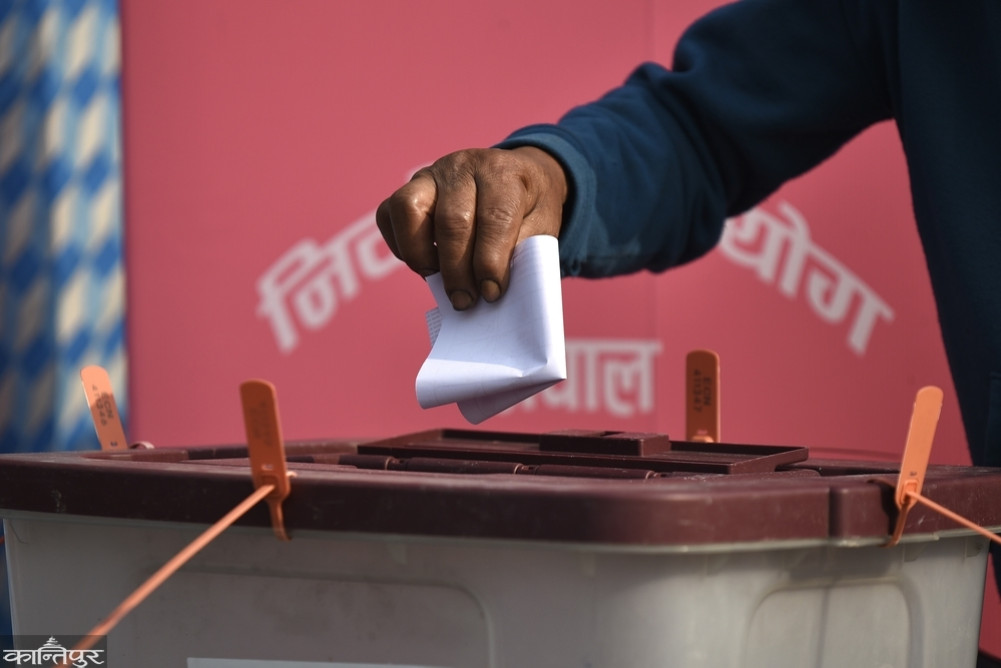
Election Commission prepares to change the style of voter education
We use Google Cloud Translation Services. Google requires we provide the following disclaimer relating to use of this service:
This service may contain translations powered by Google. Google disclaims all warranties related to the translations, expressed or implied, including any warranties of accuracy, reliability, and any implied warranties of merchantability, fitness for a particular purpose, and noninfringement.
Despite the Election Commission spending millions of rupees on voter education programs, the percentage of invalid votes in the House of Representatives elections held on March 21 has been seen as significant.
The Election Commission has taken this issue seriously, especially after more than 5 percent of the votes were invalidated in the direct (first past the post) system, said Suman Ghimire, Information Officer of the Election Commission. Voter education was conducted effectively this time with the aim of getting more and more voters to participate in the voting and reducing invalid votes. But initial data has shown that the invalid votes have not decreased as expected by the Commission.
Less in proportional, more in direct
According to the information given by Information Officer Ghimire, about 3 percent of the votes have been invalidated in the proportional election system. But in the direct, this number is above 5 percent.
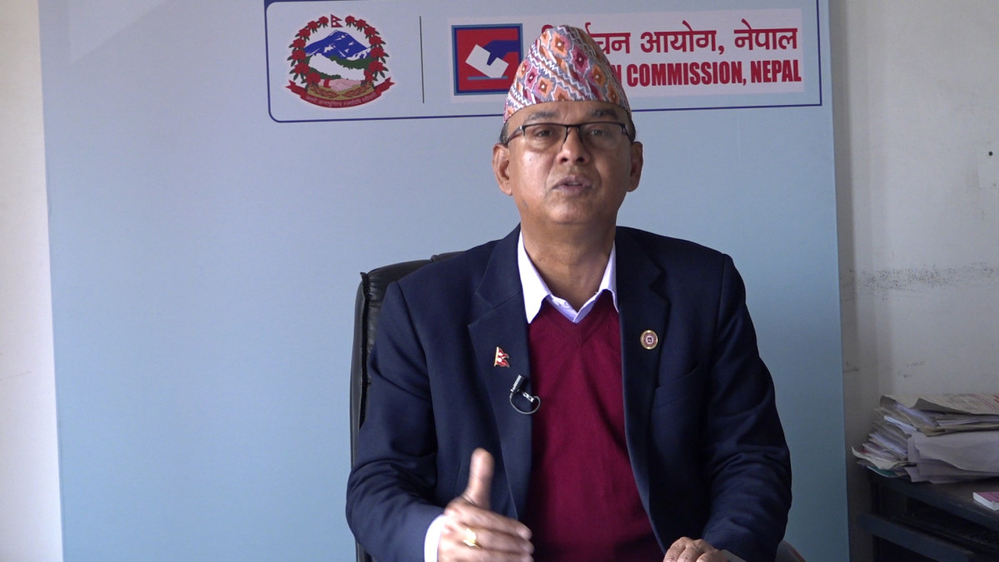
'It seems that more than 5 percent of the votes have been invalidated in the first past the post election system. It seems that about 3 percent of the votes have been invalidated in the proportional election system. Now we have taken this situation a little seriously. Now, the election education voter education program alone may play a major role in reducing the percentage of invalid votes or other factors may also be factors,' said Information Officer Ghimire.
Why were the votes invalid?
According to the Commission's preliminary study, many votes were invalidated because voters directly marked two election symbols on the same ballot paper. When two or more symbols are marked on a ballot paper that is supposed to select only one candidate, the ballot paper is automatically invalidated. However, the Commission is conducting a detailed study on the real nature and cause of invalid votes. For this, the district offices have been requested to study before the voting and more facts will come out after the report is received, the Commission has stated.
Now political parties and candidates themselves should teach
After seeing the high rate of invalid votes, the Election Commission has decided to change the style of voter education in the coming days. Concluding that traditional voter education alone has not worked, the Commission has now formulated a strategy to mobilize candidates and political parties who are directly connected to the voters for this task. After receiving the detailed study report, the commission has also prepared to make the reasons for invalid votes public to the general electorate.