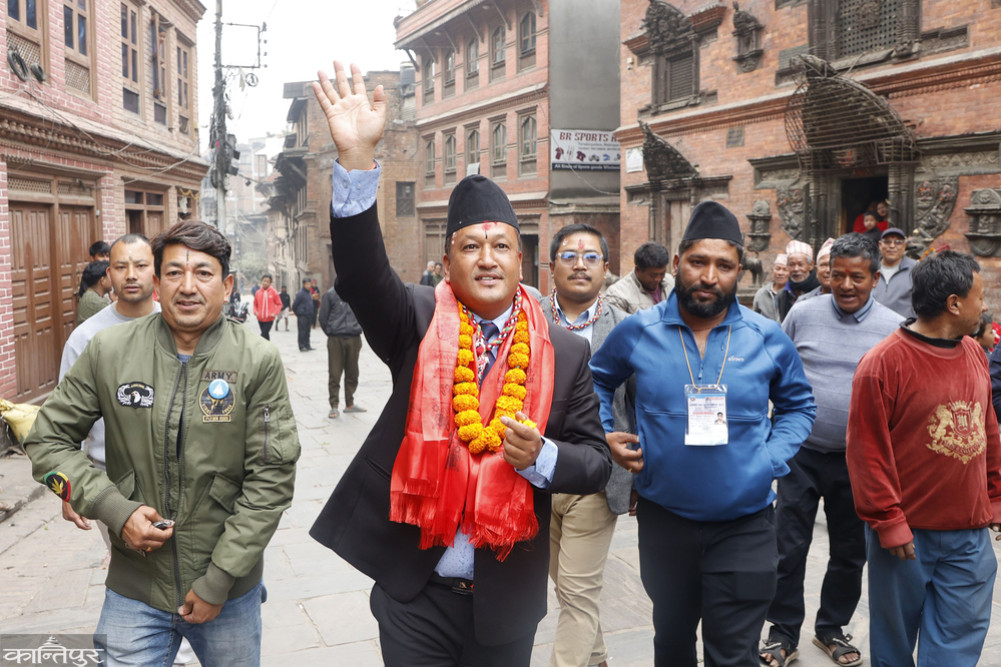
Even during the Maoist wave of 2064 BS or the Left Alliance wave of 2074 BS, Congress candidates used to win in Kathmandu-1 and Kathmandu-4 and NCP candidates in Bhaktapur-1. But this time, the Rashtriya Swayamsevak Sangh (RSS) succeeded in destroying such strongholds and won all 15 seats in the valley.
We use Google Cloud Translation Services. Google requires we provide the following disclaimer relating to use of this service:
This service may contain translations powered by Google. Google disclaims all warranties related to the translations, expressed or implied, including any warranties of accuracy, reliability, and any implied warranties of merchantability, fitness for a particular purpose, and noninfringement.
In this election, the RSVP candidate won only 15 seats in the Kathmandu Valley. The candidates of the parties with historical backgrounds, including the Congress and the UML, which had political power in the previous elections, were defeated by a large margin this time. The RSVP candidate won in both areas of Bhaktapur, which is known as the impregnable fortress of the Nepal Workers and Peasants Party.
In the 2079 election, the RSVP was able to win only 5 out of the 15 seats in the Kathmandu Valley. At that time, the Congress won 7, the UML won 2, and the NEMKIPA won 1 seat. Three years later, in the election held on 21 Falgun, the RSVP made a leap across the country. Kathmandu Valley is known for its 'vote swing'. Many also discuss the victory of Nanimaiya Dahal in the 2038 Rashtriya Panchayat election as an unexpected result. However, even after that, the people here have made it a regular habit to vote. Sometimes, there are even strange choices.
In 2048, there were only 10 constituencies in the valley, including 5 in Kathmandu, 3 in Lalitpur, and 2 in Bhaktapur. At that time, UML won four out of five constituencies in Kathmandu (except Kathmandu-2). UML General Secretary Madan Kumar Bhandari defeated the incumbent Prime Minister Krishna Prasad Bhattarai from Kathmandu-1. UML candidates also won in Lalitpur 1 and 2. In Constituency No. 3, the candidates of the United Jan Morcha Nepal won. NEMKIPA won in Bhaktapur-1 and Congress in 2.
Thus, the influence of the Communist Party in Kathmandu and Lalitpur seems to have become stronger in the first election after multi-party elections. That influence became even stronger in the mid-term elections of 2051. In that election, 7 constituencies were established in Kathmandu. UML candidates won in all of them. UML candidates also won in three constituencies in Lalitpur. NEMKIPA won in both constituencies in Bhaktapur. Thus, in the second election after multi-party integration, communist candidates won in all constituencies in the Kathmandu Valley.
Before the 2056 election, both the Congress and the UML had become infamous due to power struggles and instability. Nevertheless, due to the lack of a strong alternative, the UML's influence was visible, resulting in mixed results. UML won in 5 out of 7 constituencies in Kathmandu (1, 2, 3, 5 and 6) and Congress in 2 (4 and 7). UML won in all three constituencies in Lalitpur. NEMKIPA won in Bhaktapur-1 and Congress in 2.
The UML, which was strong throughout the multi-party era, became very weak in the first Constituent Assembly elections held in 2064. Out of the 15 constituencies in the Kathmandu Valley at that time, the UML could not win a single one. The Maoists, who entered the elections as a new force, showed their influence. The Congress also remained influential.
Kathmandu also has a distinctly rebellious nature, and it seems to have given an opportunity to those who oppose the established government rather than supporting it: Sanjib Humagain, political analyst. In 2064, Maoist candidates won in 4 out of the 10 constituencies in Kathmandu (2, 6, 7 and 10). In Kathmandu-2, the then General Secretary of the UML, Madhav Kumar Nepal, was defeated by the Maoist's Jhakku Subedi. Pushpa Kamal Dahal, who led the armed conflict, won from Kathmandu-10. The Congress candidates won in the remaining 6 constituencies (1, 3, 4, 5, 8 and 9). The Maoists won in all three constituencies in Lalitpur, which the UML had been winning. The NEMKIPA won in both constituencies in Bhaktapur. After 2051, both areas of Bhaktapur were part of the NCP.
The popularity of the Maoists declined after 2064. Its impact was seen in the 2070 elections. Its influence remained weak in constituencies across the country, like in the Kathmandu Valley. The Maoists, which won 7 out of 15 constituencies in the Kathmandu Valley in 2064, could not win a single seat in 2070. The dominance of the Congress and the UML returned here. Accordingly, the Congress won 7 out of 10 constituencies in Kathmandu (1, 4, 5, 6, 8, 9 and 10) and the UML won 3 (2, 3 and 7) constituencies. Congress candidates won in all three constituencies of Lalitpur, where only communist parties have been winning since 2048. Congress also won in Bhaktapur-2. NCP won from Bhaktapur-1.
One reference to understand that voters here can change their minds not only in periodic elections but also in by-elections to be held in a few months is the Ashar 2071 by-election. In Mangsir 2070, UML candidate Madhav Kumar Nepal, who was elected from two seats, withdrew, and Congress's Deepak Kuinkel won the by-election.
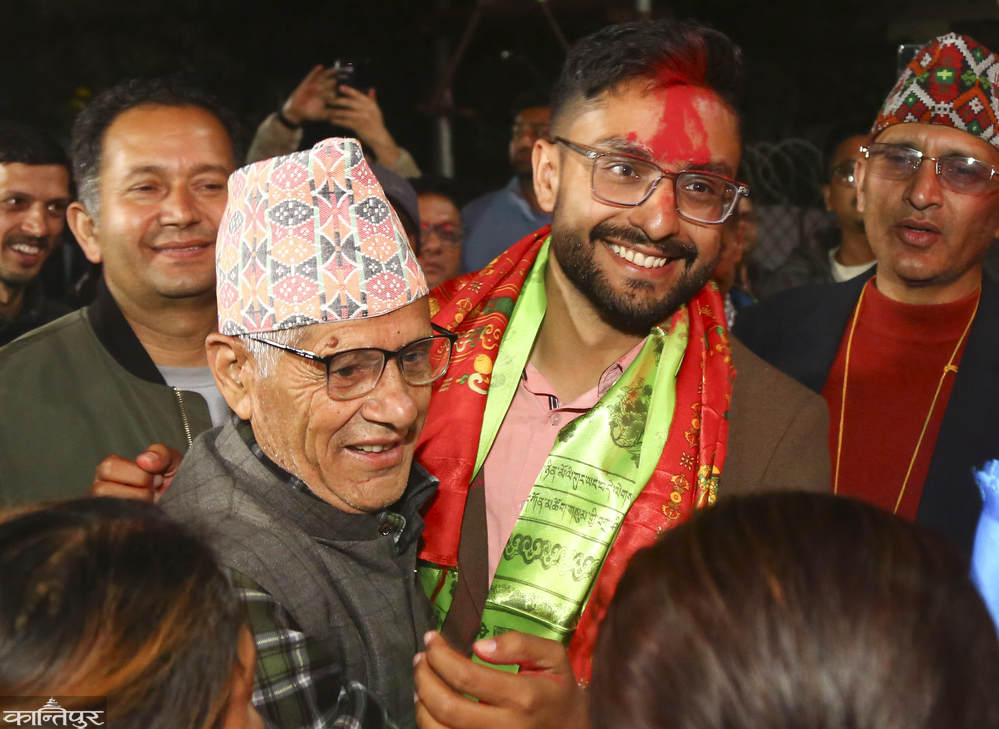
After UML and Maoists entered the election in an alliance in 2074, the influence of communists increased again in the Kathmandu Valley. In this election, UML won 6 out of 10 constituencies (2, 3, 5, 7, 8 and 9) of Kathmandu. Congress won 4 (1, 4, 6 and 10) constituencies. Communist influence was seen again in Lalitpur. UML won Lalitpur-1 and 2 and Maoists in 3. Bhaktapur-2 also saw a UML candidate win for the first time. A candidate from the NCP won in Bhaktapur-1.
A new political force entered the 2079 elections, winning one-third of the seats in the valley. The new party, the Rashtriya Swayamsevak Sangh (RSS), won 4 out of 10 seats in Kathmandu (2, 6, 7 and 8) and Lalitpur-3. Similarly, the Congress won 5 (1, 3, 4, 5 and 10) constituencies in Kathmandu. It also won in Lalitpur-1 and Bhaktapur-2. UML was limited to Kathmandu-9 and Lalitpur-2. The Maoists were again promoted from the valley.
Even in previous changes, some areas did not have much impact. For example, in the Maoist wave of 2064 or the Left Alliance wave of 2074, the Congress candidate used to win in Kathmandu-1 and Kathmandu-4. No matter what happened elsewhere, the NCP candidate used to win in Bhaktapur-1. This time, the NCP succeeded in destroying such strongholds. Political analyst Sanjib Humagain says that the experience of voters continuously giving opportunities to different parties in the capital is also abundant in countries like France, Japan, and Korea. Basically, he says that new ideas and concepts will get priority as the population continues to increase in the capital and surrounding or developing cities.
New people coming to the capital are generally from the middle class. The parties or candidates that support their socio-economic issues are the choice of the voters. ‘Then there is also the practice of looking for indigenous candidates who pay attention to their culture, traditions or ideas, sometimes because only the new population is taken into account,’ says Humagain, ‘in the case of Kathmandu, it also has a distinct rebellious nature. It seems to give more opportunities to those who oppose the established government rather than supporting the established government.’