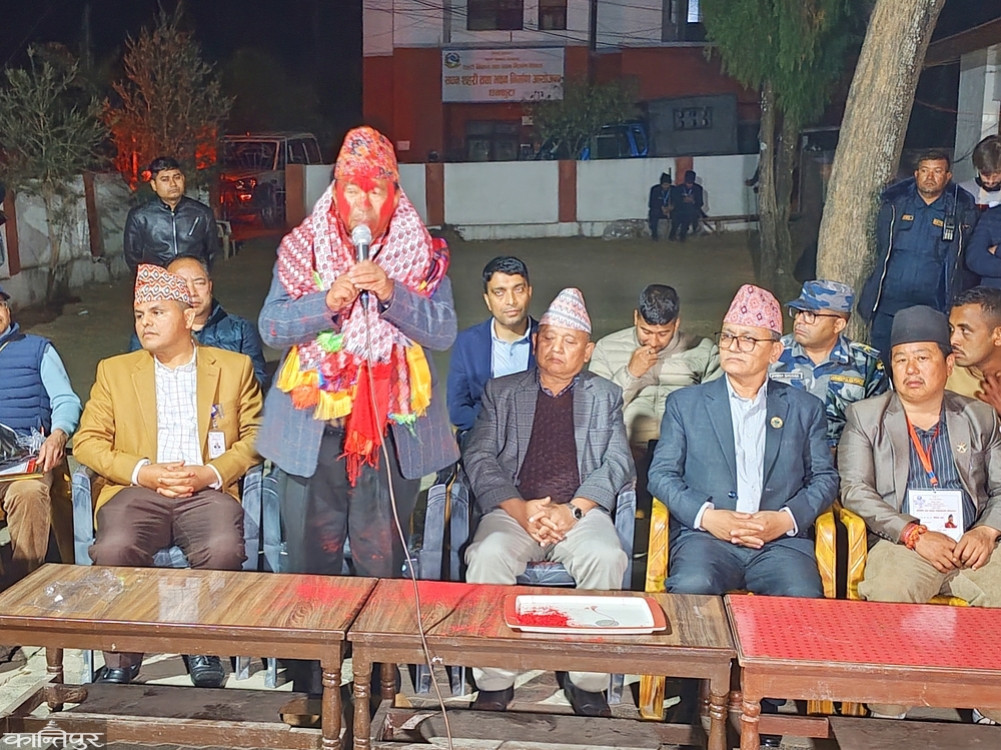
Rai's victory from Dhankuta is being viewed with particular attention in the context of UML's weaker-than-expected performance at the national level.
We use Google Cloud Translation Services. Google requires we provide the following disclaimer relating to use of this service:
This service may contain translations powered by Google. Google disclaims all warranties related to the translations, expressed or implied, including any warranties of accuracy, reliability, and any implied warranties of merchantability, fitness for a particular purpose, and noninfringement.
UML central member Rajendra Kumar Rai has been elected to the House of Representatives for the third time from the Dhankuta House of Representatives constituency. He is in his third parliamentary journey after defeating Congress Dhankuta President Dinesh Rai. According to the final results, Rai received 18,132 votes while his rival Dinesh Rai received 14,275 votes. Rai's victory from Dhankuta is being watched especially in the context of UML's weaker than expected performance at the national level.
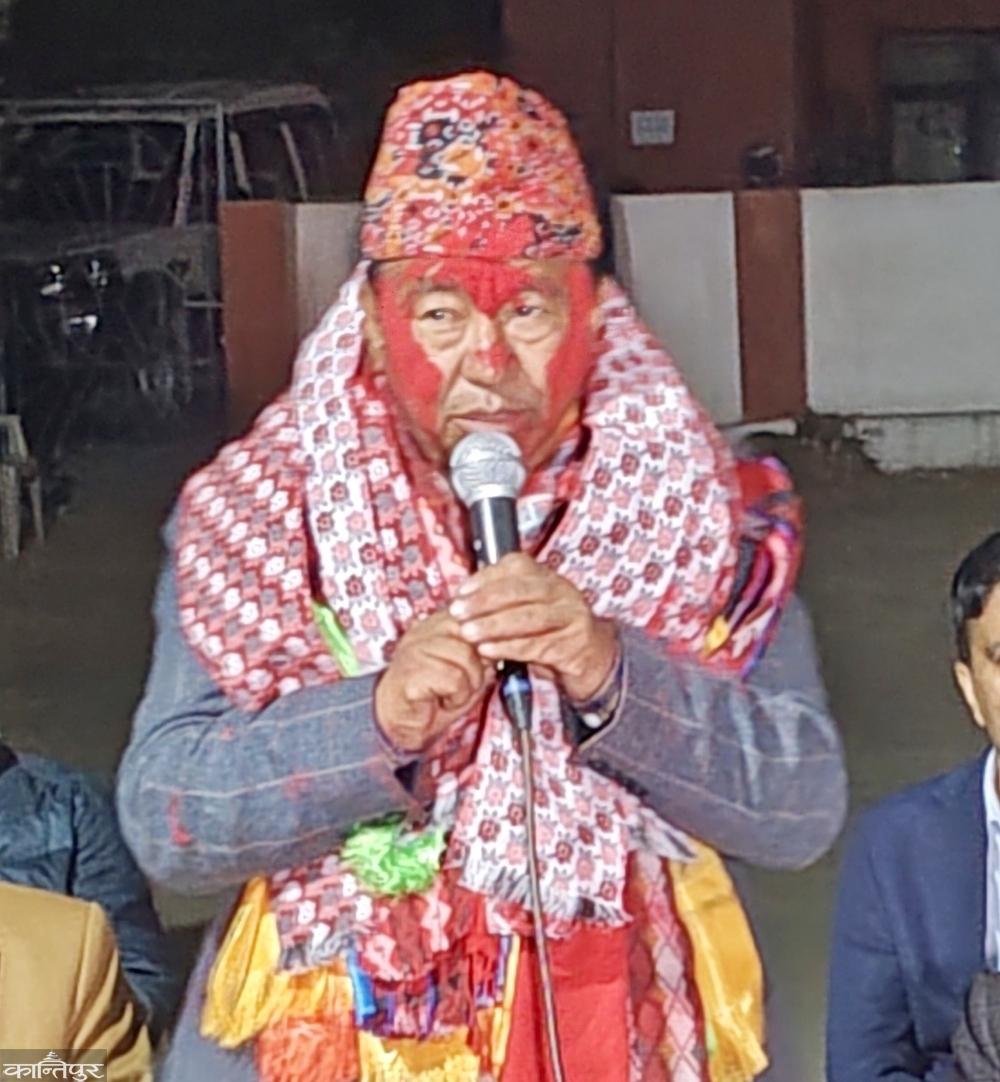 Rajendra Kumar Rai has been known as an active and established leader in Dhankuta politics for a long time. Born in the then Muga VDC in 2022 BS, he started his political journey from student politics.
Rai, who participated in the fifth national conference of ANNFSU held in Kathmandu in 2036 BS while studying in grade 8, remained active in organized politics thereafter. He became the president of ANNFSU Dhankuta in 2047 BS, became a member of the JVS in 2049 BS and became the vice-president of the JVS in 2054 BS. He also established himself as an influential leader in UML's district politics. After 2064, Rai, who served as the district president for about 13 years, remained in the party leadership in Dhankuta even after the unification of UML and Maoist Center in 2075 BS.
His parliamentary journey did not start smoothly. In the second Constituent Assembly election of 2070 BS, Rai, who was a candidate from Dhankuta Constituency No. 2, was defeated by the then RPP leader Sunil Bahadur Thapa by 454 votes. However, in the 2074 BS House of Representatives election, with the strength of the left alliance, he entered parliament for the first time, defeating Thapa by a margin of more than 10,000 votes. Even when he competed with Thapa again in 2079 BS, he repeated his victory by a narrow margin. This time, however, the competition was with Nepali Congress Dhankuta President Dinesh Rai, and he has managed to secure his seat for the third time.
After the UML won all seven local levels of Dhankuta in the 2074 elections, UML Chairman KP Sharma Oli publicly praised Rajendra Kumar Rai as the 'Man of the Election' at a meeting organized in Dhankuta's headquarters, Triveni. This indicated how strong his political influence was in Dhankuta. After that, he also played a role in national politics. In 2079 BS, he became the Minister for Poverty Alleviation, and in 2080 Falgun, he took charge of the Ministry of Drinking Water. Rai, who first became a central member from the 10th General Convention of the UML, has been reappointed to the same position from the 11th General Convention.
But even after being elected for the third time, there are both expectations and complaints among voters. Road infrastructure, drinking water, irrigation, health services, and employment problems still remain major problems in Dhankuta. Voters expected Rai, who was an MP for two terms and also held the responsibility of a minister, to show significant achievements in local development. However, complaints that concrete changes have not been made as expected are starting to be heard at the local level.
This time's election results have also given another indication. Even in the context of UML's weak performance at the national level, Rai's election from Dhankuta is seen as a result of his personal political influence, organizational clout, and local network. The organization and cadre base he built while being active in district politics for a long time are also analyzed to have facilitated his victory.
This term will probably be the most important for Rai, who has reached parliament for the third time. Being elected three times in a row is a great political achievement in itself, but with it, the expectations of the voters have also increased. The citizens of Dhankuta are now demanding concrete development results. Only the role he plays in issues such as roads, agriculture, tourism, employment, and expanding access to basic services will determine his future political future.