Ranju, a candidate of the National Independent Party, won from Kathmandu-1 with 15,455 votes.
We use Google Cloud Translation Services. Google requires we provide the following disclaimer relating to use of this service:
This service may contain translations powered by Google. Google disclaims all warranties related to the translations, expressed or implied, including any warranties of accuracy, reliability, and any implied warranties of merchantability, fitness for a particular purpose, and noninfringement.
Ranju Darshana, who has spent a long time in struggle, social activism and political campaigning, has started a new journey in politics.
She has won the election from Kathmandu Constituency No. 1 of the House of Representatives as a candidate of the National Independent Party with 15,455 votes. She defeated her rival, Congress candidate Prabal Thapa Chhetri. Thapa got 6,364 votes. RPP's Rabindra Mishra came third. He was limited to 3,972 votes.
She was pregnant during the election campaign. She gave birth to a son on Falgun 11 and took her son to vote on Thursday. Although the upcoming journey is more challenging for Ranju, who is in the dual role of motherhood and leadership, she sees it as an opportunity. According to her, if the family, society and state structure support, women can pursue both leadership and motherhood simultaneously.
Interestingly, her victory also gave a 'hat-trick' defeat to Ravindra Mishra, who was also a guardian in the old party at one time. Ravindra Mishra was her leader in the Bibeksheel Sajha.
She was eight months pregnant during the election campaign. With two lives, she continued to carry out her commitments to the people, enduring her pain. Even until the last moment, she kept going to the voters' doorsteps and informing them about her agenda and plans. During that time, she had to face personal questions repeatedly. Comments like 'Who looks after the child?', 'Why are you walking around while pregnant?', 'Health is great' were heard from the door-to-door campaign to social media. Some even joked, 'Raising a child or becoming a leader?'.
Most of those who did so were well-known names in the social strata. But Ranju answered such questions calmly, saying that ‘motherhood is not an obstacle to leadership, but rather a force that strengthens leadership.’ Her results have given a powerful answer to those who mock her motherhood. She used to say, ‘If there is a supportive structure and organization, women can pursue both motherhood and leadership simultaneously.’
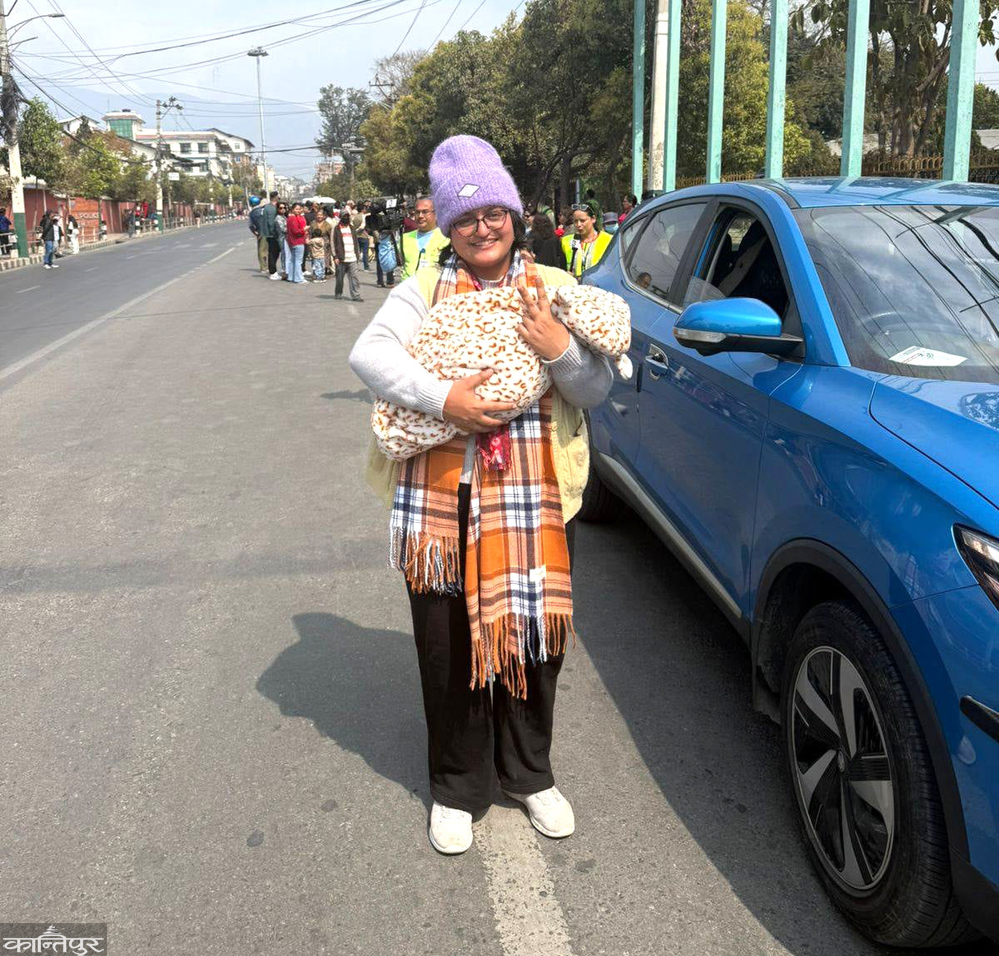
Sometimes words of support were heard during the election campaign, sometimes critical questions were also asked. Women in particular were watching her activism with pride. In an interview with Kantipur, she had said, ‘It is a good thing for voters to ask questions. Only a questioning society can choose good leadership.’ But questions have also been raised about me, and there is criticism about why a pregnant woman would contest elections.’
In 2070, she joined the alternative political campaign Bibeksheel Nepali Party. She started her active political journey with campaigns like 'Nepal Khulla Cha'. She was only 21 years old when she became a candidate for the mayor of Kathmandu Metropolitan City in 2074 BS. She entered politics at a young age and became known as a real orator. Her popularity suddenly increased as a young woman who openly questions leaders and has an agenda to build the country. She was talked about from social media to television interviews. At that time, the Bibeksheel Nepali Party had put her forward as a mayoral candidate.
The Bibeksheel Abhiyan, which emerged as an alternative political force, prioritized new thinking and new leadership. Her political journey, which began with that campaign, went through many ups and downs. The party split, the formation of new parties, and various political situations changed. But she remained steadfast in her commitment to politics. Her political journey was not a short-term achievement. She resigned from the Bibeksheel Sajha Party in December 2078 BS. At that time, she was the Bagmati Province Coordinator of the Bibeksheel Sajha Party. She wrote a letter to the party's chairman, Rabindra Mishra, stating that she had decided to put a complete end to her journey with the party. She said that she would not waste more time and energy on this party, which was only a shell of an alternative political party. She separated from the Bibeksheel Nepali Party and became a candidate from Kathmandu-1 as an independent candidate in the 2079 House of Representatives elections.
She then joined the National Independent Party and as a central member of the party, she contested directly from Kathmandu-1.
Ranju's father left her mother while she was still in the womb. Growing up with her mother, maternal uncle and paternal grandparents, she never got to experience her father's love. Despite financial hardship, social challenges and family circumstances, her mother did not let her study slow down. Her mother educated her by sewing and cutting and raising children in other people's homes. That struggle made her sensitive to society. She started social work during her school days.
She became active in activities like cleaning toll plazas, teaching the children of workers the alphabet, and performing street plays against the dowry system. She said that even if she can bring about a small change in society, it can make a difference in the lives of many people.

