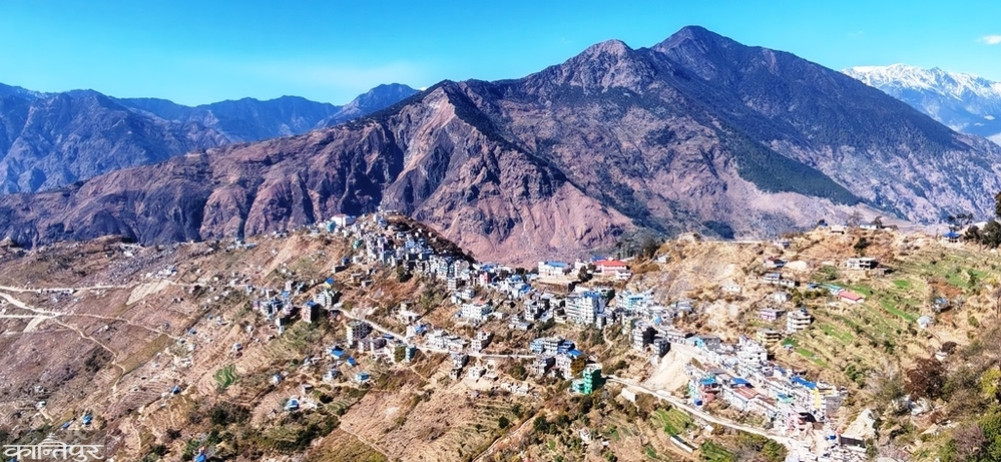
Kalikot is ranked second from the bottom, or 76th, in the Human Development Index. Kalikot, which falls in the 'A' category of armed conflict-affected areas, is in the same position as it was 20 years ago and is not seeing a return on investment.
We use Google Cloud Translation Services. Google requires we provide the following disclaimer relating to use of this service:
This service may contain translations powered by Google. Google disclaims all warranties related to the translations, expressed or implied, including any warranties of accuracy, reliability, and any implied warranties of merchantability, fitness for a particular purpose, and noninfringement.
Kalikot is the 75th district formed after separating from Jumla in 034 BS. Its headquarters, Manma Bazaar, is located on a hill in the Khada Chakra above Jitegada, where the Tila and Karnali rivers meet.
Khadachakra, which has become a modern concrete city after being touched by the Karnali Highway, looked like a stronghold of the army, police and Maoist victims during the armed conflict, but it is now quiet and deserted. Although it looks like a bustling atmosphere during the election and election police recruitment, it gradually becomes deserted. ‘There are not many young people in the village either. The market is also deserted,’ said Ramesh Bista, a former Maoist leader who came to Manma from Narharinath. He went underground in 2052 when he became the commander of Kalikot, Achham and Bajura, left the Maoists in 2057 and lived in Manma Bazaar until 2065. After that, Ramesh, who returned to the village, said that most of the youth of the village had gone to India, Gulf countries and other countries for employment.
Kalikot, which has a diverse climate, is home to a variety of crops, from apples grown in the mountains to summer fruits such as aap, bananas and oranges grown in the mountains, to rice, corn, millet, potatoes, beans, barley, wheat, and sugarcane. Although the number of families who can feed themselves throughout the year is small, agricultural production is enough to cover their food needs for an average of 3 to 6 months, and they have to rely on imported food at other times, according to the District Agricultural Development Office.
Kalikot is second from the bottom, i.e. 76th, in the Human Development Index. Kalikot, which falls in the 'A' category among those affected by armed conflict, is in the same place 20 years ago and now, so the return on investment is not visible.
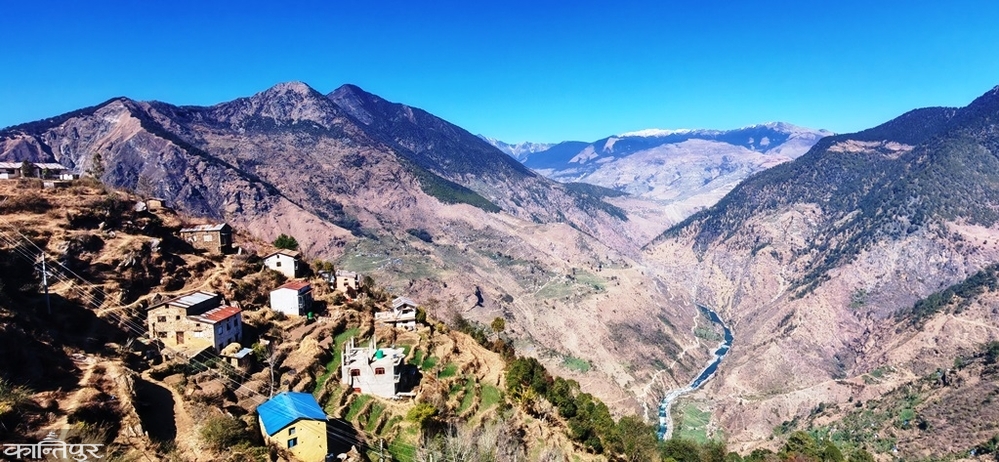
Mugu, which was in 75th place in 2005, has dropped to 66th place, while Mugu's place has been taken by Bajura. However, Kalikot is where it belongs. Kathmandu, Lalitpur and Kaski are ranked first, second and third in the country in the index determined based on indicators such as average life expectancy, literacy rate, per capita income, etc.
After the change in 046, the Congress won in 048, the UML in 051 and 056, and the Maoists won all subsequent elections in Kalikot. Although the lifestyle and condition of the leaders have changed, the living standards of the common people remain the same. The promises of the leaders to change the lives of the locals and develop the village are limited to election slogans and commitments.
For this time's House of Representatives elections, 10 candidates, including two independents, are in direct election competition with various promises and commitments. All of them are arguing that they must win for the prosperity of Kalikot.
Mahendra Bahadur Shahi, who was once the Federal Minister of Energy and the first Chief Minister of Karnali Province, is set to win for the fourth time on behalf of the Nepali Communist Party. At stake is Khadga Bahadur Bishwakarma, who has been a minister twice, and is in the election fray to win for the second time and return his legacy.
UML central member Nagindra Shahi, who is contesting for the second time, Congress leader Harsh Bahadur Bam, who is contesting for the first time, Prakash Neupane of the Rashtriya Swayamsevak Sangh (RSS) who emerged from TikTok with the slogan of youth, Nanda Bahadur Shahi of the Nepali Congress Party (NJCP), Surya Bahadur Shahi of the Nepali Congress Party (RPP), Aj Bahadur Giri of the Rashtriya Janamorcha, independent candidates Man Bahadur Tiruwa and Asmin Bista of the Maoist background are in the election fray.
The general public is disappointed that the plans and policies made for prosperity in Kalikot are not effective. Local youth Hikmat Jung Malla said that most of the development plans that have come are not of good quality and are just budget-making work. ‘The budget has come. The work that can be felt has not been carried out in a way that is tangible. There is a tendency to budget-making in collusion,’ he said. He said that although complaints of budget misuse have been received from time to time in the district, no visible action has been taken so far.
The Surkhet Regional Office of the Commission for the Investigation of Abuse of Authority (CIAA) has stated that 223 cases of budget misuse in Kalikot are from Kalikot alone. Most of them are related to irregularities committed by local levels. These include education, health, roads, irrigation canals, ponds, and drinking water.
There are 9 local levels including the district headquarters, Manma, Tadi, Molfa, Pili, Galje, Nagma in Tilagufa, RCP in Raskot, Sannigad, Bhurabagar in Pachaljharna, Thirpu Bakhre, Raduneta in Palata, and other major market areas.
There are 9 local levels including 3 municipalities and 6 rural municipalities.
According to the 2078 census, Kalikot has a population of 145,292, including 72,245 males and 73,047 females. There are 84,646 voters, including 44,603 males and 40,043 females. In both local level elections after the federal structure, the Maoists have been winning most of the municipalities.
A small number of citizens here, whose main occupations are farming, animal husbandry, seasonal trade, and wage labor, are in government service. Many of those in government service are also in teaching professions. In armed conflict-affected Kalikot, 523 people have lost their lives in the conflict, while 28 are still listed as missing.
In Kalikot, where most citizens go to India for wage labor, the number of people going to third countries in recent times is also notable.
Even though apples planted in the Sipti Bisali area of Phoimahadev, Rachuli, Chilkhaya, and Raskot have started to bear fruit, they have not been able to get a fair price due to lack of easy market access. According to the District Agriculture Development Office, more than 900,000 apple trees have been planted in Kalikot alone. Farmers who planted apples with enthusiasm after the construction of the Karnali Highway and corridor began are disappointed because they did not get a market. 'Even though apples have started to bear fruit, it is difficult to transport them due to the lack of a paved road to the village.' I sold apples from the garden for Rs 30 per kg this year,' said Kal Rokaya, a leading apple farmer from Raskot. He said that he sold apples worth Rs 160,000 this year. Tek Bahadur Shahi, an apple farmer from Tilagufa-11, said that even though the local government has introduced a policy to provide subsidies for apple transportation, it has not been implemented. The 3,000 apple trees he planted have started to bear fruit. This year, 300 quintals of apples have grown in his garden.
After the new structure was established with the slogan of "Singha Durbar's rights in the village" according to the federal structure, the government budget has started coming to the village. There are complaints that misuse has increased since the local level-focused budget started coming. 'It was said that Singha Durbar came to the village.' However, the palace did not come, corruption has spread,' said Daman Raj Bam, a lawyer. 'The budget received at the local level since 2074 should have provided paved roads to all villages, drinking water, electricity to all houses, and irrigation canals to the fields, but there is no development.' He also said that dodgy development has caused landslides everywhere.
Although the district budget has not achieved much, there are positive aspects such as the construction of unpaved roads connecting villages, the increase in educational institutions, improvements in physical infrastructure, the availability of social security allowances in the village, and increased public awareness, said Kalikot Assistant Chief District Officer Janak Sharma. According to him, there are positive aspects such as the displacement of the Tuin, the decrease in the number of residents who fetch water from traditional rivers, wells and stone streams, the increase in the population consuming drinking water from the piped system, and the increase in the participation of both sons and daughters in school education. He said that there are problems such as rampant corruption, lack of a working environment due to political squabbles, and misuse of the development budget in the village.
Airport built, no plane arrived
The Suntharali Airport in Kotwada, which was started by laying the foundation stone in 043, was completed with blacktop in 079 after 36 years, but the plane has not flown. After the runway was completed, the then Tourism Minister Jeevan Bahadur Shahi inaugurated it with pomp in 2073 and after the blacktop was laid, the then Minister Sudan Kirati inaugurated it with pomp in 2079. However, the aircraft has not arrived since then. ‘It was inaugurated twice for publicity.’ However, the aircraft could not board. There is still no destination,’ said Man Bahadur Bista of Narharinath 1.
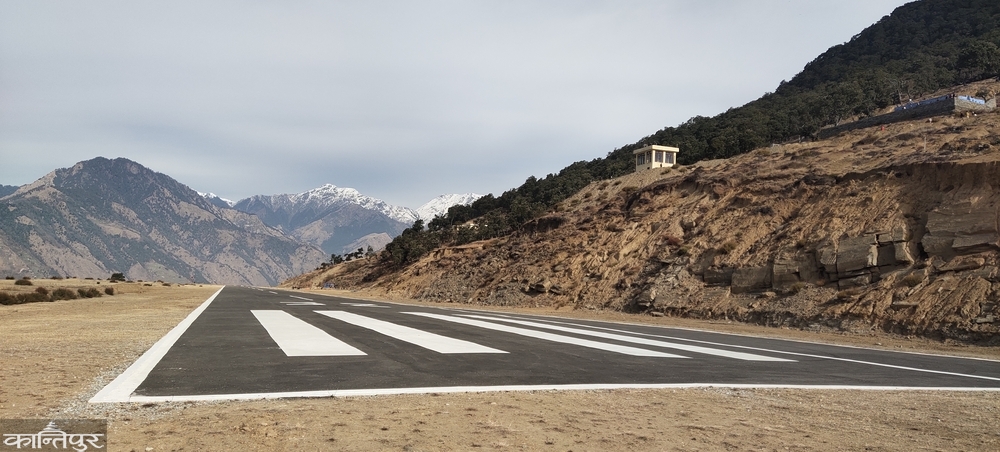
In the construction of Kotwada Airport, which could not gain momentum due to budget shortage and armed conflict, 35 workers were killed by the state in Falgun 2058. The then Royal Nepal Army, which had reached Kalikot in search of the culprits of the attack on Mangalsen, the district headquarters of Achham, was shot by the Maoists after the workers working at the airport blocked the helicopter from landing.
The Civil Aviation Authority has a record of spending only 1 billion on the construction of Kotwada Airport, where work has picked up pace after the restoration of peace. The first Chief Minister of Karnali Province, Mahendra Bahadur Shahi, had spent millions on a cable car to reach the airport, but it is currently stalled. The Sanni-Raskot-Laifu road via Kotwada Airport has also not been constructed. Despite repeated discussions with the Authority, the Ministry of Tourism and Civil Aviation, Narharinath Rural Municipality and the airline to bring Kotwada Airport into operation, the flight route has not been determined, said Karnali Province Assembly member Hikmat Bahadur Bista, who lives in Kalikot.
Other infrastructure plans are also slow
Another big project of Kalikot prosperity, the Fugad Semi-Reservoir Power Project (480 MW), is also currently slow. Although the work started with a DPR 5 years ago, it is currently slow due to budget shortage. Even though more than 90 percent of the compensation for houses and land in the project area has been distributed, the construction work has not gained momentum. Similarly, despite the talk of Tila Hydro, the work is stalled. There is a tendency to not work on the rivers and streams. Khadkaraj Shahi, a central member of the Nepal Workers and Peasants Party, says that if the Fugad Karnali and Tila Hydropower plants can be built for the prosperity of Kalikot, the days of suffering of the people of Karnali will end.
Officials of the Road Department claim that only Rs 5 billion has been spent on central, regional and local road construction plans since 2063. An official of the Road Division Office, Jumla, said that the Karnali Highway and Corridor, which are considered the lifeline of the people of Karnali, have not been upgraded. Ghatpari Chaur connecting Palata in Kalikot, Tibagad and Damdigad in Thirpu, Pantadi in Mahabai, Padamghat bridges have not been constructed even after the contract period expired.
Similarly, the Seri Pantadi, Daha-Pakha-Chhapre-Phoi Nagam road, which has been under construction for a decade. The road connecting Jarkot via Manma-Badalkot has also not picked up speed. Budget comes every year, contractors pretend to do the work, but the budget runs out. District Bar Association Chairman Amalraj Shahi says that if work continues at this pace, those roads will not be completed even in the next 20 years. He said that since it costs crores to break a single stone in the difficult geography of Kalikot, a leader who can allocate sufficient budget and work is needed.
The Karnali Highway and Karnali Corridor, both the national highways, the construction of regional roads, and the construction of municipal and ward administrative buildings have been delayed due to lack of budget, said former Agriculture Minister of Karnali Province Kurmaraj Shahi.
Out of the nine local levels formed after the federal structure change, Khadachakra Municipality and Palata Rural Municipality have not been able to construct their administrative buildings. District Coordination Chief Dhanjit Shahi said that the construction of the building has been delayed due to the time taken to find land for the building in Khadachakra and the dispute over the Palata center.
Out of 82 ward offices in Kalikot, 36 are still in rented houses. ‘Even if nothing else was done in the past 8 years, their offices should have been built,’ said District Coordination Officer Bhim Bahadur Shahi. ‘Most of them have not done that either.’ According to him, the work has not been completed even after two years of the contract for the construction of the building by Khadachakra Municipality, the district headquarters. ‘The road to the market collapsed after digging a hole. The work that was stopped a year ago has not yet started,’ he said.
The 500-kilowatt capacity Sannigad small hydropower project, which was washed away by the 2072 floods, was contracted and started in Asad 2082, but it is not certain that electricity will be restored. Even though the national transmission line has reached some villages through the district headquarters of Kalikot, most villages are still in darkness.
Even though more than Rs 300 million was spent on solar power distribution in the name of the Ujjaya Karnali program a decade ago in the name of the Ujjaya Karnali program, Mayalal Mahatara of Tilagufa-1 said that all the work has not been done yet.
The settlement is being emptied
Due to problems like unemployment, low agricultural production, lack of quality education and affordable healthcare, the villages of Kalikot are in a state of emptying. The number of people coming to Surkhet from almost all the villages here is high.
Most families come to Surkhet with their children, leaving the children there and going to various cities in India to earn money. Padmaraj Pandey, 35, of Khadachakra-3 Tadi, who came to Surkhet with his children five years ago in search of work due to lack of opportunities in the village, worked as a painter and built a one-story house in Surkhet. After learning the job of painting, he took up contracting. After incurring losses in the contract, he has now left his son in Surkhet and gone to Bangalore, India with his wife. ‘I have to meet the household expenses with my earnings from India. There are 7 of us here,’ he said. According to him, the number of people going from Tadi village to Surkhet and Bangalore is more than 300.
Prakash Neupane, a candidate of the National Independent Party, said that it is difficult to see young people in the villages of Tilagufa, Palata and Pachaljharana, which are very cold, dry and drought-prone areas. ‘There are only old people, women and children in the village. Most of the men between the ages of 20 and 60 are not at home,’ he said. Before becoming a candidate, he had visited all the villages of all 9 local levels of Kalikot last Poush to understand the situation in the villages.
The Karnali Employment and Main Mankri Rogzar programs launched by the federal government and the Karnali provincial government with the aim of providing 110 days of work to unemployed youth in the villages have also not been effective. Dadhiram Pandey, ward chairman of Khadachakra 3, said that since there is no young manpower of working age in the villages, it is necessary to involve women at home. He suggested that the amount and working days of the Karnali Employment Program, which was launched with the aim of providing 110 days of work to unemployed families in the village and giving them an opportunity to earn 22,000 rupees annually, should be increased.
Even before the federal structure, NGOs that had been bringing various projects to provide employment to some youth, raising awareness in the community and mobilizing public participation in development work, are now seen hanging boards due to the lack of programs. Ten years ago, more than 300 local employees were employed in 15/20 NGOs operating in Kalikot.
Dilip Kumar Shahi, District President of the Federation of NGOs, said that currently that number has shrunk to only 30/35 employees. He claimed that NGOs in Kalikot have supported the community empowerment campaign by building physical infrastructure such as child-friendly drinking water taps, classrooms, bridges, irrigation canals and ponds to make the area free from open defecation, reduce child marriage, chhaupadi practice, caste discrimination, and increase the participation of girls in education.
Despite the positive aspects such as the increase in literacy rate, increase in enrollment rate, child-friendly model classroom management, training for teachers, use of white boards and markers throughout the district where chalk was used on blackboards, and increased interest of parents in schools, there are also allegations of increasing dependency. The free health service announced by the government is also limited to slogans and propaganda in Kalikot. The health insurance implemented by the government is not effective. The residents of this place are forced to go to Surkhet and Jumla when they fall ill.
The attraction of youth for foreign employment has increased in Kalikot in the last 10 years. The youth of this place, who used to go to countries other than India in negligible numbers, have recently started going to Gulf countries and other countries. Remittances have started coming to the district. According to the records of the Kalikot administration, more than 5,000 people annually seek recommendations for passports. Only Rs 60 million has come to the district in the last 6 months from the 3 remittance receiving organizations operating here. IME Director Naveen Shahi said that most of the money received in this way is spent by the households on luxury goods. According to him, it is spent on mobiles, solar panels, TVs, laptops, etc. Some amount is spent on household appliances, and only a small amount is spent on enterprises.
Conflict of 'selfishness' between employees and public representatives
Although the Local Government Operation Act states that the deputy secretary in the municipality and the branch officer in the rural municipality should be the chief administrative officer, most of the local levels here have a tendency to make lower-level employees the chief to suit their own interests.
Although the livestock branch chief Jawan Singh Bam was the chief administrative officer for a long time in Raskot, the current deputy secretary Mahendra Jung Shahi has come, the branch officer is the head of the office in the district headquarters Khadachak and Tilagufa municipalities. Most of the rural municipalities are also dependent on the incumbent. According to the report of the Accountant General, the total amount of uncollected money in all local levels of Kalikot is more than 1 billion. Locals allege that the tendency to focus on earning money rather than serving the people is causing rifts between local level public representatives and employees.
13 chief administrative officers have been reshuffled in Khadachak Municipality, the district headquarters, since 2079. As per the decision of Bhadra 20, 2079, even though the letter of transfer of Deputy Secretary Buddhi Bahadur Khabi was received, he was transferred without appearing. On Bhadra 29, the education officer of the municipality, the seventh, was given the responsibility of acting until the chief administrative officer appeared.
Due to political differences, he was not chosen by Mayor Kamal Bahadur Shahi and Deputy Mayor Ganesh Bahadur Shahi. On their recommendation, Prabal Jung Shahi, the seventh officer of the municipality's planning department, was made acting. Prabal, who worked hard to win the alliance in the elections, was given the responsibility of acting office chief until 29 Kartik 2081. After he was not satisfied with him either, a letter was sent to Aviraj Shahi, another seventh-level officer of the municipality, canceling his appointment as an officer on 11 Mangsir 2081 as per the decision of 30 Kartik 2081.
Although the municipality, which had been without a chief for 3 months, received a letter transferring Raju Prasad Sah, a deputy secretary in the additional group of the Ministry of Federal Affairs and General Administration, as per the decision of 4 Falgun 2081, he did not appear and was transferred to the District Coordination Committee Bara.
After that, the municipality recommended Devkiran Budha, the acting chief administrative officer of Tilagufa, on 11 Falgun. Budha could not last a month either. After he also did not work, on 20 Baisakh 30, the municipality recommended Education Officer Chaulagain again and he worked until Bhadra.
On Bhadra 12, Deputy Secretary Padam Bahadur Budha was transferred from the Karnali Province Chief Minister's Office. After he also went to Dullu Municipality in Dailekh on Kartik 20, stating that he was uncomfortable with working, the municipality sent a written letter again on Mangsir 4 and made him the acting Chief Administrative Officer. 'I don't really want it either. When the job ends, will I be accused of irregularities in some case? I am afraid,' says Chaulagain.
Hope for prosperity
Rights activist Lilaram Neupane says that Kalikot, which has two major rivers, Tila and Karnali, and sufficient rivers and canals, can become a hub for hydropower. 'Kalikot's prosperity is possible through hydropower. There is a possibility of generating electricity in 10/12 places from a single river,' he said. Similarly, Nepal's highest Pachaljharana (481 m) is located in Kalikot. He said that if the Chuli and Badimalika's Triveni and Ramarosan, Rurubanchu tourist sites here are properly developed, tourists going to Rara and Mansarovar can be brought here.
Kalikot also has a mine of the valuable mineral kainate, which is found in 319 species of herbs. Shubhakalika Rural Municipality Chairman Govinda Prasad Acharya said that if kainate is properly managed, the state can collect crores of revenue.