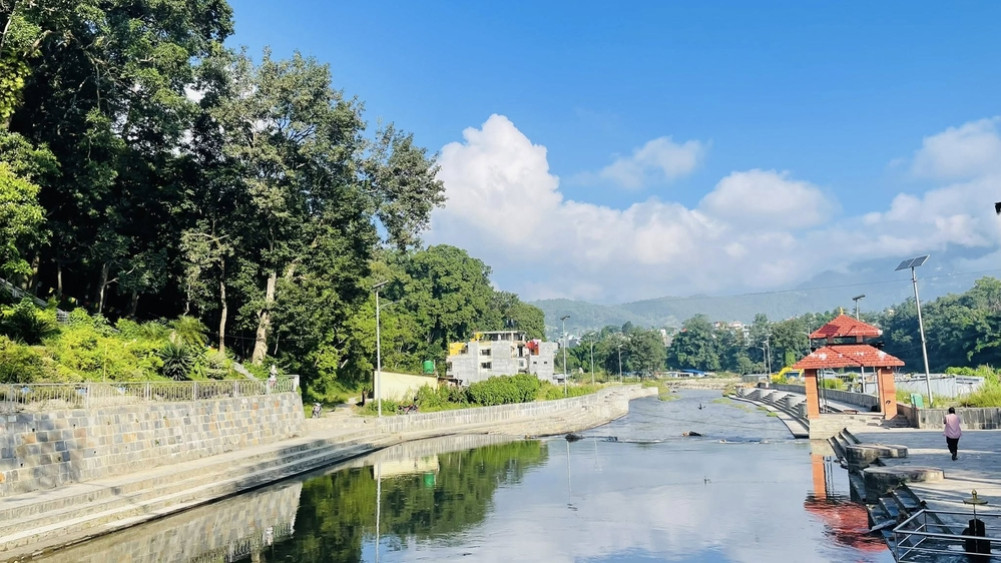
In this area, where the Congress and UML have been winning in turn, the candidacies of UNEP President Kulman Ghising and Raju Pandey from the Rashtriya Swayamsevak Sangh (RSS) have also heated up the atmosphere.
We use Google Cloud Translation Services. Google requires we provide the following disclaimer relating to use of this service:
This service may contain translations powered by Google. Google disclaims all warranties related to the translations, expressed or implied, including any warranties of accuracy, reliability, and any implied warranties of merchantability, fitness for a particular purpose, and noninfringement.
Kathmandu-3 is a constituency where voters seem to be testing their votes in different ways in every election. Kathmandu-3 has often seen candidates from different parties win in every election.
In this area, where the Congress and UML have been winning in turns, the atmosphere has also been heated by the candidacies of UNEP President Kulman Ghising and Rashtriya Swayamsevak Sangh (RSS) President Raju Pandey.
Ashtalal Marhajan, 49, who was met in the old settlement 'Deshe' village in Gokarneshwor-4, says that this time no candidate has come to seek votes. 'So far, no candidate has come to seek votes.' I have heard that there are more than 20 candidates in the field,' said Marhajan, 'I have voted for candidates from both the UML and Congress parties in the past. This time, I am thinking of making a decision after the parties come to seek votes.' He says that he will choose people who listen to the people and work. He says that his vote will not be wasted as he is in the mood to choose a candidate who listens to water supply, sewage and local problems.
Meena Gurung, who runs a drug store in Sundarijal, says that she is thinking of voting for different parties in direct and proportional representation this time. ‘So far, discussions are underway to divide the votes among the family. No one has come to ask for votes,’ Gurung said. ‘A decision should be made after the candidate goes door to door.’ But direct votes are given to the candidate who listens to the problems of the people.’
 Buddhi Prasad Pudasaini of Gokarneshwor-5 runs a clothing store. He also says that he is hoping that the new candidate will do something. Januka Khanal of Nayapati is in favor of not voting for the old parties this time. ‘In the past, we have voted for the Congress and UML, this time we are thinking of looking at the new ones,’ she said.
Ramji Giri of Gokarneshwor-5 says that chaos and unrest have increased in the country. Therefore, he said that he would vote for the party that can lead the country on the right path. But he also said that no one has asked for votes so far.
This area, which has been won by Congress and UML in turn, has not been won twice in a row since 2064 BS. In the first Constituent Assembly election in 2064 BS, Congress's Chakra Bahadur Thakuri defeated UML candidate Rameshwor Phuyal. In 2070 BS, Phuyal defeated Thakuri. Both Thakuri and Phuyal had become candidates for the House of Representatives as VDC chairmen. Thakuri was the former chairperson of Jorpati VDC, while Phuyal was from Alapot.
In 2074 BS, UML candidate Krishna Bahadur Rai won, while Congress' Ambika Basnet was defeated. But in the Provincial Assembly, Phuyal, who was competing with his father, entered into competition with Bimal Thakuri. If Thakuri is defeated, Phuyal will be elected.
 In the 2079 BS election, the results again came in favor of the Congress. The previous winner, UML candidate Krishna Bahadur Rai, lost and Congress's Santosh Chalise won. Thus, the voters of Kathmandu Constituency No. 3 have a history of sending UML and Congress candidates to parliament alternately.
This time, the only candidate who has repeated is UML's Rameshwor Phuyal. New faces are in the fray from Congress, NCP and RPP. After a corruption case was filed against the incumbent MP Chalise, the Congress has fielded former ward chairman of Gokarneshwor-6, Ramesh Aryal. The NCP has fielded Niraj Lama. Similarly, the RSP has fielded former Metropolitan Police Chief Rajunath Pandey.
Kulman Ghising, who broke away from the Rashtriya Swayamsevak Sangh (RSS) and formed his own Ujjain Nepal Party (Ujjain Nepal Party) and entered politics, is also in the fray. Ghising's home district is Ramechhap. However, it seems that he has chosen this constituency because he lives in the Buddhist Mahankal. Similarly, the RPP has also fielded a candidate from Buddhist.
What is the geography?
Kathmandu-3 includes ward number 6 of Kathmandu Metropolitan City, all wards of Gokarneshwor Municipality, and wards 1, 2, and 3 of Kageshwori Manohara Municipality. In 2048 BS, there were 5 constituencies in Kathmandu district. As the population increased, the number of constituencies was increased to 7 in 2056 BS.
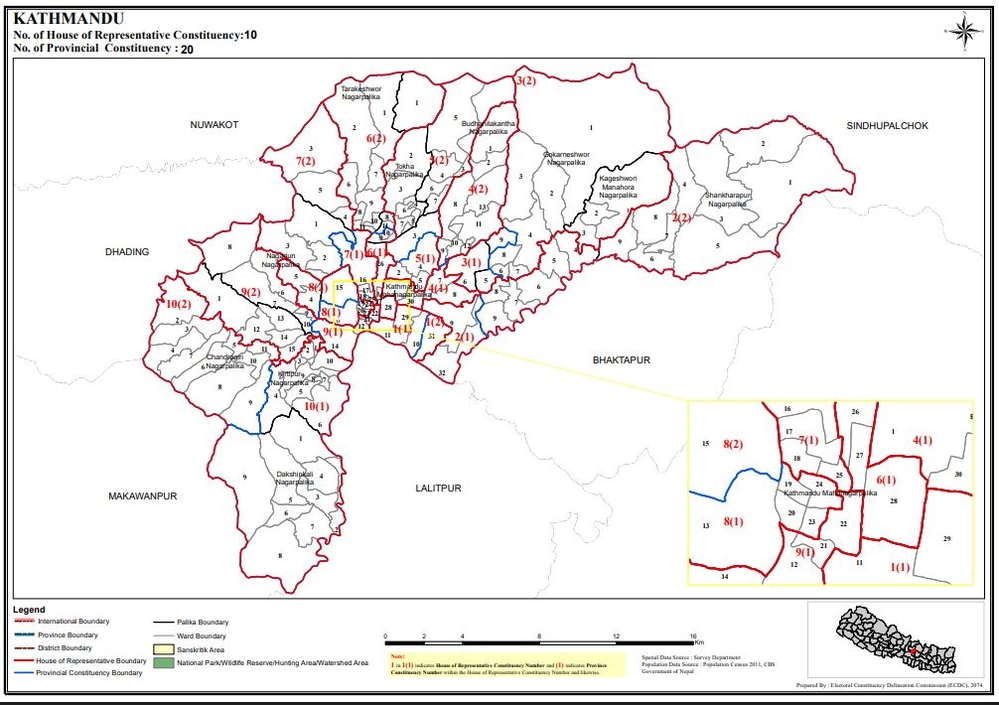 After the results of the 2058 BS census were made public in 2060 BS, the constituencies increased further according to the population of Kathmandu. From 7, Kathmandu reached 10 constituencies. After that, these constituencies still exist. The first election was held in 2064 BS based on 10 constituencies. Kathmandu-3 was created by separating the initial 1 and 2 constituencies.
Kathmandu Metropolitan City Ward No. 6, the then Jorpati VDC, which was in Constituency No. 1 in the first general election and Constituency No. 2 in 2056 BS, is now in Constituency No. 3. Baluwa, Gokarneshwor, Nayapati and Sundarijal, which were in Constituency No. 2 twice, are also in this constituency. Bhadrabas and Alapot constituencies, which were once in Constituency No. 1, are now in Constituency No. 3. Gagalpedi, which was in Constituency No. 2 in 2048 BS and Constituency No. 1 in 2056 BS, is now Constituency No. 3.
Before the creation of 10 constituencies, UML dominated Constituency No. 1. Damannath Dhungana was elected from the Congress once in Constituency No. 2. Apart from him, UML candidates were always elected.
The atmosphere heated by Kulman's entry
Kathmandu-3 is also in the news because of the choice made by UNEP Chairman Kulman Ghising . Although there was an agreement to collaborate at one time and later form a single party, Kulman formed a separate party .
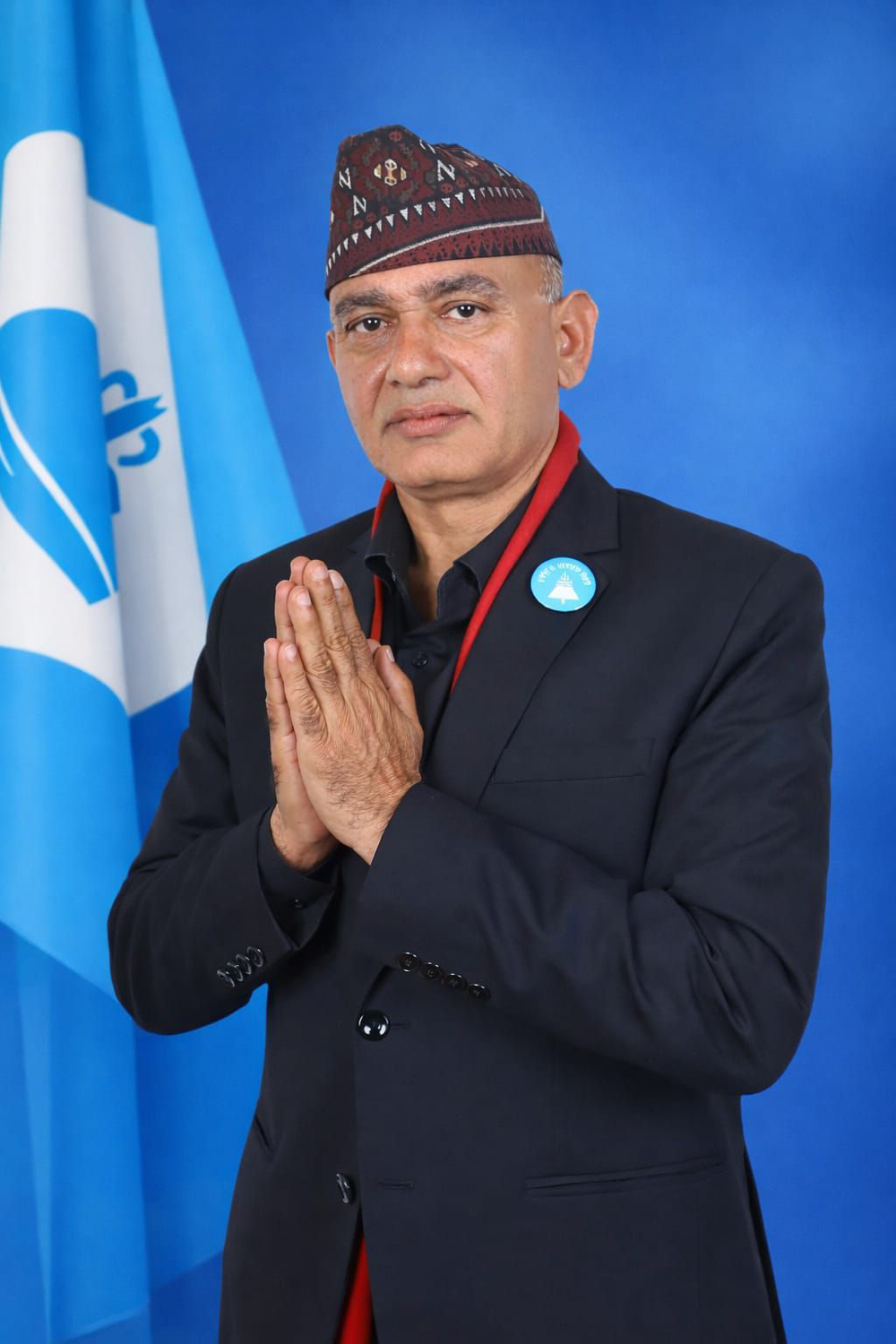 The Rashtriya Swayamsevak Sangh (RSS) has fielded former Mahanar Police Chief Rajunath Pandey against Kulman . Kulman has put forward the slogan that he has made the country free from load shedding . The candidates are working from the party palace to the tea shop to please the voters . In the meantime, Kulman was met in Makalbari . Meeting with the workers in the Bagmati Corridor, he claimed that the basis for his election from this constituency has been set .
Similarly, UML candidate Rameshwor Phuyal also claimed that he would win on his own . Meeting with the workers in the Thali area, he argued that UML is sure to win this time . He claimed that the voters will do justice this time as he was defeated in the previous provincial assembly.
Congress candidate Ramesh Aryal was also found in the Gokarneshwor temple area. He was formulating an election strategy with leading cadres. He seems confident of winning the election as it is a constituency won by the Congress and he himself is also a former ward president. He argues that he will win if he can protect the votes he received in the past.
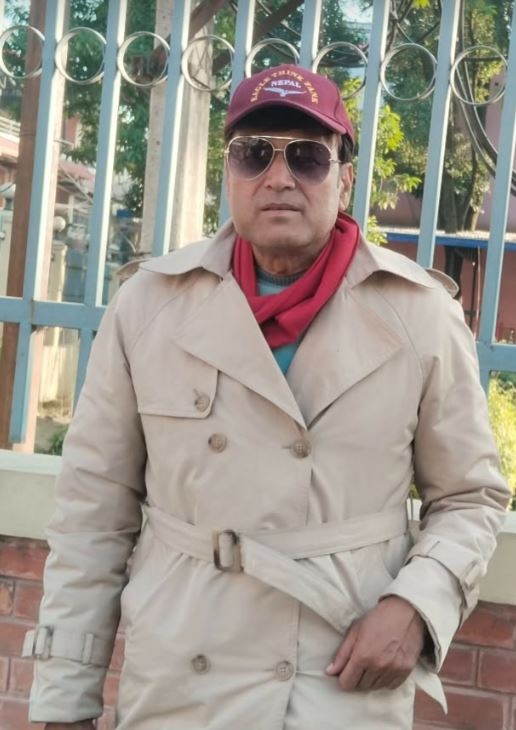 RSP candidate Raju Pandey, who reached the voters for the first time, also claims that he will win like other candidates. Talking to Kantipur after the party entry program at the Vasuki Party Palace in Nayabasti, he said that he will win Kathmandu-3 himself because of the atmosphere of the RSP across the country. He said that it is meaningless to know who won in the past and that now people will vote only after understanding.
RPP candidate Sundarram Bohora was found at a tea shop in the 'New Basti Youth Club' chowk in Naya Basti. He was chatting with the old and young while drinking tea. He said that his competition will be with the Congress and UML only. He also claimed that the people of Kathmandu-3 will not trust the new and outside candidates.
These are the results of 2079.
Kathmandu Metropolitan City Ward No. 6, which falls under Kathmandu Constituency No. 3, falls under the Boudha area. In the 2079 local elections, Bhuvan Lama of the Congress won this ward by getting 3,876 votes, while his competitor Basanta Lama of the UML got 2,732 votes. This is an area with a majority of ethnic minorities. Ghising has considered this as his base area. The old parties are also trying to protect their past voters.
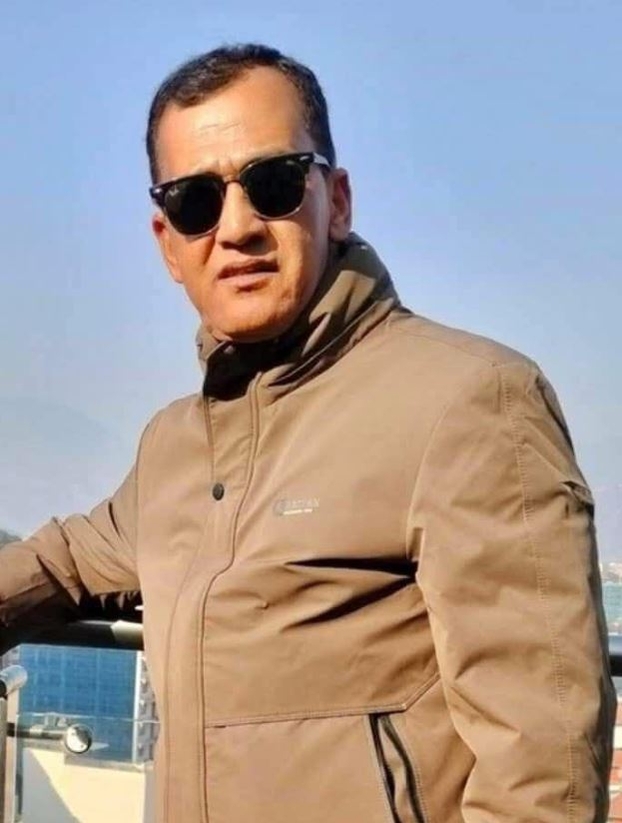 Kathmandu constituency number 3 includes Gokarneshwor Municipality. In the local elections 2079, Congress's Deepak Risal was elected mayor in Gokarneshwor. Although Congress won the mayor's post, CPN-UML candidate Sannani Lama was elected deputy mayor.
Although the mayor lost in Gokarneshwor, UML won the deputy mayor and 5 wards. UML had a total of 23 posts, while Congress won a total of 21 posts, including the mayor and 3 ward chairmen. In ward number 4, an independent candidate rebelled against Congress and won.
Kathmandu constituency number 3 includes wards 1, 2 and 3 of Kageshwari Manohara Municipality. In the local elections, Congress' Upendra Karki was elected mayor of Kageshwari Manohara. While UML won in wards 1 and 3, Congress won in wards 2. The RSVP did not participate in the 2079 local and provincial elections. In the provincial assembly elections, the Congress won in both the Kathmandu 3 constituencies, while the UML came second in both.
In the 2079 House of Representatives elections, the voters of Kathmandu 3 had elected the Congress' Santosh Chalise. He won with 15,158 votes. UML's Krishna Bahadur Rai got 11,196 votes. The third-placed RSVP candidate Durga Bikram Thapa Chhetri got 5,865 votes.
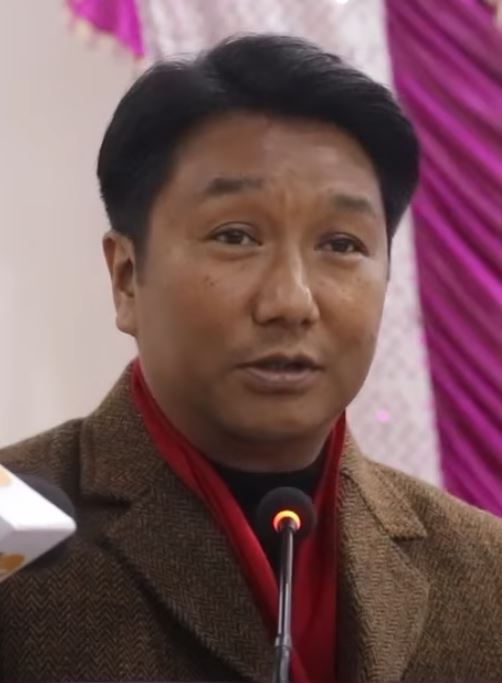 In the proportional representation, the Congress got 10,619 votes, UML 9,449 votes, and the RSVP 9,218 votes. Looking at this, it can be expected that there will be an interesting clash this time in the constituency where the UML-Congress have been winning alternately.
In the 2079 elections, 23 candidates were in the fray. There are currently 22 candidates. Compared to 2079 BS, 6,000 new voters have been added. The total number of voters in Kathmandu 3 is currently 64,479.
Who else are the candidates?
Apart from Congress, UML, Rashtriya Swayamsevak Sangh (RSS) and Ujjwal Nepal, Sundar Ram Bohara from RPP, Pranildhwaj Karki from Janata Samajwadi Party Nepal, Madan Shrestha from Nepal Mazdoor Kisan Party, Shekhar Aryal from Pragatisheel Loktantrik Party, Kul Bahadur Lama from Mongol National Organization, Babukaji Karki from Nepal Communist Party (United), Prem Tshiring Sherpa from National Republic Nepal, and Subash Ghising from Shram Sanskriti Party are candidates.
Similarly, Jit Bahadur Tamang from Miteri Party Nepal, Shekharnath Acharya from Communist Party of Nepal (Maoist), Rupsagar Devi from Aam Janata Party, Keshav Nepal, Pradeep Kafle, Ram Krishna Pujari, Shree Krishna Baral, Sajjan Acharya and Suresh Kumar Dhungana from Swatantra have become candidates.