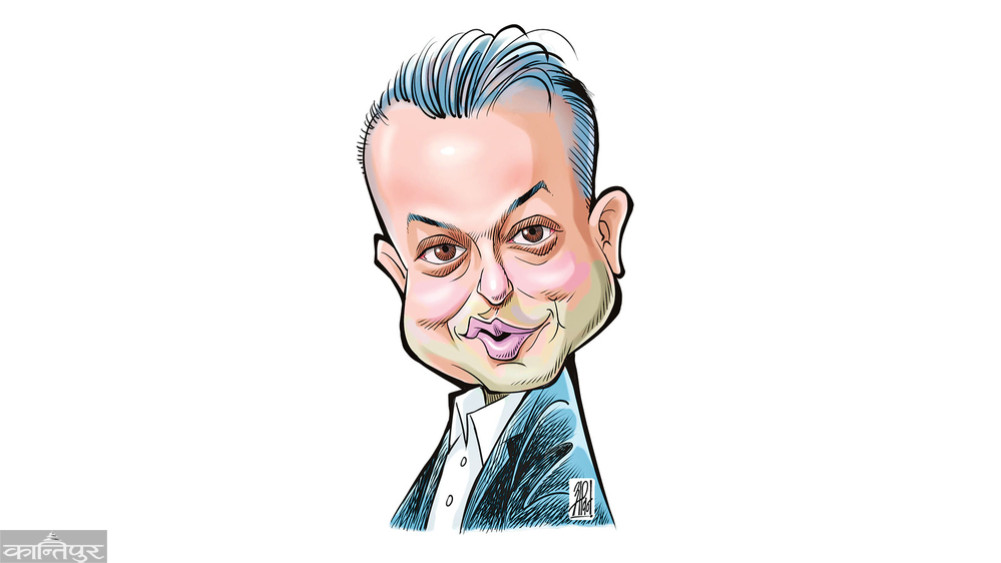
Launching the election campaign in Sarlahi, Congress President Gagan Thapa said, ”I am not a leader, I have come to become a son.” Rashtriya Swayamsevak Sangh (RSS) candidate Amresh Singh, on the other hand, is in the election fray, saying he will commit self-immolation if he does not become the Prime Minister.
We use Google Cloud Translation Services. Google requires we provide the following disclaimer relating to use of this service:
This service may contain translations powered by Google. Google disclaims all warranties related to the translations, expressed or implied, including any warranties of accuracy, reliability, and any implied warranties of merchantability, fitness for a particular purpose, and noninfringement.
Sher Bahadur Deuba was the president of the Nepali Congress during the 2079 House of Representatives elections. The then General Secretary Gagan Thapa wanted economist and former Vice Chairman of the National Planning Commission, Swarnim Wagle, to be the Congress candidate in some constituency. He was even ready to give up Kathmandu-4, where he was standing, for Wagle.
He chose Sarlahi-4 as an alternative for himself. Deuba did not listen to Thapa's proposal, but instead gave the Kathmandu-4 ticket to former Nepali Congress president Nain Singh Mahar. As soon as he learned that Mahar was leaving with the ticket from the Prime Minister's residence in Baluwatar, Thapa's well-wishers informed him, and due to which Mahar was unable to register his candidacy. After that, Thapa stopped in Kathmandu-4. The day of ticket distribution was - 23 Asoj 079.
Thapa is the party president after about 3 years and 4 months. In the previous election, Thapa has given a ticket to the person to whom Deuba had given a ticket from Thapa's Kathmandu-4, now Thapa has given a ticket from Deuba's traditional constituency of Dadeldhura. Nain Singh Mahar got a ticket from Dadeldhura. Thapa, on the other hand, has dropped to Sarlahi-4 after being allowed to choose his own constituency.
Even before the special general convention, recommendations for Congress candidates had come from all constituencies. Recommendations for Thapa came from six places, including Tehrathum, Dhankuta, Sarlahi-4, Kathmandu-4, Kapilvastu-1 and Rolpa. After the Nepali Congress Central Working Committee nominated President Thapa as the future Prime Minister, the election atmosphere in Sarlahi-4 and the entire country has heated up.
Thapa, who was first elected through proportional representation in 2064, has won three consecutive elections from Kathmandu-4. One of his competitors is Amresh Kumar Singh, who has won three consecutive elections from Sarlahi-4. Amresh was defeated in the 2064 election and won the elections from the Congress in 2070 and 2074. He was also an aspirant in 2079 but was not recommended by the district, and the center did not give him a ticket. After that, he filed an independent candidacy, but defeated the Congress-Maoist alliance. This time, he is a candidate from the Rashtriya Swayamsevak Sangh (RSS).
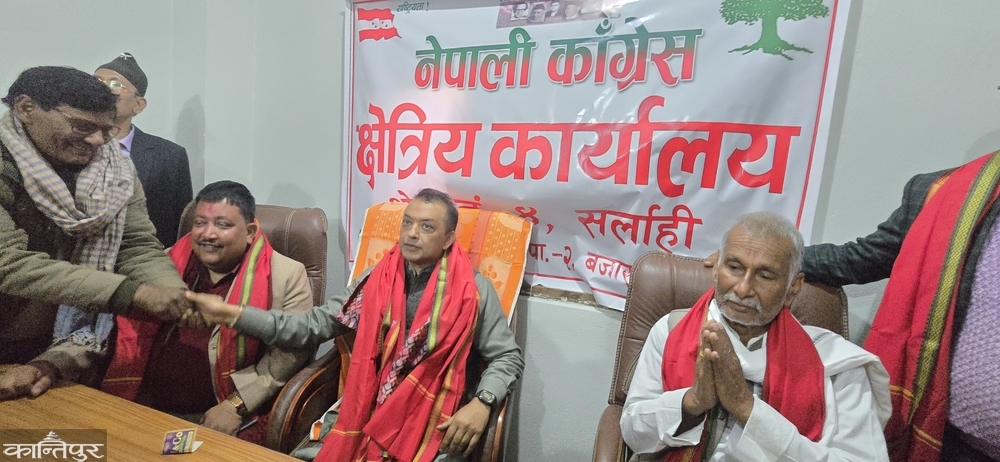
The concern about why Thapa is taking the risk of contesting in the same constituency where the Congress candidate lost in 2079 BS is not limited to Sarlahi-4. Thapa, whose ancestral home is Solukhumbu and who grew up in Kathmandu, choosing ‘core Madhesh’ is itself a challenge. No ‘Hillside’ candidate had previously been the main contender from that constituency.
In 2079 BS, the Congress did not win a single seat in Sarlahi, which has four constituencies. Independent candidate Amresh won by getting 20,017 votes, while his nearest rival Nagendra Kumar of the Congress got 18,253 votes. At that time, the Congress was also supported by the then Maoists, Unified Socialists and other parties. In 2074 BS too, the Congress had won by a slim margin. Amresh of the Congress won the election by getting 29,675 votes, while his nearest rival Rakesh Kumar Mishra of the RJP got 28,136 votes.
Congress President Thapa, on the other hand, says that he came to Sarlahi to understand the entire nation and form a national perspective. ‘While fulfilling the responsibility of the Congress Party President, I have to have a national perspective. I am a person from the hills. I grew up in Kathmandu. I came to Sarlahi-4 because I felt that I could not understand the feelings of the entire country without immersing myself in Madhesh and feeling it. I know that this is a risky decision. I came knowing that it will be difficult. I made the decision with understanding,’ Thapa told Kantipur.
He says that he chose Sarlahi because his party friends have been calling him since the last time. However, some analyze that the ‘ego’ between Congress Sarlahi leaders Surendra-Birendra Singh Dajubhai and Amresh Singh also played a role in this. Birendra is the Vice President of Congress Madhesh Province. Not only in 2074, but in 2079, when Amresh won the House of Representatives as a rebel, Birendra was elected as a member of the Provincial Assembly from Sarlahi-4 (1). He also became a minister in the Madhesh Pradesh government. His brother Surendra was the party's district president since 2078 BS. He resigned from the post of president last Bhadra after being convicted by the Supreme Court in a corruption case. This time, when the regional committee recommended candidates, Birendra's name was also sent along with Gagan Thapa.
Amresh Singh, who is competing with Congress president Thapa, is a leader who emerged after the 2062/63 people's movement. He says that he became active in politics after being influenced by the ideas of BP and Girija Prasad Koirala. While doing his PhD at Jawaharlal Nehru University in India, he had established relations with the Indian establishment. Later, he also became close to the Koirala family. Amresh was active as a 'back channel' negotiator in the 2062/63 people's movement and the peace process. He was considered close to Mahant Thakur and Krishna Sitaula in the Congress. Amresh was also there when 10 people were nominated from the Congress in the 2063 interim parliament. He became a candidate in the first Constituent Assembly election of 2064 BS but got the third vote.
Sarlahi-4 is also the constituency where old leader Mahantha Thakur also did politics. Thakur had won the elections of 2048, 2051 and 2056 from the then Sarlahi-5, which was located in the same geographical area. When the 2064 BS elections came, Thakur had left the Congress and formed the Terai-Madhesh Democratic Party (Tamlopa) under his own leadership. At that time, when the constituency was expanded, Sarlahi-6 was formed by including most of the areas of the former Sarlahi-5. Thakur was defeated when the election was held in that constituency. After that, Thakur did not contest from Sarlahi, but went to Mahottari.
The leader who defeated Thakur and Singh in the first Constituent Assembly election of 2064 BS was the then Madhesi Janadhikar Forum candidate Shivpujan Ray Yadav. While Yadav got 15,688 votes, Thakur had 15,416 votes and Amresh had 11,971 votes. At that time, there was a competition between Yadav and Amresh for 'booth capture'. Explosions were set off outside various polling stations to influence voters.
Amresh's brother Shambhu Singh was killed in an explosion outside the Gadhaiya polling station. There has been a back-and-forth between Amresh and Shivpujan regarding this incident. Amresh alleges that Shivpujan ordered his brother's murder. Shivpujan claims that Shambhu himself was killed when a bomb he was carrying exploded. Similarly, the police opened fire in the air after an attempt to capture a booth was made at the Arnah polling station.
Less than three years after winning the first Constituent Assembly election, a case of misuse of diplomatic passport was filed against Shivpujan and he was suspended. Since then, he has not been able to enter parliament, but he is equally active in politics. In the second Constituent Assembly election of 2070, Shivpujan ran as a candidate from the Tarai-Madhesh Sadbhavana Party, but could not win the election. In 2074, he ran as a candidate from the Maoists. But his candidacy was cancelled because he was found guilty by a special court in the passport case. Shivpujan alleges that Amresh Singh used all his power to cancel his candidacy.
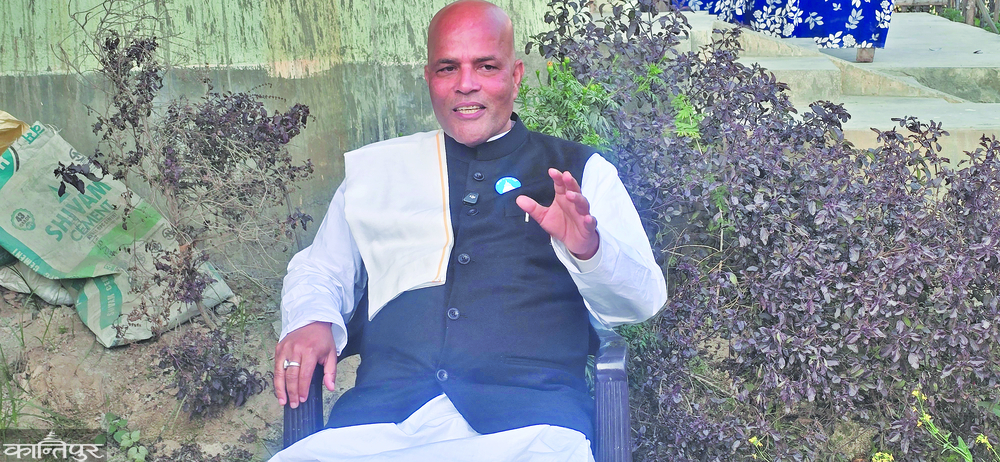
The Maoists supported the Congress in the 2079 election. Shivpujan made his daughter Madhumala Kumari Yadav an independent candidate. She came third with 14,622 votes. This time too, Madhumala Kumari has filed an independent candidacy. Her son, 27-year-old Amanish Kumar, is the UML candidate from the same constituency. Why did Shivpujan make his son and daughter candidates together? There are two arguments for this, one - to make his daughter's candidacy active if his new party UML betrays him at some point, and two - to get election campaigning and booth agent facilities if both of them remain candidates.
Shivpujan's father Amiri Rai Yadav was the Pradhan Panch of the then Gadhiya Village Panchayat during the Panchayat period. He became the VDC chairman on behalf of the Congress in the 2049 local body elections. Shivpujan's younger son Rajababu Yadav is the chairman of Ramnagar Rural Municipality. Shivpujan claims that his son, Amanish, is a young candidate for the House of Representatives, so he is everyone's favorite.
Initially, Ravi Shankar Kushwaha got the ticket from UML here. Amanish Kumar was put forward on the day of candidacy registration. This is why some UML leaders and activists are angry. In the last election, UML directly supported JSP, JSP's Rakesh Kumar Mishra got only 5,813 votes. In proportional representation, UML had 9,471 votes.
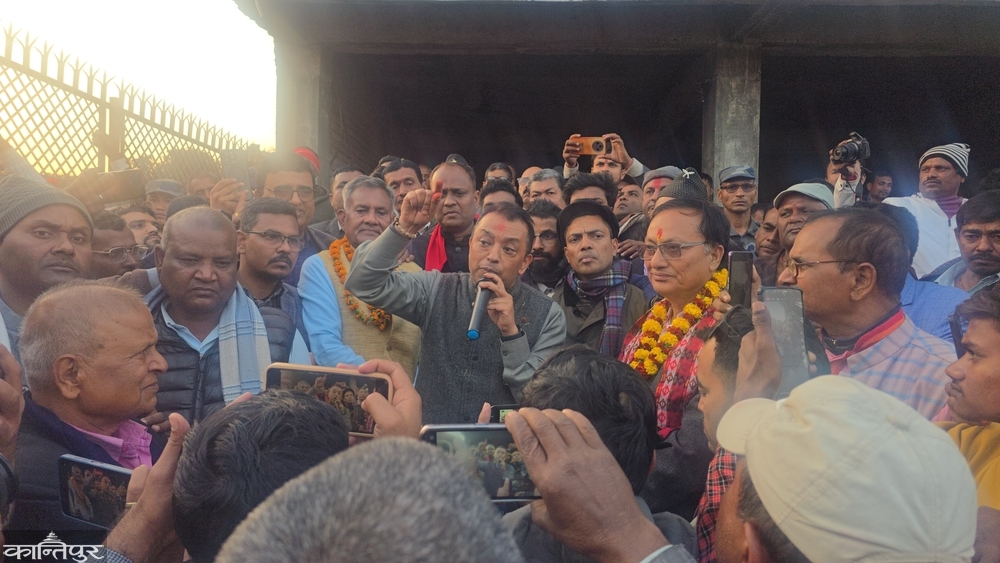
The entry of Congress President Thapa amid the power struggle between Amresh and Shivpujan has made the Sarlahi-4 election complicated. Thapa, who registered his nomination through Wares on 6th Magh, has been campaigning in Sarlahi since Monday. While starting the election campaign in Dhankaul Rural Municipality-2, he said, 'I am not a leader, I have come to become a son.'
He also says that he chose Sarlahi-4 with the aim of developing an information technology-based education system and creating opportunities in the country by prioritizing education reform in Madhesh. Thapa says that he came with the courage to win the election on the trust of Madhesh, taking the language and culture of the region as inspiration.
On Monday, the day Thapa arrived in Sarlahi, Amresh Singh was seeking votes in Manpur village. Amresh, who joined the Rashtriya Swayamsevak Party on 5th Magh, the day before the candidacy registration, has also come into controversy by making a statement that he would self-immolate if senior leader Balendra Shah does not become the Prime Minister.
Amresh is a leader who has been in the news from time to time due to his controversial statements and activities. On 15th Baisakh 2080, when he demanded an emergency time in the meeting of the House of Representatives, when the Speaker did not grant it, he protested by opening his shirt and trousers. Amresh has spoken openly on issues such as the rights of Madhesh, farmers' problems, corruption and others.
Elected independently last time, Amresh is a candidate from the Swatantra Party this time. In the 2079 election, which Amresh won as an independent candidate, the deposit of the RSVP candidate from Sarlahi-4 was confiscated. RSVP's Dheeraj Thakur had secured 306 votes. In proportional representation, 1,199 votes were cast.
But Ramesh Singh, Manoj Mohan Prasad Singh, Kamleshwar Sinha, Dinesh Kushwaha, Shyam Sah, and Sitaram Singh, who had been working as his 'pillars' for a long time, are no longer with him. Kamleshwar Sinha, who was previously with Amresh, is now openly supporting Gagan Thapa. 'In the past, we were the ones who made Amresh win, working day and night,' says Sinha, 'Now no one is with him. He has become weak.'
This is why Shivpujan claims that he is weak this time. 'If these pillars go towards Amresh again, the election results may go in his favor again,' he says, 'but time has turned the corner. This time, if he had not joined the Rashtriya Swayamsevak Sangh (RSS), his name would have been erased.'
Sarlahi-4 includes 11 wards of Balara Municipality, 12 of Godaita Municipality, 4 of Bishnu Rural Municipality, 3 of Basbariya Rural Municipality, 7 of Ramnagar Rural Municipality, 7 of Dhankaul Rural Municipality and 7 of Barhathawa Municipality. Jawaharlal Yadav of the Congress is the chairman of Bishnu Rural Municipality. Devendra Kumar Yadav was elected as the chairman of Godaita Municipality from LOSPA, and now he is in JSP Nepal. Balara Mayor Ramshankar Prasad Kushwaha was elected from the then Maoist Center.
Ramnagar Rural Municipality Chairman Rajababu Yadav is the younger son of former MP Shivapujan. Dhankaul Rural Municipality Chairman Ram Ashray Sah won from the Congress. Basbariya Rural Municipality Chairman Ram Sinhasan Ray is affiliated with JSP. Barhathawa Municipality Mayor Kalpana Kumari Katuwal was elected from UML.
Congress Madhesh Province Vice President Birendra claims that the election will be won because about 2,000 workers who had previously gone elsewhere have returned to the Congress. ‘The chairman of Dhankaul Rural Municipality is from the Congress, and the chairman of six wards in Balra Municipality, ward no. 1, 3, 4, 5, 7 and 8, were elected from the Congress. That is why we are getting strong votes,’ he says.
Sarlahi-4, located in the southwest of the district, has a majority of Madheshi voters. The caste equation has a big impact in this area, which has 121,012 voters. The Yadav and Dalit communities have a large population here. The Singh (Rajput), Brahmin, Koiri (Kushwaha) and Muslim communities also have a good presence. In every election, there is a competition to attract ‘indigenous’ votes.
The then UML chairman and former Prime Minister Jhalanath Khanal contested from Sarlahi-1 in the 2070 Constituent Assembly elections but was defeated. The then president of the RPP and former Prime Minister Surya Bahadur Thapa was defeated in 2051 BS by running for Sarlahi-2. Gajendra Narayan Singh, the founding president of the Sadbhavana Party, who was born in Saptari in Madhesh, was also a candidate from Sarlahi-5 in the 2056 BS House of Representatives election but was defeated. Mahantha Thakur, who became the then president of the Tarai-Madhesh Democratic Party, was also defeated from Sarlahi.
A local youth, Jagdish Singh, says that due to Amresh's entry into the RPP and his attraction to Balendra Shah, the youth's trend towards the election symbol bell has been seen. 'I expect that Amresh will get a good vote this time too,' he says, 'Congress President Thapa is also very popular among the youth and the old. The public opinion that Thapa, who has been declared as the future Prime Minister, will win the election from this constituency by any means seems to be equally overwhelming.'
The Sarlahi election is considered very sensitive in terms of security. In previous elections, voters were intimidated by bombings. Those who could do so used to ‘booth capture’. Local Rajkishore Yadav said that there has been no violent incident since 2070. ‘Don’t talk about past elections. Nothing happened except bombings,’ he said, ‘Now times have changed. Everyone is more aware. Voters voted confidently in the last elections.’
District Police Chief SP Yogendra Kumar Khadka says that security arrangements will be strengthened for the elections. ‘We will not allow any untoward incident to happen under any circumstances. There will be no compromise on security.’
According to the National Statistics Office, Sarlahi is the district with the lowest overall literacy rate of 39.5 percent among the 21 districts of Tarai-Madhesh. Although the Postal Highway has provided some relief, the condition of the internal roads is pathetic.
Sarlahi-4 constituency begins only after descending 14 kilometers south from the East-West Highway. This area is separated from Rautahat by the Bagmati River. During the monsoon, when the Bagmati floods cut off roads, many villages are cut off from transport links.
Local Sukaiyadevi Paswan said that the Bagmati River is both a blessing and a curse for this region. She said, “Although the water of the Bagmati is useful for irrigation, erosion and inundation cause great damage every year.” In every election, candidates come to seek votes promising to solve the problems of floods, inundation and erosion. This time too, candidates have started raising the same issue.
Until the 1950s, most of the villages in this region were dependent on India. There was no easy transport facility to reach the district headquarters. Despite some improvements in road and electricity facilities in the last decade, the problems of education, health, agriculture, poverty and unemployment are huge.
Now, a large part of the youth has gone to third countries for employment. The physical condition of government schools and health posts is poor. People are still forced to go to Janakpur or Birgunj for quality treatment.
–Sarlahi is the district with the lowest literacy rate of 39.5 percent among the 21 districts of Terai-Madhesh. Foreign employment is a must in this region, which is plagued by floods, inundation and unemployment.
–Amresh Singh, who was defeated by the Congress for the first time and elected twice, was elected as an independent for the third time. This time, he is a candidate from the National Independent Party.
–In the 2079 election, the deposit of Dheeraj Thakur, the Rashtriya Swatantra Party candidate from Sarlahi-4, was forfeited. He got 306 votes. In proportional representation, 1199 votes were cast.
–In the last election, independent candidate Amresh won by getting 20,017 votes, while Nagendra Kumar of the Congress got 18,253 votes. The Congress was also supported by the Maoists, the Unified Socialists and other parties.