The Chaitara near Pulchowk in Narayangadh Bazaar, where all decisions on social issues, from zamindari to religious programs, were made, has now been preserved by building a temple and community building.
We use Google Cloud Translation Services. Google requires we provide the following disclaimer relating to use of this service:
This service may contain translations powered by Google. Google disclaims all warranties related to the translations, expressed or implied, including any warranties of accuracy, reliability, and any implied warranties of merchantability, fitness for a particular purpose, and noninfringement.
There is a square in Barapipal, 300 meters west of Pulchowk, the busy area of Narayangadh Bazaar. The story of Narayangadh Bazaar is connected with this 87-year-old square, and its roots and branches spread over the land of its own name. Plot number 50 of the former Narayangadh 6 'A' is the land of this square.
Bamdev, the son of Kalidas Khanal, a zimindar in Narayangadh since 1990, said that there is two kattas and four dhurs of land in this plot. Kalidas himself had built the square and also allocated the land in this place near the Narayani River. 'My father built the square within our land. After the square was built, he also allocated the land,' Bamdev said.
Khanal says that the land of plot number 50 of Narayangadh 6 'A' is mentioned in the land revenue records (Dhadda). Khanal said that his parents recognized the square in 1996 BS by planting two banyan trees and two peepal trees. Sitting in the four-cornered square, Kalidas used to discuss and take decisions with the locals about issues related to land and upcoming social work.
Kalidas died of asthma in 2006 BS. Since Kalidas' sons were young, Dittha Kamal Prasad Shrestha, an old resident of Narayangadh, helped him manage the zimindari until 2013 BS. Bamdev said that even during Shrestha's time, this square was used to distribute documents, papers, zimindari, courthouses, meetings to collect land revenue and other information.
After 2013, Kalidas' son Shriharsha started taking over the responsibility of the zamindari of Narayangadh. A political incident took place in Bharatpur in 2018. The Nepali Congress had taken up arms against the then Panchayat system. The armed group of the Congress had occupied Bharatpur at that time. But soon the army came and started action against the rebels.
Shriharsha was arrested on charges of participating in the Congress campaign. Bamdev was young. Neighbor Mitra Prasad Upadhyay Khanal helped in running the zamindari. Mitra Prasad also came to this square to do whatever work was needed for the zamindari. From 2021, Bamdev started running the zamindari of Narayangadh. His headquarters or office became this square.
This square was built by Kalidas himself. But Bamdev said that all the documents of the action taken against his son Shriharsh by the then Panchayat system against him were also completed by the representatives of the then government sitting in this very square.
The then Panchayat government had ‘seized’ Shriharsh Khanal on charges of being involved in the Bharatpur occupation incident. ‘After my brother was arrested in an armed rebellion, he was sentenced to 6 years in prison.’ In addition, all the land in his name, the utensils in the house and the hut, the baskets, the namla, all the food and other items in the bakari were confiscated,’ Bamdev said.
He says that the government employees who were deployed for this work gathered in this very square. ‘They gathered all the police officers and the zimindari in the square, got the government order executed, prepared a document freezing all the property, and completed the work from this very square, with everyone present as witnesses,’ Bamdev said.
The job of a zamindari was to collect the land revenue of the land within his area and deposit it in the government treasury, convey the notices and orders issued by the government to the residents of the zamindari, and coordinate and assist in other government activities. He said that at that time, there were only a few small houses in the Narayangadh Pulchowk area, which is now a large urban area.
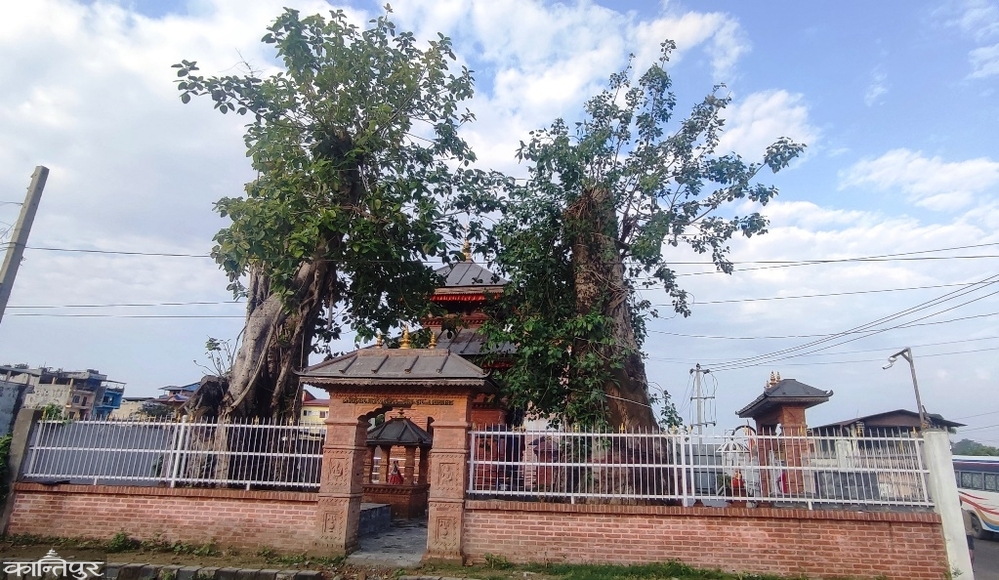
Bamdev said that his father built a chautaro because it was difficult to do the zamindari work by living in small houses with thatched roofs. It was not just a place to fulfill the zamindari's responsibilities. The Khanal family had performed a great week-long Purana in this chautaro in 2018. The Ohrdohar ran along the banks of the Narayangadh River to the rural areas of Kalabanjar and Meghauli, 25/30 kilometers to the west. The common people coming from that area to the market and the traders who came to sell their rice, corn, mustard and sesame seeds on their carts would also come to this square after finishing their work in the market.
Similarly, those coming from the Madi area in the southern part of the district to Narayangadh would also come to this square to rest. 80-year-old Subhadra Pokharel, who lives near Pulchowk, has seen a crowd of carts around this square. ‘We came to this place in 2022 BS. 60 years ago, that place was deserted. But the caravans would come and rest there. Water would be kept in the trough in the square. The place where the passers-by would go to drink water was either directly in Narayani or that square,’ Subhadra said.
She says that it is a very pleasant sight to see a flock of birds sitting above and people resting below. ‘We used to do this because we believed that if we built a dharamshala in Chait/Baishakh and distributed water, we would save ourselves and our ancestors. On the day of Akshaya Tritiya, barley satu and pure water were distributed from this very square. On that day, we used to donate shoes, umbrellas and clothes to the Pandits and Jogis,’ Bamdev said.
The government abolished the zimindari system after 2027. Khanal’s family also moved to a new place from the square. Narayangadh market started to grow. Roads started to open. Houses kept increasing. This road and square along the Narayani square gradually receded.
In 2067, after seeing the square starting to collapse, Bamdev and his nephew Mahaprasad repaired it together. They made a stone ramp and a concrete slope. But the custom of people hanging out in the courtyard was disappearing. The courtyard was getting smaller. ‘It had grown by hanging. There was a fear that the branches would be torn off by the wind.’ On the other hand, we also started thinking about using the courtyard and its land for social welfare. We tried to add a structure including a temple and a sattal,’ said Bamdev.
The local model Chautari Tol Shudra Samiti took the initiative to repair the courtyard. Now, a Siddheshwar Mahadev temple and a two-story community building have been prepared there. ‘The temple sattal has been prepared to allow religious rituals, marriages, fasts, pujas, Rudri, and home bhajans. The courtyard is in its place. This has saved the courtyard. The added temple and sattal have also connected this place to the society,’ said Khanal. The temple and the Sattal have had to cover the spreading branches of the Chautara. But the greenery and shade of the Chautara, which is almost 90 years old, remain the same.

