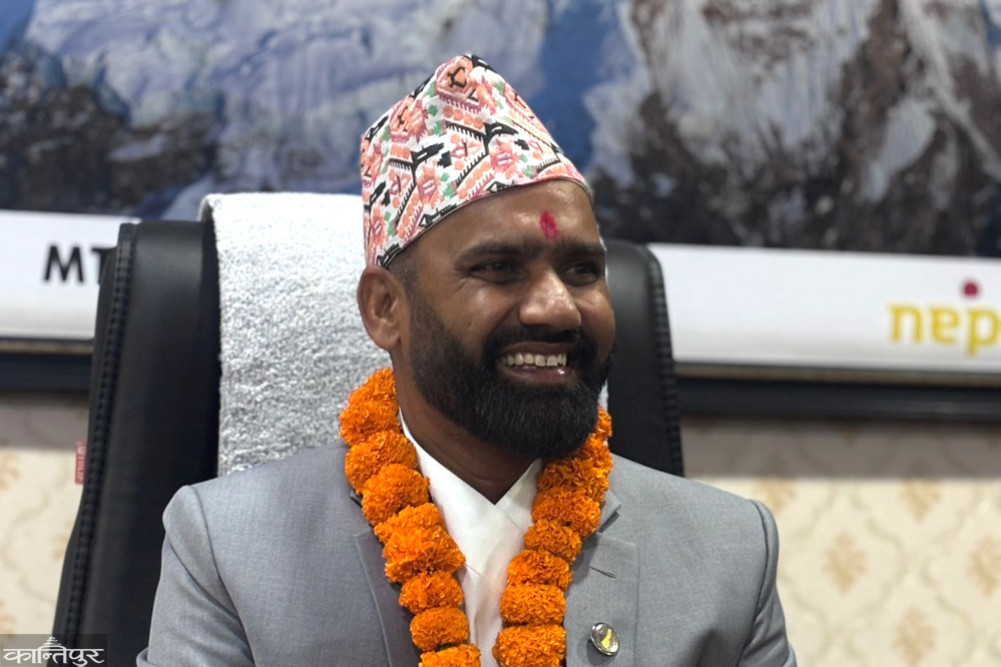
He is currently a central member of the National Independent Party. But there are many challenges he has to face while assuming the responsibility of a minister.
We use Google Cloud Translation Services. Google requires we provide the following disclaimer relating to use of this service:
This service may contain translations powered by Google. Google disclaims all warranties related to the translations, expressed or implied, including any warranties of accuracy, reliability, and any implied warranties of merchantability, fitness for a particular purpose, and noninfringement.
Khadakraj Poudel, better known as Ganes Poudel, has been appointed as the Minister of Culture, Tourism and Civil Aviation in the Balen-led government. With the arrival of Poudel from Pokhara, who is known for literature, education and social campaigns, it is expected that long-standing problems in the tourism and aviation sectors will be resolved. Poudel, a permanent resident of Majheripatan, Pokhara-14, is a writer, teacher and social activist.
A graduate in English literature and an MBA from Pokhara University, he has gained more than 15 years of teaching experience. Active in the development of reading culture through the 'Random Readers Society', he has introduced a new trend in literature through experimental works like 'Paitala'.
A supporter of the alternative political trend of 'Winning with Thought, Sustaining with Character', Poudel is also the promoter of the 'Ateri' campaign. He is currently a central member of the National Independent Party. But there are many challenges he has to face while assuming the responsibility of a minister.
He is currently a central member of the National Independent Party. But there are many challenges he will have to face while assuming the role of minister. Nepal's tourism sector, considered the backbone of the economy, is still plagued by structural problems, poor management and policy ambiguity. The aviation sector in particular is under international scrutiny. The European Union has banned Nepal Airlines from flying in its skies since 2013, reflecting international distrust of Nepal's aviation safety.
Nepal Airlines Corporation is in debt of around Rs 52 billion. Due to management weaknesses, political interference and lack of a clear business plan, the corporation has not been able to perform as expected. Due to limited aircraft, weak market strategy and international competition, Nepal has not been able to expand flights to many destinations despite signing air agreements with 42 countries.
In terms of infrastructure, Pokhara and Bhairahawa international airports, built with billions of investment, have not been fully operational. The increasing pressure at Tribhuvan International Airport has made management more complicated, and the implementation of the master plan is being delayed.
There is also a need for reform in the institutional structure. As the Civil Aviation Authority of Nepal is playing both the regulatory and service provider roles, questions have been raised about transparency and effectiveness.
Other areas related to tourism are also problematic—the share dispute over the Hyatt Hotel, encroachment on property in the Pashupati area, the delay in the Lumbini Development Plan, and the inactivity of the Janakpur Development Committee, among other issues, make the overall management seem weak.
Increasing waste in Himalayan tourism, disorganized management, and disputes over the appointment of liaison officers have increased the risk of affecting Nepal's international image. In addition, the practice of charging foreign passengers in dollars on domestic flights and the non-implementation of the report on ticket rigging during the COVID-19 era reflect policy ambiguity.
In such a situation, Ganes Poudel's appointment has come as both an opportunity and a challenge. It is expected that Nepal's tourism sector can be made sustainable and competitive only if he can implement his alternative thinking and reform-oriented approach to build structural reforms, transparency, and international credibility.