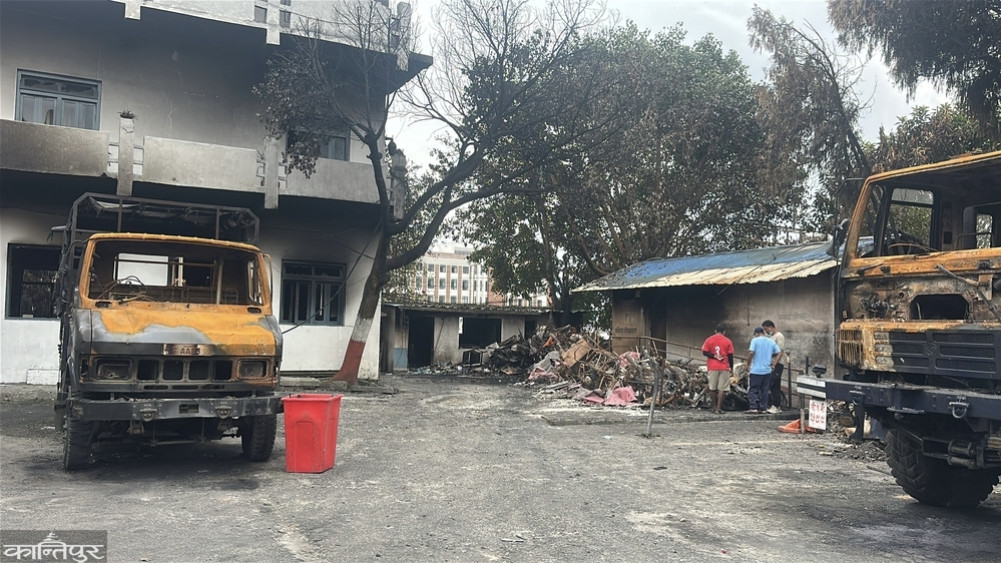
Protesters attacked traffic police, forced them to remove their uniforms, and vandalized and looted everything from barracks to service buildings.
We use Google Cloud Translation Services. Google requires we provide the following disclaimer relating to use of this service:
This service may contain translations powered by Google. Google disclaims all warranties related to the translations, expressed or implied, including any warranties of accuracy, reliability, and any implied warranties of merchantability, fitness for a particular purpose, and noninfringement.
Last Bhadra 23. The morning atmosphere at the Kathmandu Valley Traffic Police Office was normal. During office hours, service recipients were coming to the office to pay fines for rule violations and for license-blue book-related work.
Some traffic police were out on road management. Some were returning to the barracks after completing their duty. While preparations for the Gen-G movement were underway on the road, the office's focus was on making the road easier.
The situation suddenly changed after shots were fired in the Parliament building area in New Baneshwor in the afternoon. After 2 pm, discomfort began in the office. However, the possible services were still operational. The next day, all services were closed. Because a curfew order had been issued. The situation was becoming more complicated.
There was no question of the police deployed for traffic management being armed. They had no role in the shooting on the 23rd either. Everyone working here was concerned that the protesters would not be angry with the traffic, which was a bit far from 'policing'.
However, since traffic is a part of the police, the frontline police force was prepared to be used whenever necessary from 5 am that day. The police had been on high alert throughout the country since the morning that day. Around 80 people working at the Kathmandu Valley Traffic Police Office were sent to the Jawalakhel Police Complex in Lalitpur at around 7 am. There were 300 traffic police in this office.
Although the protesters moved in front of the office in the morning, they did not attack them. Some in the crowd were aggressive, but they complied when explained. Instead, they asked for water from the office and drank it. The traffic police reached the gate with water in bottles and jars and served it to them. Because the police were afraid that they would be in danger when they came inside. This process went on from 11 am to around 1 pm.
But the situation changed in the afternoon when a fire broke out in the Singha Durbar area. The attack on the nearby Kathmandu Valley Traffic Police Office also began. The crowd's anger turned on the traffic police who were 'feeding water'. There were police officers in civilian clothes around the office. They were pretending to be protesters and explaining. However, the protesters broke through the gate and wall and entered the office. They broke through the wall of the office before the gate.
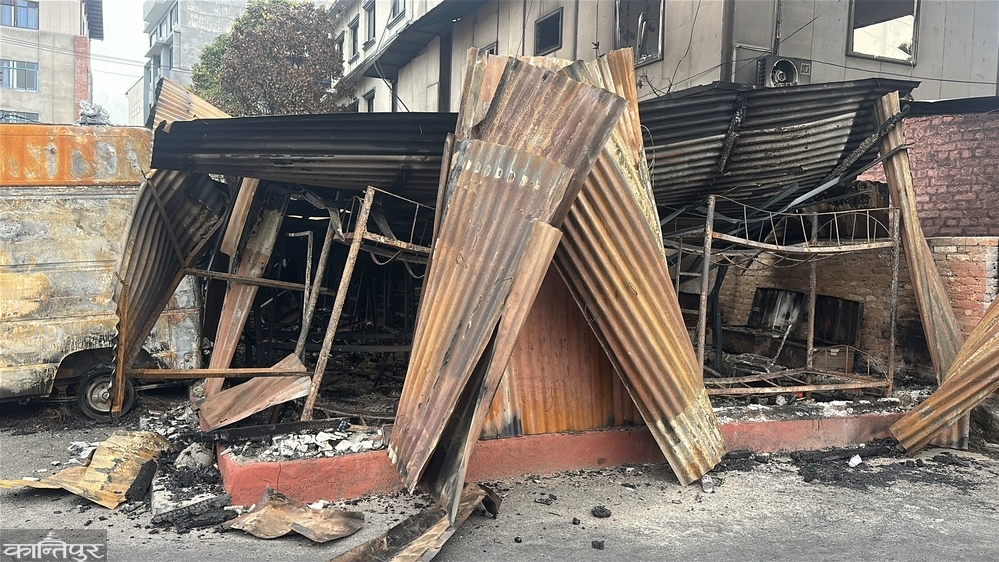
After the fire broke out in Singh Durbar at 3 pm, the crowd that arrived set fire to the office vehicles and the building as well. Initially, a group of 50 people entered the office. Initially, they set fire to the vehicles in the premises. Then, some entered the police room and started putting on their uniforms.
'I myself was in civilian clothes that day. I tried to persuade them to leave but I couldn't," said Dipendra Prasad Shah, Inspector of Kathmandu Valley Traffic Police Office. "The team that came after burning Singha Durbar burned the vehicles in the premises. Some of them went to our chief's room and started harassing us by wearing his clothes." He repeatedly requested not to burn vehicles and papers. But the protesters did not stop. They started setting fire.
The protesters attacked the traffic police, forced them to take off their uniforms, and vandalized and looted buildings from barracks to service buildings.
Every effort made by the police for their own security failed. Tear gas also had no effect. When the traffic leadership asked them to protect themselves, some of them joined hands with the protesters and fled towards the river near the office. The first group set fire. The second group that came later started looting. By 4 pm, the office was reduced to ruins.
The office was vandalized and set on fire, destroying important documents including the license and blue book of the service recipients. The accompanying traffic FM was also burned. The protesters considered this as their bravery. They started walking on the streets wearing traffic uniforms.
On the same day, in the attack, Assistant Inspector Milan Rai, Police Constable Uttam Thapa, and Assistant Constable Amrit Gurung of Police Division Koteshwor were beaten to death by the protesters. The police, who always protect others, became unsafe themselves that day. Police structures and vehicles across the country were destroyed. But amidst the destroyed buildings and looted materials, the police service is returning to its former state.