While anger is growing that the government's decision has given a big blow to freedom of expression, right to information and the digital economy, the ruling Congress has neither publicized its institutional views nor advocated debate within the party.
We use Google Cloud Translation Services. Google requires we provide the following disclaimer relating to use of this service:
This service may contain translations powered by Google. Google disclaims all warranties related to the translations, expressed or implied, including any warranties of accuracy, reliability, and any implied warranties of merchantability, fitness for a particular purpose, and noninfringement.
Even after three days have passed since the government took the decision to close the social media platform, Congress, the main component of power, has not made public its institutional opinion. Some leaders of the Congress have linked it to the future power equation behind the party's long struggle for democracy and freedom of speech remaining institutionally silent in this way.
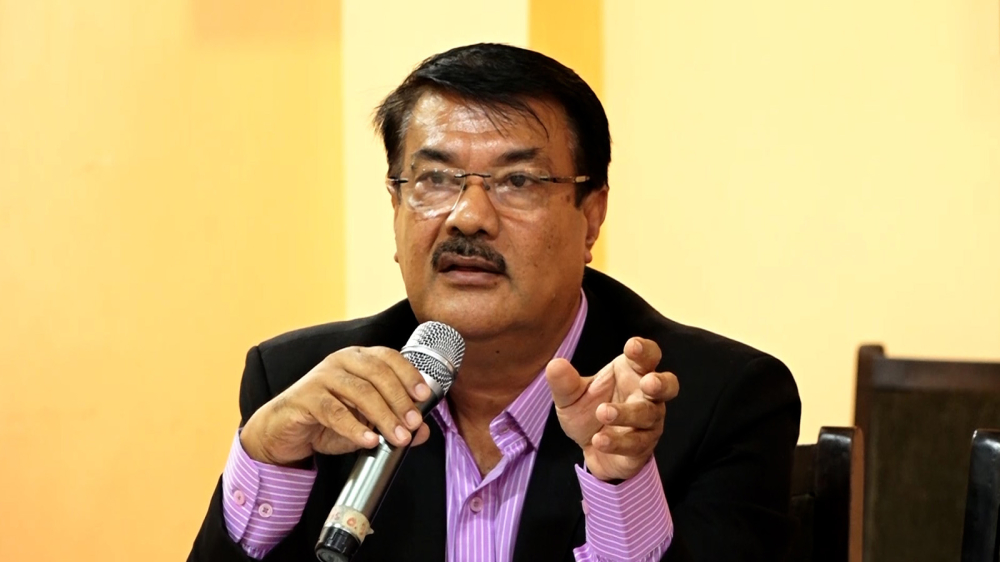
Since the government's decision is only a technical matter, it cannot be linked with the intention of curtailing civil rights, but the government's decision to shut down social media appears immature: Meen Vishwakarma, Head of Publicity Department, Congress The government has closed 26 social networks including Facebook, X (Twitter), YouTube, Instagram, WhatsApp from August 19. Based on the order of the Supreme Court, the Ministry of Information and Communication has decided to come to the registration process within seven days, but the government has decided to close it directly after the big companies did not show interest. The civil society, media world and common users are angry saying that this decision of the government has given a big blow to freedom of expression, right to information and digital economy. At such a time, the Congress has not made public its official views, nor has there been a debate within the party.
Meen Vishwakarma, Head of Publicity Department of Congress, said that it is not morally acceptable for a partner party in the government to make the same opinion as the opposition. According to him, the government's decision is not a legal one, but a technical matter, so it cannot be linked with the intention of curtailing civil rights. However, he commented that the government's decision to shut down social media is immature. He said that there is a problem when the government is suddenly controlling and has to call for social networks to be listed only after setting a systematic process.
'Government should have been a facilitator, but it looked like a controller, it's just that the way of working is not enough, it's not trying to control the social network' Vishwakarma added, 'If Facebook is hacked, they should contact America now, but if its focal person or office is here, users get the facility from here . This work that the government is trying to do is good, but the method is not enough. He said that the government should find an alternative by considering the practice of
 communication, the rights of citizens and the livelihood of common people. "Government also should not take the position of saying '12 percent of my bull,' he said. Former Communications and Information Minister Gyanendra Bahadur Karki also says that social media platforms should come under the registration process according to the government's policy. However, he argues that it should not be defined as a violation of civil rights.
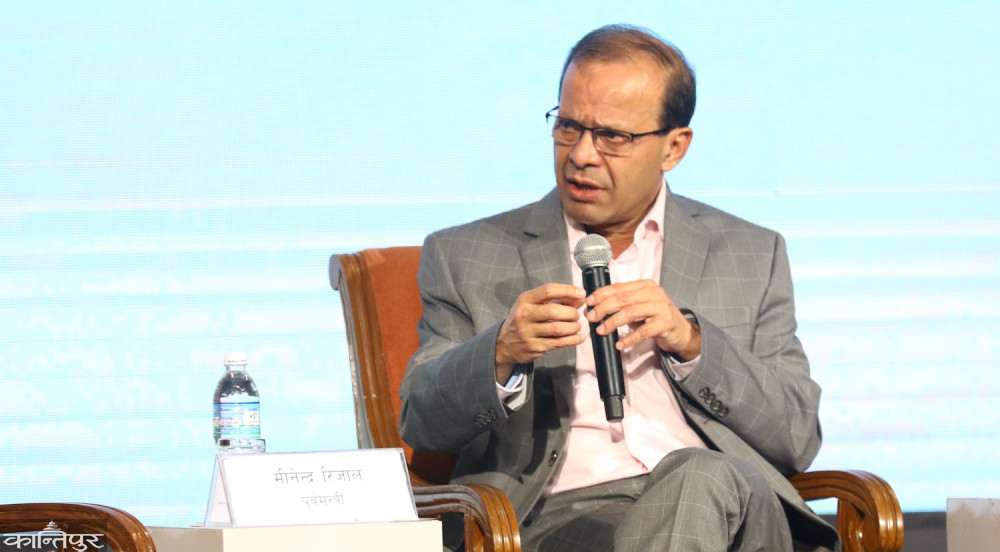 Congress central member Meinendra Rizal, who is also the former Minister of Communications and Information, says that the government has taken such a decision with the support of party chairman Sher Bahadur Deuba and says that there may be no debate within the Congress. He says that it is wrong for the chairman of the liberal democracy party to agree to such a decision of the government. How can the Congress president who prevented Balen Shah from being arrested help the social media shutdown? "His conscience cannot walk on this path," Rizal said. He said that the party president and the Congress government should not go forward together on such a path.
There may be no debate in the Congress because the government took the decision with the support of the party chairman, it is wrong for the chairman of the liberal democracy biased party to agree to such a decision: Meinendra Rizal, central member, Congress In the past few years, social media has not only become a means of expression for ordinary citizens, but has also become the backbone of employment for thousands of young people. Thousands of youth have been making a living through YouTube, TikTok, and Instagram. The government's decision to shut down social media has directly affected their income. On the other hand, Nepalis who are employed abroad are dependent on social networks such as Facebook and WhatsApp to keep in touch with their families. Common citizens are under stress when the means of establishing relationships between families and communities are closed.
Soon after the government's decision, Congress General Minister Gagan Thapa and leader Shekhar Koirala objected . Thapa had asked to correct the decision saying that the government was walking in the opposite direction. Koirala commented that the government took the path of shutting down social media platforms to cover its unpopularity. However, they have not started a formal debate within the party against the government's decision. Chairman Deuba and the leadership close to him seem to be neither trying to form an institutional opinion on this issue nor have they received any response.
While social media ban is affecting citizens' daily life, entrepreneurship, from digital market to social relations, another general minister of Congress, Bishwa Prakash Sharma, has also been unusually silent. Sharma, who is in Kathmandu, has not raised this issue anywhere on social media, public forums and debates within the party. Earlier, when the government tried to control social media through bills and guidelines, Sharma along with Chief Minister Thapa had been criticizing.
Earlier in October 2080, the Congress leadership remained silent even when the government led by Pushpa Kamal Dahal banned TikTok. However, General Ministers Thapa and Sharma were strongly opposed. At that time, Thapa wrote, "Pramjiu, don't say that the agreement reached in the closed room meeting of the former prime minister's club is an agreement between the parties, don't call it". This is an understanding between you, not the parties . A party is not a private company of the party leader, for any vote to be a party vote, there must be a discussion within the party.
This time too, Thapa asked the government to correct the decision by saying that the Supreme Court has asked to make a law, not to close social media. "Social media is an important platform for citizens to voice their opinions, participate in public debate and hold the government accountable." "Closing it means narrowing civil rights," he said.
When deciding to close Tik Tok, another Chief Minister Sharma also strongly protested. "TikTok will be closed today, Facebook will be closed tomorrow, tomorrow someone will say that the democratic system of governance has ruined the country, so what will you do, Mr. Prime Minister, who will destroy the democratic system?" was Sharma's question. However, even after three days have passed since the social media platform was closed, no opinion has come from Sharma.
In 2077, when the government led by KP Sharma Oli dissolved the parliament, in the name of social media regulation, General Minister Thapa and Sharma strongly protested when they tried to control social media through the Social Media Legislature Directive. There is still strong opposition within the Congress regarding the social media bill registered in the National Assembly by the Oli-led government on January 15, 2081. Due to the opposition of the Congress, the bill is not being able to proceed . The day after the registration of the bill, General Minister Sharma said, "The vision carried while being a spokesperson, will not change when the General Minister". Let the country be safe, the vision will not change, the bill will be changed.'

However, now the social media platforms are closed and even when the rights of common citizens and livelihood opportunities are lost, a large section of the Congress is keeping silent about the government's decision . A central member close to Sharma said, "Many leaders say that it is not natural for big companies outside the country to directly challenge the rules and laws of our sovereign country. This subject is not intended to control the social network, but there may be no opposition as it is a systematic process.'

