According to the constitution, the single right up to secondary education is at the local level, contrary to the system, the teachers in Kathmandu focused on the street movement by making an invisible demand that teachers should remain in the union.
We use Google Cloud Translation Services. Google requires we provide the following disclaimer relating to use of this service:
This service may contain translations powered by Google. Google disclaims all warranties related to the translations, expressed or implied, including any warranties of accuracy, reliability, and any implied warranties of merchantability, fitness for a particular purpose, and noninfringement.
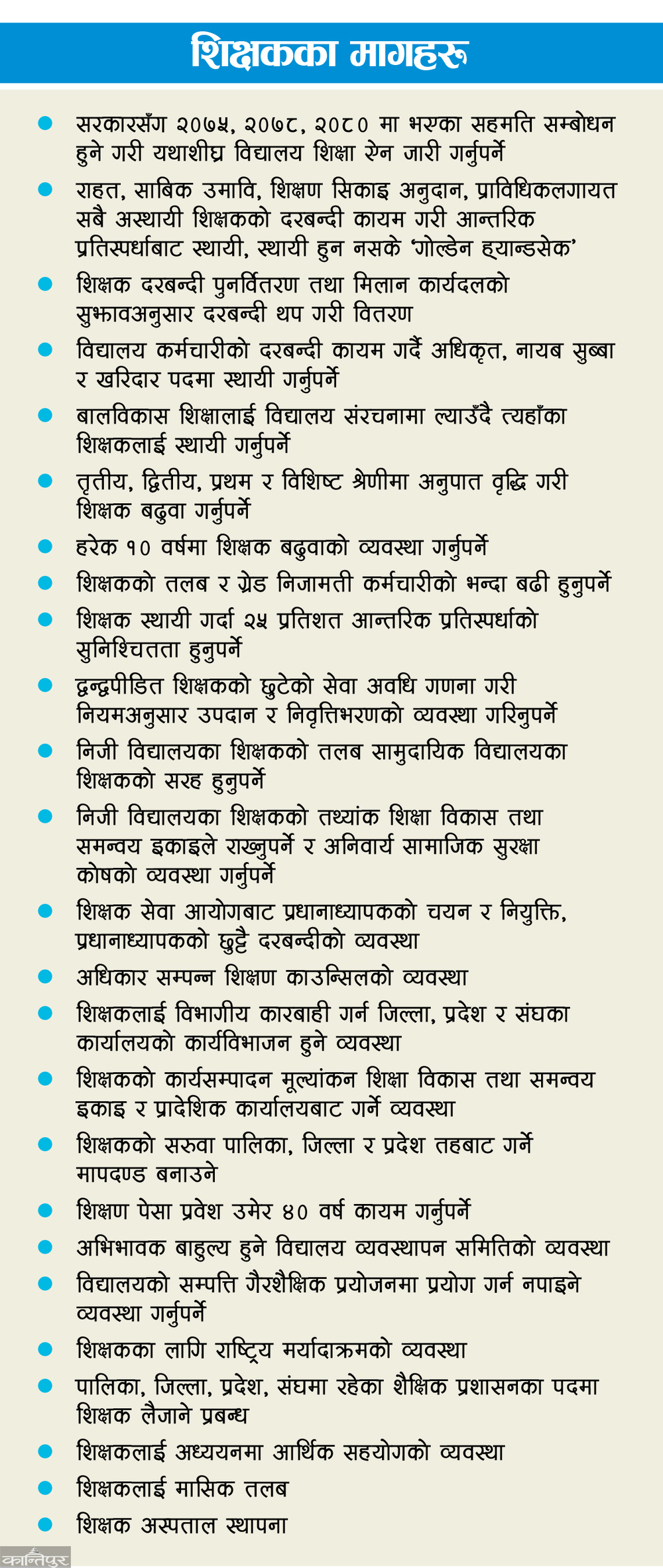
Teachers across the country have started a street protest in Kathmandu since Wednesday, demanding the school education act. According to the Federation of Nepalese Teachers, an indefinite street movement centered in Kathmandu has been started for the speedy passage of the School Education Bill pending in the Education, Health and Information Technology Committee of the House of Representatives. However, the teachers have been pressuring the government to pass the bill "in their favour".
Contrary to the provisions of the constitution, they have an 'invisible but major demand' that teachers should not live under the local level.
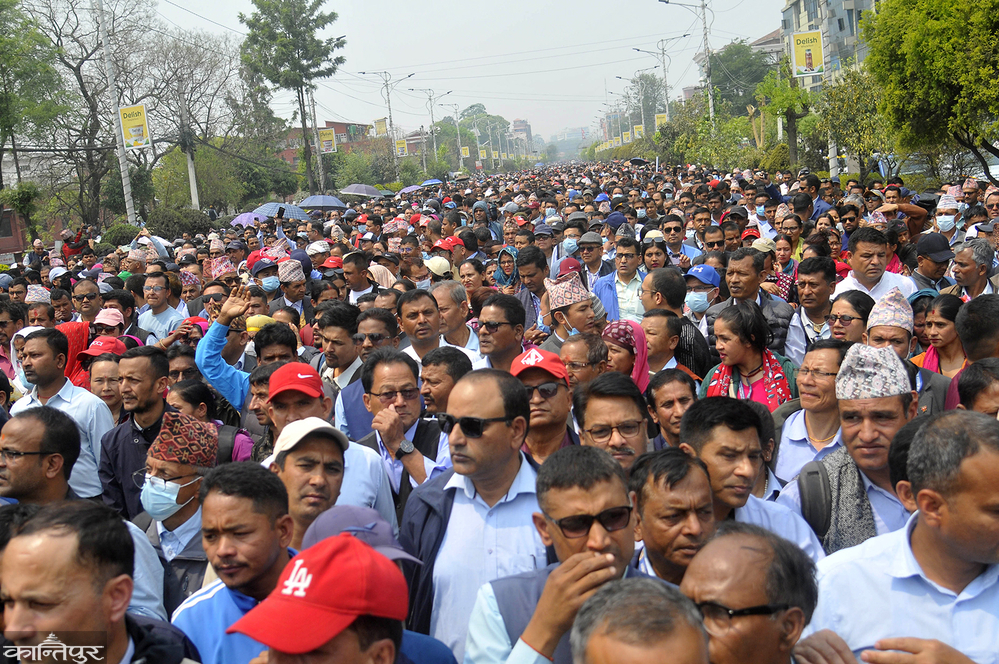
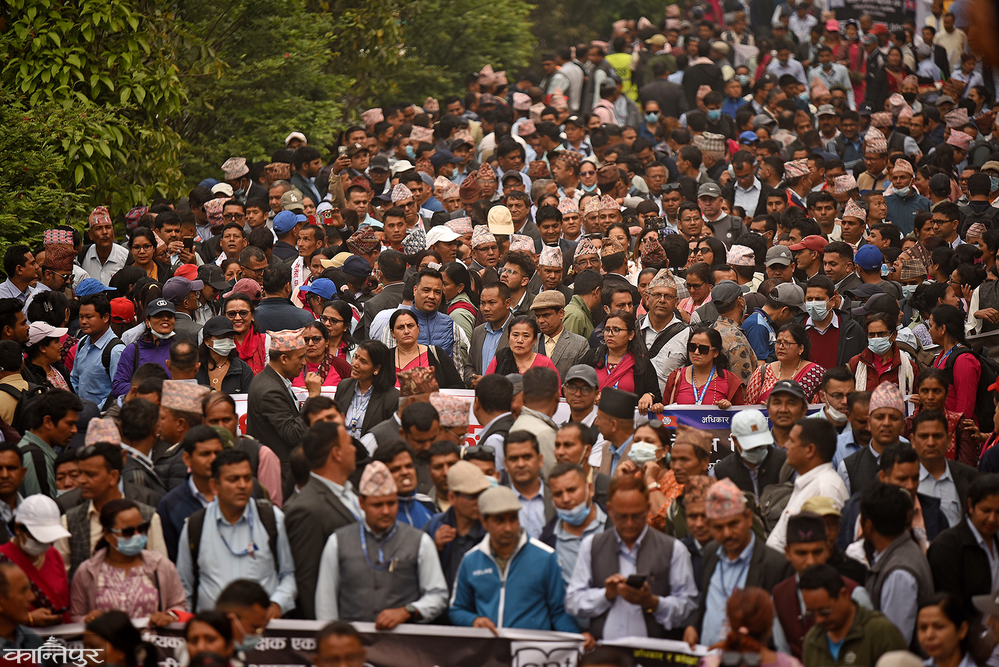
After the end of the winter session of the Parliament last Tuesday night, the Federation of Teachers has continued the agitation by demanding that the School Education Act be promulgated as soon as possible despite the ordinance. On Friday also, teachers staged a road demonstration from Maitighar to Baneshwar area. The Ministry of Education's call for dialogue and correspondence has been rejected by the Teachers' Federation.
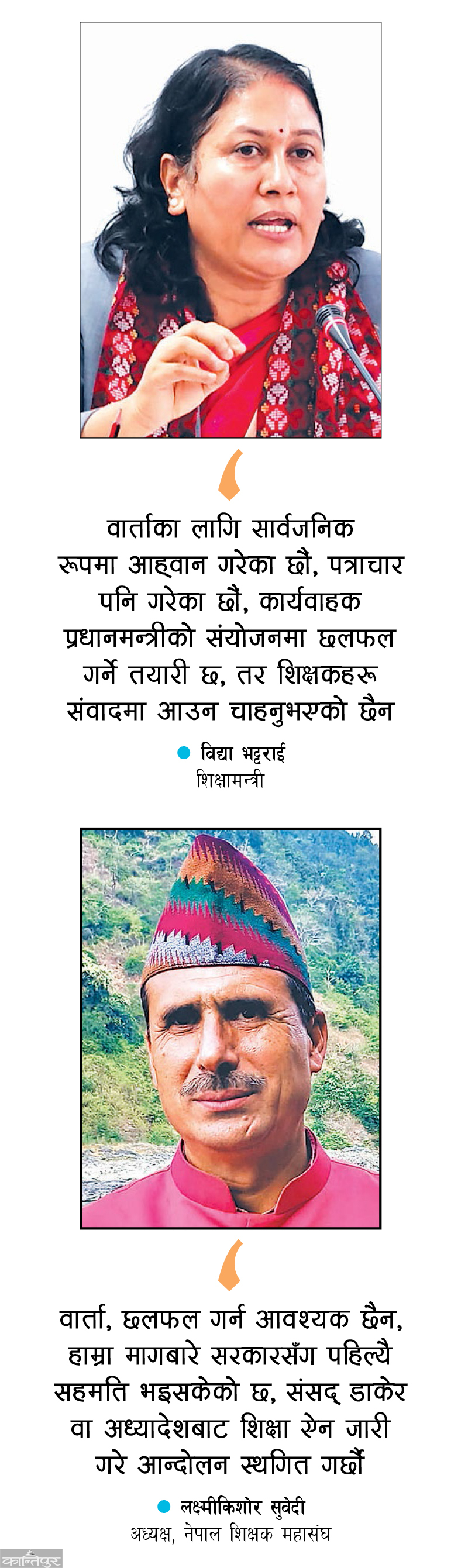
Federation president Laxmikishore Subedi said that the movement has been started to force the release of the progressive school education act, which includes all the agreements made with the government in the past. There is no need to talk or discuss. Our demands have already been agreed with the government. According to the agreement, we will suspend the movement if the Parliament passes or issues the Education Act through an ordinance," he said. Speaker Subedi demanded to bring the School Education Act either by calling a session of Parliament or through an ordinance. "We have received a letter from the talks, we have already said that we will not come," he added, "We will not stop the movement until the law is passed." At that time, after the government agreed to meet the demand, the teachers postponed the 3-day demonstration and returned to school. President Subedi said that the teachers had to re-organize their movement centered on Kathmandu as the bill did not move forward even after 18 months. Even in February 2078, before the bill was registered, the government had agreed on 51 points with the federation. According to the agreement at that time, the government withdrew from the provisions of the constitution that the sole right up to secondary education belongs to the local level.
Photo: Deepak KC/Kantipur
 The then education minister Devendra Paudel argued that education is under the common authority of all three levels of government and made an agreement to withdraw it from the sole authority of the local level. The federation emphasized that the school education bill should be passed by implementing the same agreement during the protest. But Subedi insisted that since the demand is related to the constitution, it will be raised during the amendment of the constitution.
Acting Prime Minister Prakashman Singh had a discussion with Home Minister Ramesh Akhtar, Education Minister Vidya Bhattarai, Chairman of the Education and Health Committee Amma Bahadur Thapa, Coordinator of the parliamentary sub-committee formed to discuss the education bill, Chabilal Vishwakarma, Congress whip Shyam Ghimire, and UML whip Mahesh Bertaula. The Ministry of Education issued a statement on Thursday and invited the teachers to the talks. Joint Secretary and Spokesperson of the Ministry, Shivkumar Sapkota, called upon the teachers to come to the discussion to convey a collective message for the School Education Bill, which is awaiting approval.
Photo: Angad Dhakal/Kantipur
 Even after waiting for one and a half hours on Friday, Education Minister Bhattarai said that the teachers were not ready to sit for the discussion. We have publicly called for talks. We have also corresponded. It is prepared to discuss under the coordination of acting Prime Minister.
But the teachers don't want to come to the dialogue, she said. Minister Bhattarai said that though the Acting Prime Minister, Home Minister, Leaders of the ruling and opposition parties met for discussion on Friday, the teachers' representatives did not come. "Teachers only say they want the law. The bill is at the stage of discussion in the sub-committee under the committee. That too has a process. He did not come even when called for talks,'' Bhattarai said, 'There was a conversation on the phone. But formal dialogue has not been done.'
Minister Bhattarai also said that the government and the Ministry of Education are ready to resolve the demands of the teachers through dialogue and dialogue. The committee has started working by forming a sub-committee to quickly agree on the bill.
To submit the report within 35 days of the start of work. According to the agenda, the Ministry of Education has also requested the agitating teachers to wait until then.
The federation has demanded that temporary teachers be made permanent, promotion of permanent teachers, ECD teachers be assured of primary and tertiary positions along with school structure, school staff positions, stability, selection and appointment of principals from the Teachers Service Commission, and ensuring the service facilities of private school teachers should be covered by the Education Act. The bill mentions that some percentage of the temporary teachers will be made permanent through internal competition. But the teachers have demanded that 100 percent should be made permanent. Teachers should be promoted in a certain period, ECD teachers should be included in the school structure, school staff should be maintained, principal selection and appointment commission will not be included in the bill.
The government promised to pass the school education bill from the last parliament session but failed. The bill was registered in the parliament only after about 8 years of effort when the representatives of the people, teachers and private school administrators who are interested in their own interest in matters such as the jurisdiction of the local level in school education, the management of private schools and public school teachers continued to put pressure on the government. Education workers have been commenting that due to some complicated and controversial issues that need to be settled in the bill even after registration, the discussion has been delayed. An official of the Ministry of Education said that the government has prepared to hold a dialogue and discussion in coordination with Acting Prime Minister Singh, as the demands of the students should be decided at the level of the political leadership.