We use Google Cloud Translation Services. Google requires we provide the following disclaimer relating to use of this service:
This service may contain translations powered by Google. Google disclaims all warranties related to the translations, expressed or implied, including any warranties of accuracy, reliability, and any implied warranties of merchantability, fitness for a particular purpose, and noninfringement.
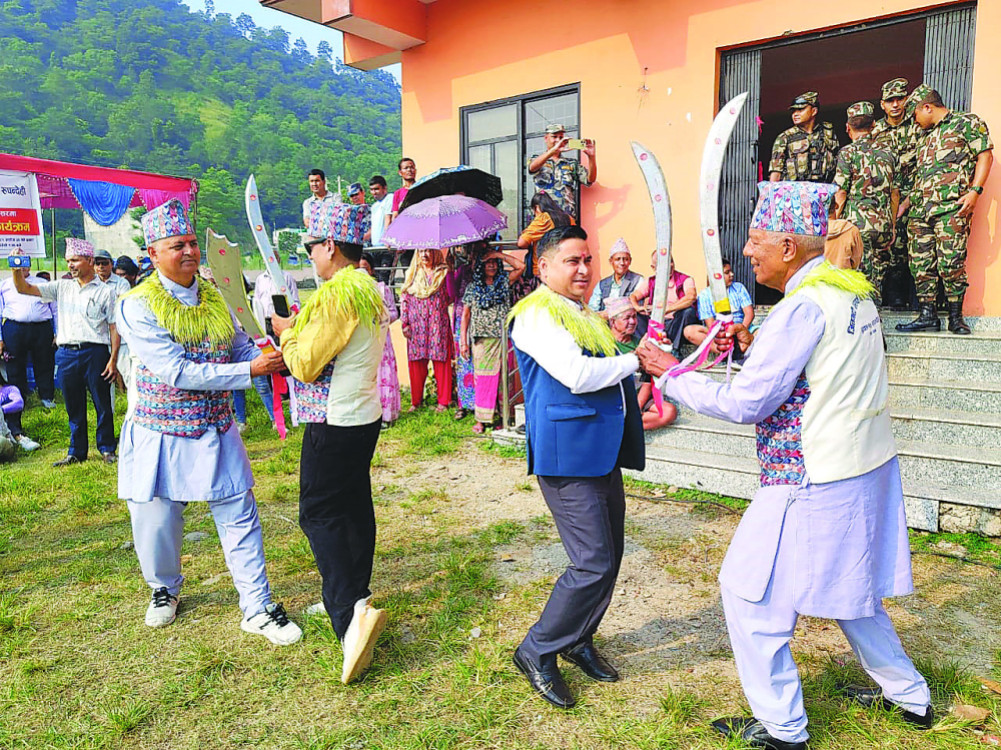
In the crowd of hundreds of people, the khukuri, khunda, sword and shield or red handkerchief in the other hand and jamara or temple pylon tied around the neck and dancing to the beat of the baja is a dance. Danced in all the eight districts of Lumbini state, this dance has a unique charm.
Starting with a sword fight act, the Sarai dance is performed with the batting. Dasain is bid farewell to Kotghar, Durga and Goddess Shakti Peeth by dancing Sarai, throwing Jamra and Phulpati in rivers and ponds. Recently, the cultural dance of the mountains has spread and expanded to some places in the Terai.
Sarai dance started from Argha Bhagwati temple in Arghakhanchi and reached Palpa, Gulmi, Pyuthan through other villages. In recent times, those who migrated from the hills to the Terai have set up temples of Kot, Durga and Devi there and perform Sarai dances. In Char Rupandehi, Kapilvastu, Dang and Nawalparasi districts of the hills, from the day after Dasain to the full moon, Sarai dances are performed in Shaktipeeth temples, using household weapons such as clubs, spears, swords, and shields, giving the appearance of war.
Sarai dance is now being performed in the temples of many Shaktipethas in eight districts. In the hills and plains, children, young to old men and women prefer to dance Sarai. Most of those who come home to perform Dasain Tika, go to the temple, have darshan, dance Sarai and return on the next full moon day. It is believed that after Satya's victory in the battle with the demon, Satya's priest began to celebrate the victory and danced Sarai with coat and display of weapons in the temple.
Sanskritists have not been able to pinpoint exactly when Sarai dance began. According to experts, Sarai Nach is danced in celebration of tika application. After ritually performing pooja in the temple, this dance is performed rejoicingly by taking out weapons, alam, instruments from the temple. Sarai dance is believed to have originated from the Bhagwati Temple in the Argha Palace of Arghakhanchi. Gradually this dance continues from Dasain to Kojagatra Purnima in Gulmi, Pyuthan, Palpa kots. Priest Dharmaraj Pokharel said that on the day of Jamra Purnima, which is ritually placed in Bhagwati temple, Sarai is celebrated with dancing.
Argha Darbar hosts the biggest Sarai Jatra in the region. Chairman of the temple management committee Saroj Bhusal claimed that there is a history of pilgrims coming to the temple after walking for two/three days from the districts of Terai including Gulmi, Pyuthan, Palpa when there are no cars in the village and Sarai dance originated from Argha Darbar. The historical Sarai Jatra of this region takes place in the temple. He said that it originated here and reached neighboring districts through various households of Arghakhanchi. It is said that in the medieval period, in the then Argha kingdom of the present Arghakhanchi district, Raja Zilla Rai, on the occasion of the victory of the Argha kingdom in the war, started to distribute curd, banana and boxis without dancing Sarai dance on the Kojagrat Purnima day of Vijaya Dashami.
Khanchi Palace of Arghakhanchi, Malarani Temple, Rangamare Temple, Thada, Jukena, Maidan, etc. It is danced in many places including Mathagadhi. Sarai dance is danced in Ghazul and Khungri, eastern region of Rolpa, Lamhi, Bhaluwang, Sisahnia in Dang.
Sarai dancing places also have financial transactions. Jerry, especially, is widely cooked in tavern dancing places. Various kinds of dishes including vegetable puri, clothes and sweet foods are kept by the businessmen.
Tourism Minister of Lumbini Prachanda Vikram Neupane said that since the Sarai Dance, which has expanded in Lumbini province, has historical significance, the provincial government is trying to protect it. He said that places with cultural and archaeological importance will be developed as religious tourist spots. Tourists come from far and wide to see Sarai dance as it is religious and cultural.