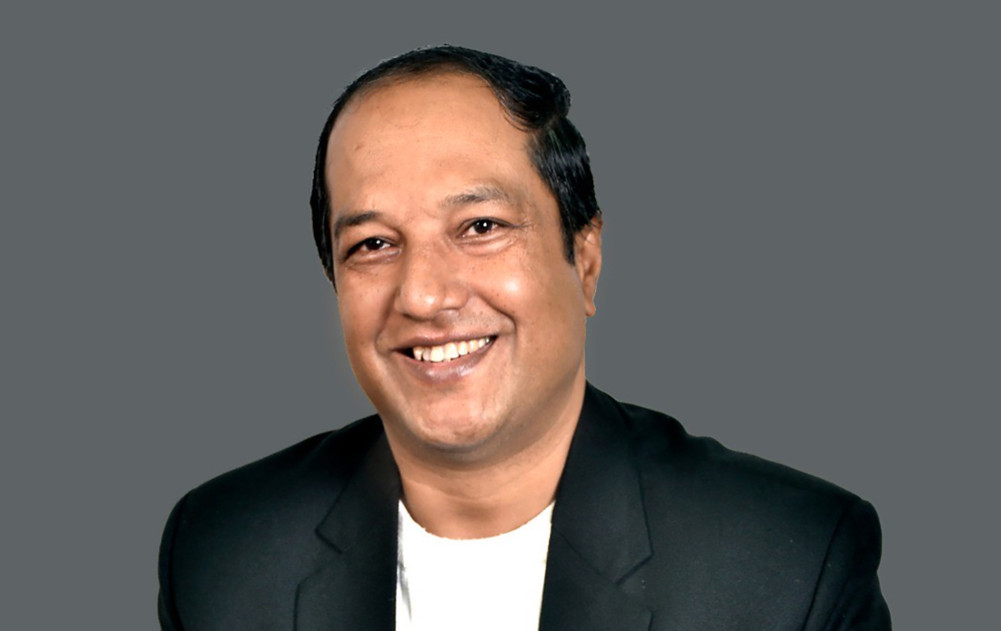
He has been active in hydropower projects as an engineer, specialist, and manager for 23 years. He has gained experience in hydropower project operation, maintenance, technical inspection, and policy management.
We use Google Cloud Translation Services. Google requires we provide the following disclaimer relating to use of this service:
This service may contain translations powered by Google. Google disclaims all warranties related to the translations, expressed or implied, including any warranties of accuracy, reliability, and any implied warranties of merchantability, fitness for a particular purpose, and noninfringement.
Sunsari Constituency No. 4, Rastriya Swatantra Party (RSWP) candidate Deepak Kumar Sah has been elected with a wide margin. He entered the House of Representatives with 42,771 votes and defeated his nearest rival, former minister and Congress member Gyanendra Bahadur Karki, by a margin of 26,184 votes. Karki received 16,587 votes. This wide margin is not just a personal victory, but also a sign of a new change in the local political context.
In this area, which is considered a stronghold of the Congress, Sah has presented a new perspective by challenging the old political structure. Gyanendra Bahadur Karki is a long-time Congress leader in this area. He has become a minister several times. He is a leader who has been considered influential in the political stability of this area for a long time. Similarly, Jagadish Prasad Kusiyait is a former UML minister and was known as a leader who had a great influence in this area. However, the results of Falgun 24 showed that voters are now prioritizing innovative thinking and efficiency over traditional experience. Sah's victory has signaled to voters that voters are now prioritizing new leadership, technical expertise, and result-oriented planning over traditional political influence and experience.
Sah, 49, is an engineer, energy specialist, and community empowerment activist by profession. He was born in Bhokra Narsing Rural Municipality Ward No. 6 of Sunsari and currently lives in Naya Thimi, Bhaktapur. His political journey began with the Janmat Party, where he also became the vice president. However, he was suspended due to disputes within the party and disciplinary violations. After being suspended from the post of vice president for 6 months, he was completely expelled from the party. The party had accused him of conducting factional activities and behaving contrary to the constitution.
After the Gen-G movement, he tried to form the Janaswaraj Party for a new political identity. After the court initially did not recognize it, he changed the name of the party and registered the Sarvodaya Party last November. He also served as the president of the Sarvodaya Party. In the February 21 election to the House of Representatives, he joined hands with the Rashtriya Swatantra Party and contested from Sunsari Constituency No. 4 under the RSVP symbol.
Another reason for Sah's victory is his professional skills. He holds a bachelor's degree in mechanical engineering and a master's degree in natural resource development from Pulchowk Engineering Campus. He has been active as an engineer, specialist and manager in hydropower projects for more than 23 years. He has gained experience in hydropower project operation, maintenance, technical inspection and policy management. He made significant contributions to energy projects, efficiency assessments and institutional reforms while working as a technical auditor at the National Vigilance Center. This experience has given him a deep understanding of energy policy, technology and project management.
Sah's social initiatives are also noteworthy. He is active in rural electrification, basic infrastructure, road construction, community empowerment and motivating youth towards technical training and self-employment. This has made his leadership long-term, inclusive and result-oriented.
He has come with a leadership based on professional competence, technical knowledge and community improvement. This approach has instilled confidence in the voters that he is not a leader limited to declarations, but a person who presents practical and result-oriented leadership. He has made his journey to parliament by using his expertise in the engineering and energy sectors to directly benefit the community. Locals expect his experience in the fields of hydropower, energy policy, rural development, and youth empowerment to bring a policy-based, result-oriented, and practical approach to political decision-making.