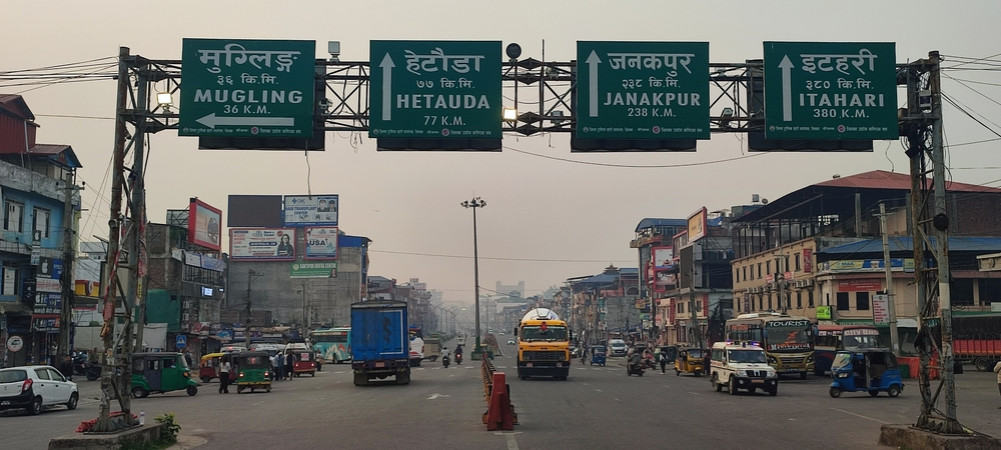
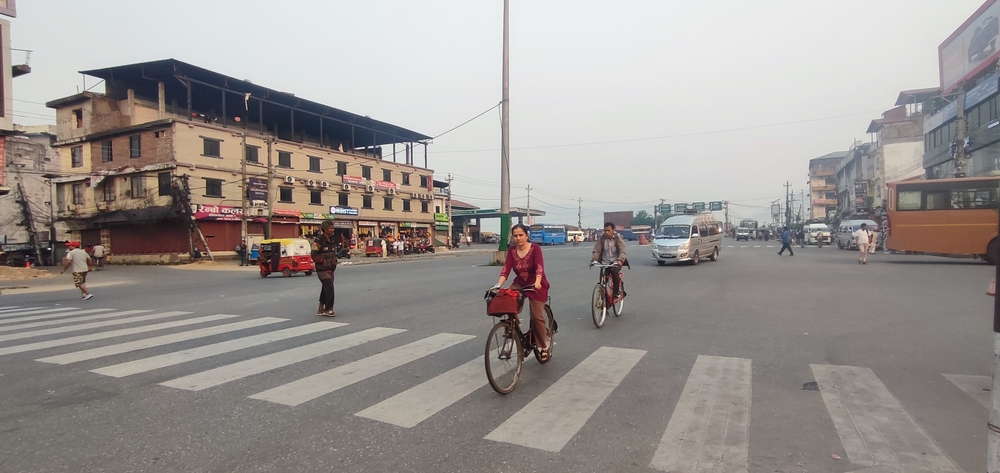
When the bridge was built in Narayani, buses and trucks came. People came on those buses and trucks. The place got its name Pulchowk. There was a constant buzz of activity day and night. The then Maoist armed struggle reached its peak and the crisis period began, and vehicles stopped running at night. After that, Pulchowk became quiet. Although it could not return to its old rhythm after the peace process, Pulchowk has retained its old identity.
We use Google Cloud Translation Services. Google requires we provide the following disclaimer relating to use of this service:
This service may contain translations powered by Google. Google disclaims all warranties related to the translations, expressed or implied, including any warranties of accuracy, reliability, and any implied warranties of merchantability, fitness for a particular purpose, and noninfringement.
Narayangadh's Pulchowk used to be lively day and night. There was constant activity day and night. When the then Maoist armed struggle was at its peak, the crisis period began in Mangsir 2058. Vehicles stopped running at night. After that, Pulchowk, which had been dormant, has managed to maintain its old identity even though it has not returned to its old rhythm after the establishment of peace.
'It is time for the train to Butwal, Bhalubang, Dang, Pyuthan to arrive. Passengers, please come. When the train arrives, please go to your seats,' was echoed in the ticket counter microphone at Pulchowk before the crisis. Such a sound used to alert the surrounding passengers. This sound, which came around 8-9 pm, could be heard as far as the houses in the Belchowk area, one and a half kilometers away.
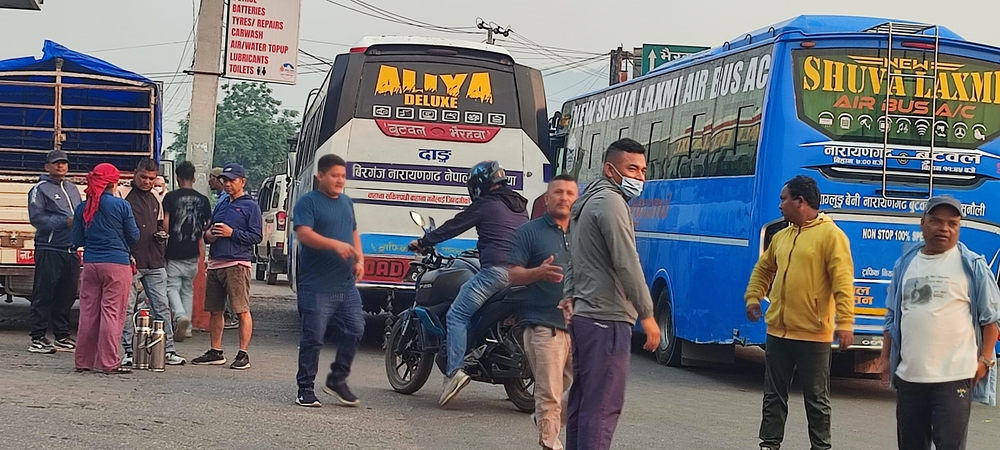
After the political change, peace was restored and the movement resumed. But such a sound is not heard today. But even now, some people standing at Pulchowk ask, ‘Are you going to Kathmandu?’ Some are requesting that the east-going vehicle be this way, some that the west-going vehicle be that way.
Pulchowk has become a place where people from Narayangadh can go to the east, west, Kathmandu, Pokhara, and those from there can be dropped off here. Vehicles coming from the right, left, and east-west stop, and people get off. When the bus stops, three-wheeled rickshaws used to come in the hope of getting a ‘ride’, but now three-wheeled auto-rickshaws come in. People carrying water bottles, gram, and peanuts do the same.
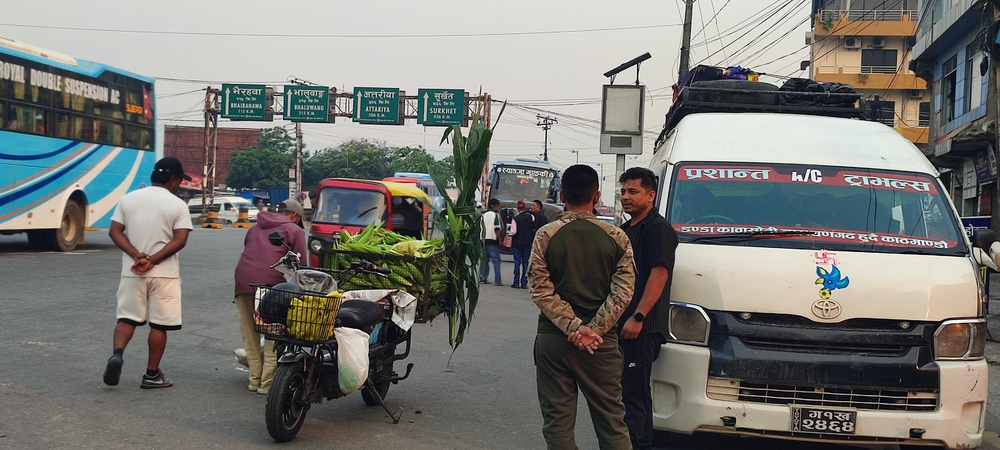
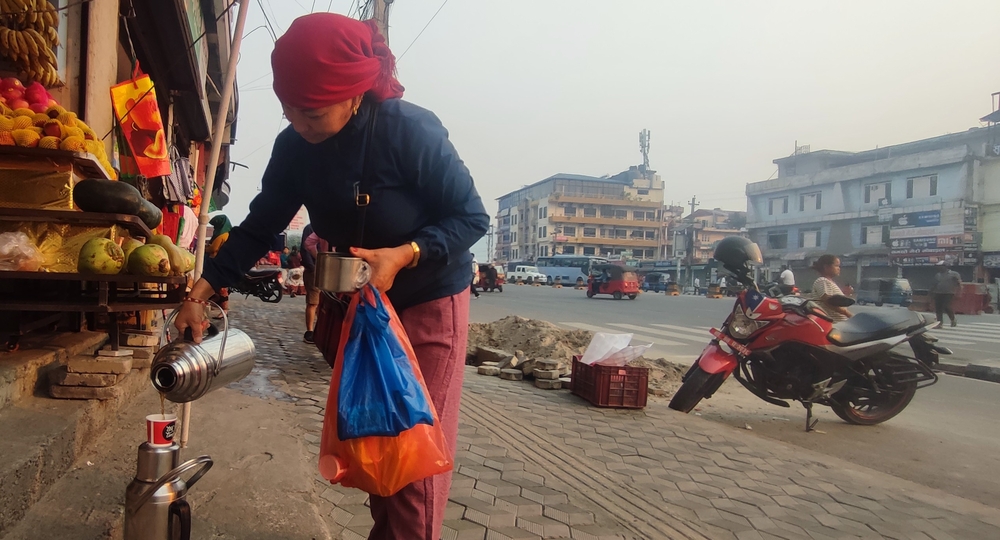
The day at Pulchowk is spent in such a busy manner. Although it slows down as evening falls, the hustle and bustle here decreases at night, but it does not stop. The busyness of Pulchowk is linked to passenger buses. Daily life here moves forward with the speed of the bus. Manju Gurung, originally from Gorkha, wakes up not with the robbers of Bhale, but with the bus schedule. She reaches Pulchowk before 5 am.
There are two large thermoses, one with milk and the other with black tea, sugar and lemon in the bag, and paper cups. When she goes, she carries these things heavily in both hands. When she returns after two to two and a half hours, it feels lighter. This is how her daily life has been going for the past four years. ‘A little more tea is sold in the winter. In the summer, 60/70 cups,’ she said.
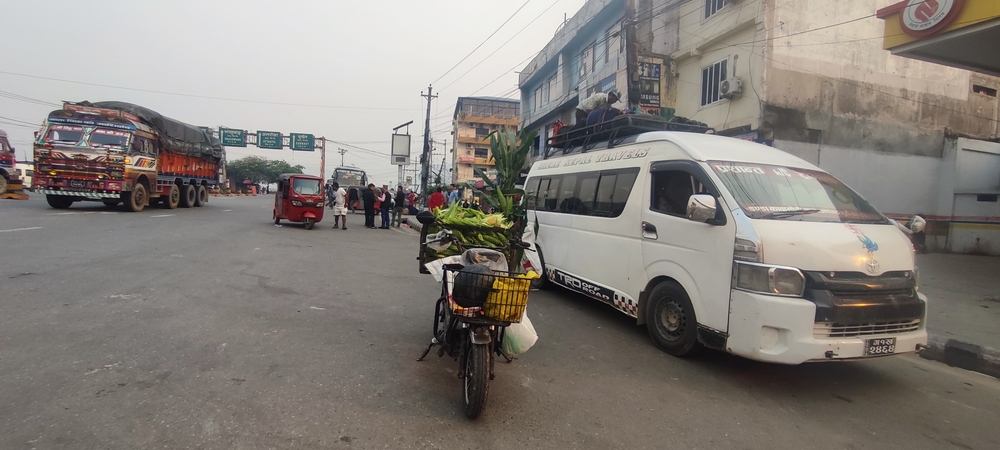
The tea drinkers are the passengers who get on, off and sit on the bus, the driver, and the co-driver. There are five to seven people like Manju who reach Pulchowk early in the morning with tea in a thermos, mostly women.
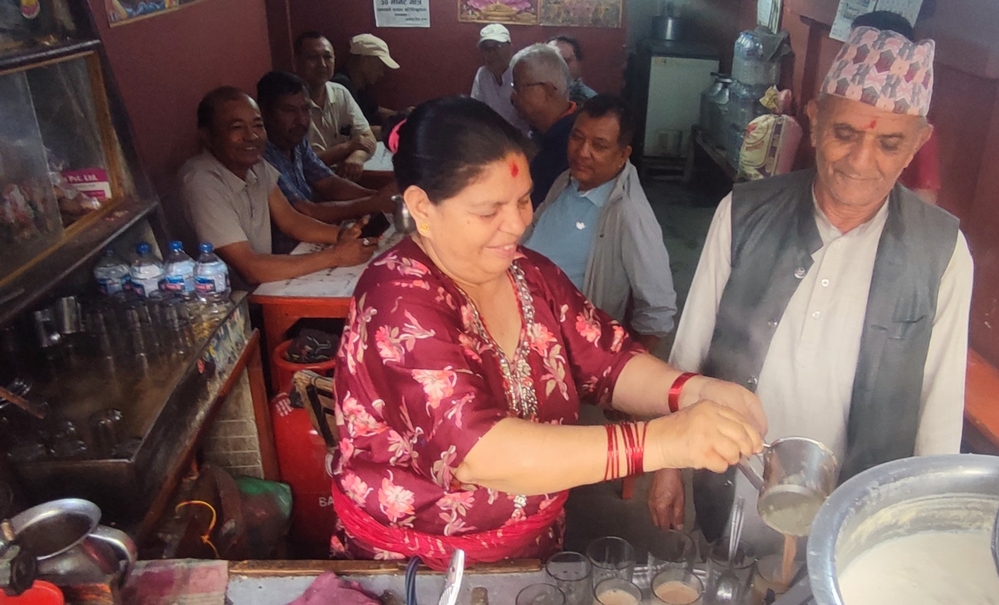
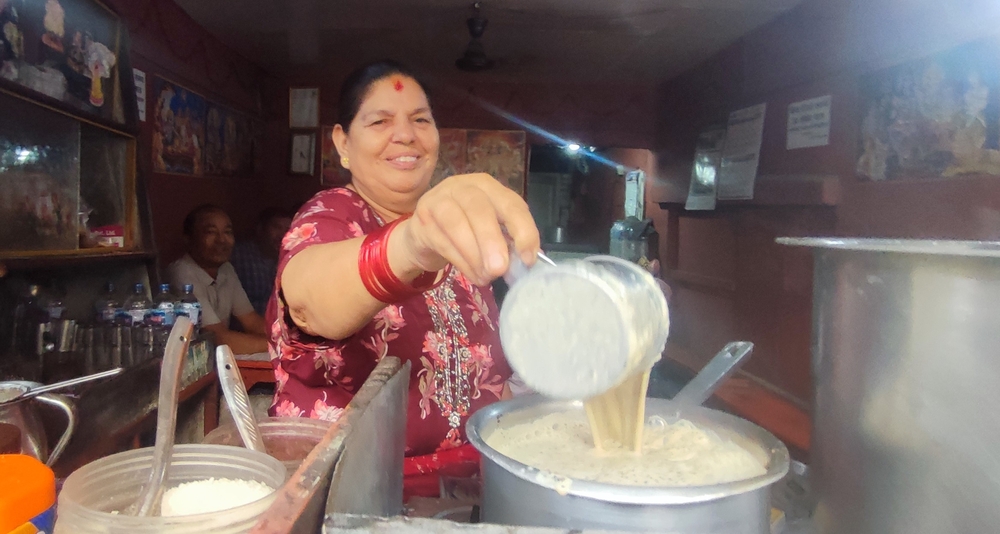
Jagmaya Bhandari has been selling tea in Pulchowk for decades. The ‘Gulmeli Tea Shop’ run by her husband Chandrakant Bhandari and Jagmaya in Pulchowk is a junction for many people to drink tea. People gather here early in the morning. Her tea shop closes as soon as evening falls.
Jagmaya started selling tea in 2039. Due to the heavy traffic, and on top of that, the night buses, after 2042, Jagmaya would start making tea at 3 pm. After that, she would sell tea all night long. She would go home to sleep after 9-10 am.
Jagmaya sometimes came with a small table in front of her and sometimes selling tea on a cart. When the crisis hit and night trading was not possible . After that, she rented a small room in Pulchowk and started selling tea from early morning .
But was Pulchowk always like this ? The story of Laxmi Khanal Pokharel, who was born on 22 Shrawan 2019 near Pulchowk, shows a different picture . Laxmi's father had one and a half bighas of land in that place . Maize, mustard, and potatoes grew well . A little further west was a ghat where the last rites of the dead were performed . One day, Laxmi's father saw a scene that shocked him . 'There is a square near our house . A body was kept in that square . Since it was a pregnant woman's body, there was a plan to cut it open, take out the baby, and burn it,' Laxmi said .
Her father saw Lakshmi and her brother watching the body being dismembered with their hands on their cheeks. ‘Then he thought it was not a suitable place to live and moved us to Kshetrapur,’ Lakshmi said. From Kshetrapur, they later moved to Belchowk. Now Pulchowk is a busier city than Kshetrapur and Belchowk.
How did Pulchowk become so busy? There is only one answer to this, when a bridge was built in Narayani. After that, this place got the name ‘Pulchowk’. And buses and trucks came to Pulchowk. People came on these buses and trucks. Mahendralal Pradhan’s father and uncle had bought 16 bighas of land around Pulchowk around 2015. Although their original place was Tanahun Bandipur, they had a cloth business.
Even though the shop was in Bandipur, to get the goods, one had to cross Madi through Narayangadh and enter through Thori to reach Nagarkatiyagunj in Bihar, India. The merchants of Bandipur used to store the goods brought from there in Narayangadh and pack them. Perhaps seeing a bright future, Pradhan's father and uncle annexed land in Narayangadh, which is in the current market and Pulchowk area.
Mahendralal Pradhan, who completed his school education from Kathmandu and higher education from Mumbai, India, continued his father's profession and business. Initially, he ran a clothing and food business. But when the bridge was built in Narayani, he took up a new job. He opened a petrol pump right next to the bridge and started selling fuel. The pump, which opened in 2042 BS, sold a thousand liters of fuel on the first day.
'We sold up to 45 thousand liters of diesel and petrol daily.' Now there has been some decrease. Our pump is one of the most fuel-selling pumps in the country,' said Pradhan.
Gopiman Shrestha of Madi had started a newspaper shop in a small mobile shop in Pulchowk. In 2038 BS, he used to sell 20-25 newspapers a day. The bridge that began to be built in 2038 BS was completed in 2042 BS. Then Butwal-Narayangadh was connected. The Narayangadh-Muglin road connected Kathmandu and Pokhara with Narayangadh. At that time, newspapers that were published against the Durbar started coming.
'After that, a crowd started coming to my shop to read newspapers. Surya Bahadur Thapa started opposing the Durbaria, calling them an underground gang. The sale of newspapers that wrote about this increased rapidly. After 2042 BS, the weekly newspaper itself started selling 2500-3000 copies,' said Shrestha. According to him, during the armed struggle, newspapers that wrote in favor of the then Maoists used to sell four to five thousand copies.
Gopiman Shrestha's shop, which only sold newspapers, was a suitable place to quench the thirst for information and news. Every newspaper coming out of Kathmandu was available here. Shrestha closed the shop after the newspaper business started to decline. 'The business was going well. But it was no longer possible to pay the rent by selling only newspapers. I started the shop with a monthly rent of 150 rupees, and I left it in 2066 when the rent reached 10 thousand rupees,' he said.
Not only Gopiman's newspaper shop, but many things have disappeared from the Pulchowk area. There are now houses in the fields where maize and mustard used to be sown. There are no snack and food shops that used to be crowded with passengers like before.
The government itself started the Rapti Doon Development Project in 2013 for the development of organized settlements in Chitwan. Until the highway was built, there was no dense settlement in the Narayangadh area. When the highway started to be built in a hurry, the market started to fill up. But even before the bridge was built and ready, the current Pulchowk area was empty. About a kilometer east of Pulchowk, Lilachowk was bustling.
When the bridge was not built, people used to travel by boat. Vehicles were ferried across the Narayani River on 'ferries' and large boats. In this way, Lilachowk was the place to go for boat crossing. The old Sangam Chowk, now called Shahid Chowk, was also bustling. But the Pulchowk that came into existence later was visited by many. Recently, alternative highways to and from Kathmandu have been built. There is also a bypass road in Bharatpur.
Mahendralal Pradhan, who led the then Narayangadh Chamber of Commerce and Industry twice and was also a central member of the Federation of Nepalese Chambers of Commerce and Industry, says that Pulchowk is no longer in a state of expansion. ‘After the crisis, the number of night buses decreased. Otherwise, this Pulchowk was a place for business in the morning and evening due to night buses. It was always busy during the day. Buses used to stop in front of food and snack stalls and hotels. Fruits were also sold,’ said Sevan Pant, who was born in Narayangadh Pulchowk in 2025 BS.
Sevan’s grandfather, Khadga Bahadur Pant, owned 16 bighas of land covering almost the entire Narayangadh area from the current Pulchowk. Khadga Bahadur, who was a farmer during the Rana period, had sold that land in 2015 BS. But a case was filed claiming that the rights of the heirs would be affected, and although the judicial resolution of the case was decades ago, it was not without controversy when it was implemented. That dispute is not over yet. For a long time, the Pulchowk area was full of huts and huts. When the Pant family's land dispute began to find a solution, then houses with slopes started to be built.
With the construction of the bridge, vehicles started to stop at Pulchowk, but the Pokhara Bus Park was ready one and a half to two kilometers away. Later, in the early 60s, the Central Bus Park of Bharatpur began to operate. Whether it was during the Panchayat period or at other times, a great effort was made to prevent buses from stopping at Pulchowk, says local businessman Ram Kumar Shrestha. But people have got used to coming to Pulchowk and getting on their vehicles. That habit has kept Pulchowk alive to this day.