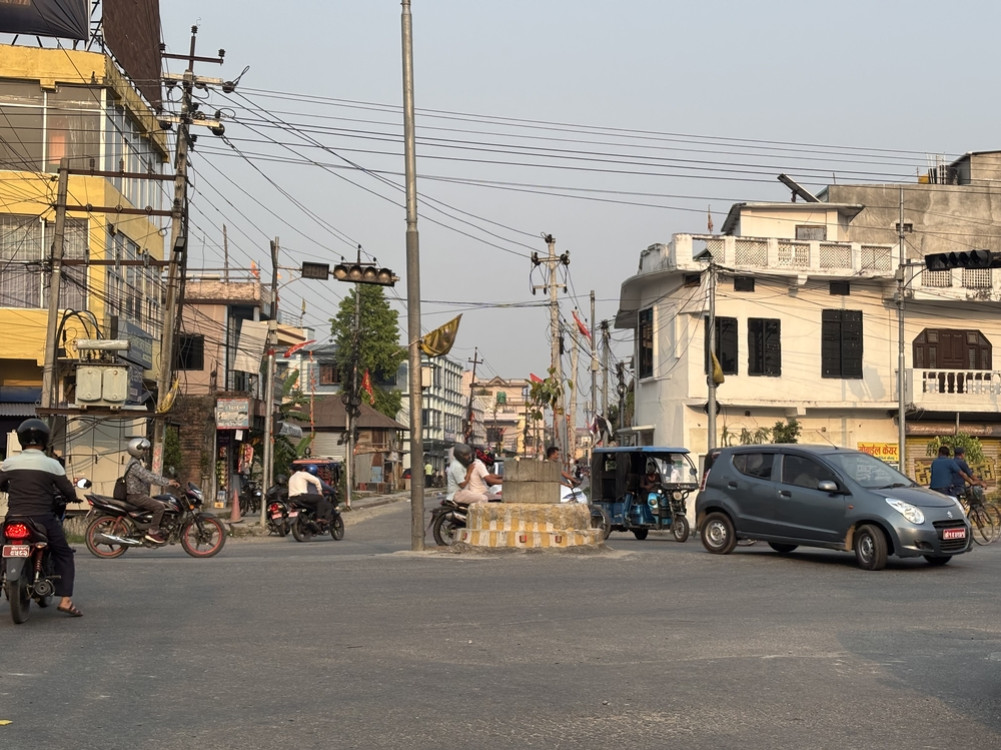
From student movements, labor struggles to the recent 'Gen-G' uprising, Baragachhi has been a public platform for continuous protest and resistance. The tradition of questioning power, demanding rights, and raising voices for change is also alive from this square.
We use Google Cloud Translation Services. Google requires we provide the following disclaimer relating to use of this service:
This service may contain translations powered by Google. Google disclaims all warranties related to the translations, expressed or implied, including any warranties of accuracy, reliability, and any implied warranties of merchantability, fitness for a particular purpose, and noninfringement.
Before understanding the story of Baragachhi, let us understand the history of Biratnagar. Today's Biratnagar was previously known as Nepalgunj and then Chandragunj. The old settlement was centered around 'Gograha Ghat'. Dr. Vijay Prasad Mishra, in an article titled 'History of the Development of the Settlement of Biratnagar', quoted linguist Balkrishna Pokharel as saying, 'Biratnagar is a younger name than Gograha, Nepalgunj and Chandragunj.'
Before moving here from Rangeli, the headquarters of Morang, settlements like Gograha, Kharji, Pokhariya, Tinpaini, Shankarpur, Mahuwa, Geheli, Jahada, Bakri and Rani existed. At that time, the main settlement was centered in the south, especially in the Rani area, while there was dense forest to the north.
People were afraid to settle here due to the outbreak of malaria. Later, after the Rana regime encouraged farming and settlement, indigenous people including Tharu, Rajbanshi, Dhimal, Marwari, Newar, Madhesi and hill tribes, traders and hill tribes started settling here.
‘Bargachhi’ is not a new name for anyone traveling along the Koshi Highway that runs north from Jogbani in India. However, it is not just a square but a living story of history, identity and change. Today’s busy, noisy and concrete-filled Bargachhi Square. At first glance, it is perhaps hard to believe that once upon a time, a giant Bar tree stood here. Under whose shade, rest, discussion and relationships grew.
Before the highway was widened, the identity of the Bargachhi area was linked to that giant Bar tree. Madhav Prasad Atri, in an article in the literary magazine ‘Bargachhi’, mentioned that the tribal Rajbanshi, Tharu and other communities have been protecting it not as a tree, but as a village place. That tree was not only a symbol of nature, it was a center of faith, culture and community unity. The village and society’s courthouse was located under that canopy. Travelers used to rest and many aspects of local life were exhausted.
However, when the road was expanded in the name of development, not only that old tree fell, but also many memories, cultures and important aspects of identity associated with it. The tree was destroyed, the birds’ habitat was destroyed. But the name was not erased. ‘Bargachhi’ is still alive in the speech of people, on city maps, on signboards and in collective memory. Not only that, that great tree.
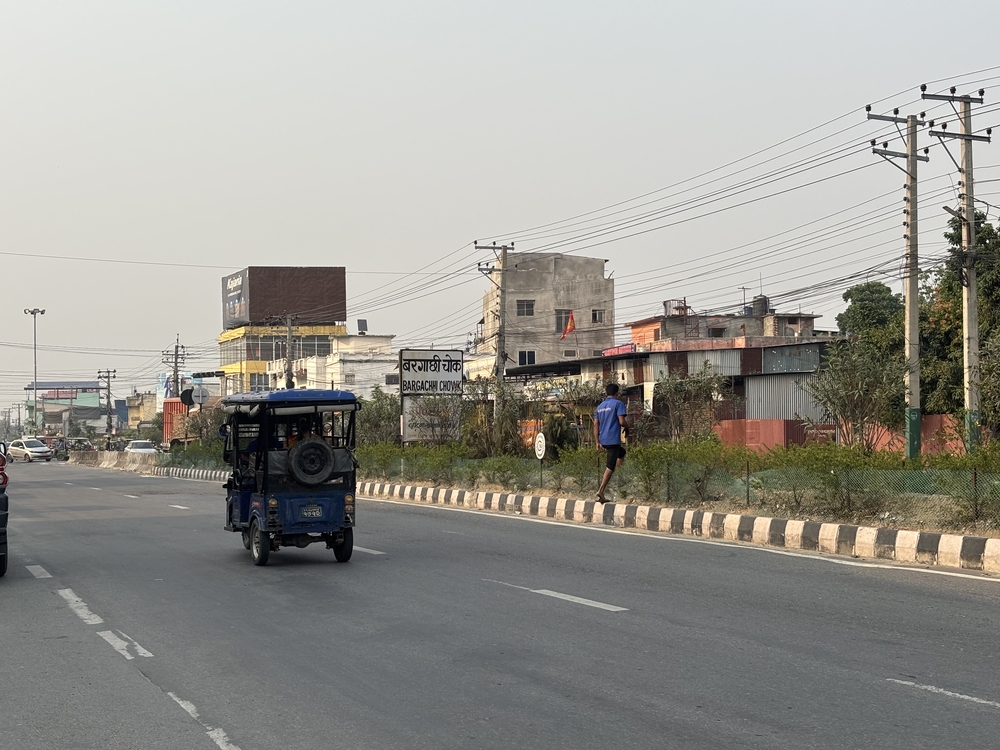
Baragachhi is not just a crossroad, but also a witness to political and social movements. This square has been at the center of many important moments of Nepal's democratic movement. From the democratic revolution of 2007 BS to the people's movement of 2046 BS to the historic movement of 2062/63 BS, Baragachhi has always been resounding with masal processions, slogans and public waves. This area has also become the working ground of prominent figures in Nepali politics. The political activities of veteran leaders like Matrika, BP and Girija Prasad Koirala to Manmohan and Bharatmohan Adhikari were linked to this geography. 'Baragachhi was not just a square, it was a fertile ground for political consciousness,' says social activist Tikaram Khatiwada, 'from where voices of change would rise and reach the government.'
As mentioned in the book 'Biman Bidhoor', the famous plane hijacking scandal of 2030 BS is also believed to have been planned around this area. The book discusses Baragachi and its surroundings. Characters like Durga Subedi, Basant Bhattarai and Nagendra Dhungel were associated with this area, which seems to have established Baragachi as a center of national political activity.
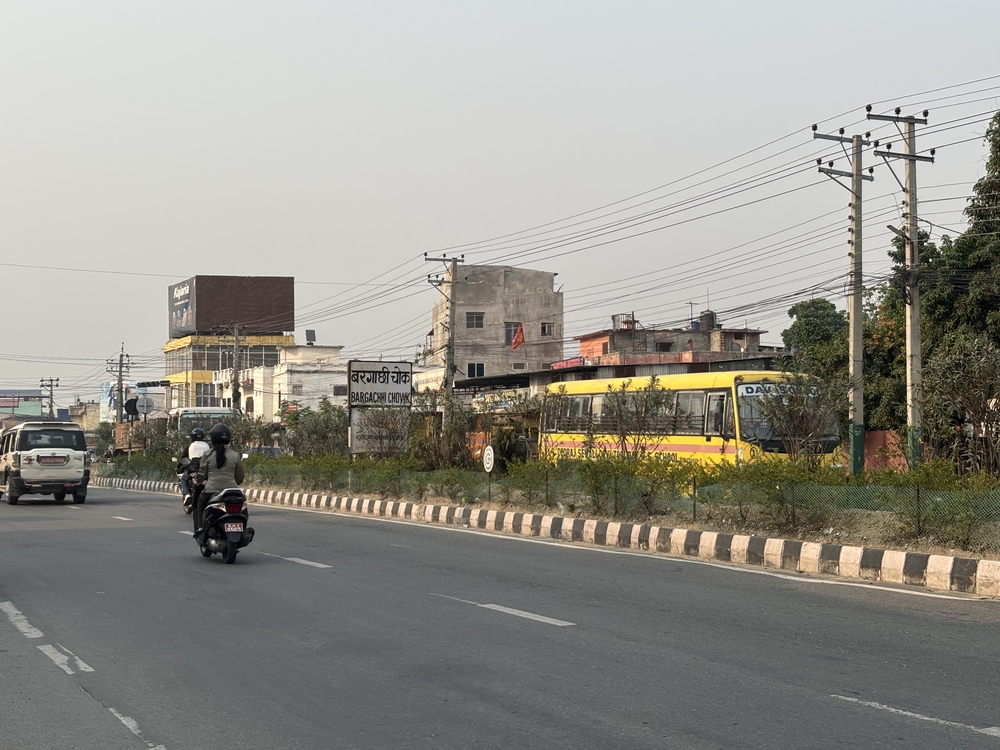
From student movements, labor struggles to the recent ‘Gen-G’ uprising, Baragachi has been a continuous public platform for protest and resistance. The tradition of questioning the government, demanding rights and raising voices for change is still alive from here.
Baragachi Chowk is the artery of Biratnagar’s economic activity. This chowk, which connects Itahari-Dharan in the north, Rani Bhansar and Jogbani in the south, Pushpalal Chowk in the east and the airport in the west, has become like a ‘transit hub’ of the city.
The wholesale and retail shops here are keeping the city’s economy moving. The vegetable market, grocery stores, electronics and automobile showrooms are bustling from early morning. From small tea shops to large hotels, hundreds have been directly employed. Dr. Vedraj Acharya, a long-time resident of Biratnagar and economist, says, ‘If you want to feel the economic pulse of the city, look at the business activities of Baragachi.’ In fact, the crowding, business and dynamism here seem like an indicator of Biratnagar’s economic health.
Baragachi is also the heartbeat of social life. Life is in full swing from 4 am. College-going students, people taking morning walks, people sitting at tea shops scrolling their mobile phones and analyzing the country’s politics. Business activity peaks in the afternoon, while small and big restaurants come alive in the evening. The cafes, buzzing with the heated debates of Gen-G youth, represent the city’s modern lifestyle, fashion and culture. The business acumen of the Marwari community, the coexistence of the Madhesi and Pahadi communities have made Baragachi an example of cultural diversity.
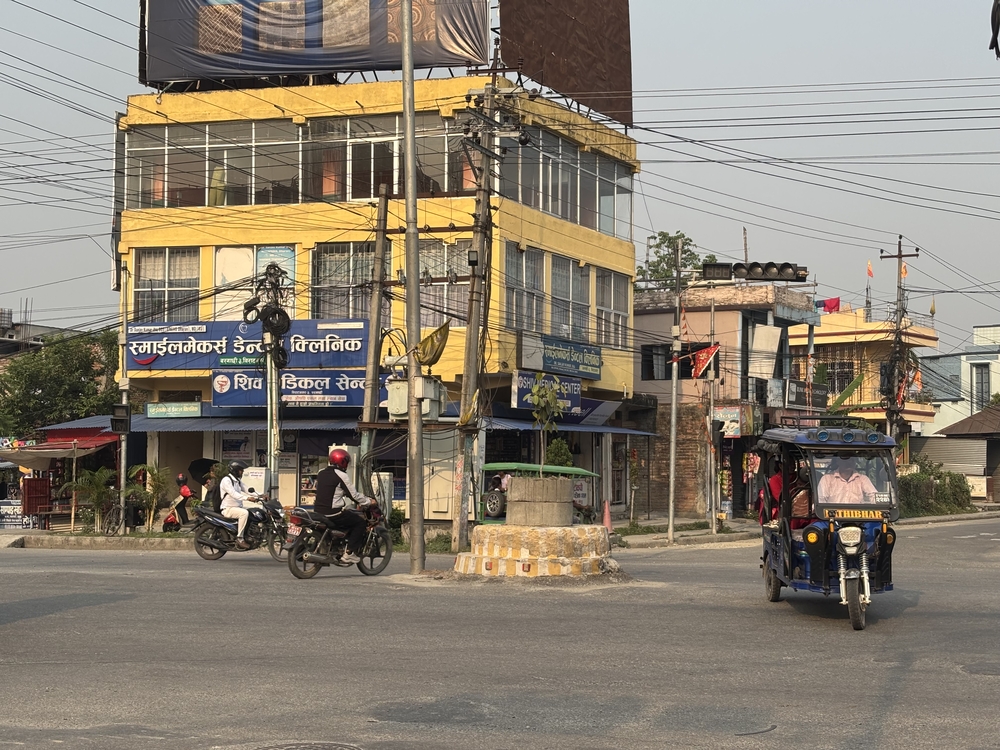
With development, the appearance of Baragachi has changed. The roads have become wider, the buildings have become taller, and the number of vehicles has increased significantly. However, with this change, the old residents feel that something valuable is being lost, that is, the old Baragachi. Local resident Budhlal Rajbanshi says, ‘Earlier Baragachi was not just a shelter of coolness, it was our village. Now it is not a shelter of the groom, but only a pile of concrete remains.’
The temperature in Biratnagar is increasing day by day. In the summer, which reaches above 42 degrees Celsius, the lack of greenery and shelter is felt more acutely. The once lush roadsides now look deserted. Parul Chhetri is engaged in a campaign to make the deserted roadside green. He and his group are busy planting and watering plants daily. This group is selflessly doing the work that the metropolis does. ‘Now we are engaged in a campaign to grow the Varavriksha tree like before,’ says Chhetri, ‘Our goal is to bring back the old Varagachhi.’
After the historical Varavriksha tree of Varagachhi was destroyed, many ways were sought to give it a new identity. A statue of grandfather Krishna Prasad Koirala was also installed on the initiative of Congress leader Shekhar Koirala. However, that statue was also destroyed in a road accident. Currently, a small Varavriksha tree is growing in the same place. The locals hope that one day that tree will grow into a huge tree and will once again provide shade to Varagachhi.
In the experience of Biratnagar-based writer Seema Abhas, urban development should not be limited to the process of widening roads and erecting tall buildings. Preserving the connection with history, culture, and nature is equally essential. ‘Places like Bargachhi carried the soul of the city,’ Abhas adds, ‘preserving that means preserving identity.’