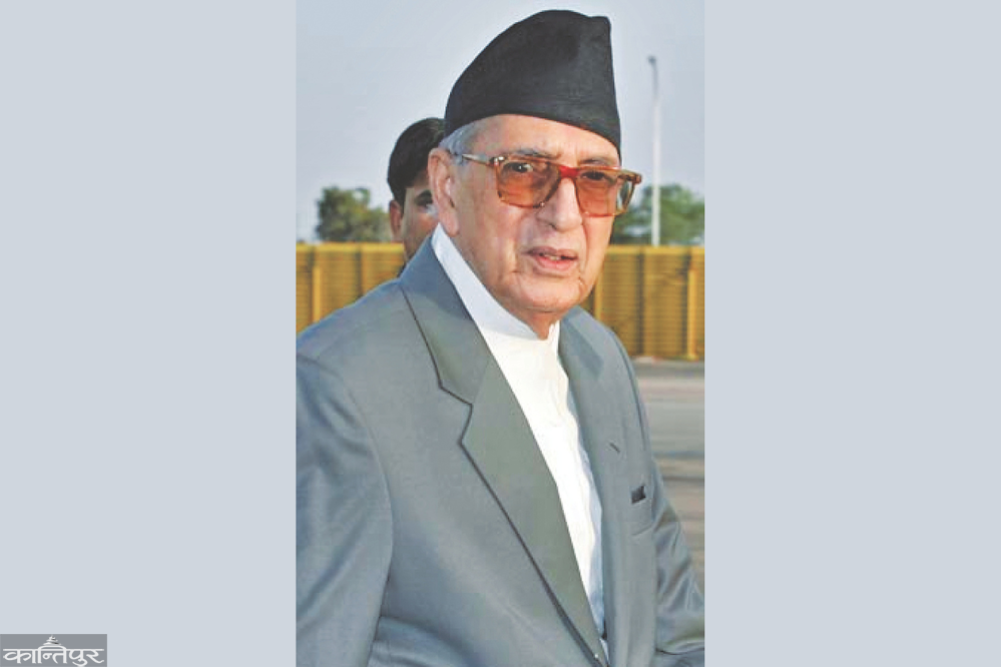
Girija Prasad Koirala was a leader with unwavering faith in democracy. He never compromised with anyone in his life for the sake of democracy. The main reason for all the mistakes and weaknesses during his tenure was his power-centric politics.
We use Google Cloud Translation Services. Google requires we provide the following disclaimer relating to use of this service:
This service may contain translations powered by Google. Google disclaims all warranties related to the translations, expressed or implied, including any warranties of accuracy, reliability, and any implied warranties of merchantability, fitness for a particular purpose, and noninfringement.
इतिहासकै शक्तिशाली जनमतसहित वालेन्द्र शाह प्रधानमन्त्री बनेको तीन साता पुगेको छ । प्रधानमन्त्रीका रूपमा उनको भूमिका कस्तो रहनेछ ? उनलाई इतिहासले कसरी सम्झिन्छ ? अहिल्यै आकलन गर्नु हतारो हुनेछ । नेपालको राजनीतिक इतिहासमा ४० जना प्रधानमन्त्री भइसकेका छन् । तीमध्ये कतिपयलाई निरन्तर सम्झना गरिन्छ । कतिपय भने गुमनाम जस्तै छन्, औपचारिक सन्दर्भभन्दा बाहेक चर्चा गरिँदैनन् । ‘कोसेली’ ले केही प्रधानमन्त्रीको कार्यकाल सम्झना गरेको छ । ‘कान्तिपुर’ को सम्पादकीय समूहले पदमा रहँदा निर्वाह गरेको भूमिका र सार्वजनिक विमर्शमा नाम आइरहने १२ पात्र छनोट गरेको छ । उनीहरूको पदावधिको चर्चा गर्दा नेपालको मूलभूत शासकीय प्रवृत्ति उजागर हुनेछ भन्ने हाम्रो विश्वास छ ।
When I was a reporter for Radio Nepal (from 2055 to 2059), I was responsible for covering the Nepali Congress, Parliament and Government. Girija Prasad Koirala, also known as Girija Babu, who was the President of the Nepali Congress and Prime Minister, was at the center of politics. From the time he joined Kantipur Television on 2059 Chaitra 7 until Girija Babu's death (2067 Chaitra 7), my 'beat' was Girija Babu.
In this sense, I had the opportunity to observe and understand him closely for about 12 years. From Asar 2064 BS for 6 months, I conducted a series of interviews based on his biography on television. He was at the center of the Nepali political scene from the Constituent Assembly elections, the end of the monarchy and the establishment of the republic until his death on 2067 Chaitra 7, and I had the opportunity to report on that period. After his death, Koirala is one of the most mourned politicians in Nepali history. Kantipur Television filmed his funeral procession from a helicopter.
He is the most criticized and praised figure in Nepal's political history by the media. Koirala, who started politics as a labor leader in 2003 BS while working at the Biratnagar Jute Mill, served as the country's executive prime minister and head of state six times. He played a leading role in all political changes from the 2007 BS revolution, the 2046 BS and 2062/63 BS people's movements to the end of the monarchy and the establishment of the republic.
Political background
During the reign of Rana Prime Minister Chandra Shumsher, his father Krishna Prasad Koirala received the contract for all customs duties from East Mechi to West Mahakali. The Koirala family was among the richest and most prosperous in the country after the Ranas of that time. After Prime Minister Chandra Shumsher deported Krishna Prasad from the country with all his possessions in 1974 BS, the Koirala family had to emigrate to India for 12 years. At that time, Girija Prasad was born in Tedhi, Dipnagar, Saharsa district, India in 1981. At that time, the freedom struggle was going on in India, which was under the leadership of Mahatma Gandhi. Krishna Prasad was influenced by Gandhi. He motivated his sons to enter politics, saying that the end of the Rana rule in Nepal was not possible until the British returned from India. After the death of Chandra Shumsher, Bhim Shumsher, who became the Prime Minister of Nepal, granted a general amnesty and allowed Krishna Prasad to return home.
Even after Krishna Prasad returned home, his sons Matrika and BP, who were studying in India, continued to participate in the Indian freedom struggle. After it was decided that the British would return from India, BP established the Nepali National Congress with the aim of ending the Rana rule. And that same organization started an organized movement of workers from Biratnagar. The leader of that movement was Girija Prasad Koirala.
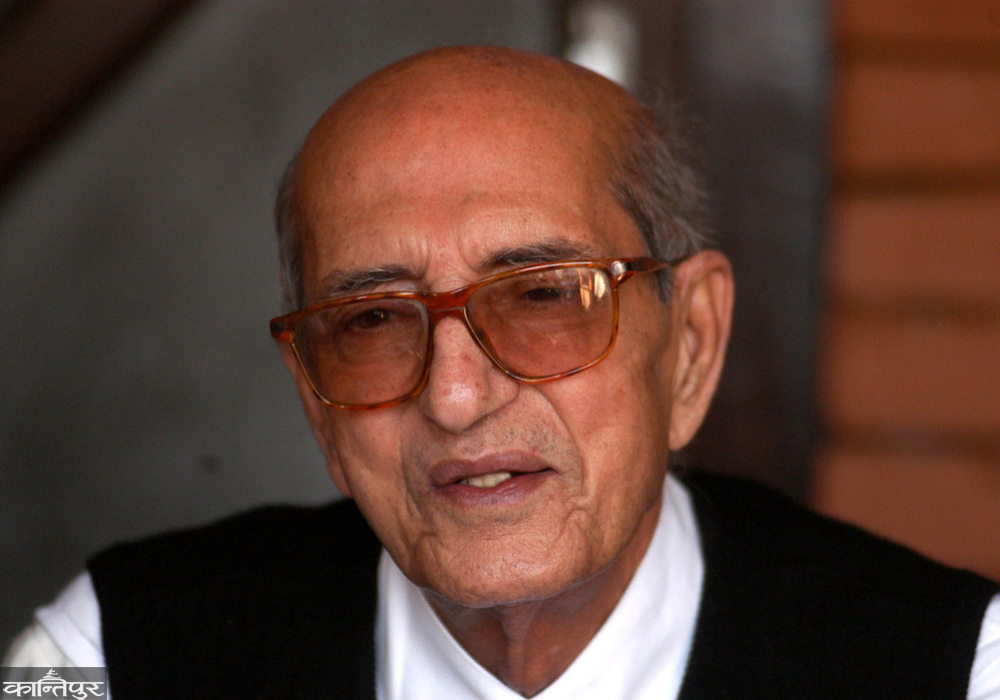 Thus, he began his political journey as a laborer and was deployed in the Kranti Morcha as a political commissar in the 2007 revolution. That revolution ended the 104-year Rana rule and established democracy in the country. His brother BP became the Home Minister on behalf of the Nepali Congress in the Rana-Congress joint government formed immediately after that. The joint government collapsed due to the tension between the Rana and the Congress, and Girija Prasad's elder brother Matrika Prasad became the Prime Minister. Thus, since 2007, Girija Prasad got the opportunity to know, understand and appreciate the Nepali state closely. After the Nepali Congress won a two-thirds majority in the 2015 parliamentary elections, his younger brother BP became the country's first elected Prime Minister.
That government did not work for more than 18 months. The then King Mahendra dissolved the elected government and parliament and initiated an autocratic Panchayat system. During this period, Girija was imprisoned for 7 years. After his release, he led the armed revolution from exile in India. To raise funds for the revolution, he even did very daring and daring things, including making the then Royal Nepal Airlines Corporation's plane hijacking plan a success.
According to Girija Prasad, in the early days, he had never imagined or dreamed of becoming a leader except to make his brother BP successful. After working in a low-profile for more than three decades, BP appointed him as the party's general secretary in the latter half of his life. Thus, Girija Prasad became the third-ranked leader in the party after Ganeshman Singh and Krishna Prasad Bhattarai.
Coincidentally, in the 2048 BS general election, the Nepali Congress got a clear majority, but the acting president and Prime Minister Krishna Prasad Bhattarai was defeated in Kathmandu Constituency No. 1. Supreme leader Ganeshman Singh had not even filed his candidacy in that election. In an interview with Panchikar, Girijababu had said – ‘I never dreamed that Kisunji would lose. There was no way to imagine that the leader of such a movement, the Prime Minister of the interim government, would lose. The Congress would win the majority in the elections and Kisunji should become the Prime Minister. I never imagined that I would become the Prime Minister, I would do this, I would do that.’ Bhattarai became the Prime Minister by chance because he lost the election. With this, history was made that Krishna Prasad Koirala’s three sons became Prime Ministers. Such an incident is rare in the world.
Despite his long experience in political movements, Koirala did not have the knowledge of governing. Nevertheless, there was a rush to do something for the country and the people. Many far-reaching works were done during Koirala’s first term (2048–2051). The level of improvement in the country’s economy at that time has never been seen since. The first government led by Koirala laid the foundation for the development of the private sector, including education, health, transportation, communications, banking and finance. With his own strength, the roots of democracy were extended to the villages by holding local elections. Despite this, the removal of high-level employees on a whim and the dissolution of parliament due to internal strife within the party and taking the country to the mid-term elections were the biggest mistakes of Koirala's political life.
Power-centered politics
Girija Prasad Koirala was a leader with unwavering faith in democracy. He never compromised with anyone in his life for democracy. The main reason for all the mistakes and weaknesses during his tenure was his power-centered politics. He was constantly accused of encouraging corruption during his tenure by keeping power and power at the center, and of giving opportunities to his devotees by sidelining those who were qualified in politics. Koirala's party, the Nepali Congress, was defeated in the mid-term elections held by him in 2051. The people did not give a majority to any party. The CPN-UML became the largest party in parliament. And Manmohan Adhikari became the country's first communist prime minister. The Adhikari-led government collapsed within nine months. In the meantime, Sher Bahadur Deuba, Lokendra Bahadur Chand and Surya Bahadur Thapa became prime ministers. The government changed every 6 months. Activities such as locking MPs in hotels, providing them with luxury goods, sending ministers abroad, and giving MPs expensive cars like Pajero and Prado on duty free brought the parliamentary system into disrepute.
In this environment, Koirala became prime minister for a second term. He dissolved parliament to end the distortions and anomalies prevalent in parliament and to go for a fresh mandate. In the 2056 elections, Koirala put forward party leader Krishna Prasad Bhattarai as the future prime minister. The Congress won a comfortable majority, but after nine months of the Bhattarai-led government, Koirala was forced to resign and became Prime Minister for the fourth term. That incident was the biggest mistake of his political life. His tenure as Prime Minister was the most controversial. He was also involved in the corruption case involving the rental of aircraft from the Lauda Company for the then Royal Nepal Airlines Corporation. The main opposition CPN-UML held a protest program saying that the incumbent Prime Minister would not be allowed to enter Singha Durbar, and for the first time in Nepal's parliamentary history, the nineteenth session of the parliament had to end without holding a single meeting.
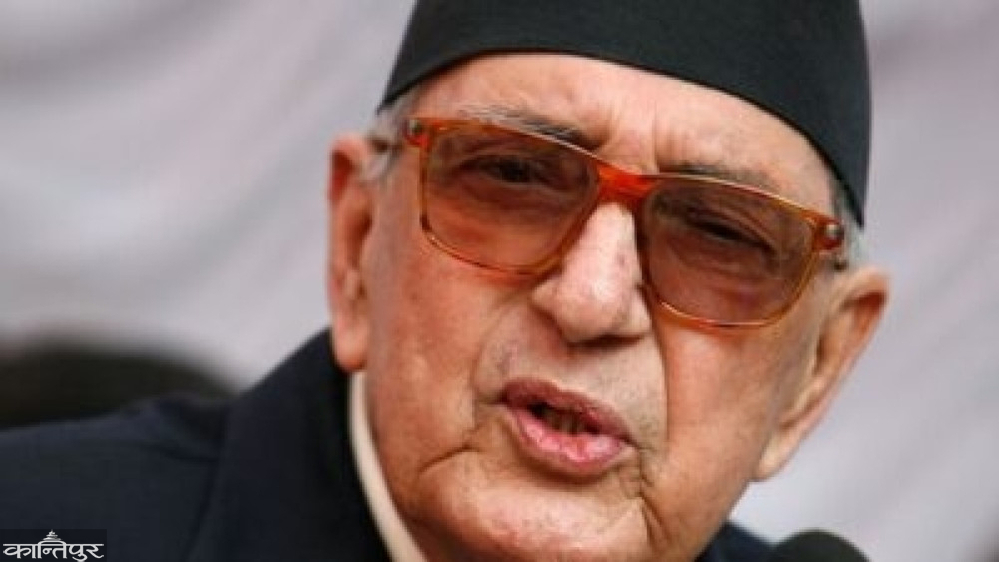 The destruction of King Birendra's dynasty and the non-cooperation of the new king
Even though he deposed Bhattarai and took over the reins of power, that term became the most challenging for Koirala. A strong group was formed within the party to oppose him. Opponents became more aggressive. At that time, the Maoists, who had launched an armed rebellion against the parliamentary system, saying they would seize power at gunpoint, launched a campaign to intimidate the police. The peace and security of the country was disrupted. All police stations had to be moved to the district headquarters.
At that time, the royal palace massacre on 19 Jestha 2058 BS destroyed the dynasty of King Birendra. At that time, Koirala, as Prime Minister, made a bold decision to continue the monarchy by crowning the king's younger brother Gyanendra.
Koirala was confident of receiving support from the new king. One and a half months after Gyanendra ascended the throne, on 29 Asad 2058 BS, the Maoists attacked the Holeri outpost in Rolpa and kidnapped 72 security personnel and looted their weapons.
Since the police were unable to resolve the Maoist rebellion through mobilisation, the government had no choice but to appeal to the army. Prime Minister Koirala gave the army the responsibility of rescuing the kidnapped policemen and returning their weapons. But the army not only did not cooperate with the elected government, it also kept spreading false information that action was being taken against the Maoist rebels. At that very moment, the king pressured Prime Minister Koirala to resign.
In this way, Koirala was forced to resign due to the non-cooperation of the court, the king and the army. In this context, Koirala had said – ‘I only found out much later that the army had dissupported the elected government on the king’s orders. I should have made the matter of the king’s dissupport of the elected government public from Tundikhel, not doing so was a big mistake in my political life.’ After that incident, another Congress leader, Sher Bahadur Deuba, became the Prime Minister.
Insistence on the restoration of parliament
Prime Minister Deuba recommended the dissolution of parliament to the King at midnight on 2059 Jestha 8. Despite knowing that elections were not possible due to peace and security concerns due to the Maoist insurgency, the King immediately approved the Prime Minister's recommendation and set a date for mid-term elections. Shortly after that, the King dismissed Prime Minister Deuba, accusing him of being incapable of holding elections. And, misinterpreting the constitution, he acted on the basis of Article 127 to form and dissolve the government at will.
In that context, Koirala put forward the demand for the restoration of the dissolved parliament. That proposal was opposed from all sides. In this context, Koirala had told this columnist – ‘My conviction was that the issue I raised was the only option to save democracy. I believed that if parliament was not restored, democracy would end for a long time.’ First, in 2017, the king overthrew the elected government by military force and ruled as a Panchayat dictatorship for 30 years. Now, I thought it would take another 50 years. And I kept insisting that the parliament should be restored no matter what. My inner self felt that one day everyone would have to come to my agenda.'
Koirala, who had the image of completing the task he had set out to do once, started escalating street protests by involving the opposition parties. He increased dialogue with the international community and the rebel Maoists. He got all the parties to agree on the issue of restoring the parliament. And, at the age of eight, he forced the king to restore the dissolved House of Representatives as the commander of the 2062/63 People's Movement.
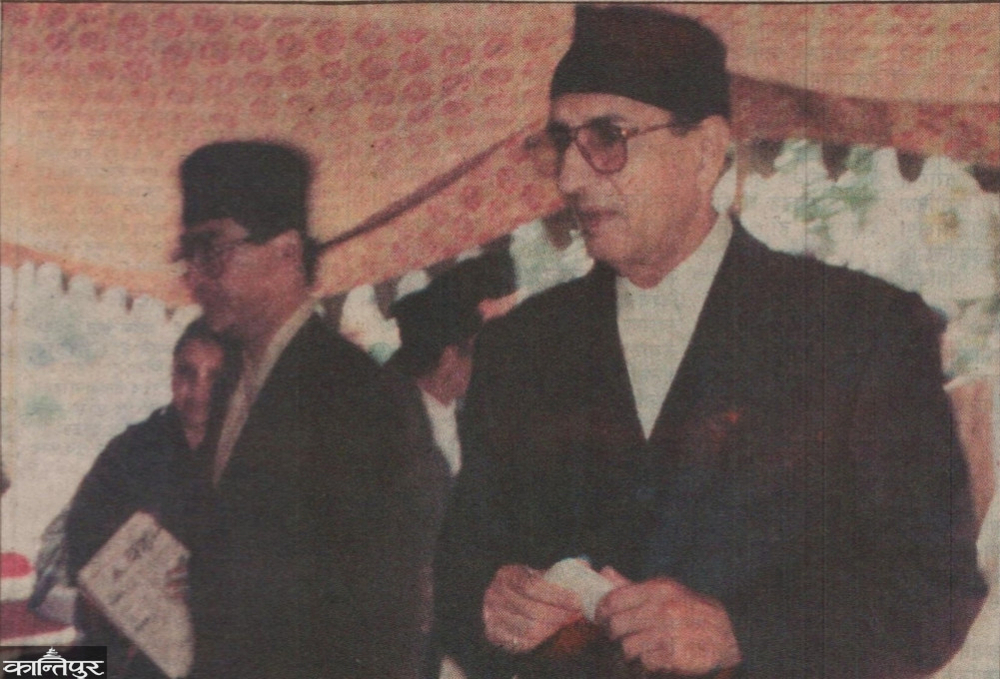 End of monarchy and establishment of a republic
Nine parliamentary elections have been held in Nepal so far. Koirala is one of the prime ministers who held three elections. Under his leadership, the parliamentary elections of 2051 and 2056 and the first Constituent Assembly elections in 2064 were held. Koirala, a restless politician in Nepali politics, became the prime minister of the country for the fifth time on the strength of the people's movement of 2062/63 when he was over 80. Once a chain smoker, he had recently had to be under the direct supervision of a doctor due to lung problems. In fact, even when he was sworn in as prime minister before the king, he had reached the Narayanhiti Palace with a private doctor.
Even at the age of over 80, Koirala's willpower, morale, and memory were unmatched. Prime Minister Koirala, who did what he said and faced any crisis, had taken the country forward in a well-thought-out manner based on the roadmap to a republic through the Constituent Assembly, gradually depriving the king of his powers through the restored House of Representatives.
He played a key role in transforming the country from a 10-year armed rebellion to peace by signing a comprehensive peace agreement with the Maoist rebels. This success not only cleared his image, which had been tarnished by many wrong and unpopular decisions made in the past, but also made Koirala a politician. By returning the Maoists, who had taken up arms to end the parliamentary system, to a parliamentary system through the peace process, he set an example of the power of democracy.
The interim constitution was ratified by the interim legislature (parliament) including the Maoists, and the country was led on its journey towards a republic through the Constituent Assembly elections. And despite knowing that his party was losing badly, he held the Constituent Assembly elections. He had told the Maoist top leadership at that time – ‘Even if my party loses, the country and the people will win.’ Due to my age and health, I have very little time. I want to hold elections during my own term. If I die before this election, I should come to watch the elections even as a ghost.’
Thus, the historic Constituent Assembly elections were held on Chaitra 28, 2064 under Koirala’s leadership. If he had not come, it would not have been possible to end the 238-year-long monarchy and establish a federal democratic republic in the country from the first meeting of the Constituent Assembly on Jestha 15, 2065. It was because of his seven decades of political experience and mature leadership that King Gyanendra, the last king of the Shah dynasty, peacefully left the Narayanhiti palace on Jestha 29, 2065.