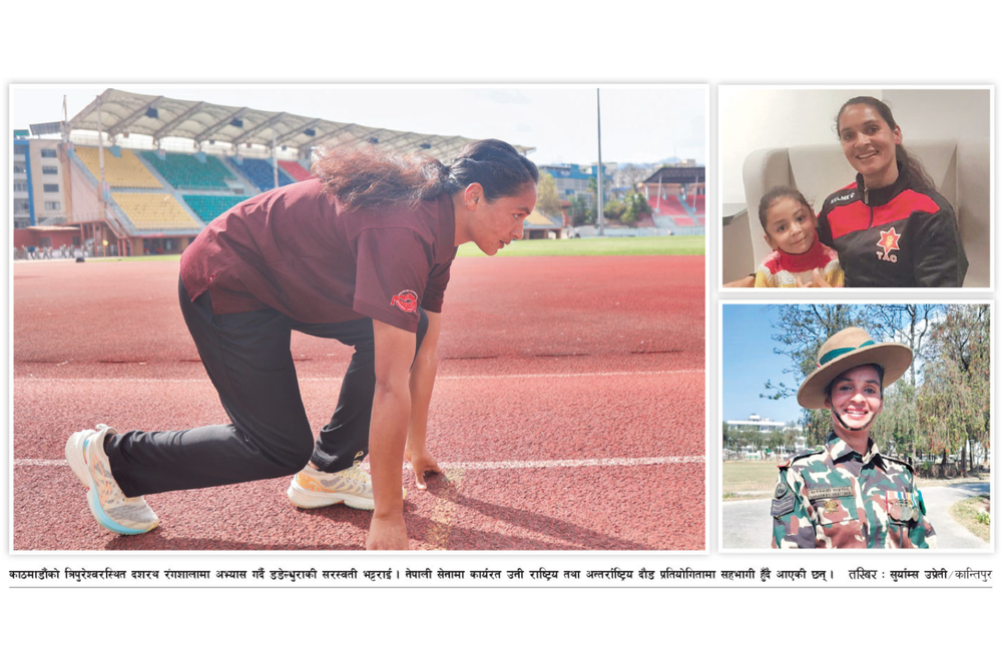
Saraswati (32), who started her career in Dadeldhura in the far west, has now reached the international stage. Representing the country in the middle distance, she won silver medals in the 800 and 1500 meters at the Thailand Open Championship and set a new national record in the 1500 meters (4:33.94) while participating in the Rio Olympics. Earlier, the record was held by Rajkumari Pandey at the 1990 Asian Games.
We use Google Cloud Translation Services. Google requires we provide the following disclaimer relating to use of this service:
This service may contain translations powered by Google. Google disclaims all warranties related to the translations, expressed or implied, including any warranties of accuracy, reliability, and any implied warranties of merchantability, fitness for a particular purpose, and noninfringement.
Players from all over the country were preparing for the 2066 President's Running Shield. The players had to compete in the district, regional and central competitions in the games to be held in Kathmandu. Saraswati Bhattarai, who is studying in the 7th grade of Amargadhi Higher Secondary School in Dadeldhura, was planned to prepare for it at school. But Saraswati did not know that her teacher Tara Awasthi had put her name down for the race. She did not know what running was? How to play? How to compete. Nevertheless, she came first in the school competition.
After that, her streak of coming first did not stop. She also won gold in the President's Running Shield through the district and regional competitions. When she won her first gold, she ran barefoot. Recalling that moment, she says, ‘The shoes were given by the province, but it was not easy to run in those shoes and I ran barefoot.’ When she returned after winning the President’s Running Shield, there was a crowd of people welcoming her. She was honored by a team with musical instruments. She says, ‘It was no small feat for me, who never ran, to come to Kathmandu and win a medal, and I will never forget the honor I received.’ She wanted to continue running. But there was neither a practice ground nor a coach, and her dream of about 4 years was almost lost.
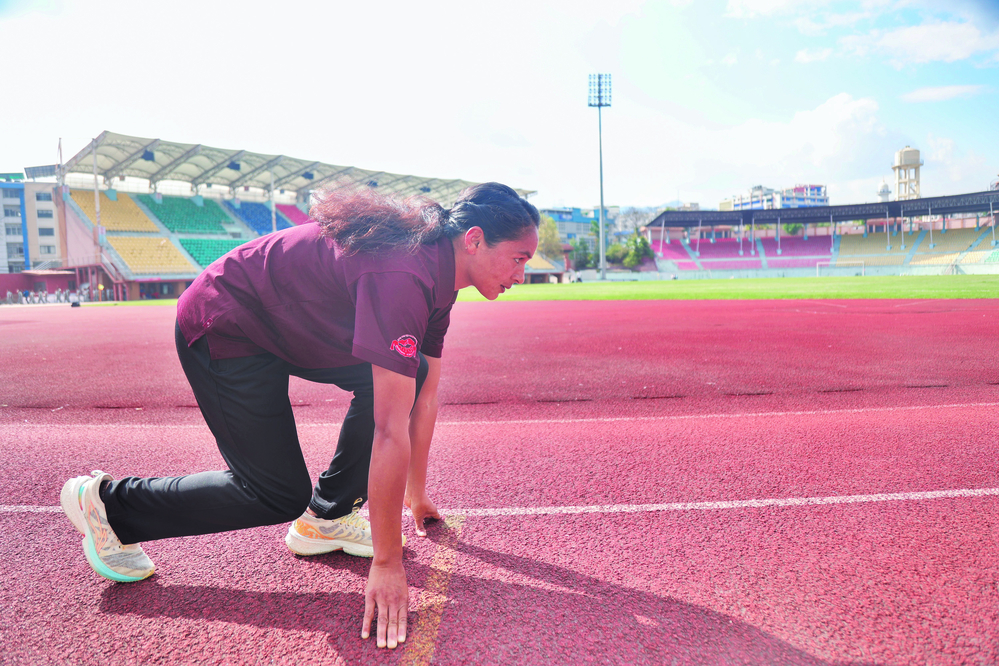 Her run, which started in Dadeldhura in the far west, has now spread to the international stage. She has represented Nepal in the middle distance. Athletics itself is a sport where the balance of both body and mind is very important. She says that in ‘middle-distance’ races like 800 and 1500 meters, not only speed but also endurance, strategy and time management should be used in an equally balanced manner. ‘It seems that the athlete is just running, but how fast to start, how much energy to save in the middle and how to sprint at the last moment, all these things can be successful only by combining all these things,’ says Saraswati, who has progressed as an athlete who not only runs but also thinks and plans to run.
The reason for her joining the Nepali Army in 2070 was also to become an athlete. Explaining the reason for taking a job in the army, she said, ‘I applied because I could get a job in the army and also play.’ She had applied secretly for fear of being teased by the villagers if she failed. ‘I was afraid that I would pass/not pass, I was not sure that I would pass, but I did.’ Then she participated in the training. At that time, she was known as a disciplined and hardworking trainee. The army training in Trishuli was challenging.
The early morning exercises, the strict rules, the mental pressure – all of these tired her, but she could not break down. Having grown up in the village, she believes that she was physically strong because she was strong. ‘I think I easily completed the difficult training because I was a person who carried a lot of grass and firewood. After a year of training, other friends went to the camp, but I joined the Tribhuvan Army Club. From here, I thought of taking sports forward,’ After getting admission in the Army Club, she got the inspiration and encouragement to take her sports life forward.
National Competition
Saraswati has been consistently performing excellently at the national level. In the 39th National Championship, she won gold medals in both the 800 meters in 2 minutes 20 seconds and the 1500 meters in 4 minutes 52 seconds, while her team secured second place in the 400 meters relay. In the 7th National Games, she performed even better and won gold in the 800 meters (2:16) and 1500 meters (4:42). She also won gold in the 400 meters relay and brought success to the team. Similarly, she proved herself by completing the 5,000 meters open road race in 18 minutes 5 seconds. In the 8th National Games, Saraswati maintained her pace and won gold in the 800 meters (2:15) and 1500 meters (4:38).
In the 9th National Games, she faced tough competition. Despite posting good times, she was limited to second place in the 800 and 1500 meters. That was her first defeat. She says, ‘It was very sad to come second for the first time, I was confident that I would win, but it was very bad when I didn’t.’ But she won gold in the 400 meters. Then she made a comeback in the national championship and won gold in the 800 meters and 1500 meters. Having created an image of a good competitor for a national athlete, she became known as an equally good athlete in international games.
 International competition
Saraswati’s journey at the international level was even more exciting. She won silver medals in the 800 and 1500 meters at the Thailand Open Championship. That became a great opportunity for her to increase her confidence. The most important achievement of her career was her participation in the Rio Olympics, where she completed the 1500 meters in 4:33.94, setting a new national record. Earlier, Rajkumari Pandey had a national record of 4:34:45 in the 1990 Asian Games. She said that the honors she received from the President (2074) and the Chief of Army Staff Prasanna Nissan (2073) are encouraging her to move forward.
She continued to represent Nepal in the South Asian Games, Asian Championship, Asian Games and the Seismic Military World Games. In the Open Championship held in Maldives, she presented the best performance of her career by winning gold in the 800, 1500 and 5000 meters. Every competition taught her something. Sometimes she wins, sometimes she loses, but always experience. 'Every sport teaches her something, and in international sports, you know where your place is,' she said.
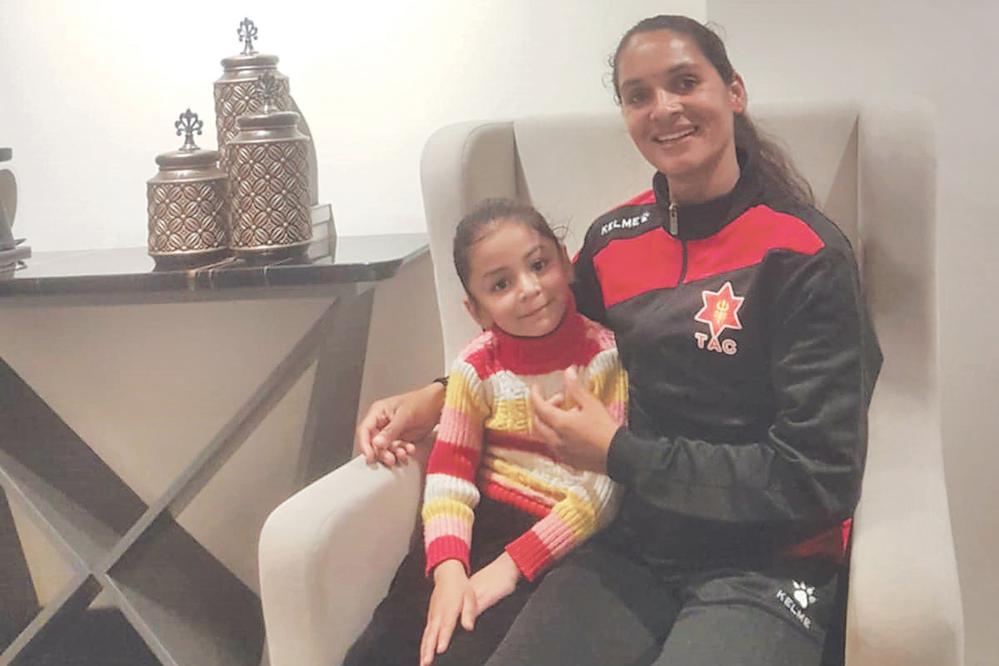
She got married during her service. Her husband is also working in the Nepali Army. After marriage, she continued playing sports. After the birth of her daughter in 2077, many assumed that her sports career was over. She returned to the national games after 17 months after giving birth to a daughter. 'A woman's career does not end with having a child,' she adds, 'For me, winning a medal is not just an achievement, I am playing to send a message that even being a mother can do a lot in the field of sports.'
She says that it is both easy and difficult when both her husband and wife are in the same field. She says that since she has an army job, she has to stay in the camp and is unable to give enough time to the child. Her 6-year-old daughter is being raised by her mother-in-law. She stays with her daughter two days a week, her husband is out, but since Saraswati's duty is in Kathmandu, it is easy to take care of the child. She says, 'More than other jobs, police and army jobs require you to stay in the camp, so you don't have enough time to give your child.' She says that the support of her family is what is driving the sport forward.
Her army job is not limited to sports. She also works in security as needed. She also served a year in South Sudan as part of the United Nations peacekeeping mission. She feels she would not have become an Olympian if it weren't for the army. Even at the age of 32, she exercises regularly and is equally conscious about her diet. Her desire to run has not diminished. She says, 'If my health allows, I will continue to run, and if not, I will continue to train.'
She has seen generations of athletes who made a career in sports migrate abroad. She understands that they are forced to leave because they have no future. 'I expect the new generation of athletes to be supported by their families, society and the state,' she says.