As long as injustice, discrimination, exploitation and oppression exist in society, the seeds of revolution continue to be planted. Living poetry continues to act as air, water and light to awaken those seeds.
We use Google Cloud Translation Services. Google requires we provide the following disclaimer relating to use of this service:
This service may contain translations powered by Google. Google disclaims all warranties related to the translations, expressed or implied, including any warranties of accuracy, reliability, and any implied warranties of merchantability, fitness for a particular purpose, and noninfringement.
Historically, poetry has had a physical presence during revolutions and a turbulent effect on the consciousness of the participants . It fills the warriors with enthusiasm when they parade in armed struggle, and unites them towards dedication by giving them the concept of political imagination in the construction of organizations . American black writer Alice Walker says – Every revolution needs fresh poetry, that is why poetry has an eternal life . Such poems become the ‘manifesto’ of the revolution . When set to music, they are praised as ‘anthems’ by the people, and the poet is called the undefined creator of rebellion, and in the process of change, he becomes the vanguard of the collective voice . In revolution, fists are the words of the poet .
The awakening and enthusiasm of the procession become its poetic bouquet . The identity and struggle for rights that Maya Angelou's poem 'Still I Rise' added to the movement against racism, sexism, and historical exploitation experienced by American black women in the 1970s is still considered a source of inspiration.
poetry unifies the people's desire for a revolutionary revolution and instills faith in victory. Martin Pachner has argued that Karl Marx's 'Communist Manifesto' can be considered the great poem of revolution based on the role it played in challenging the oppression of power in every political context, raising its voice against marginalization, and transforming silence into an organized culture. It has been able to connect different periods from Moscow to Santiago, from Berlin to Mexico City, and from Calcutta to Kathmandu in a single lifeline. As long as injustice, discrimination, exploitation, and oppression exist in our society, the seeds of revolution continue to be sown, and living poetry continues to act as air, water, and light in awakening it.
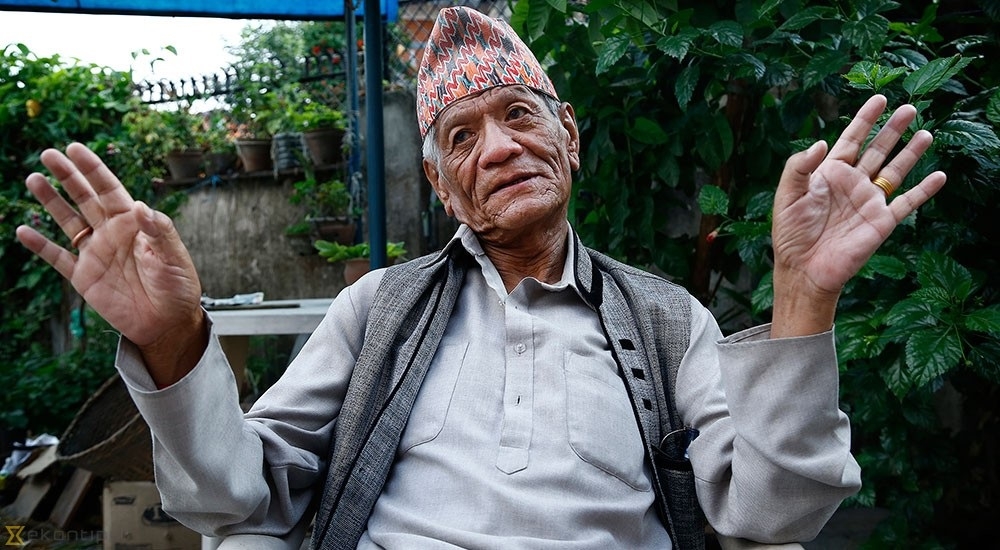
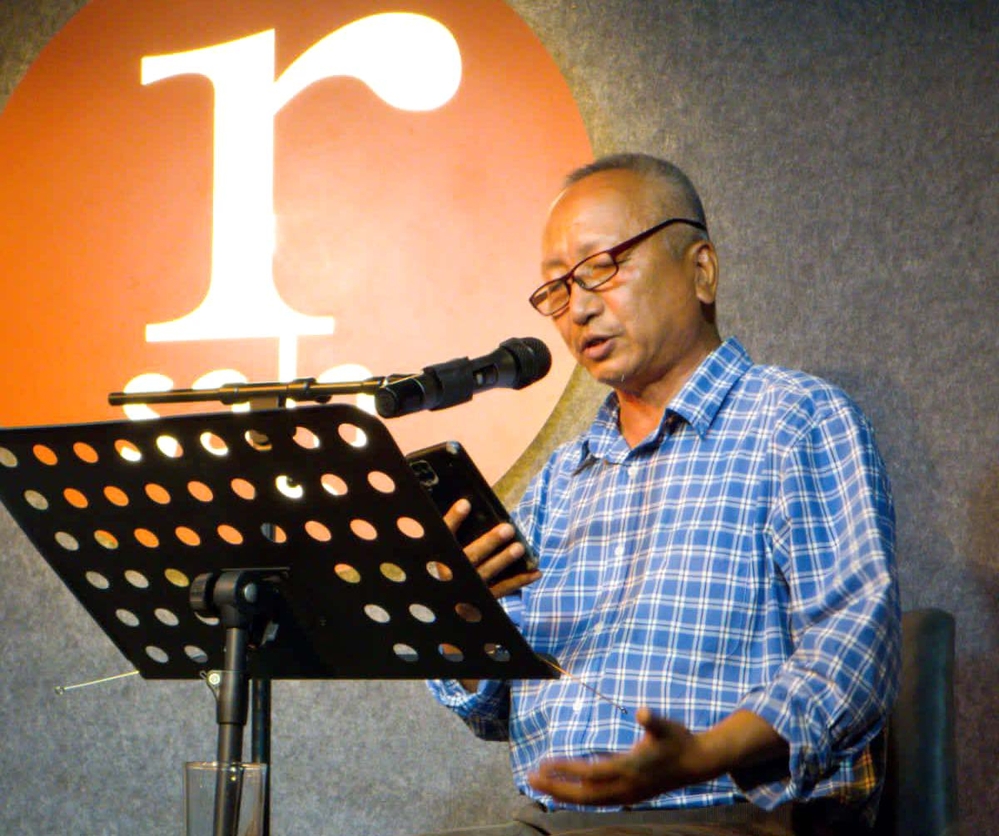
Historically, poetry has had a physical presence during revolutions and a profound impact on the consciousness of its participants. It invigorates warriors during parades in armed struggle, provides a political vision for organization building, and unites them towards dedication. It instills strength in civil disobedience against authority, and invigorates the campaign by spreading a culture of single-mindedness. In fact, poetry helps to loosen the psychological grip of the oppressor by giving expression to the anger and tremors of the people. We can always feel the optimistic poetic form that gives revolutionary solace to the souls of the suffering Nepalis, centered in Shyam Tamot's poetry:
Rise up from village to village
Rise up from slum to slum
Rise up to change the face of this country...
Those who have nothing in their hands, rise up with their voices
This poem has given a new direction to the demonstrations that took place during the democratic movement to gain their rights. This composition has become the central voice of every Nepali movement after the 2030s because it awakens those who have been wronged and inspires them to resist discrimination and can be easily sung by the general public.
Poetry and Revolution
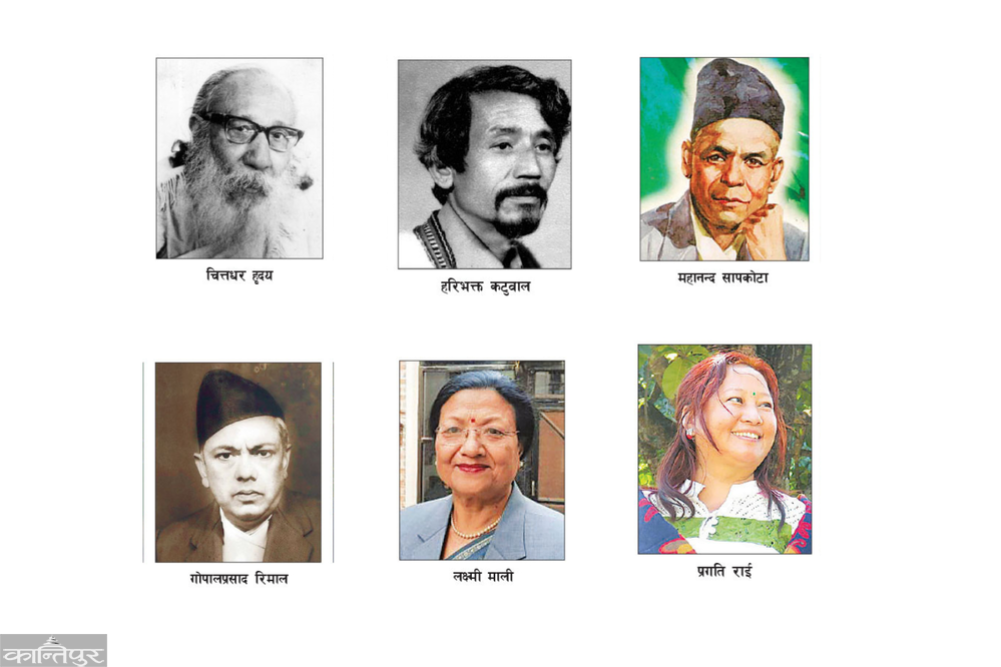
In 2006, Mahananda Sapkota raised the issue of class equality in his poem, saying, "Becoming ten to five out of a hundred rich, others counting their own servants/If this is the law, then now that law has reached its end." Despite the warnings given by Shri 3 in 1991 to Nepali language writers including Jogbir Singh Kansakar not to write in their mother tongue, poet Keshari Chittadhar Hriday was imprisoned for ten years in 1997 for publishing poetry in Nepali language, while Siddhicharan Shrestha was imprisoned with all his possessions. If we are to analyze the revolutionary tradition of Nepali poetry, Yogmaya was the first to connect poetry with political movements. She started the struggle with 268 demands such as welfare social reforms, an end to the tyranny of the Rana regime, and the abolition of the inhuman practices of the priesthood, and made poetry a medium for expressing revolutionary issues.
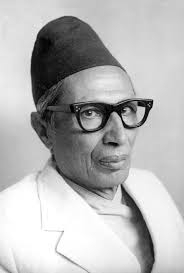
After the ban on publishing poetry in the mother tongue, Kansakar had started the tradition of composing and reciting poems in Nepali, Sanskrit, Nepali language and Hindi in the ‘Jogamandali’ he established by inviting poets to his residence. At that time, the political activism shown by the ‘Nepal Praja Parishad’ and the events of the Martyrdom (1997) were also making the people aware. In this background, Gopal Prasad Rimal called for a revolution through his poem, saying, ‘Look, it will come as a storm/You will follow it as a leaf!’.
 In 2006, Mahananda Sapkota raised the issue of class equality in his poem, saying, ‘Becoming ten to five out of a hundred rich, others counting their scoundrels/If this is the law, then that law has also reached its end.’ This poem also shows that the goal of establishing Marxist socialism taken by the Communist Party of Nepal (2006) has been planted in Nepali society. Poets committed to creating a collective identity have powerfully taken up the task of making progressive poetry a tool of revolution in 2007-17.
Even after King Mahendra overthrew the elected government and took power into his own hands, poets and poetry continued to agitate. Bhupi Sherchan's 'Letter to Ho Chi Minh', composed during this period, is an excellent work that combines poetry and revolution. This poem has taken its full form in the revolutionary process of transforming 'me' into 'us'.
 In 'Sadak Kavita Kranti 2036', poets participated in the movement and recited poems. In the context of the announcement of a referendum between the reformed Panchayat and multi-party system, poets like Bhavani Ghimire, Haribhakta Katuwal, Ashesh Malla, Mohan Koirala, etc. recited poems on the streets to create public opinion in favor of multi-party democracy. Nearly two hundred poets participated in the revolution, which was organized 36 times in various places in central and eastern Nepal along with the Kathmandu Valley.
Despite the defeat of the multi-party supporters in the referendum, poems continued to be written in favor of the underground movement, and this prepared the background for the revolution of 2046. During the people's movement, Naresh Shakya's poem 'Pagler Pini Timro Mutubat' criticized the monarchy and greatly encouraged the protesters to fight against autocracy.
In the women's movement that began after the 'Constitution of Nepal, 2047', which was announced after the restoration of democracy, women's rights issues were not addressed, voices such as inheritance rights based on the identity of the mother like the father, maternal identity in obtaining citizenship, and the necessity of the mother's name in administrative work were raised. During that time, Lakshmi Mali's poem 'Aama, Timro Naam Ke Ho?' was recited repeatedly on the streets. In the second people's movement, poets joined the 'United Forum of Democratic Writers (2062)' formed under the chairmanship of Bairagi Kaila and took to the streets to demonstrate, using their works as weapons of change.
Even during the ten-year period of 'People's War', Krishna Sen Ichchat's poems became the slogans of the revolution. His poems have also been used as placard slogans in demonstrations against the government that is involved in the misuse of state power. The poems addressed to Rolpa, Thabang, and Jaljala in the full stop form a beautiful combination of revolutionary ideas and vibrant places. The poems of Nibha Shah and Chunu Gurung played a powerful role in organizing the marginalized community in the ‘People’s War’.
In the second people’s movement, poets also joined the ‘United Forum of Democratic Writers’ (2062) formed under the chairmanship of Bairagi Kaila and took to the streets, making their works a weapon of change. In this campaign, Shravan Mukarung’s poem ‘Bise Nagarchiko Bayan’ went ‘viral’ in the current language:
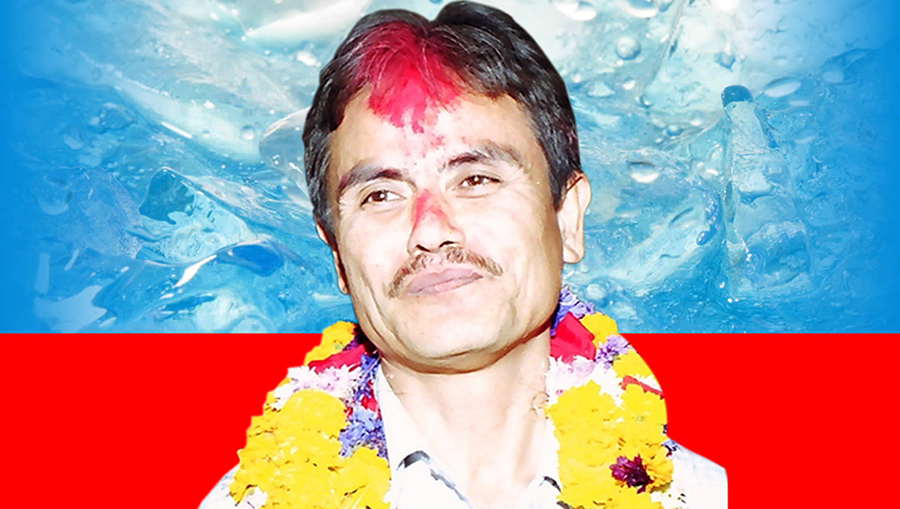 Master!
Does your sword/cut your head or a flower?
I am confused/Does your gun change ideas or people?
I am confused/Did the people build this state or did the king?...
Master! How can I be a terrorist?
I'm just crazy, sir!
Along with this, Shyamal's poem 'Demon in the Cave', which metaphorically represents the end of the monarchy, was also recited many times on the streets.
 In 2064, Badi women protested in front of Singha Durbar, saying 'Either strip naked forever or make alternative arrangements', in a semi-nude demonstration against the sexual harassment and economic and social exclusion that has been going on for ages. The powerful works of poets such as Sita Sharma and Pragati Rai helped the movement. After the movement, an agreement was reached with the government to ban the use of words like badeni, patar, bhand, randi, and veshya, which hurt the self-esteem of Badi women.
Finally,
poetry records the events of the revolution, the spirit of sacrifice, and the spirit of the times in a different way than political reports. Between the lines of poetry, there is the smell of tear gas, the sound of resistance, the footsteps of warriors, and the beauty of the rebels' feelings at that time. If there is a touch of music in it, it becomes a tool of revolution and gives momentum to the masses towards progress.
When the achievements of the revolution begin to fade into oblivion, poetry can be used to remind the thoughts, thoughts, issues, and activities contained in the poems of that time and to reawaken against injustice. Every revolution has a certain ideology. Poetry that participates in the revolution of gaining economic rights, gaining identity, or freedom from discrimination is expected to be strong and ideological. Sometimes they can also become tools of propaganda, but simple and figurative poems with artistic consciousness are successful for the revolution. Between the lines of poetry, there is the smell of tear gas, the sound of resistance, the footsteps of warriors, and the beauty of the rebels' feelings at that time.
Poems that are connected to the problems of the people, that can feel their feelings, and that can be sung in a collective rhythm to be sung in the campaign are the true bearers of revolutionary consciousness. In the dire circumstances of revolution, clear poetry that can break the barricades of scripture like raised hands and dusty bare feet is needed more than miraculous. During the Irish revolution against Britain, W.B. Yeats' 'A Terrible Beauty is Born' can represent its true rebellious form.