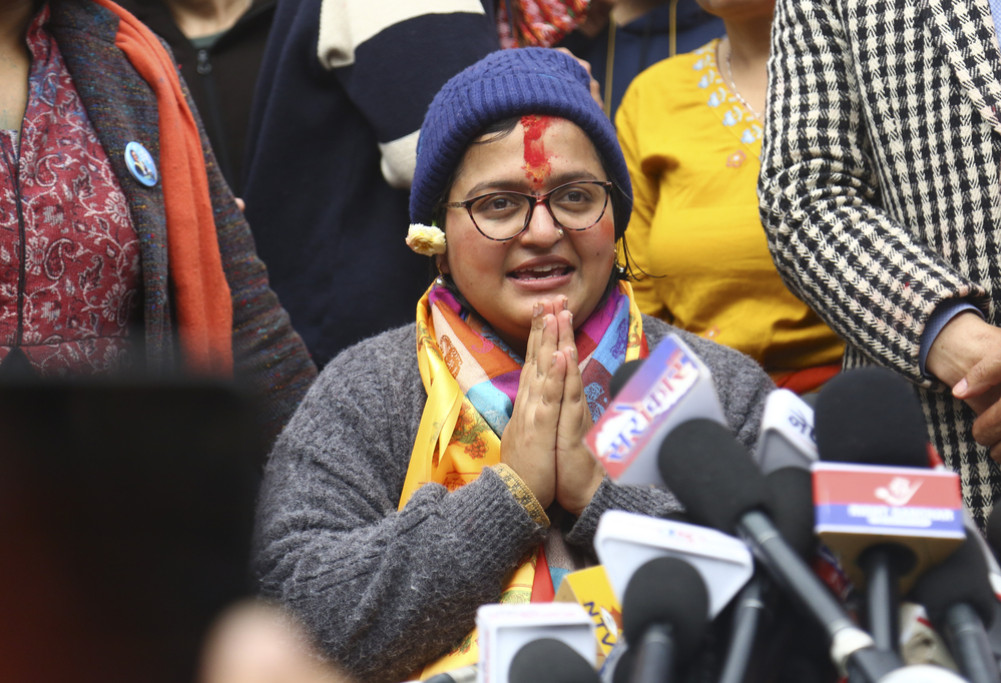
Ranju Darshana was 21 years old when she ran for mayor of Kathmandu Metropolitan City in 2074 BS. She has been active in the social sector for 17 years and has seen the pain and hope of society. She says, “My responsibility towards the coming generation led me into politics.”
We use Google Cloud Translation Services. Google requires we provide the following disclaimer relating to use of this service:
This service may contain translations powered by Google. Google disclaims all warranties related to the translations, expressed or implied, including any warranties of accuracy, reliability, and any implied warranties of merchantability, fitness for a particular purpose, and noninfringement.
Ranju Darshana was at the peak of the discussion in the general election-2082. Her door-to-door campaign, while eight months pregnant, became a source of inspiration for many. Voters praised her as an example of courage, determination and perseverance.
When she reached the door-to-door campaign, some welcomed her with hugs, while others identified her as the Ranju they had voted for in 2074 BS. Some expressed concern by saying, 'Why are you walking in such a situation?' And, 'Take care of yourself when drinking water.' Amidst such mixed reactions from voters, Ranju continued to campaign.
Her husband Kishore Kuinkel was also with her during the election campaign. She said that the support of her family has increased her confidence in moving forward in any situation. Some respected her activism with pride, while some male voters also asked critical questions. Listening to criticism, answering questions and gathering courage, she won the election.
She was elected as a member of the House of Representatives from Kathmandu Constituency No. 1 by securing 15,455 votes. Her main competitor, Nepali Congress candidate Prabal Thapa Chhetri, got 6,364 votes, while Rabindra Mishra came in third place. The reason for standing in the direct election was also dissatisfaction within her party. She had decided to contest directly because her name was placed behind in the proportional list. Keeping in mind her motherhood situation, she had initially planned to become a candidate through proportional representation. She received the highest number of votes among women in the party's primary election and was recommended as the first in the Khas-Arya women's quota, but later, when the list was changed, she decided to withdraw from proportional representation and contest the direct election.
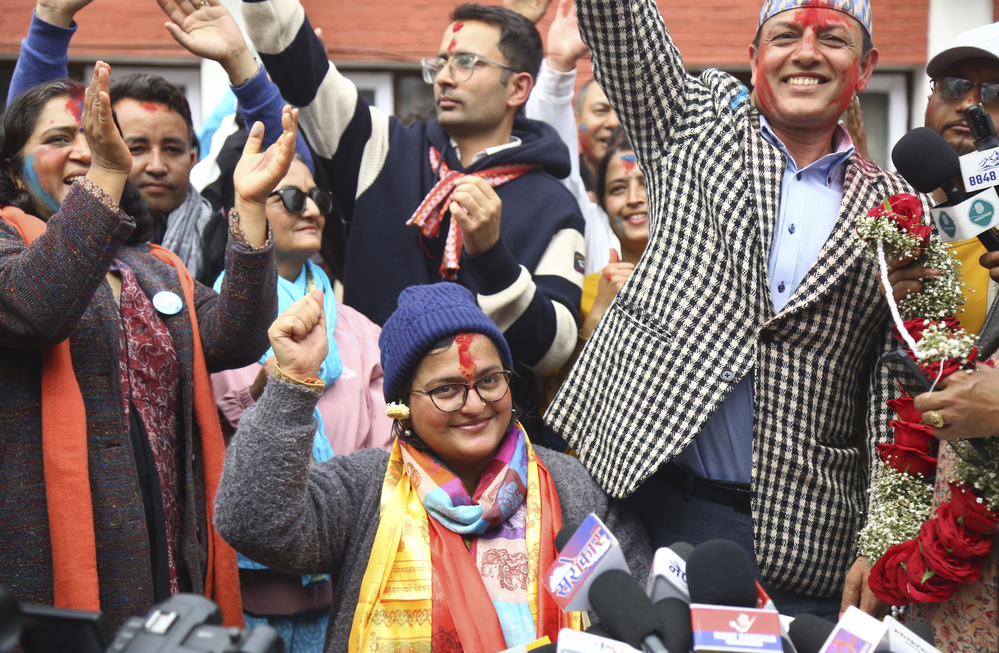
Ranju, who became the candidate for Kathmandu-1 from the Rastriya Swatantra Party, was previously active in the Bibeksheel Sajha Party. After the merger of the Bibeksheel Sajha and the Rastriya Swatantra Party, she became a central member of the Rashtriya Swatantra Party. While being active in the social sector for 17 years, she has seen many pains and hopes of the society. She says that her responsibility towards the coming generation is what is driving her to move forward in politics.
Ranju's political journey began in 2074 BS - when she ran for the post of mayor of Kathmandu Metropolitan City. She was 21 years old at that time. She entered politics at a young age and came to the limelight as a articulate speaker and a young woman who asks real questions. At that time, her fame spread across the country. She feels that she has become a 'celebrity' from a 'chelibeti' due to television interviews, social media and public interest.
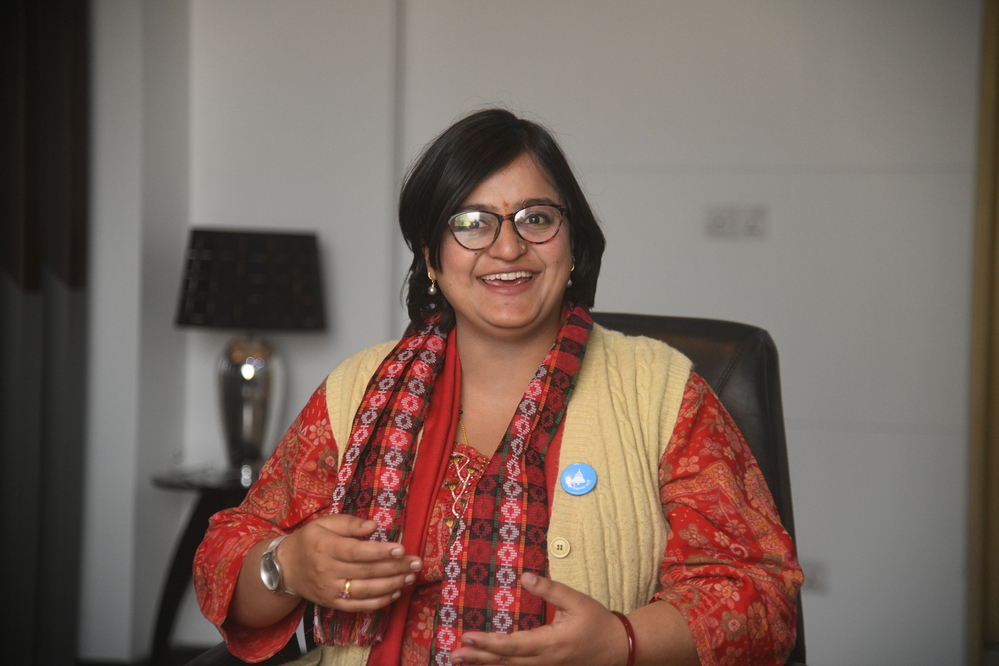
She entered the election fray raising issues such as city development, waste management, transport and pollution. Although she could not win the mayoral election, it pushed her forward in leadership, strategy and dialogue with voters. Recalling the time of the mayoral election campaign, she said, ‘While going to the election, I could have become a character in a comedy that I could lose, but I took it as a lesson. From that point on, my interest in politics increased.’
She was active in social campaigns even before filing her candidacy for mayor. Inspired by the ideas of Ujjwal Thapa, the founder of the Bibeksheel Nepali Party, since 2070, she joined the Bibeksheel Abhiyan. From the anti-corruption movement to supporting Dr. Govinda KC, she was seen in street protests. She also participated in a campaign to give a message against the dowry system through street plays in Nepalgunj. She says that the social campaign has developed practical-political thinking in her.
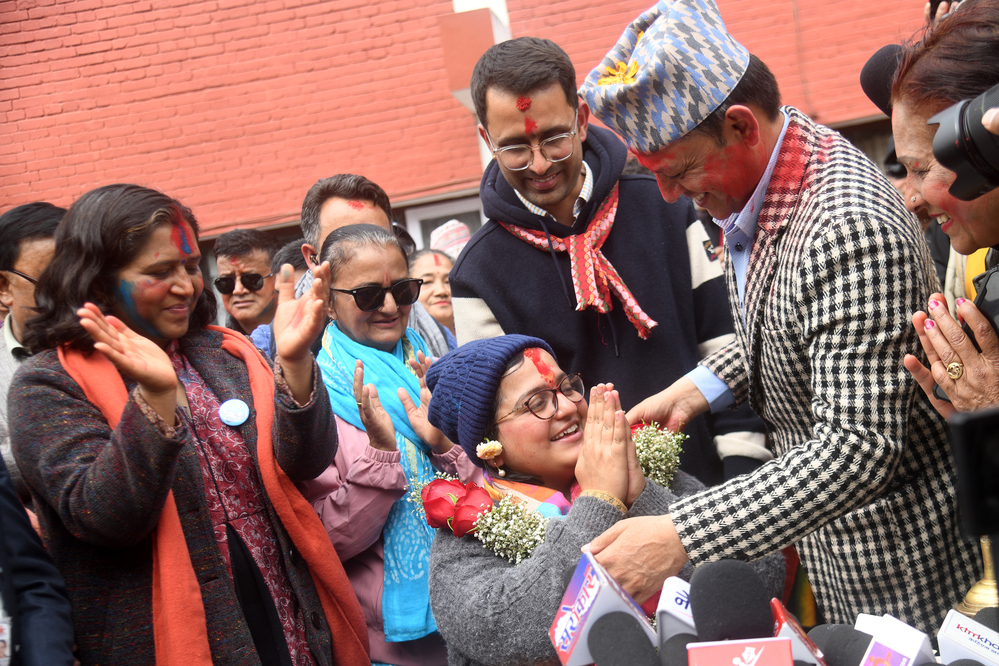
Ranju, who is now 30 years old, feels more mature than before. She is already the mother of a son. She has a bachelor's degree in development studies from Kathmandu University and a master's degree in political science from Tribhuvan University. She is moving forward in her political journey while taking on the responsibility of motherhood along with leadership.
Ranju Darshana won the election by listening to criticism, answering questions and gathering courage. She received 15,455 votes for the House of Representatives from Kathmandu Constituency No. 1, her main competitor was Nepali Congress candidate Prabal Thapa Chhetri who got 6,364 votes, while Rabindra Mishra came in third place. Her childhood was not easy. Her father left the family when she was still in the womb. Born in 2052 at the Tribhuvan University Teaching Hospital in Kathmandu, Ranju's life was marked by her mother's struggle and the support of her maternal uncle. Although she never received her father's love, she grew up considering her mother as her parents, and she does not hate her father, but only questions him. While applying for citizenship, she was forced to look for her father. The system of not being able to obtain citizenship in her mother's name made her realize the complexity of the state structure for the first time. When citizenship was required to open a bank account, she met her father. Since her father had another family, she did not want to interfere. Regarding her father's absence, she says, "I thought that even if I did not receive my father's love, his other children should not be loved."
She was a playful student in her school life. Due to her short hair, different clothes and habit of playing with boys, she never considered herself confined within gender boundaries. In school, she formed a group called 'Brahma Cottage Helping Hand' and started cleaning the toll and teaching the children of laborers the alphabet. Although she does not know where the students she taught are now, she still remembers a student named 'Rani'. When she was in the fifth grade, the question of why the toll road was not paved attracted her to politics. Elections would come, leaders would come, but the road would never be built. This question inspired her to watch the news, listen to speeches and understand politics.
After completing SLC, she started her first job as a telemarketing worker, and while studying in Plus Two, she became interested in journalism and law. The aim of improving the country and making it a livable society led her to politics. After finding a pamphlet of the ‘Nepal Khula Cha’ campaign on the road, she researched it and became active in politics through that campaign. During the 2072 earthquake, she was at the forefront of relief distribution and management. At that time, she worked day and night in teaching hospitals, from managing the deceased to coordinating volunteers. That experience made it even clearer to her that the state’s preparedness was weak.
After the split of the Vibeksheel Party in 2075, she resigned. In 2079, she contested the election as an independent candidate from Kathmandu-5. Her election symbol was ‘Cell Roti’, which is associated with business. However, in that election, she only got 600 votes and her deposit was forfeited. At that time, there was no craze like in 2074. Even after losing twice, she did not think of retiring from politics. ‘My aim was not just to win the election, but to create responsible leadership,’ she says.
Having lost twice, she was elected this time. Personal struggle, social campaigning and political experience have given her the identity of a member of the House of Representatives. She is doing politics with a responsibility towards the new generation, saying, ‘The day will come when my children and future generations will ask questions, and my goal is to build a society that can answer them.’