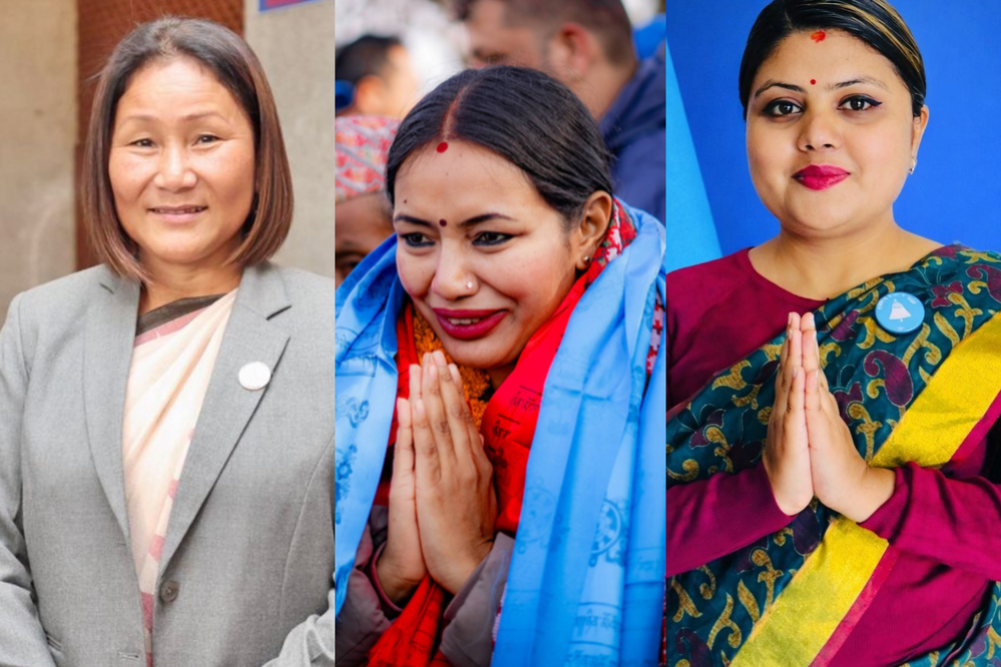
Indira Rana Magar, Ashika Tamang, and Rubina Acharya, who have been raising their voices against the prevailing injustices in society, supporting and protecting the uncooperative class/community, and campaigning for their rights, have reached the policy-making level in a short time after joining political parties.
We use Google Cloud Translation Services. Google requires we provide the following disclaimer relating to use of this service:
This service may contain translations powered by Google. Google disclaims all warranties related to the translations, expressed or implied, including any warranties of accuracy, reliability, and any implied warranties of merchantability, fitness for a particular purpose, and noninfringement.
Ashika Tamang made a satirical video two months ago, sitting with the injured Gen-G. She had said to the injured Prakash Bohara, the heir to the iconic shoes of the Gen-G movement, on the street, ‘His shoes are on the street. The owner of the Goldstar shoe that made those shoes is in the House. Look at the country’s past. The politics of shoes.’
Yesterday, the same Ashika, who was sitting on the street and warning against injustice and wrong trends, has now reached the House. She was elected as a member of the House of Representatives by getting 39,128 votes from the Rashtriya Swayamsevak Sangh (RSS) in Dhading-1.
The same Ashika, who was sitting on the streets yesterday and warning against disorder and wrong trends, has now reached the House. She was elected as a member of the House of Representatives by winning 39,128 votes from the Rashtriya Swayamsevak Sangh (RSS) in Dhading-1. Yesterday, the general public is familiar with Ashika’s style of applying ‘balm to the wounds’ of the injured on the street and raising her voice against wrong injustice. Ashika has dominated social media for about 8 years with her expressions and activities. In 2018, she had asked a heartbreaking question in a video while crying, ‘Why slaughter innocent goats?’. Facebook users even ‘trolled’ her performance as she found it dramatic and unnatural.
After that, Ashika, who had been attracting the attention of social media users at various times, started appearing aggressively on the streets for the past two years. Wearing sunglasses, she went from the road, hotel, bus park to the airport parking lot. The camera on the glasses recorded her activities. Sometimes she would go to a hotel and ask tough questions about the price of water. She would go to the parking lot and scold the employees there, saying that there should be free parking.
Ashika used to go to hotels along the highway and warn them about selling substandard food at high prices. Wherever she went, she would record the footage and make it public. Her work was praised, abused and 'trolled' on social media.
Some of Ashika's work style was criticized and against the law. Her activities violated the privacy of an employee and an individual. Ashika was arrested twice on charges of misbehaving with people. For the first time on 2 Magh 2081, the police arrested her from Swayambhu in Kathmandu. The second time she was arrested on 14 Magh the same year. On 18 Magh, the Bhaktapur District Court ordered her release on a bail of 20,000 rupees.
Those who used to troll and abuse Ashika, over time, began to look at Ashika with love. How did people's attitude towards her suddenly take a U-turn? To understand this, we need to go back to the scenes after the Gen-G movement. On 23 and 24 Bhadra, 76 people lost their lives and hundreds were injured. The injured were lying in the hospital, their families were struggling with financial hardship. At a time when the state's presence was weakening, Ashika treated the injured with love and reached the hospital beds and the shelters that were empty due to lack of food. She made that scene public on her Facebook page.

She also provided financial assistance to those whose treatment and medicine were stopped due to money. She distributed food. People were moved to see the gentle and affectionate appearance of Ashika, who had looked rough and angry in previous videos. When she reached the shelter or hospital, she would call the injured from afar with affectionate love, 'Babu, Kanchha.' How are you?’ Some of the injured started saying with tears in their eyes, ‘You are our sister. Ashika’s sister.’
Ashika also expressed her love for animals. For example, she was seen distributing fruits for monkeys in the Pashupati complex. She was seen feeding birds.
Ashika also expressed her love for animals. For example, she was seen distributing fruits for monkeys in the Pashupati complex. She was seen feeding birds. As the House of Representatives elections were approaching, Ashika suddenly announced that she would run as an independent candidate from Kathmandu Constituency No. 1 or 9 on 25 Poush. She said that she was embarking on a journey of change even if she was alone. Initially, she said that she would stand up without a political party, but on 5 Magh, she joined the National Independent Party.
After getting the ticket from the Rashtriya Swayamsevak Sangh (RSS), Ashika had to face some difficult situations. Since Ashika's husband Thomas is a German citizen, rumors spread that she had a German 'PR' (permanent residence permit). This raised questions about her candidacy. When the Election Commission examined the documents, it was found that the legal criteria for candidacy were met, so her candidacy remained intact.
Ashika did not stop being a 'troll' even during the elections. In a video that went viral on social media, she was seen sometimes asking for votes from a rooster and sometimes from a goat. Shortly before the elections, while giving a speech, she slipped her tongue and tried to say something else, 'I have come here to commit corruption.' What she meant to say was 'I have come to stop corruption.' Amidst a wave of trolls, abuse and praise, Ashika was finally elected by the voters of Dhading-1. She won the election with a landslide.
From child laborer to social activist
Aashika had said in a podcast with Sanjay Silwal Gupta a few months ago, ‘If anyone sees a child laborer, they should remember her as their sister.’ She does not want anyone to work at an age when they can read and write.
Because Aashika experienced the pain of child labor in her childhood.
Aashika was born on 1 Asoj 2045 in Malekhu, Dhading. Her mother and father divorced within a few years of her birth. Aashika lived with her father. Growing up in poverty and deprivation since she could understand, she did not know for many years that the house they were living in was not hers. On top of that, due to the neglect of her other mother and the lack of finances at home, Aashika had to leave her father at the age of 8.
She started school in someone else’s house in Chitwan as a child laborer.
Ashika had met Thomas the previous time. They used to talk. After reaching Germany for the second time, Ashika married Thomas. After living in Chitwan for a few years, she returned to Malekhu. But the other mother could not bear it. She was taken to Bale Meet's house. A small room was built for Ashika to live in the house. 'I passed my SLC while living in that house,' Ashika said.
After SLC, Ashika came to Kathmandu to study nursing. She enrolled in nursing. She had studied on a 'scholarship' from a German institution since school. The expenses were borne by the German institution. A monthly expense of Rs. 3,700 was also incurred. With that expense, she covered the expenses of Kathmandu. After completing her nursing course, she went to a consultancy and started studying German. Ashika's father wanted her to see her daughter board a ship. He had also helped her get a passport. He used to tell Ashika, 'You have a big dream of going to Germany.' Unfortunately, her father left the world on the day Ashika's visa was issued.
Ashika went to Germany. But initially she couldn't stay for more than 6 months. She came back to Nepal. She saw that her siblings in Malekhu were in trouble. She brought them to Kathmandu and started teaching them. At that time, she herself started consultancy. But as the financial burden increased, she prepared to go to Germany again. Ashika had met Thomas the previous time. They kept talking. After reaching Germany for the second time, Ashika married Thomas.
A day like this came for Ashika, who once struggled financially, and she had many options. She wanted to be known. She chose film. She made the film ‘Sushree’ with her own investment in 2015, where she shared the screen with actor Aryan Sigdel. But she suffered a loss of more than 10 million. Ashika wanted people to know her. But neither the film was released nor did anyone recognize her. She was in deep pain. Then she returned to Germany. A well-wisher reminded her, ‘Thomas is also getting old. Now become a mother.’
In 2016, she gave birth to her first child, son Aaron. Ashika also has a 4-year-old daughter, Anna. ‘It was only after I became a mother for the first time that I felt that I was born from someone’s womb,’ Ashika said in a podcast with Sanjay Silwal. Ashika does not even know whether her mother, whom she has never seen, is still on this earth. ‘Now the world knows me, but my mother does not,’ she said emotionally.
Ashika noticed the garbage in the country after returning from Germany. In 2019, she started an awareness and cleanliness campaign by opening the ‘Green and Clean Foundation’. During the Covid pandemic, she helped through the foundation. She distributed food to those living in Kathmandu by working as a wage laborer. She also provided tarpaulins for the earthquake victims of Jajarkot.
When she questioned the sudden dismissal of a contract employee of the Pashupati Development Fund, the police arrested her on 2 Magh 2081 and detained her. A video posted on social media in Dashain 2018 made Ashika go viral.
It was not long before she thought of entering politics. When she questioned the sudden dismissal of a contract employee of the Pashupati Development Fund, the police arrested her on 2 Magh 2081 and detained her. ‘At that time, I came to the conclusion that legal and policy work should be done to reform the system and I decided to move forward politically,’ Ashika said.
Ashika will be in Parliament for the next five years. What are her plans for that period? ‘My main priorities will be to adopt a zero tolerance policy against corruption, encourage children to go to school, take the initiative in the provision of digital education, and make policy reforms through regular dialogue with the people,’ says Ashika. She has also set a goal to make legal arrangements to make fertilizers, seeds and agricultural inputs easily available to farmers by launching the 'Made in Dhading' campaign.
Ashika, who has been warning in her own style on the streets, has now stood on her own in the place of policy-making and accountability. How strong and successful she will be in the next five years remains to be seen.
000
Mother of hundreds of children
Indira of the Rashtriya Swayamsevak Sangh (RSS) has set her journey to Parliament by winning the election from Jhapa-2 this time. While she received 60,110 votes, her nearest rival, former Speaker Devraj Ghimire, received only 11,368 votes. Ghimire is from UML. Indira Rana Magar is not a new face in Parliament. The difference is that earlier she was elected through the proportional system, now through the direct election system. In the previous Parliament, she was the Deputy Speaker. The Speaker at that time, Indira defeated him in the elections this time.
Indira of the Rashtriya Swayamsevak Sangh (RSS) has set her journey to the parliament by winning the election from Jhapa-2 this time. While she received 60,110 votes, her nearest rival, former Speaker Devraj Ghimire, received only 11,368 votes. Ghimire is from UML.
Active in social service for a long time, Indira joined the RSS on the eve of the House of Representatives elections on 4 Mangsir 2079 and entered politics. After that, she became a member of the House of Representatives through the proportional system and became the Deputy Speaker. Even after that, she had been raising the issues of social justice, child rights, education and human rights as a priority. She was also embroiled in controversy for recommending some people to the US Embassy for visa interviews while she was the Deputy Speaker.
Indira was born in Shanishchare, Jhapa in 2027. Her family migrated from Udayapur to Jhapa. Her childhood was a struggle. Although it was normal for others to go to school at school age, it was not easy for Indira. She could not go to school for about 10 years.
Despite starting late, she continued her studies and completed her graduation. While teaching in Kathmandu, she got the opportunity to understand the lives of children closely. After that, she took up social service. She gave birth to only one child (Subani Rana Magar) but has given karma to hundreds of children. That is why she is also called the 'mother' of hundreds of children.
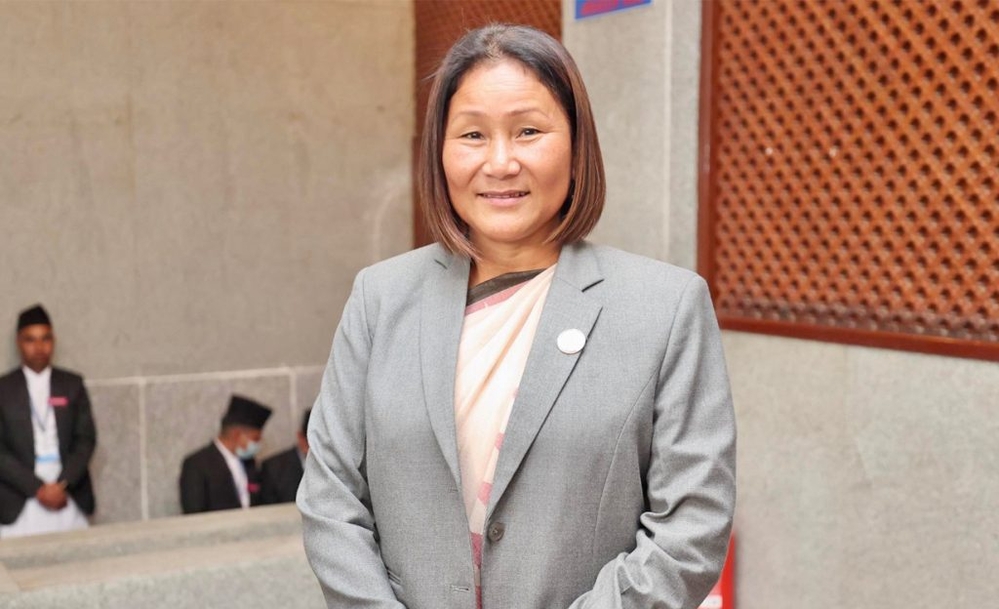
Indira says that she decided to engage in education and protection after seeing the children of prisoners and children without parents in prisons. To help such children, she established an organization called Bandi Sahayata Nepal. She launched a campaign to support children of prisoners and their families. For more than two decades, the organization has been running various programs for the protection, education and overall development of children at risk.
She has received many national and international honors and awards for her contribution to society. In 2017, the BBC listed her among the 100 most influential women in the world. After being included in the list, her work gained international attention. Indira's organization runs 12 orphanages, two schools and four day care centers. The organization says that about 1,500 children are being cared for through these centers. The organization not only provides shelter to children, but also provides opportunities for education, health, mental support and life skills. Indira continued her social service even during the difficult days of the COVID-19 pandemic. Many people had become unemployed and homeless due to the pandemic. In such a situation, she ran the 'Food for the Hungry' program.
Indira, who has been working continuously for helpless children, is considered one of the leading female activists in the field of child rights in Nepal. She has received many national and international honors and awards for her contribution to society. In 2017, the BBC listed her among the 100 most influential women in the world. After being included in the list, her work gained international attention.
Indira also ranked in the top three of the International Humanitarian Award 2020, which is given to people who have done outstanding social service in the world. This award is given to people who have taken innovative initiatives for social change. In 2009, she was awarded the Asia-21 Young Leaders Public Service Award. In 2014, she received the ‘Honorary Award’ and was one of the three nominees for the World Children’s Prize in the same year.
Indira has also received many important awards within Nepal. For her contribution to the field of social service, she has received various awards including the Leelaram-Kuntidevi Neupane Social Service Award, Naikharu Gaurav Award, Outstanding Social Worker Award, and Social Development Award. Awards such as the Struggling Women’s Development Award and the Struggling Women’s Award have also recognized her contribution.
Rubina, who will destroy Koirala’s legacy
Rubina Acharya of Biratnagar is in the news after defeating Congress leader Shekhar Koirala by a large margin. Rubina won in Morang-6 with 55,513 votes, while Koirala was limited to 12,850 votes. Shekhar won the election in 2079 in this constituency, which is considered the legacy of the Koirala family. Rubina was born in Biratnagar-4. She received her early education in Biratnagar and completed her MBA from Kathmandu University.
Rubina does not come from a political family background. She was active in the Bibeksheel Nepali Party, which emerged as an alternative force, from the age of 22. She became active in the campaign to involve the young generation in politics and raise issues of transparency, good governance and civil rights. At that time, the Bibeksheel campaign, which was raising its voice against transparency, accountability and corruption, attracted many young people. While being active in this campaign, Rubina played a leading role in various movements and programs. She constantly raised her voice, especially on the issues of women's rights, civic participation and social justice.
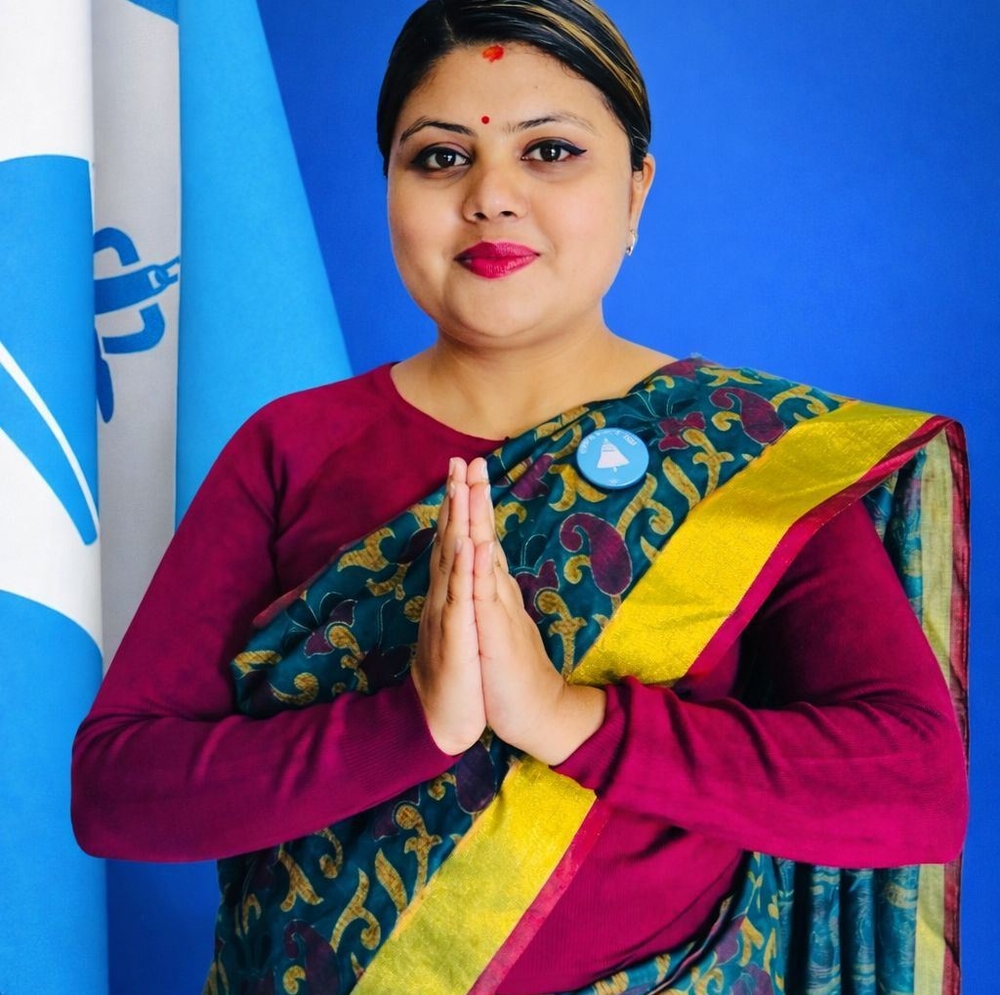
Rubina always stepped forward to help citizens in times of crisis. She was also continuously active in campaigns against violence against women. Rubina was also active in social campaigns. She actively participated in the movement launched by Dr. Govinda KC for medical education reform. Not only that, she also played a role in strengthening the movement by involving the youth. She was also active in the 'Hot Rice Campaign' launched during the difficult days of the Corona pandemic. The campaign was launched to provide free food to many people who were in financial crisis due to the pandemic.
Rubina always stepped forward to help citizens in times of crisis. She was also continuously active in campaigns against violence against women. After the merger between Bibeksheel and Sajha Party, Rubina became more active in youth organizations and women's campaigns. She played an important role in organization building, campaign management and policy debate. After the first central convention of Bibeksheel Sajha Party, she was elected unopposed as a central member. This established her as a leader within the party.
Rubina played an active role in the 2074 elections. She played a role in developing election strategies and mobilizing volunteers in Kathmandu-2 at that time. She was active in organizing youth volunteers, running campaigns, and directly communicating with citizens. She played a leadership role in the Bagmati Province Committee of the Bibeksheel Sajha Youth Organization.
After the merger between Bibeksheel Sajha and the National Independent Party, Rubina got a ticket for Morang-6. This was her first contest in the parliamentary election. She became known among voters through youth volunteer mobilization, door-to-door programs, dialogue through social media, and direct meetings with citizens. That also helped her win the election.
The identity she built through social campaigns, youth movements, and alternative political practices has established Rubina in national politics. Now, many are focusing on her role in parliament, the issues she raises, and the impact the political perspectives she presents on Nepali politics.