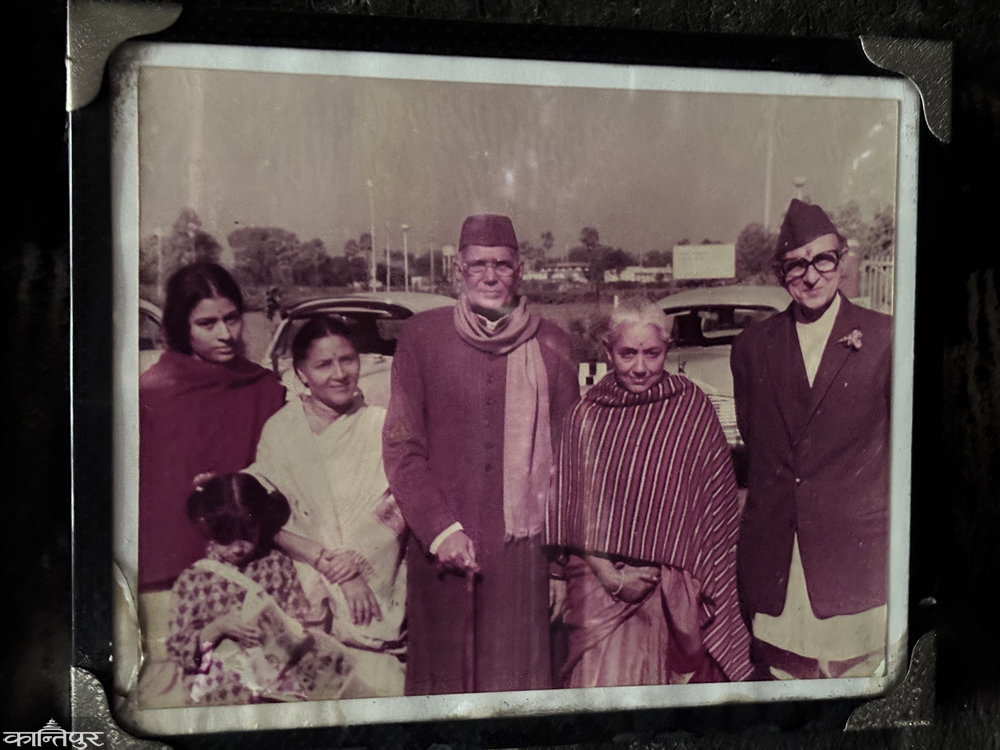
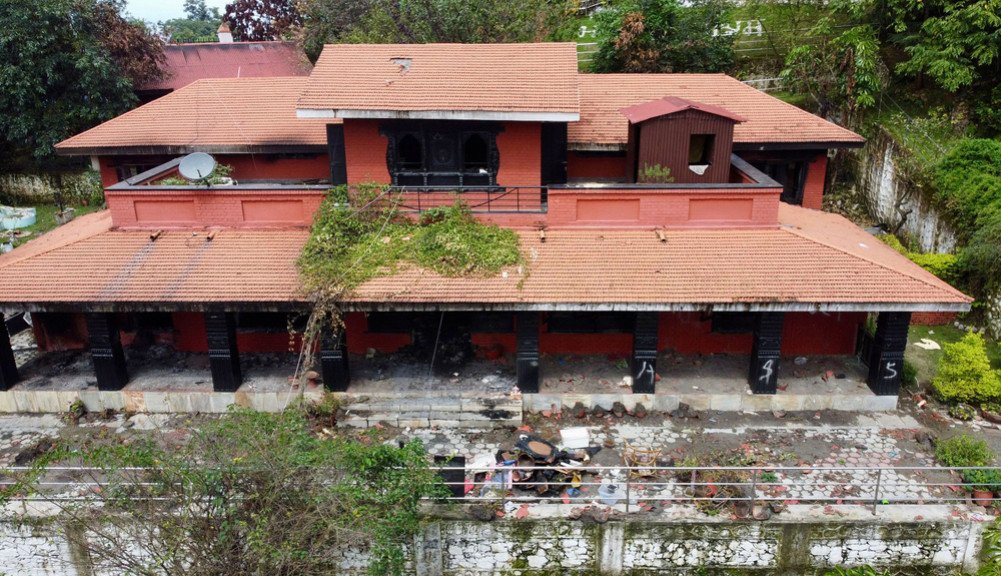
A living witness of Nepal's political transformation, the almost hundred-year-old Koirala residence was engulfed in flames. The 'Democracy' jeep numbered Ba1ch 4401, which was like a shrine for Congress leaders, was not spared. The umbrella, tankard and tank carried by the saintly leader Krishna Prasad Bhattarai turned into ashes.
We use Google Cloud Translation Services. Google requires we provide the following disclaimer relating to use of this service:
This service may contain translations powered by Google. Google disclaims all warranties related to the translations, expressed or implied, including any warranties of accuracy, reliability, and any implied warranties of merchantability, fitness for a particular purpose, and noninfringement.
On the afternoon of 24 August, the clock was almost 3 o'clock. From the street in front of Koshi Hospital, the chaotic crowd moves towards the west. After a few steps, an old iron gate covered with green paint is broken and the chaos enters inside. And the orgy begins. First vandalism, looting, then the team goes out after setting fire. The Koirala residence, which has a political history of more than a hundred years, is engulfed in flames.
Koirala Niwas, a living witness of Nepali political change, is turned into ashes in a moment by the fierce fire. The frenzy of the Gen-G movement was shaking the heart of Biratnagar, the roar of slogans against the leaders echoed throughout the city.
At that time of turmoil, the historic house, which had been blowing political trumpets continuously since 2007 until the declaration of the Republic, was destroyed in flames. Now it will be limited only to the pages of history.
Foundation of 'Shatabdi Ghar'
Around 1986 (year 1929), the Jahanian Rana rule was at its peak in Nepal. The power of the East India Company in the neighborhood is just as strong. In the midst of those harsh times, a modest but meaningful house stood in a corner of Biratnagar.
Krishna Prasad Koirala, a simple cloth merchant, had no idea that the house created by his own hard work and sweat would one day become an important witness of Nepali political history. It was not only a house made of especially valuable wood, it was the birthplace of Nepali democracy.
Krishna Prasad Koirala was a businessman by profession and also a leader in the role of social reformer. Three of his sons became Prime Ministers of Nepal at different times – Matrikaprasad Koirala (2008), Vishweshwar Prasad Koirala (May 2016) and Girija Prasad Koirala (May 2048). The emergence of three Prime Ministers from the same family is a unique and rare example in history.
Born in Dumja village of Sindhuli, Krishna Prasad later migrated to Biratnagar. He earned a huge fortune by taking various customs contracts across the country. He became active in political activities as he traveled to Calcutta on business. Along with the establishment of a school in Biratnagar, he led social reform activities such as spreading awareness among women and encouraging the education of girls through the Women's Committee. After the
, the Nepali Congress under the leadership of Matrika, BP and Girijas blew the trumpet of revolution against the Rana regime. Who brought the light of democracy and repeatedly resisted dictatorship. From the year 2007, 30 years of Panchayati Kalratri, the Jan Andolan of 2046 to the second Jan Andolan of 2062/2063, this house became a political center. This rebel house, which had seen/suffered many rebel movements, was reduced to ashes by the impulse of the Gen-ji Rebellion.
The origin of the anti-Rana movement
In 1947, the 'Quit India' movement against the British rule in India was on the way to success. At the same time, the direct impact of the Indian movement started to be felt in Biratnagar as well and in the heat of it, everyone became united against the Rana regime.
As the anti-Rana activities intensified, a jute mill strike was called. Jute mill is the first industry of Nepal. It was established in the year 1993. The 'design' of the movement was prepared sitting in the living room of this house. Sitting in Krishna Prasad's room, BP decided the strategy with the labor leaders and said, 'Now this should be made into a decisive movement.'
Although he was a businessman, Krishna Prasad had a very high political consciousness. By nature he was brave and daring. That is why Krishna Prasad once sent torn clothes to the palace to show the suffering of farmers and workers to the then Prime Minister Chandrashamsher. That is why Krishna Prasad was exiled to India along with his children after Rana Prime Minister Chandrashamsher was executed.
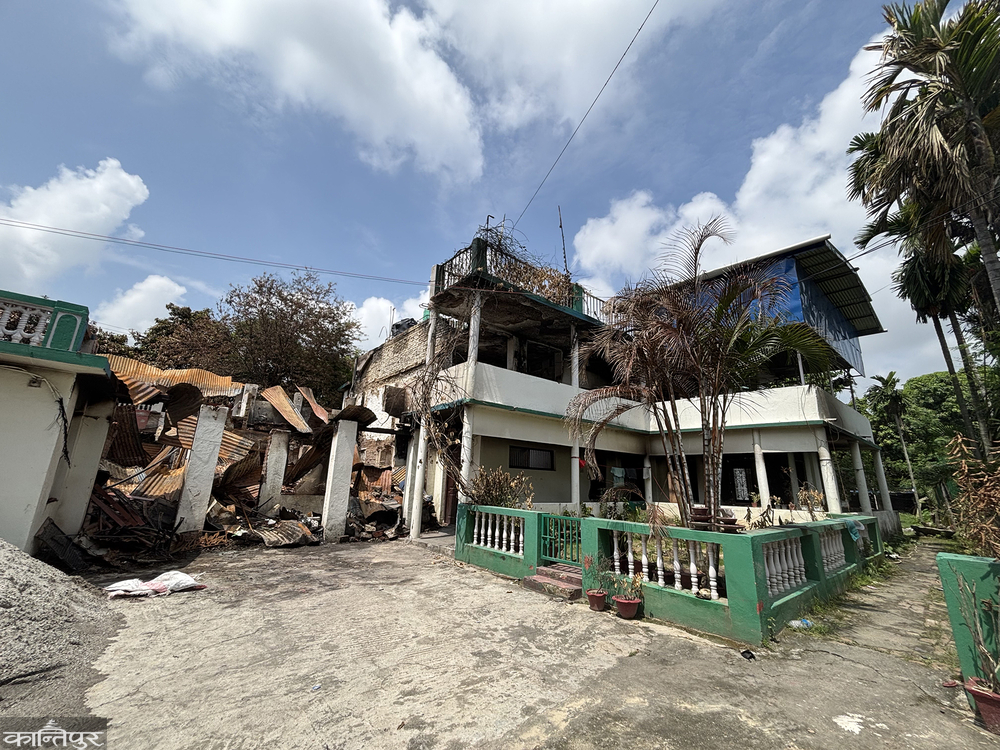
83-year-old Jagat Aryal of Biratnagar Mahanagara 12 remembers, 'Krishna Prasad used to say, the pain of the people must be shown to the court, only then will change be possible.' BP spent three months as a prisoner in Singha Darbar and then in Sundarijal.
Even when he was in jail, Koirala Niwas again became a bastion of resistance against the panchayat. In the courtyard of the house, the Congress leaders under the leadership of their younger brother Girijaprasad Koirala used to decide the strategy, hold secret discussions and prepare for the movement. After his release from prison, BP himself started to appear in the forefront of the movement.
BP Koirala, the 'people's leader' of modern Nepali democracy, participated in the seven-year revolution while living in this house. In the first general election of 2015, BP won as a candidate from here and became the first elected Prime Minister of Nepal. This house was also the secretariat of the multi-party campaign for the 2037 referendum.
2042 Satyagraha, resistance to Panchayat oppression, 2046 Jan Andolan and the second Jan Andolan in 2062-63 Koirala Niwas remained the political center of Biratnagar.
This house witnessed many decisive moments of Nepali democracy. Sometimes the struggle with the dictatorship of the Panchayat, sometimes the preparation to spread the light of democracy. Every meeting, every strategy took shape in this backyard. And directed the political direction of the nation.
Nepal-India's common ground
Koirala residence became a shelter not only for Nepali leaders but also for important figures of Indian democracy. Former Prime Minister of India and socialist leader Chandra Shekhar used to frequent the Koirala residence. Pana Uranu, a member of the Koirala family, remembers, "Once Indian leader Chandrasekhar came. He was sleeping on Girijababu's bed. He said that Koirala Niwas felt like a house.
BP of Nepali politics was Bishweshwar Sahitya. Indian leaders used to come, writers also kept coming. Among them was the famous writer Phanishwarnath Renu. He used to go down to Biratnagar by train to discuss literature with BP. For some time, Koirala used to return to listen to the political and literary beats of the residence. He used to say, 'This house is not only a political center, but also a unique model of South Asian political friendship.' According to
writer Chandramani Gautam, from the labor movement of 2003 to the historic people's revolution of 2007, Renu stayed in Biratnagar and was active both intellectually and physically. He was not only a writer, but also a fighter for the independence of Nepal. "He was even injured by bullets during the violent moments of the movement, but his courage for freedom and social justice remained firm," wrote Gautam. Anantaraj Neupane, a senior journalist of Biratnagar who knows about the Koirala residence, says, 'No one can imagine that a simple merchant's house has become a witness to so many historical-political events and international meetings.' In 2051, the then Prime Minister Girija Prasad Koirala announced the dissolution of the Parliament after his own policies and programs presented in the Parliament were rejected.
The root of this was the internal strife within the party a few years ago. After Koirala became Prime Minister in 2048, the differences between him and Supreme Commander Ganeshman Singh intensified. The beginning of the dispute, who will be the vice-chairman of the National Planning Commission? It was about that. Koirala appointed Ram Sharan Mahat as Vice President but Ganeshman opposed the appointment.
He not only argued that it is not appropriate to appoint a person who lost in the election, he also criticized the trend of always giving priority to 'Bahun-Kshatriya' in the division of posts. The disagreement that started like this gradually deepened and finally reached the decision to dissolve the parliament. Girija Prasad resigned.
When the Nepali Congress was deeply enmeshed in internal disputes, the supreme commander of the party, Ganeshman Singh, went on a nationwide public awareness campaign. Ganeshman arrived in Biratnagar in the same month. It was widely understood that his relationship with Girija was strained by these events. So the general assumption that he would definitely not meet Girija failed.
Singh did not meet Girija and spent that night at the Koirala residence. Ganeshman, who slept with Girija at night, held a press conference in the morning. At other times, Girija used to hold press conferences from the bardli of this house and make important political announcements. Sometimes he was criticized for making controversial comments. But at that time Ganeshman not only opened fire against Girija, but also announced his resignation from the party itself, which marked the beginning of a new course in Congress politics.
Heritage made of ashes
In this house, priceless archives of Nepali Congress, historical documents, list of convention delegates, handwritten letters of BP, notes of anti-Rana secret plans to rare photographs of different eras were preserved. A few years ago some of the old documents were transferred to the BP museum in Sundarijal, but the rest were here. From BP, Girija's old memories to cars, everything was destroyed in the fire.
As soon as he came to Biratnagar, Congress leader Shekhar Koirala used to stay in this house. Shekhar was patronizing this house as Uncle Girija used to live in the past. BP and Girija's Maila brother is Keshav Koirala's son - Shekhar. He says, "We never dreamed that this house would collapse like this."
Dr. Shekhar is now planning the reconstruction. According to him, this house is not just a pile of wood, bricks and stones, but a living memory of Nepal's democratic journey. He is planning to return it to its old form.
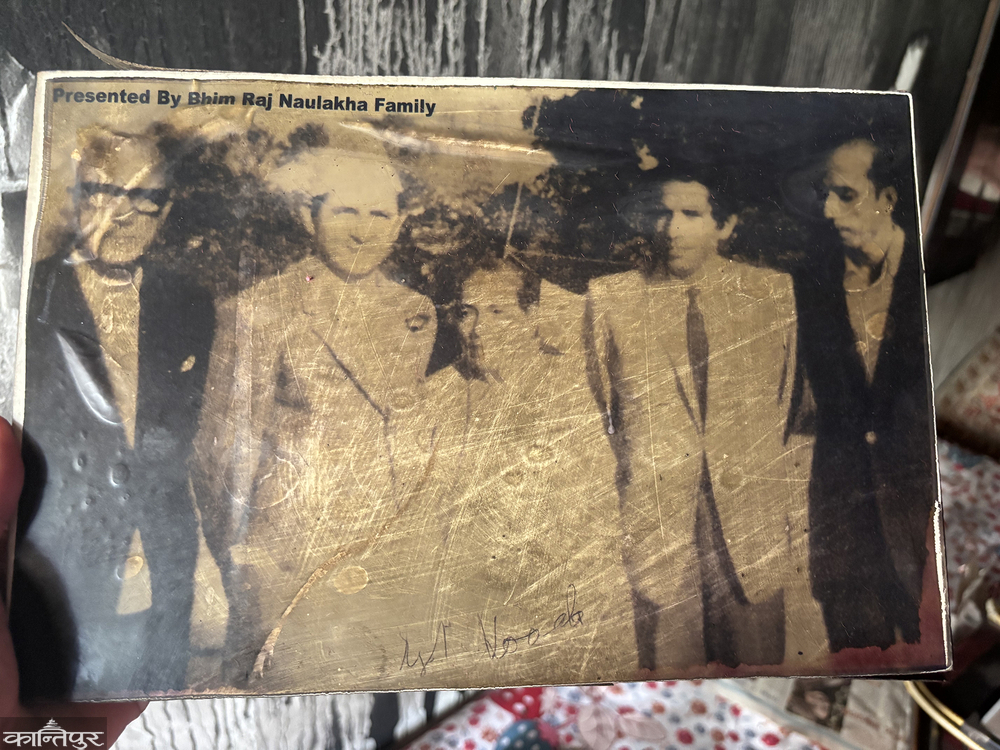
President of Biratnagar Mahanagara Nepali Congress Deepak Chapagain says, "This house is a symbol of fighting against Rana and King for the rights of the people. We claim that it was burnt in a planned manner in the name of Gen-G, it was wrong. Nepali Congress Sunwarshi leader Yagya Karki recalled that when he was a student, he used to come to Koirala Niwas many times and said that his mother cooked and fed him. He said, 'Rice was always cooked for everyone in this house. Even if someone came and ate it.
This house, which became the 'star' of attacks many times during the Panchayat period, this time, no one could save it. "Earlier, the locals used to shield themselves from every attack, but this time no one could protect them," he says. An eyewitness who runs a shop in front of Koirala residence remembers, "Suddenly there was an unstoppable crowd." The crowd was not in a position to listen to us.
The state was responsible for protecting historical heritage. However, the state itself was innocent before that chaotic crowd. The security personnel had surrendered. "That was a tyranny one day. The decision made by the mob was the final decision,' said Uma Pokharel, an old resident of Biratnagar, emotionally, 'Mob tyranny destroyed the center of democracy.' But its contribution is still vivid in the consciousness of the Nepalese people. Whether it is the rebellion of Gen-Ji or the movement of the next generation, the road to democracy will re-sprout on the ashes of this memory.
Pana Uraon's guard
2034 year. Koirala Niwas, an old house next to Koshi Hospital in Biratnagar. It was in that house that Pana Oran, a tribal girl, knocked on the door for the first time. At that time when Jananayak BP Koirala was alive, this house was the center of political tussle. From that day till today, for almost five decades, Pana has remained an invisible shadow of this house.
In the meantime, how many members passed away, how many new ones were born, how many political storms came and went. But Pana's life remained stuck with the same old door, the same bugle, the same courtyard. Pana did not marry, did not create a separate world. Because while guarding the Koirala residence, she did not find leisure.
'Koirala Niwas is my family, Maiti is also the same, Mavali is also the same,' in his clear voice, deep determination is heard like the history of the house. Krishnaprasad Koirala built this house and saved it with her blood and sweat. She turned 65 years old today and was still dedicated to this service.
However, after seeing the terrible incident on 24 August, she was disturbed. That had never happened to him before. She still trembles at the sight of history burning before her eyes. She had guarded the Koirala residence all her life and remained completely silent that day. "I felt as if I had a convulsion," she remembers that incident.
...
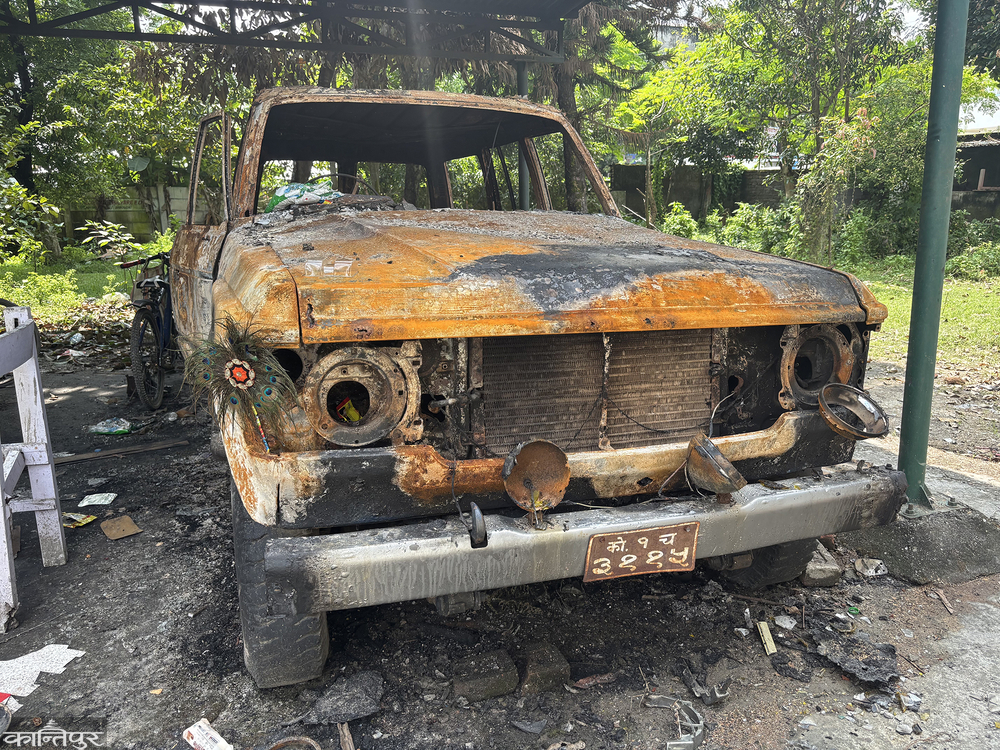
Ba.1 Ch 4401 zip code. It was not just a piece of metal, it was a witness of Nepal's democracy. The vehicle carried by Ganeshman Singh, which carried the slogan of the movement on the streets of Kathmandu. This jeep, which was covered with a tent in the courtyard of Chaksibari, was like a shrine for the Congress leaders. They used to come, stick to jeeps and take pictures, pay homage. Later it was named 'Democracy Zip'.
During the Gen-G movement, the protestors not only burnt Ganeshman's house, but also burnt down the historic heritage which was covered with a tent in the open courtyard of the house. Photojournalist Meenratna Vajracharya couldn't hold back her tears after witnessing the Kayan Yatra with Ganeshman and seeing the burning jeep on fire.
'Perhaps because of the feeling of a long gap with Ganeshman Singh, on the one hand, the bedroom and living room where Ganeshman was sleeping was getting burnt, on the other hand, the jeep carrying history was on fire in Chowr. It was very difficult for me to capture that scene,' says Vajracharya, who followed Ganeshman Singh and learned photojournalism from 2004 to 2054, 'Tears fell, my whole body trembled, that jeep was not burning, a history was burning. He remembered an incident on 4 Baisak 2047 before the restoration of democracy and the formation of the interim government. At that time, there were frequent meetings between the king and the political parties regarding the interim government and constitution making. Leaders were moving around the palace. On that day, King Birendra Shah called only Ganeshman Singh for a visit. At that time his driver was Shandas Manandhar.
Manandhar prepared the same zip. Ganeman was accompanied by photojournalist Vajrajarya. He was quite young at that time. Just learning photojournalism. He did not dare to enter the palace as he was not in formal dress.
After taking Ganeshman to the palace, he returned to Chaksibari. Later he went again in the same vehicle to pick up Ganeshman. He did not know what happened with the king and Ganeshmanji. He says, "Later, I heard that King Birendra had proposed to Ganeshman to become the Prime Minister of the interim government in that meeting." Ganeshmanji said that my health condition is not good, government, it takes two or three hours to go to the toilet, I can't, make Acting Speaker Krishna Prasad Bhattarai the prime minister.' This is not the place where Ganeshman was born. He was born in Yadkha of Makhan Galli. After the change of 2007, the thick circle of leaders and activists started looking for a little open space even though the space was narrow. While looking for a
, the old house of the place where the Election Commission is currently located and the house of the Chaksibari were discussed. According to the then MP Rajendra KC, who jumped into politics in the company of Ganeshman, the house where Ganeshman lived in Chaksibari was called 'Bhutah Ghar'. Ganeshman was a brave, fearless and militant leader who fought for democracy. People used to say that a ghost lives here. Ganeshman laughed and bought the land in Chaksibari in 2009 to see what the ghost would be like, says KC.
Some people say that King Tribhuvan gave 45 thousand rupees to buy this house. However, in a video interview a few days ago, son Prakashman said that he bought it with money from the bank. There was a long rift between the Congress and the Communists since time immemorial. BP Koirala was of the opinion that he should not join with the left wing, but Ganeshman connected the eight left constituents that democracy can be restored only by joining with the left wing and announced that there will be a movement from 7th February 2046 from this Chaksibari.
People like Indian leaders Chandrasekhar, Suprasannam Swamy came here and gave encouragement for the restoration of democracy. According to photojournalist Vajracharya, Chaksibari was not only a center of politics, but also a platform for international media. The democrats believe that the fight to restore democracy in Nepal has been successful as they have started a joint movement by connecting eight left elements. It was then that Ganeshman was given the title of 'Supreme Commander' and 'Supreme Leader' by the Congress.
This heritage of democracy was targeted by protesters on 24 August. They set fire to the winery. Burned the old house where Ganeshman lived. Before that, the secretariat, 6 cars and motorcycles in the parking lot were burnt.
Although he was the Deputy Prime Minister and Urban Development Minister, his son Prakashman did not go to the minister's quarter and lived here. He was also at home till an hour ago. After receiving information about the attack, the army took him to a safe place in time. His wife Shrijan was stuck in Bangkok on her way back from abroad. "Because Prakash Dai was taken on time, there was no incident, otherwise Sher Bahadur would have created a situation like that of Deuba," says photojournalist Vajracharya.
Outgoing Member of Parliament KC says that the fire that was set in "Chaksibari" was not set in a house, but in a school of democracy. The black walls of the old house where Ganeshman lives now, the furniture thrown from the window in the flames and the ashes of the democracy jeep tell the story of history. Son Prakashman added a new house to the west, where his son and daughter lived. But he slept in the old house.
Even though it was damaged by the earthquake of 12 Baisakh 072, it was repaired. But the fire of 24 August destroyed everything. "This unimaginable phenomenon is not natural for democrats," KC adds, "Democracy is not power, it is sacrifice." Many physical relics of Ganeshaman have been destroyed. But the spirit of democracy does not die. Chaksibari will continue to live in these ruins.'
...
The vehicle number 2177, which was destroyed by fire, is seen not entering through the main gate of Bandegaon Ashram in Godavari Municipality-14 Lalitpur of the leader Krishna Prasad Bhattarai (Kisunji), who dedicated his life for democracy. Another object that catches the eye as soon as you enter the gate is a zip bearing the number Ba2ch 1842. The Jeep Kisunji used to ride in the 50s.
The jeep kept in the garage was completely destroyed by fire. Glass, pots and fruit plants are scattered throughout. 'There was a big full-length statue of Kisunji here, is it lost?' a local young man replied to a woman's question, 'We heard that the protestors took down that half-height statue of clay and dragged it away and burned it.' We begged a lot not to burn, but they didn't. "When they started attacking us, we fled to save our lives," he said.
Along with the fire set by the protestors, umbrellas, cans and tankas bearing Kisunji's identity were also reduced to ashes. Muna Adhikari, deputy head of Godavari Municipality, said, showing the pile of ashes, 'These were the items used by Kisunji, which turned into ashes in a moment. Some of the goods were taken away by the protestors.
According to the officer, the stolen goods were seen on CC TV. She said that the Godavari municipality has also issued a notice to return the goods. They were the umbrella, tankard and tanka Kisunji's identities. Kisunji, a two-time prime minister, was unmarried and had no land or property in his name. That is why the government had built an ashram on 5 ropani land. He served as interim prime minister in 2046 and in 2056. He was called 'Sant Neta' because he was unmarried and had no greed for wealth. Amita Kapali was taking care of her for a long time.
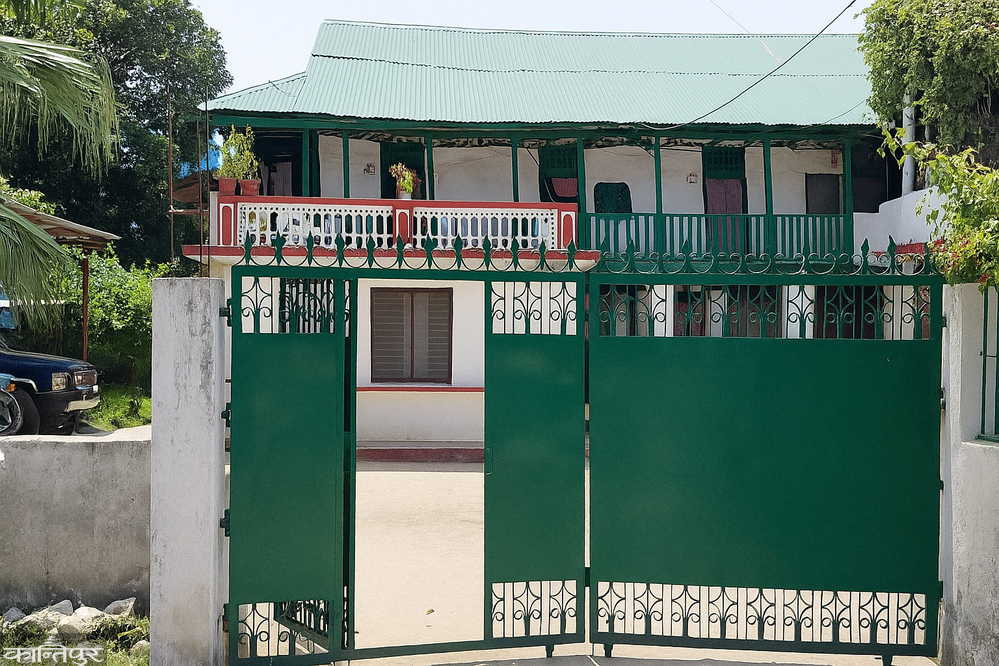
2067 After his death on February 20, Kisunji's mortal body was taken to the same ashram and paid homage. Even after that, Amita was living in the ashram. During the demonstration, there was a crowd of people coming to the ashram after receiving information that the ashram had been burnt down on August 24.
The interior of the ashram, which has 5 buildings, small and big, and all the belongings there have been burnt. Locals gathered at the ashram said, "The protestors looted good and useful goods and set them on fire." The fire destroyed all the structures leaving only the ruins of the building. The objects that could not be burned were broken and thrown away while all the history of Bhattarai's lifetime turned into ashes. The 'lockets' made with his photo were scattered on the floor, while there are only piles of ashes.
According to the deputy chief officer who was in the ashram during the attack, books, gifts, photographs of meetings and discussions with foreigners and historical documents of the Congress were burnt. Kisunji's follower Gobind Chaulagai of Ramechhap Gunsibhadaura, who reached the ashram, looked at the burnt ashram and said in an emotional tone, "Such an attack is a 'rehearsal' to erase the history of the democratic movement." "Only a depraved society can insult the selfless late leader who brought freedom to the present generation by fighting for democracy all his life," said Chaulagai.
Kisunji's followers reached the ashram and were seen flipping through some of the photos in the album to be burned and taking pictures on their mobile phones. Kisunji's nephew Vinod Bhattarai, who was found in the ashram, said while flipping the burnt album, "The structure will be built but the pages of history made of ashes have now been merged in the fire forever." He said that his uncle Kisunji kept photos and documents from 1947 in the ashram. He (uncle) brought it to the ashram to keep everything in one place, 'Now we don't have any historical records. We did not think that this would happen in the ashram.
Ashram's helper Ramsharan says, "All the papers written by my grandfather (Kisunji) were here." There were also expensive gifts. Everything was decorated. Now it is gray.' He used to bring necessary goods to Kapali and used to work as a driver when needed.
According to Ram Sharan, who arrived after the locals set fire to the vehicle outside the gate, the protestors took Kisunji's important belongings out of the fence on the west side of the compound. The ashram's large refrigerator has been vandalized and left useless as it could not be taken away. The small fridge was robbed.
Fruit and ornamental plants are uprooted. The wooden structures built in the artistic style have all been burnt down, leaving the building in ruins. Ramsharan said, "We asked the protestors to do nothing first, but when they refused, we started to save our own lives." Kapali, who was taken care of by Kisunji, was living in the ashram. Ramsharan says, "Kapili told her that she would die in the ashram after she refused even when she folded her hands to prevent burning." But when the protesters tried to assault him by abusing him, I took him away from the ashram to a safe place.' After saying that he would not leave the ashram, Ram Sharan called Kapali's mother to convince her. All his belongings have also been burnt.
Local Congress leader Rajendra Maharjan, who met at the ashram, said that the structure was burnt when they were trying to increase the land of the ashram and make it more orderly. Congress vice president and central member Ramhari Khatiwada visited the ashram. "Other Congress leaders did not go much," the local said. Locals have complained that the place has become neglected due to lack of protection.