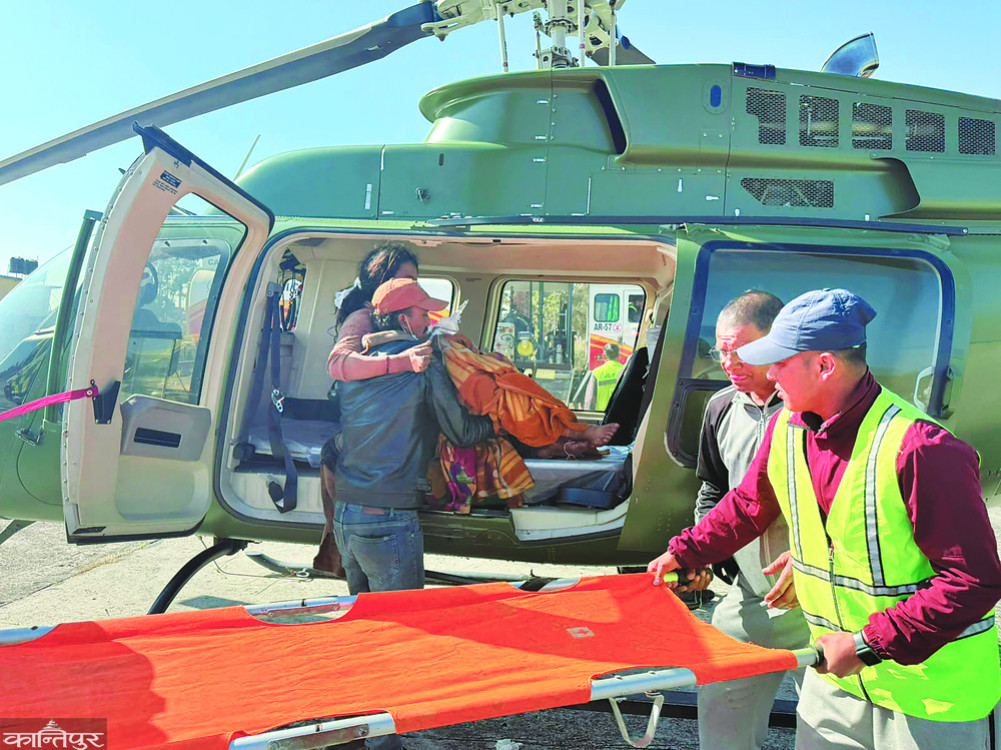
Of those airlifted for rescue, 19 percent of postpartum women were under 20 years old; due to early marriage and pregnancy, both mothers and infants faced life-threatening health complications. In Karnali, 11 women lost their lives last fiscal year because they could not give birth, and in the past four years, 777 newborns have died.
We use Google Cloud Translation Services. Google requires we provide the following disclaimer relating to use of this service:
This service may contain translations powered by Google. Google disclaims all warranties related to the translations, expressed or implied, including any warranties of accuracy, reliability, and any implied warranties of merchantability, fitness for a particular purpose, and noninfringement.
For 19-year-old Sushila Roka of Musikot Municipality–14 in West Rukum, the morning of 21 Jestha became the most difficult moment of her life. When labor began, the family, who were awaiting their first child, was happy, but as complications increased, that happiness turned into worry.
Sushila was rushed to the district hospital. At the hospital, the doctor said, “You should give up hope for the baby now; you didn’t bring her in time, we can’t save it.” Hearing this, the family was stunned. Sushila was carrying twins. After much effort, one baby was delivered normally, but the second had to be delivered by surgery.
According to Sushila’s sister-in-law, Nandakala, the risk did not subside even after the babies were born. Sushila’s abnormal bleeding increased. “Maybe because she gave birth at such a young age, or for some other reason, the bleeding didn’t stop even after the babies were born. As her condition worsened, we panicked,” said Nandakala.
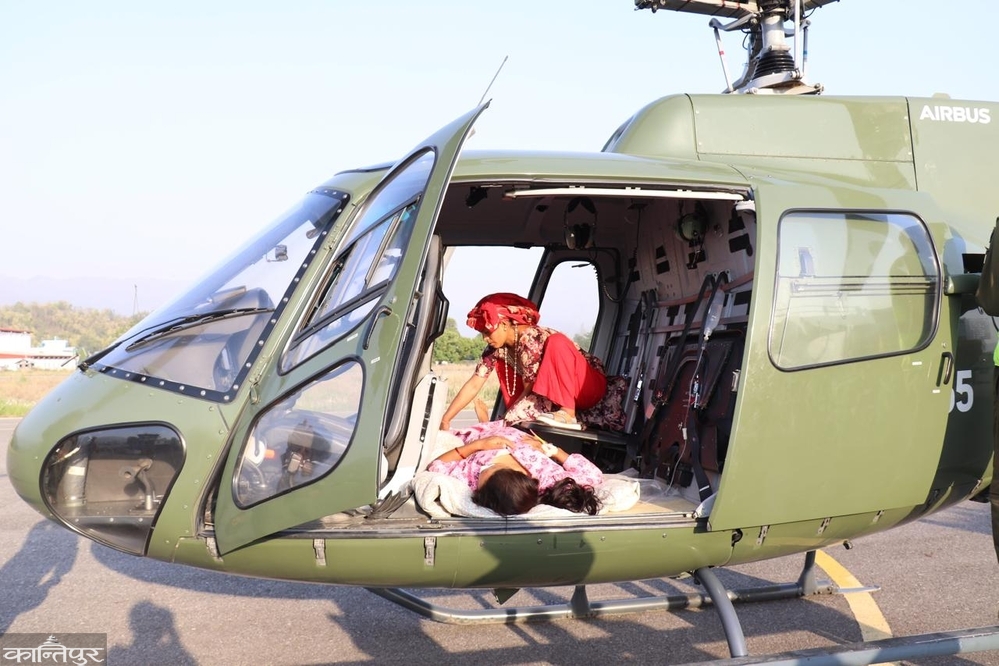
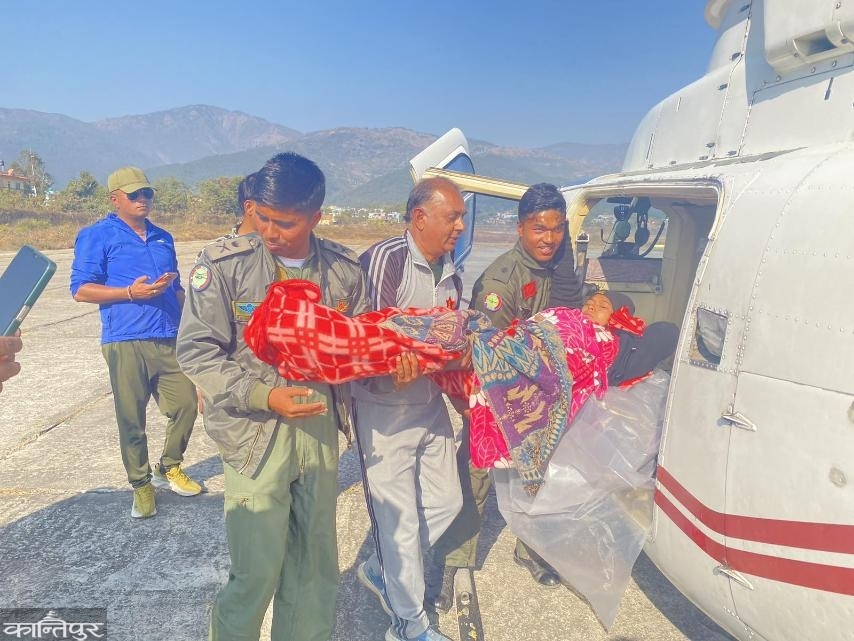
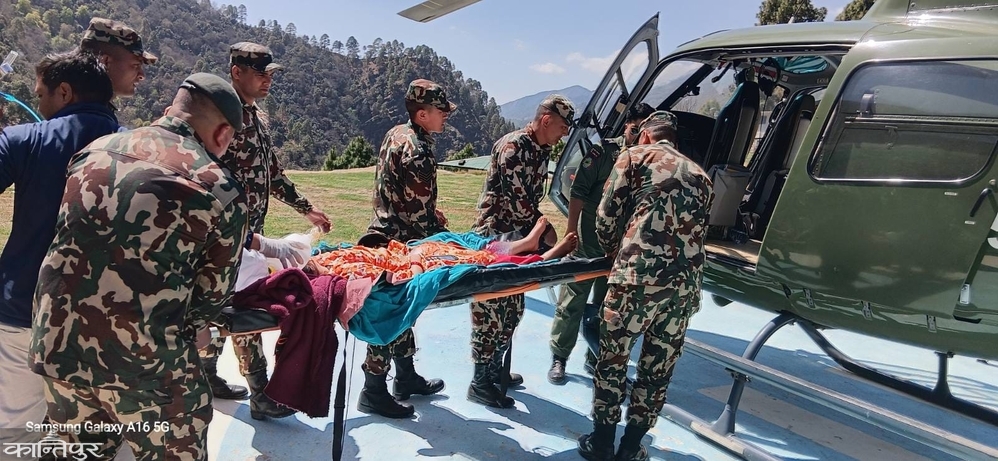
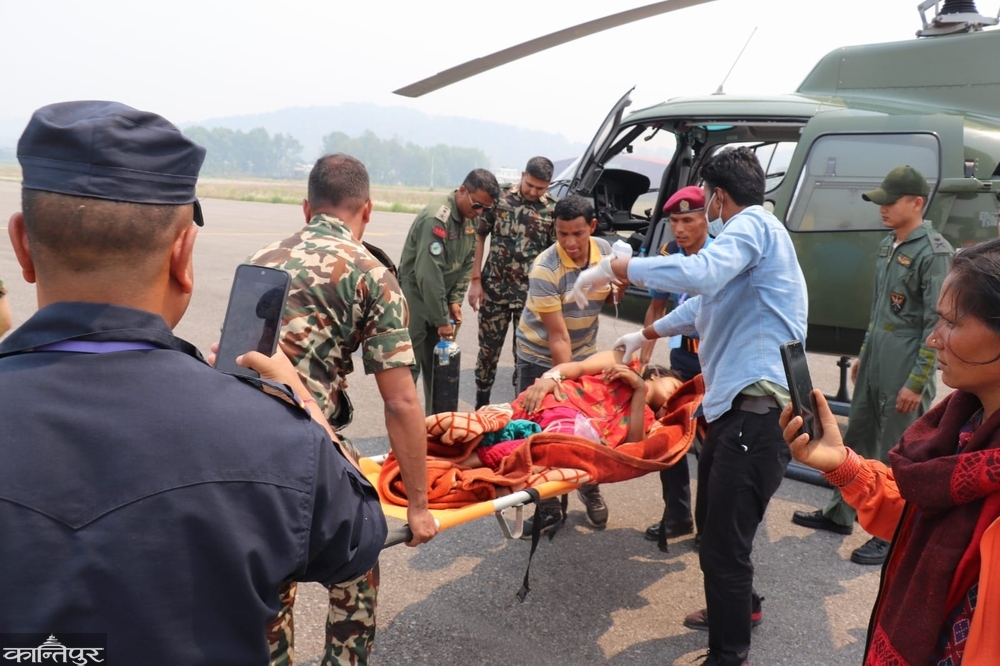
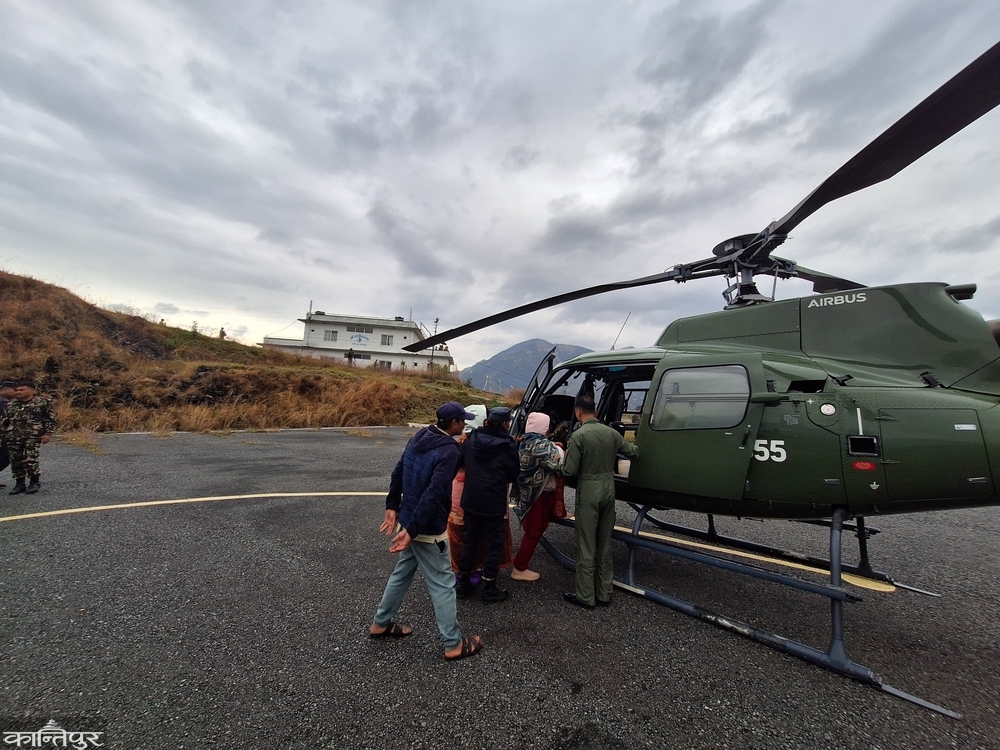
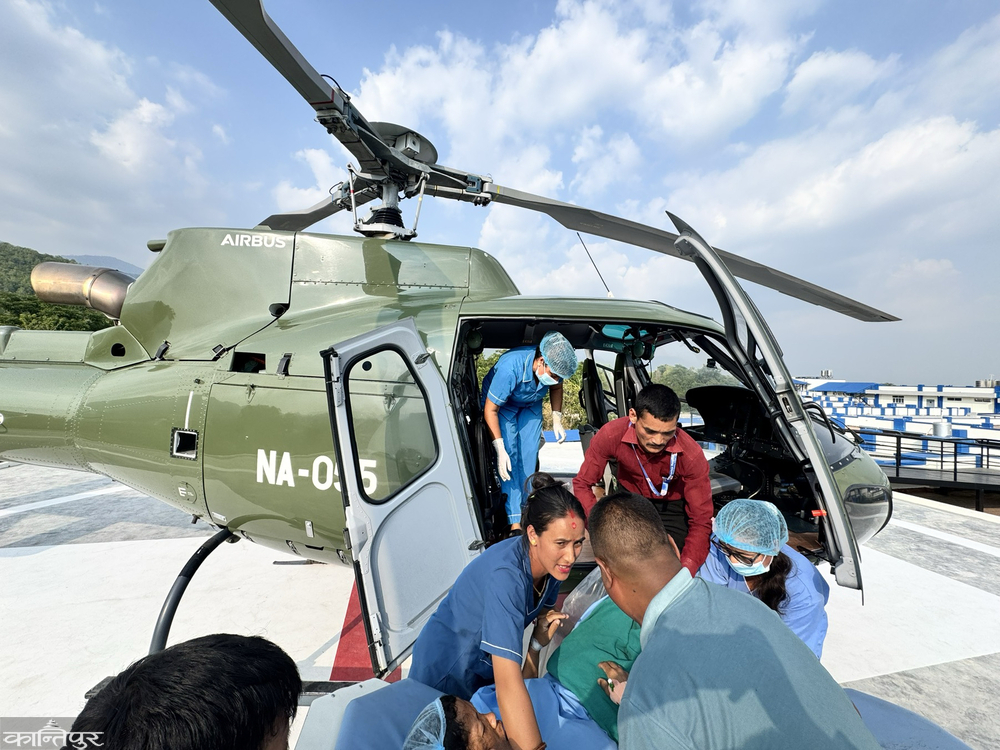
The doctors advised transferring the mother and babies to the provincial hospital to save them. After receiving rescue permission from the District Administration Office, they were taken to the provincial hospital by Nepal Army helicopter. Only then did hope return to the Roka family.
Sushila and her newborns are still in the hospital. Both babies have very low birth weights. Due to Sushila’s still-weak health, she has not been able to breastfeed her newborns.
On 21 Mangsir, 15-year-old Karuna Bishwakarma of Jagannath Rural Municipality–2 in Bajura gave birth while unconscious. She had lost consciousness before delivering the baby due to labor pains. By the time she was brought to the district hospital, her condition had already become critical.
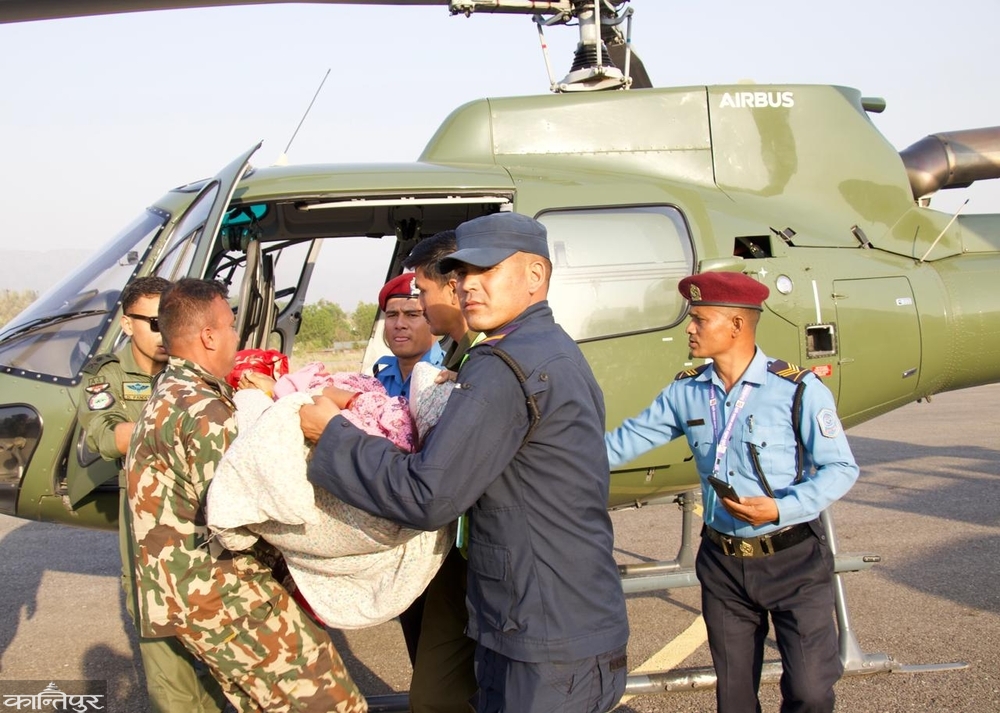
Due to excessive bleeding and delivery complications, doctors referred her outside the district, saying further treatment was not possible. “Maybe because she was so young, my daughter-in-law lost consciousness during childbirth,” said her mother-in-law Amrita Bishwakarma. “She didn’t regain consciousness for two days after my grandson was born.”
With the initiative of the rural municipality and district administration, she was rescued by helicopter and taken to the provincial hospital. Like Sushila and Karuna, there are many teenage mothers whose lives are at risk due to early marriage and pregnancy. According to data provided by the Nepal Army, among those rescued by helicopter, 19 percent of mothers are under 20 years old.
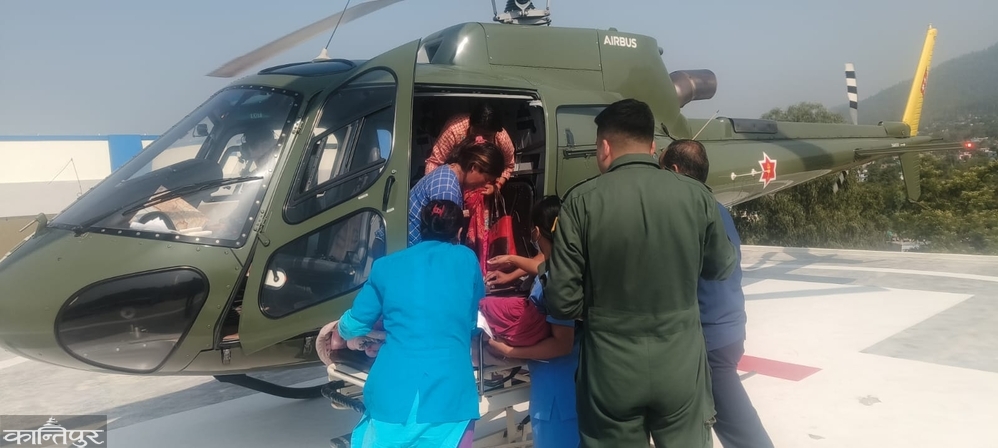
In remote areas, women with complicated deliveries are rescued by helicopter and taken to hospitals. Sometimes, when rescue is not possible in time, some lose their lives. One such example is 18-year-old Asmita Nepali of Kudari, Tila Rural Municipality–3, Jumla. Last Chaitra, when she went into labor, she was taken to the local health post. As her condition worsened, she was referred to the Karnali Academy of Health Sciences in Jumla.
Although the baby was delivered by surgery at the academy, she was referred to Kathmandu due to excessive bleeding, kidney failure, and lung complications. However, because the helicopter could not arrive in time due to bad weather, she was taken to the provincial hospital in Surkhet. Within 24 hours of arrival, on 29 Chaitra, Asmita died. Asmita’s father-in-law, Birkha Bahadur Nepali, says she died because they could not get her to a good hospital in time.
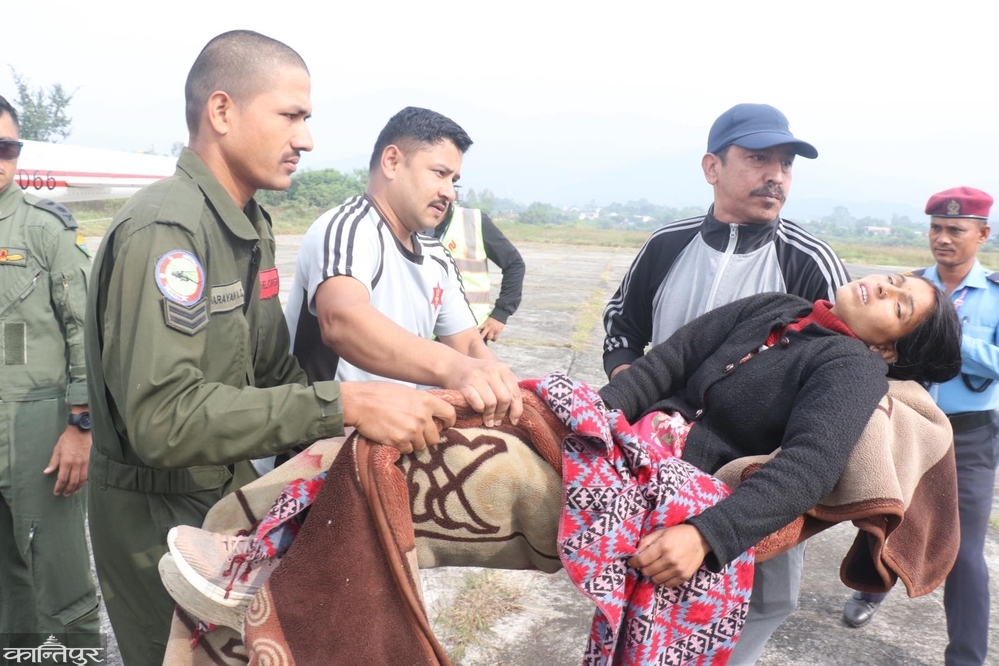
“She died while being rushed from one hospital to another,” he said. “Now my four-month-old granddaughter is sick. My son is not even 20 yet. At an age when he should be taking care of himself, he has to raise a child without a mother.”
After seeing the condition of his son and daughter-in-law, Birkha Bahadur says he now believes no one should marry at a young age. “If you marry and get pregnant at a young age, you are deprived of government services and facilities as well,” he said.
Many who become pregnant in adolescence have no knowledge of the delivery process, possible risks, or necessary preparations. This also leads to complications for both mother and child. Nilima Sherpa of Makalu Rural Municipality–2, Sankhuwasabha, who gave birth at just 15, said her experience of becoming a mother was the most terrifying of her life.
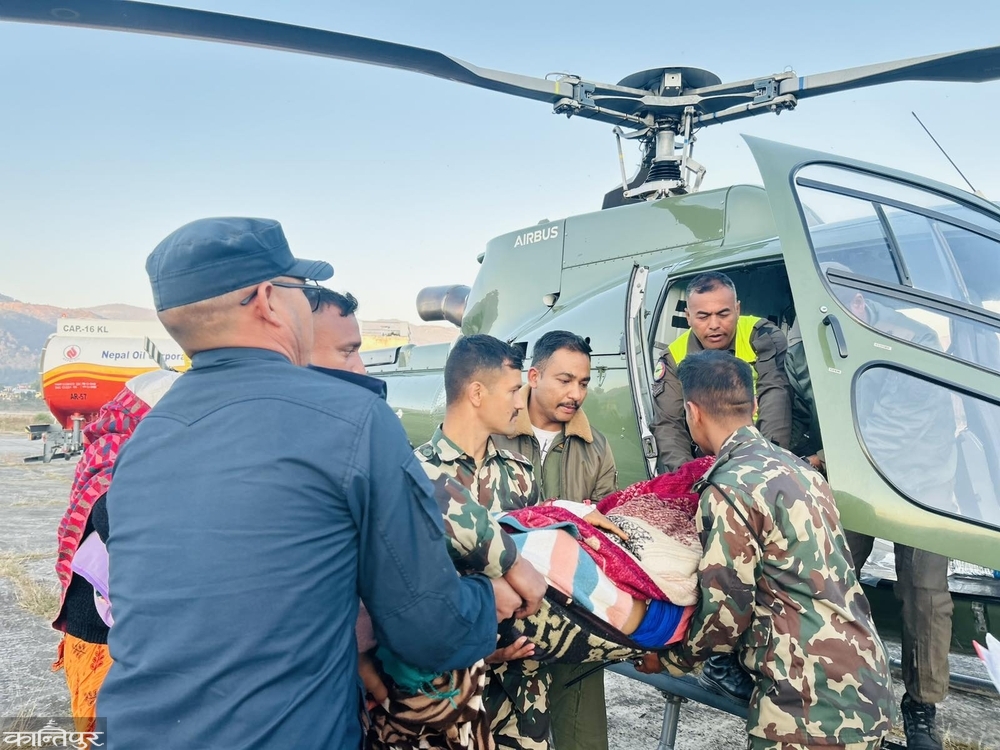
Last 8 Chaitra, after excessive bleeding, she was rescued by Nepal Army helicopter and brought to Paropakar Maternity and Women’s Hospital in Kathmandu. “More than how to give birth, I was haunted by the fear of whether I would survive or not,” she said. “Fortunately, after the helicopter rescue coordinated by relatives, local administration, and concerned authorities, I got a new lease on life.”
She shared that becoming a mother at a young age has deep mental as well as physical impacts. “My health is normal now. But if I see even a little blood, I’m afraid something might happen again. Even though my body has healed, my mind is still not completely at ease,” she said.
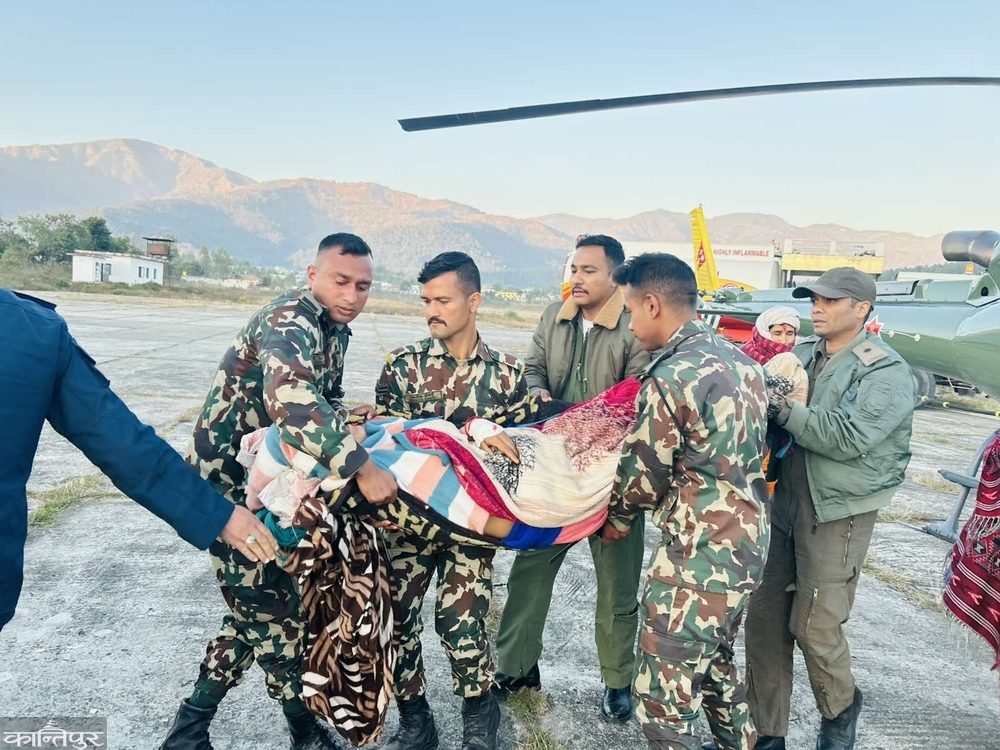
Dr. Sijan Rawal, working at Dolpa District Hospital, says that in remote areas, there are problems such as lack of road and ambulance access, shortage of specialist doctors at district hospitals, and inability to handle complicated deliveries at local health posts. “We don’t have pediatricians, essential equipment, or enough staff,” he said. “Even if the delivery operation is successful, we are often forced to refer mothers and babies elsewhere to save their lives.”
It is very difficult to reach local health posts from remote mountain and hill settlements. In such cases, helicopters become the last resort for rescue. But sometimes, due to bad weather, helicopters cannot arrive on time. Delays in rescue put both mother and child at risk.
Child marriage most prevalent in Karnali
According to the National Statistics Office’s “Nepal Multiple Indicator Survey 2081/82,” the highest rate of child marriage is in Karnali Province. Among married people aged 20 to 24, the highest proportion—41 percent—in Karnali married before the age of 18. In Koshi, it is 24.2 percent; Madhesh, 38.8 percent; Bagmati, 20.9 percent; Gandaki, 21.5 percent; Lumbini, 21.6 percent; and Sudurpaschim, 26 percent married before 18.
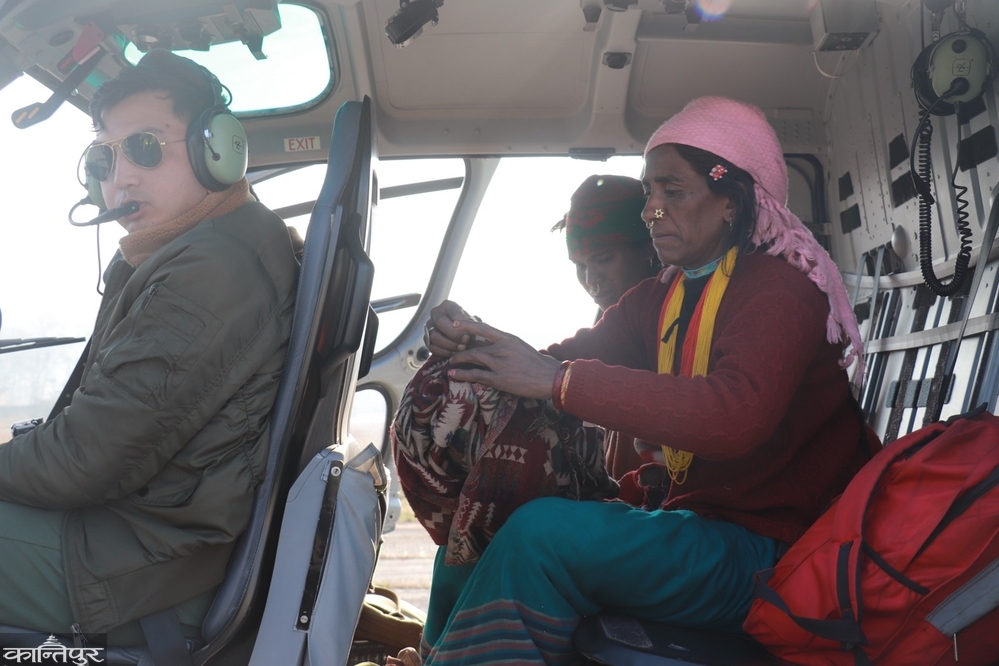
According to the Karnali Province Health Directorate, the proportion of mothers under 20 in Karnali was 21.64 percent in 2079. It was 20.64 percent in 2080, 20.82 percent in 2081, and 21.34 percent in 2082.
According to Dr. Lalit Jung Shahi, an obstetrician and gynecologist working in Karnali Province hospitals, four main problems are seen in pregnant teenagers: excessive bleeding at the onset of labor, very low birth weight of the baby, high blood pressure, and anemia.
“It is difficult to keep blood pressure stable in pregnant teenagers, so in many cases, surgery is necessary,” he says. “Even after surgery, some develop further complications. In such cases, we have to refer them elsewhere.”
Anju Dhungana, head of the Women’s Empowerment Division at the Ministry of Women, Children, Gender and Sexual Minorities, and Social Security, said all three levels of government need to put more emphasis on child marriage reduction programs. “Child marriage has become a major challenge for Nepal’s human development,” she said. “We need to raise awareness through various programs about the problems that arise when teenagers become parents at a young age. There should also be a focus on reducing child marriage.”
According to Dhungana, the air rescue service for pregnant and postpartum women was launched targeting those who cannot be treated at local health posts, have prolonged labor, or face difficulties in childbirth. The ministry has so far conducted nearly 950 air rescues of pregnant and postpartum women in all seven provinces.
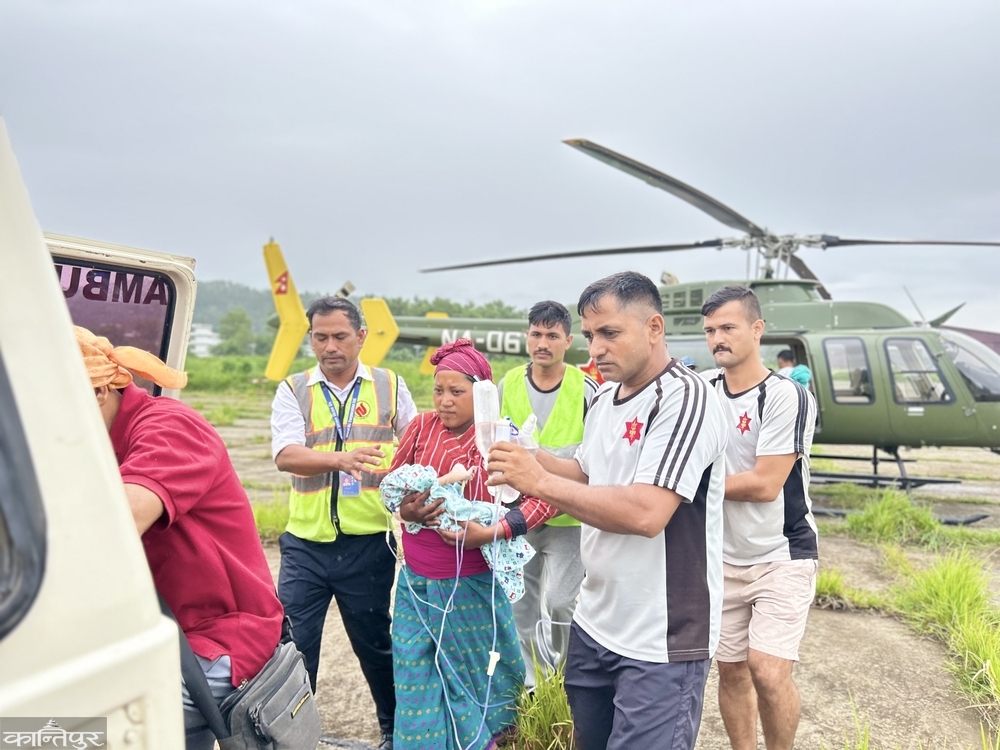
Under the President Women’s Upliftment Program, last fiscal year alone, 54 pregnant and postpartum women were rescued free of charge by air from Karnali. Although air rescue has saved many lives, the maternal and infant mortality rates remain worrying.
According to the Health Service Directorate, in Karnali last fiscal year, 11 women died due to inability to deliver, and in the past four years, 777 newborns have died. According to health workers, most women in remote areas only reach the hospital after their condition becomes critical, specialist services are not available at district hospitals, and helicopter rescue remains the last resort.
“No complaints of child marriage”
Although statistics show that child marriage and teenage pregnancy remain serious issues, effective action to control them has not been taken. The law prohibits child marriage, but the practice continues. Most such cases never reach the police. If there is a dispute, it is settled socially.
Karnali Province Police Chief DIG Jayaraj Sapkota said that although child marriage is a serious problem in Karnali, prevention is challenging because complaints are not filed. “When child marriage occurs, people do not want to go through legal procedures due to social pressure and fear of losing reputation; families and relatives tend to settle it within the village,” he said.
According to Mugu District Police Chief Raviraj Thapaliya, very few complaints about child marriage are filed with the police. “The situation of child marriage is dire,” he said. “People do not come to the police because they do not want to get entangled in legal hassles.”
According to DIG Sapkota, there were four complaints of child marriage registered in the province in 2081/82. In 2083, not a single complaint has been registered in the province.
According to child rights activist Tikaram Acharya, although some cases of child marriage come to light due to economic and caste reasons, most do not reach the police. “In Karnali alone, about 40 percent marry at a young age,” he said. “All stakeholders must be active in creating an environment where people do not marry young.” Acharya said that due to lack of adequate communication between parents and children, children seek parental love, support, and companionship by choosing a life partner at a young age.
Sonam Bhuti Gurung of Kaike Rural Municipality, Dolpa, who has been running campaigns saying girls should study and not marry young, said students should be informed at the school level about the legal penalties for child marriage. “On one hand, there is the challenge of education in our area; on the other, there is discrimination between sons and daughters in education,” she said. “Unless we can give girls access to higher education, they may continue to face such problems.”
Gurung said that lack of education and awareness is also a reason behind the tendency of parents to marry off their children at a young age. “When they don’t get a proper education, there is a belief that marriage is inevitable, so child marriage is taken as normal,” she said.
Kamala Tiwari, associate professor at Mid-Western University in Surkhet, said that children marry when they become emotionally vulnerable. “The state has spent millions to reduce child marriage, but has not paid attention to what children actually want,” she said.
According to Associate Professor Tiwari, teenagers who marry young hesitate to seek health services due to social and legal pressure, are embarrassed and afraid to use family planning methods, and are pressured to have children immediately after marriage. She says that instead of just telling teenagers who have already married young, “You’ve made a mistake, now don’t have children,” attention should be given to ensuring their easy access to safe motherhood, reproductive health, and family planning services. She said the concept of family planning should be understood not just as a means to reduce the number of children, but as a way to prepare for childbirth at the right age and after physical and mental maturity.
Tiwari also said that since 20 is the mandatory age for marriage registration in Nepal, couples who marry young face difficulties accessing various government services. “For fear of legal action, some hide the fact that they are married and have children,” she said.
Tiwari pointed out that physical and hormonal changes during adolescence, increasing romantic relationships through digital media, and lack of open communication with parents are major causes of child marriage. She said that marrying young has long-term negative effects on education, health, economic status, and social life, and emphasized the need to teach teenagers skills to manage emotions and sexual behavior.
According to Tiwari, if both schools and families can provide teenagers with sexual and reproductive health education, time management, and life skills, it can make a significant contribution to reducing child marriage.
Air rescue is lifesaving in remote areas
The “President Women’s Upliftment Program,” launched by the Government of Nepal in fiscal year 2075/76, has become a lifesaving initiative for locals in remote and inaccessible areas. The program is operated with the aim of rescuing women with pregnancy and postpartum complications and getting them to hospitals in time.
Under this program, women with complicated deliveries, excessive bleeding, or whose lives are at risk due to delays in reaching health facilities are rescued immediately. Based on the recommendation of the Chief District Officer and local health post, the Ministry of Women, Children, Gender and Sexual Minorities, and Social Security deploys the Nepal Army for rescue. Maternity rescues are carried out from the Mid Air Base in Kathmandu and the Western Air Base in Surkhet.
According to Nepal Army spokesperson and Brigadier General Rajaram Basnet, the maternity rescue program has been a lifesaver for mothers and babies. According to him, emergency rescues are carried out based on recommendations from local governments, district hospitals, and district administration.
The free air rescue service is implemented in Taplejung, Sankhuwasabha, Bhojpur, Khotang, Solukhumbu, Okhaldhunga, Manang, Mustang, Rukum East, Rukum West, Jajarkot, Dolpa, Kalikot, Mugu, Humla, Bajhang, Bajura, Achham, and Darchula. In 25 other districts, the service is partially implemented, and pregnant and postpartum women at risk are rescued by air and taken to designated hospitals as needed.