The blind elder, who was making a living by singing songs on the street, met Ramala on the street. He fell in love with Rama while teasing his friends and proposed one day, ``Miss Rama, if our friends start calling us old, then we are. Or are you going to get married?' Then Rama also gave a silent acceptance with a smile
We use Google Cloud Translation Services. Google requires we provide the following disclaimer relating to use of this service:
This service may contain translations powered by Google. Google disclaims all warranties related to the translations, expressed or implied, including any warranties of accuracy, reliability, and any implied warranties of merchantability, fitness for a particular purpose, and noninfringement.
Jetha Murmu ascended to Kathmandu two years before the earthquake of 072. He is a blind singer and creator who first went to Kathmandu from Kechna in Jhapa, a small region of the country. After becoming unemployed in Jhapa, he decided to go to Kathmandu in search of employment and struggle.
A man named Ramesh Subedi spent two years promising to 'get the job done' in Thamel's double evenings. After a while, they were forced to sit on the streets of Kathmandu and sing. The dream of singing in the shimmering evening of Thamel ended on the dusty pavement.
Joined a group that established Akshaya Fund for disabled children in Kathmandu and started singing and walking. Only after a long time did they get the trick, that group is full of thugs. After being freed from the trap of thugs, he started walking singing his own tune. The 2/300 rupees that he had collected from singing all day was enough to get by, but he was unable to pay the room rent. During that time, one day he came in contact with a group of blind people in Dang. The group called him Dang. Rama Vishwakarma, a blind singer from Sindhupalchok, was invited along with her.
The responsibility of delivering Rama to Dang fell on the shoulders of the eldest. Cut two tickets for the Kathmandu-Dang night bus. Around March 2070, summer had already started in Kathmandu. Jetha was waiting for Rama in the street of the new bus park, enduring the hot sun. Somehow Rama went to Jetha in search of him. Even though both of them could not see eye to eye, they recognized each other. And boarded Dang's night bus. That was the first meeting of Jetha-Rama. They met inside the bus. "Even when I was traveling in a bus, I couldn't sleep, even the little bit of sleep I had left after meeting Rama disappeared," Jetha said jokingly, recalling that day, "We both made light by gossiping."
They both reached Dang in the morning. Dang's friends came to pick up the bus to welcome them. Both Jetha and Rama were delighted by the warm welcome. After that they started walking with the blind musical team sometimes to Ghorahi and sometimes to Tulsipur. Sometimes he sings in street boxes for weeks.
Jetha-rama started eating together, walking together. Friends started teasing him when they found out. They considered it difficult. ``My friends are teasing me, I fell in love with Miss Rama,'' Jetha said excitedly remembering the romantic moment.
Friends used to tease Jetha, 'Now you have to get married, it doesn't always happen like this.' Jetha would smile and say, 'Is it just me getting married? Shouldn't Miss Rama agree?' One day, Jetha opened his mouth and said to Rama, 'Miss Rama, if our friends start calling us old people.' She replied, "I don't know." His friends teased and unexpectedly fell in love with Jetha-Rama. Finally, with the help of friends, Rama, the eldest of the endangered Santhal community and a Dalit, got married.
Jetha didn't even have money to buy clothes for the wedding. The friends invested the group's money in the wedding. Bought a new pair of shorts for the eldest. Sari-Cholo to Rama. They gathered at the Krishna temple in Ghorai. With a scholar as a witness, the elder put a red cloth and a garland of flowers on Rama's neck and vermilion on his shoulder. There was no money to buy gold, Rama dressed the grandson without gold and also garlanded the eldest son. The friends clapped.
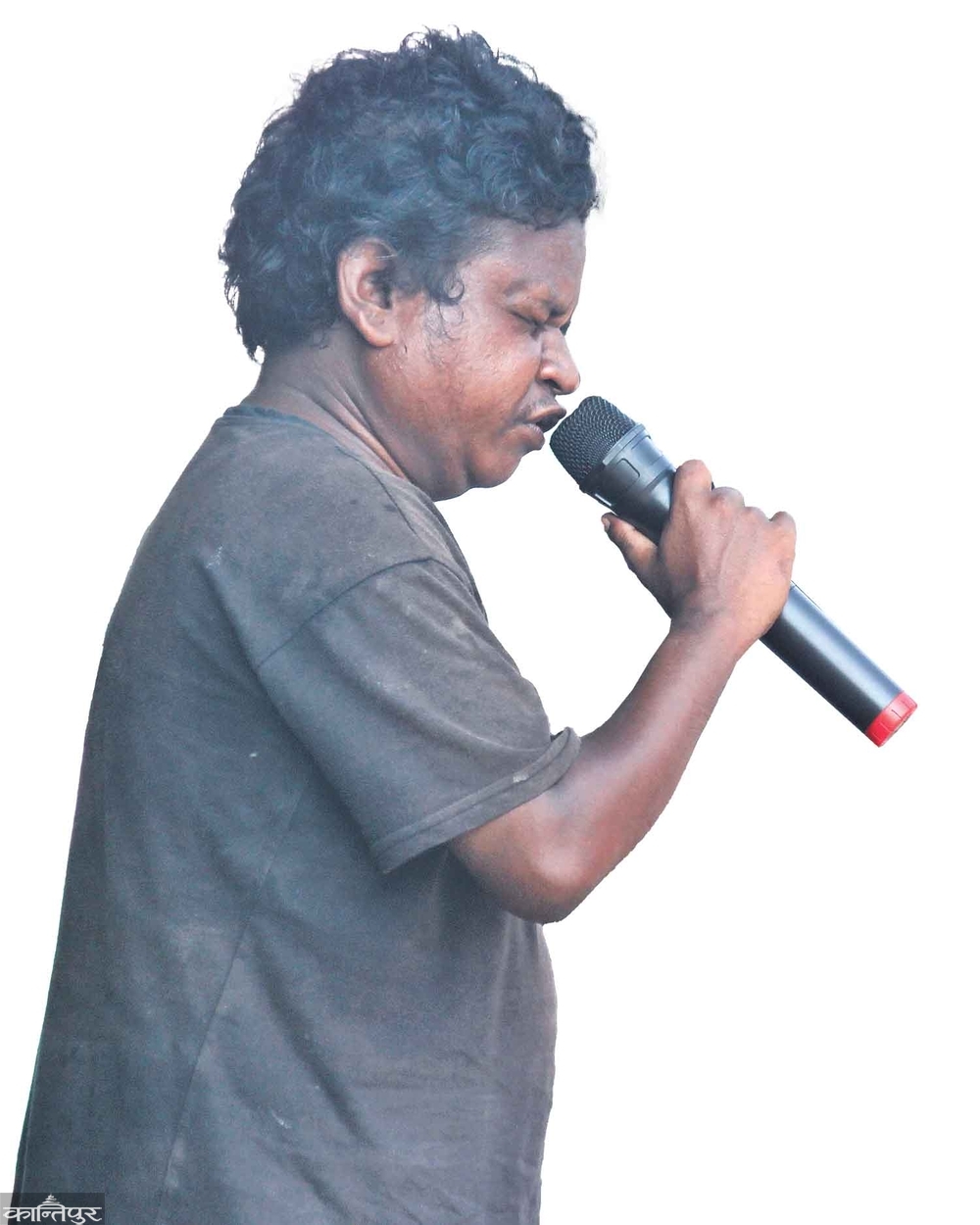
The marriage is over. After the wedding, everyone had meat and rice at the hotel. The marriage was completed for a total of 10,000 rupees. After marriage, it became difficult to live in a group. They started looking for a camp in Dang. Caste on top of the blind allowed them to camp. "Dang was not very good because of the problem of not getting a camp," remembered the elder, "we stayed there for three/four months and returned to Jhapa."
After returning from Dang, Jetha did not take Rama home directly. Placed in Mechinagar Disabled Association. After the death of the father in 2060, only the mother has been living in the Pathamari bush. Three sisters are married. They take care of the mother. So far he has taken his wife home only three times. He also visited his in-laws all three times. Rama's family has three brothers and sisters along with his parents. One brother is blind like him. All others are Sapang.
When going to his in-laws for the first time, the elder Audhi was scared. It is also thought that they will be beaten and eaten. But Rama gave him courage. The father-in-law asked, 'Can you adopt my daughter, son-in-law?', the eldest son laughed and said, 'I got married for adoption, father.' But, Rama says, 'We are happy, we are doing well. What is the meaning of the saying that the one who sees the eye will keep it?'
They stayed with a shelter in the building of Apang Sangh. A daughter was born there. Whose name Jetha himself chose, Rasmita. Not just staying in the disabled association. Eating and bringing food had to be done. He started walking in Chowk Bazar singing. From there, the money collected went away. But he felt that Jhapa's earnings were not enough. And leaving his pregnant wife and infant daughter, he went back to Kathmandu. In Kathmandu, he again sat on the pavement and started singing in Jugalbandi with some new and old friends. Sometimes he would also send money to his wife.
On 12 Baisakh 2072, he reached Ramechhap with the group. They were camping in a house. He used to go to Gaun Chowk market all day long. In the evening, he would return to the camp to stay. That afternoon, I was waiting for the bus to go to the market. "Suddenly there was an earthquake," Jetha remembered, "If I had stayed in the tent, I would have been crushed to death by the house." His tent was destroyed by the earthquake.
He returned to Jhapa after the earthquake. He has not gone to Kathmandu since then. Meanwhile, another epidemic further threatened his profession. After the lockdown due to covid, he could not leave the camp in Birtamod. "During the lockdown, it was as if we would die of hunger," Jetha said, "But, after it gradually became normal, we started singing in the Chowk Bazaar, and the money given by Mankari was enough to eat rice."
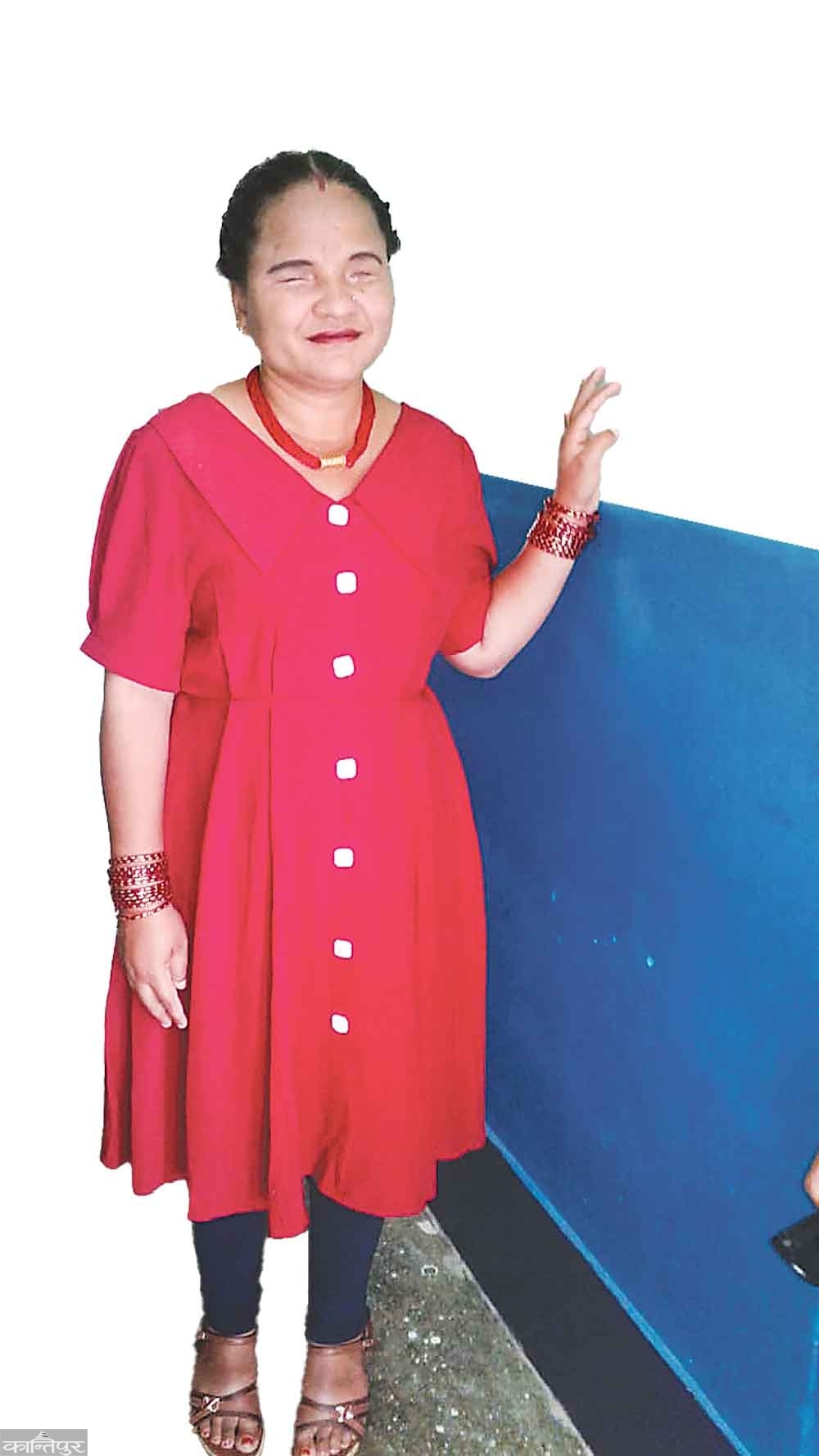
His camp is near Little Flower School in Birthamod. The monthly rent of the camp is 8 thousand. An 11-year-old daughter studies in class 4. 6,000 is paid for his annual education expenses. The local Eden Garden School is teaching on the condition of paying 6,000 per year regardless of the amount of study. However, now there is an economic recession in the market. The recession has also had a direct impact on his profession. He says that he has been raising his family by singing on the sidewalk, but now he is unable to support his family.
'I don't earn as much as before,' said Jetha, who was found singing on the pavement of Damak, 'Life has become difficult.' Earlier, Mrs. Rama also sang with him. For the past few years, she has only had to babysit. Rama dreams of making his daughter a doctor. Daughter is not blind like them. Rama said, "Now my daughter is growing up, I am also planning to go to sing with my elder."

