Rozman Maharjan's dohori from Lalitpur's Khokna, Kuma Sagar's dafa bhajan from Bhaktapur, Western-style Newa songs by Ujan Shakya from Kathmandu have brought a distinct wave in Newa music.
We use Google Cloud Translation Services. Google requires we provide the following disclaimer relating to use of this service:
This service may contain translations powered by Google. Google disclaims all warranties related to the translations, expressed or implied, including any warranties of accuracy, reliability, and any implied warranties of merchantability, fitness for a particular purpose, and noninfringement.
Art has no language, no boundaries. Art is free. Art does not look at caste or color! It does not differentiate, it does not bring division. A vivid example of this is 'Aila Luwaya' sung by Rozman. This song is touching not only the Newa community in the valley but also the non-Newa community throughout Nepal.
Making a tick tok in Kuma Sagar's 'O Champa', humming the words of Ujan Shakya's 'Rajmati Cha' has increased. After listening to Niva Dangol's 'Sachika China', he comments on YouTube, 'I don't understand anything but the song is interesting.' Rozman Maharjan from Khokna in Lalitpur repeated, while Dafa Bhajan of Kuma from Bhaktapur was sung! Ujan Shakya's western style song from Kathmandu! Their songs have added a distinct wave to the entire Newa music.
Even before them, Neva: they are not without work in music. Music was being created, songs were being marketed. Rajmati Kumati, Sirsaya Heguru became evergreen songs. It was in these old classic songs that the introduction of Newa music revolved. However, when Kuma, Rozman and Ujan brought Nepali language songs in a new tune, not only the Neva community, but the entire Nepali audience has started to be captivated by it. Platforms like social media have brought these songs to a huge audience.
author Suresh Kiran says these songs have increased the reach and impact of Neva music. However, many scholars are working in Nepali language, as a kind of movement. However, Kiran claims that the movement has not been able to make an impact, which is spreading through the songs of Ujan, Kuma and Rozman. "Their songs have had an impact not only on the Newa community, but also outside," said Kiran. Neva: According to his analysis, these songs have reached a large audience because of the different tastes mixed with popular tunes in music.
As Kiran said, if you listen to the popular Newa music, you will find that it has a different flavor and separation. Roseman brought the songs by holding the double style. The potter added a metallic rasp to his voice.
Since then, Ujan has created new music in Nepali language by mixing western music and instrumental music. However, their music is catching the tunes of their community, which have become popular among the audience like 'Aila Luwaya', 'O Mancha', 'Lumanti'.
Kuma Sagar admits that the discussion of Newa music has started because they are creating music by keeping the roots of Newa music. Now it is not whose song is his song. Now there are no Newar, Tamang, Magar. All that Nepali music is gone," Kuma said. "Where we are, musicians used to hum songs that have been playing since the time of Malla Raja. I am trying to cover the music of that time.'
Kuma used to sing in Dafa hymns. While singing there, he was writing the lyrics of the song 'O Champa'. However, the song was incomplete, it was getting noisy. One day, the musicians who were singing Dafa hymns said, "Oi Kuma, don't even record our hymns."
Then the potter's hitch blew. The very next day, they kept the instruments and mixed the bhajan with the song. Due to the mixing of bhajans, 'O Champa' gained unexpected buzz after 2/3 months of its release. Then the potter mixed in the tunes of Dafa hymns and produced 'A My Re'. The line 'You wanted to fly with the wind, did you have that lust in your mind' went viral.
The experience of 'Salugu Gacha', 'Aila Luwaya' being a hit is due to the separation among the audience who are waiting for a new taste. Meanwhile, Rozman saw the same style of songs coming in Neva: Sangeet. It was like those songs were made just for the sake of making them. Songs of the same style were not even able to attract the attention of the audience.
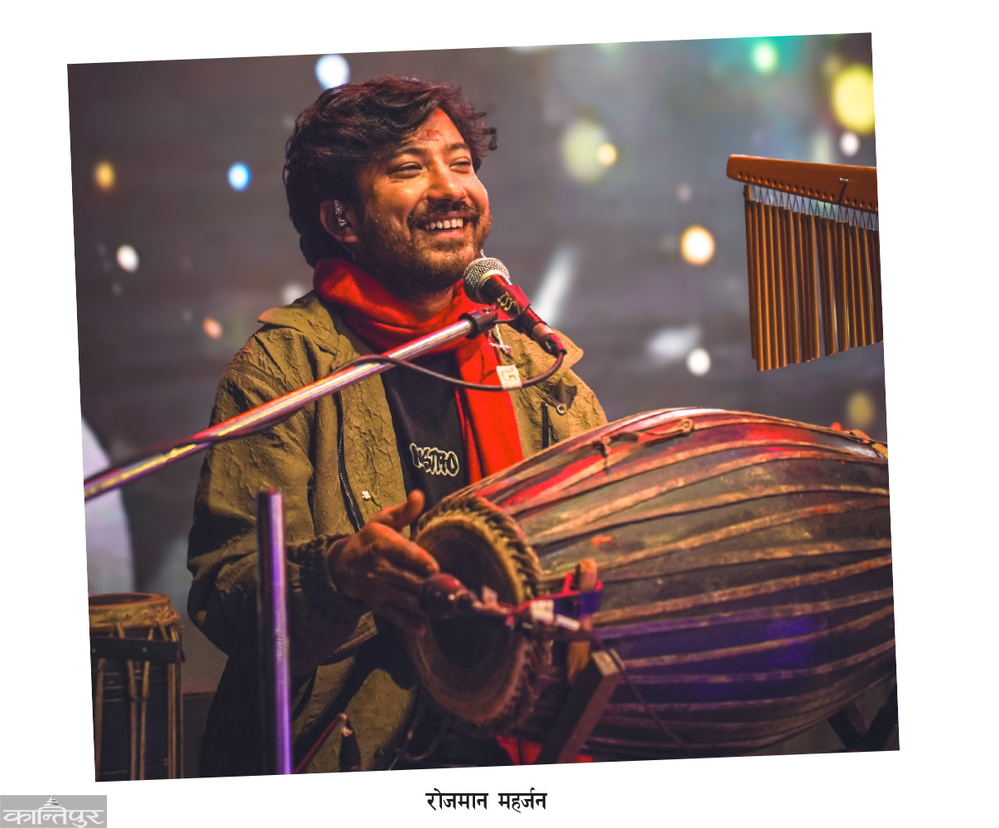
Everyone will be singing the old song everywhere towards the wedding party! Seeing her dancing to both Hindi and foreign songs made Rozman want to do new separate music. So he brought it in double style, 'Salugu Gacha'. After the song was played, he brought 'Aila Luwaya'.
This song became widespread in the non-Newar community. Our sentences are also good. We also had a custom of playing madals and rejoicing from the tradition of wedding feasts. On one side were the women's groups, on the other were the men's. Aila Luwaya is an example of that double sentence," Rozman said.
Ujan feels that the main reason why the audience is attracted to their songs is the rhythm mixed in them. Music has no language. Perhaps everyone seems to be enjoying the music vibe right now. The audience seems to be engrossed in the melody of the song rather than the words. We didn't even understand the song called 'Gangnam Style' but the melody of that song drew us. Today's Neva is drawn by the same melody of the songs," Ujan said. To that, Kuma adds, "Melody has also made me like music now." If the song is the house, then the voice is the color of the house. So I think the melody should be good.'
According to Ujan, who brought Newa language songs like 'Rajmati Cha', 'Maicha', 'Lumanti', social media has also brought these songs to a wider audience. The song 'Salugu Gacha' became a hit shortly after it was released on YouTube! According to Roseman, many people made many ticktaks on this song at that time. The bhajan style 'Salugu Gacha' went on that year in such a way that the same song was played at the banquet as well. Released a year after the release of this song, 'Aila Luwaya' collected one lakh views in 3 days. Rosman has the experience that this song, which has now been viewed by more than 14 million people on YouTube, became a hit only because of Tiktok. Rozman has also experienced the impact of platforms like Tiktok up close. In particular, Rozman brought a song called 'Maya Madula' after 'Aila Luwaya'. It was then that Tiktok became a band in Nepal. This song didn't go that well. Some time ago, when 'Makh Twaah Ya Gwaah' was released, Tiktok opened, the song is Tiktok!
A similar platform of social media, which has recently become a new means of music promotion, did not distinguish Roseman's song as regional, community.
'Be it natives of the valley or tribals, marginalised, their songs were not reaching that place. Because even in music only the same faces were reaching. However, YouTube and Tiktok did not look at caste, they did not look at community. No one could even stop our song from being released there. We have made a song that makes people happy. And it seems that our song has healed their hearts,' said Rozman.
Neva: Rozman is shocked to see this kind of wave of songs. "Not only Newar, other original songs are our property and culture," he said.
Kuma, who has reached the east on the Nepal tour, is happy to see people from different districts enjoying the music. 'Sachika China' singer Niva Dangol says that 'newa' music has started to flow from platforms like Tiktok. At first, young people were less visible in music. It was just the old face. But, now with the participation of the youth, Neva: songs are playing,” said Niva.
Traditional tunes, music and rhythms are mixed with today's songs, says writer Kiran. "Neva: There is no repetition in the community. Roseman also became popular when he brought songs in a style that was not his own. The songs sung in traditional bhajans have become popular among the audience by mixing new singing styles and rhythms," said writer Kiran.
If we look at the songs of today, then the elements of Newa music have been mixed by singers and musicians. Let's look at the example of 'Salugu Gacha'. Especially the melody of this song was already famous in the Newar settlements. But it was stuck, in a corner. Khokna used to teach hymns to mothers, Rozman. If you make a song based on this melody, Neva: I thought that there will be some change in music. So Kutupukhu Bhajan came together with Khalah.
In 'Salugu Gacha', both men and women are expressed through songs. 'Salugu Gacha Salimate' means, don't follow thin. "Khaisi, Jhamsi Hacke Mate" means Jamir and Kagti Najhar. 'Maya Yayegu Tote Mate' means don't stop loving! Even those who did not understand the meaning of the song were swayed by its melody. Rozman composed a song on this tune so that it could be new for the Newas. How many songs were coming out in this tune. However, that song was not touching the mind of the audience. Our songs touched their hearts," said Rozman.
In 'Aila Luwaya', Rozman not only mixed the music, he wrote the words envisioning the feast itself. 'Aila Luwa' means come to pour wine in the cup!
'Jhan jhan dhal bwe chenya bwe naya
le le tal chhangu hey khwa swaya
Aila luwaya...'
meaning, 'I got excited with the dinner party. This heart rejoiced with your face, drinking alcohol. In 'Aila Luwaya', Rozman has covered the words of the song that give meaning like 'Zhyapai Lagao that your alcohol is looking at you'.

Kovid's combination, music production Kovid has a sweet combination with the songs of Kuma, Rozman and Ujan. Especially their songs came during the Covid period and became famous. Ujan started writing Neva songs in the midst of Covid. Around 2016/17 he used to gig towards Thamel on English songs only.
The Eagles were influenced by the band's country rock and sang similar songs. The family kept saying that they should bring Neva songs. He sang songs in Nepali language. Thinking of not wasting the time of lockdown, he learned music production at that time. While studying BIM, he made music inside the room. By learning, writing songs and filling them with music, he started publishing them on YouTube. After 8 Nepali songs, he got more response than expected when he sang a Nepalese song called 'Thou Kanen'.
Before that, his songs were getting 14/15 thousand views. However, this song, which is a fusion of Rock and Newa, got 40,000 views in a short time. Then he thought, maybe the audience is waiting for a similar song. Ujan made 'Maicha' again with the same zeal with the idea of creating a fun style song. As he was always locked inside the room during the lockdown, the family was also asking Ujan to come out.
So to take a break from all this chaos, I shut down all the social networks. 'O Maicha' was released on YouTube. One day the band member called and said, 'Maicha has gone viral. Do you know?' 100,000 views within 2 weeks of the song's release. The same zeal made 'Rajmati Cha' and 'Lumanti'.
I wanted to modernize Neva music. However, in the rush to modernize, for a while, I forgot the meaning, I forgot the instrument," he said. From 'Rajmati Cha' I started mixing traditional instruments. In terms of genre, Rajmati is Afro, but Newari Baja has been mixed in it. Used strings in 'Liklik'. Afro-style Lumanti mixes slow sounds, khin and ta. Flute was also mixed. "My style is Afro, but I mix it with Neva: baja," said Uzan.
Kuma also started making music at home in the midst of Covid. Every single song from Kumaka now takes place on 'Kumale Station'. Kumale Station is one such room, where there is only one mic. Neither the mixing mastering materials used in other big studios, nor the instruments used in world music! Just as a potter makes different natures of earthen pots from the same clay, the potter station here emits songs of different flavors from the same mic. "Kuma station is releasing raw songs," said Rozman, who has been in Kuma Sagar's band for 3 years.
Kuma was making music since 7/8 years ago. Kuma used to strum a guitar and attend musical events. Started recording from 2016/17. Also went to 'Voice of Nepal' (2019). Voice Nepal could not accept Kuma's voice as the voice of Nepal and Kuma left from the third stage. But, in that competition, he saw all kinds of singers. At that time he did not like his own singing.
songs like 'Chameli Phool', 'Ma', 'Saath Deo Na' went to another studio and recorded them. Meanwhile, he decided to record the songs himself. I played the previous songs by going to other people's studios. I did a lot of work depending on others, now I have to do it myself. "I started recording songs by playing the guitar myself rather than when others play the guitar," says Kuma, "I started buying music production materials while performing gigs in restaurants." . The home-recorded songs 'O Champa', 'A My Re' were very popular. Then he got the idea that he could record songs at home. "After playing the songs recorded at home, I got courage. That it can be done at home. That's why our song is raw. Mixing is not mastering. When listening to our song on the speaker, the sound is different.
only sounds good on mobile,' said Kuma with a laugh. Agreeing with Kuma, Rozman adds, “We don't go to a big studio and bring songs. We record the song on the same mic and then release the raw song. Our songs will come out of that potter's station. We don't spend a lot of money making music. We sing songs that cool the ears. This is also the specialty of Kuma Sagar.
Rosman says that Kuma's specialty is that he can produce songs on original tunes despite the lack of stations. His song is a song to be proud of. Now many people have made songs by encouraging foreign traders. However, he brought folk tunes to the world. He used original tunes,' says Rosman while discussing Kuma. Writer Kiran says that the songs of Ujan, Kuma, Rozman, Niva Dangol have started to be accepted in the mainstream due to the issue of
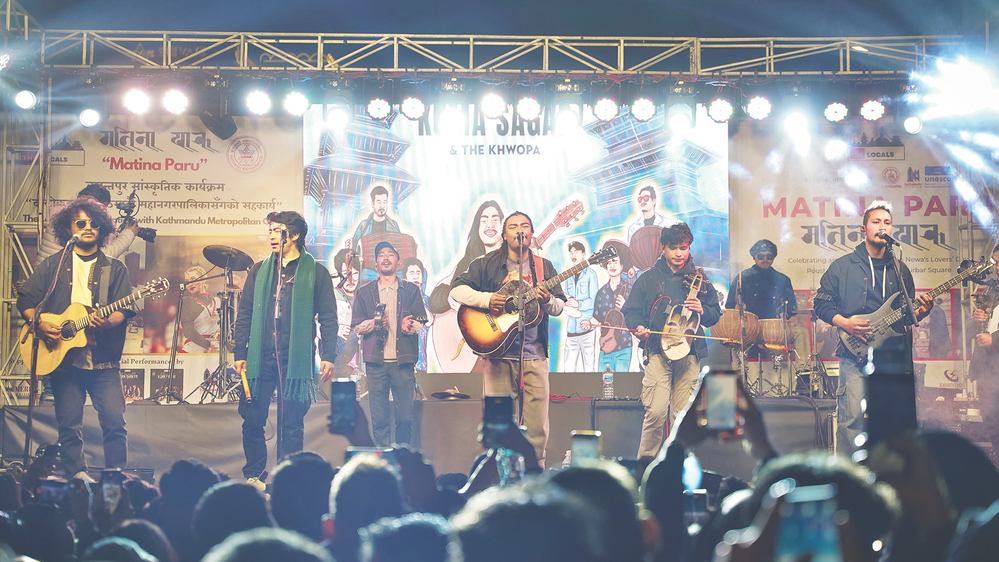
identity. In fact, we could not recognize each other's identity. It was feared that only negative things would come after the identity movement. In fact, it has been shown that identity can bring out such positive aspects as well. As the issue of identity is increasing, they are aware that they should not return to their culture. They don't have to raise the flag to raise the issue of identity,' said Kiran.