Opened three decades ago, Rizalco's products are consumed not only in the country, but also in China's Tibet and India, the industry employs around 800 people.
We use Google Cloud Translation Services. Google requires we provide the following disclaimer relating to use of this service:
This service may contain translations powered by Google. Google disclaims all warranties related to the translations, expressed or implied, including any warranties of accuracy, reliability, and any implied warranties of merchantability, fitness for a particular purpose, and noninfringement.
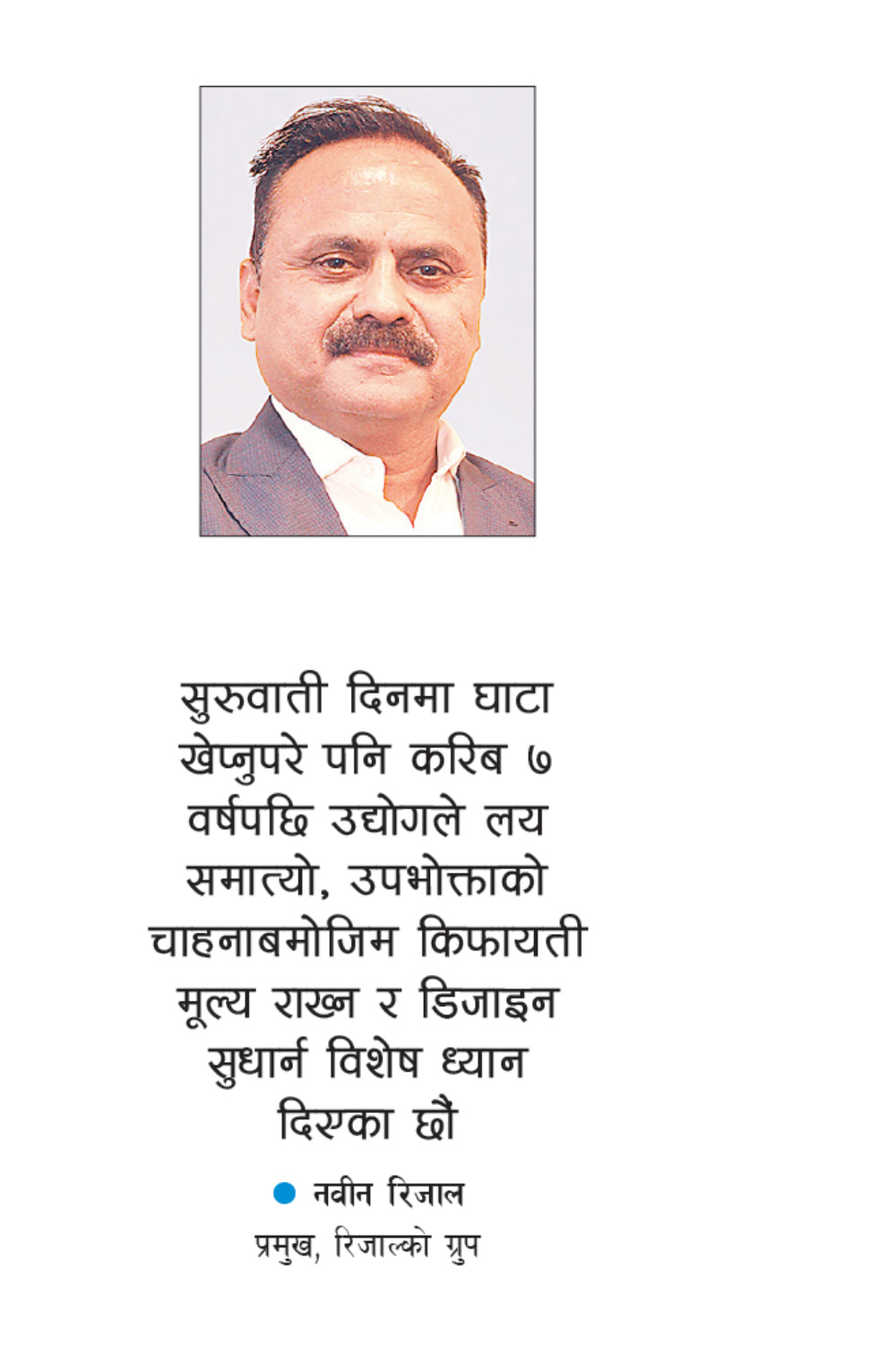
The story of Biratnagar-based entrepreneur Naveen Rizal represents an inspiring journey through struggles, failures and determination to reach success. Naveen, who was disappointed because he could not get a job, is now able to provide employment to hundreds of people.
His struggle began in the year 2050. At that time, the Rizal family started a plastic water tank manufacturing industry. At that time there were tank industries in other districts, but not in the east.
The Rizal family had no experience in producing water tanks. However, this family had the courage to face the challenge. The Rizal family established the industry for the first time in the East with the brand 'Rizalco'. The products of the industry opened with the initial goal of meeting the demands of the former consumers are now consumed not only within the country but also abroad.
Naveen's father Vinay Rizal had a jerkin industry in the 40s. After that industry did not work as expected, it had to be sold cheaply around 45 years. A few years after the Jerkin industry was sold, the water tank industry was started. Naveen, who had no desire to do business but wandered in search of a job, was forced to return to business after not finding a job.
In the late 40s, Naveen reached Kathmandu while wandering in search of a job. After graduating, many of his efforts to find a job went in vain. Spent 6 months in Kathmandu to become an employee. Finally returned home disappointed. After returning home, Naveen continued his studies.
Along with studying, he also had a passion for business. He was motivated by the fact that he had to work to improve the family's financial situation. As per the suggestion of his father Vinay, he started a tank manufacturing business in 2050. "At that time, I wanted to get a job above the office assistant, but I didn't get it," Naveen opened up about the past.
In the beginning, he started his business by buying machines on loan, and now, his industry is running state-of-the-art machines worth crores. In the early days, it was very difficult to get a loan from a bank. The prevailing interest rate at that time was 14 percent. He barely got a loan at 18 percent interest.
The factory was opened with a loan of about 2.5 million. A private bank used to provide raw materials on payment. "After paying 2500 rupees, 5 bags of plastic grains would come out," recalls Naveen, "5 tanks would be built from that." We used to sell that and buy raw materials again. This cycle of providing raw materials by the bank, building and selling the tank, and paying the money to the bank again went on for a long time.
was like a monopoly in the GI and concrete tank market. Rizal started manufacturing plastic tanks. Competitive industries price their products to attract customers
s drastically reduced, which directly affected his industry. "Even though we had to bear losses in the early days, the industry caught the rhythm after about 7 years," says Naveen, "We paid special attention to keep affordable prices and improve the design according to the wishes of consumers." That's why consumers started getting attracted to the Rizalco brand. In the opening days of the
industry, Naveen invented a new way of advertising. Advertisement flexes with the message 'Listen in water' were hung on poles in Kathmandu. He has the experience that the advertisement has a positive effect on the psychology of the consumer. Later, the product was introduced to consumers through the 'Rizalco Polytank' brand.
The industry, which started with a small capital on 4 kattha land in Itahari, has now spread over 11 bigha area. Also, after the 60s, this industry was not limited to the East. It also expanded to Kathmandu and other areas. In 2063, he also started production of tanks from Luvu in Lalitpur. Soon they are starting production of tanks from within the Balaju Industrial Area of Kathmandu.
He says that he is going to start an industry targeting the consumers of Kathmandu and Kathmandu West. "Transportation costs are high in the tank industry," he says, "We believe that the two industries in Kathmandu and Lalitpur will reduce the cost of transportation." The
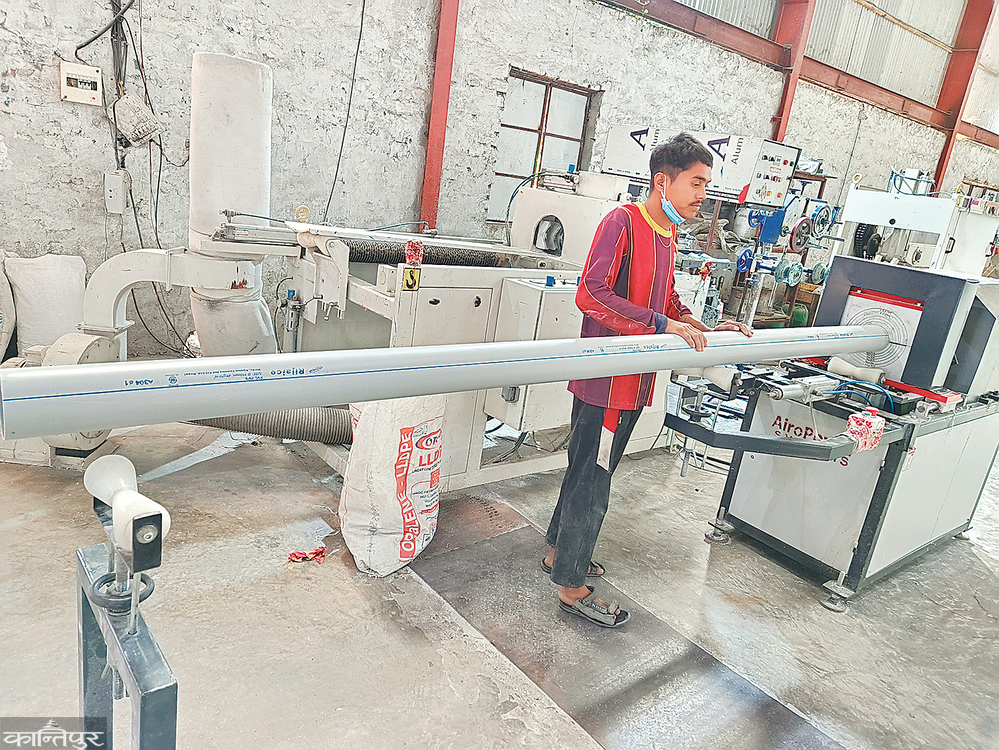
Rizalco industry was not limited to tanks. Rizalco started producing gas in 2067 and Rizalco pipe in 2072. The industry, which had an initial investment of 2.5 million, is now doing an annual business of around 250 million rupees.
Today Rizalco Industries produces more than 50 types of tanks. Colored tanks, tanks with Birko and tanks designed according to the needs of consumers can be seen in the market. Tanks ranging from 100 to 10,000 liters are available from his industry. The aim is to soon produce steel tanks as well.
Raw materials are imported from abroad for tanks. Tanks are manufactured using raw materials and chemicals imported from countries like Korea, Singapore, Saudi Arabia, Malaysia, and Vietnam. "Though the raw material comes from abroad, the tank is produced in the country, so the consumer gets quality material at an affordable price," says Naveen.
Rizalco industry employs about 800 workers directly and indirectly. The product reaches consumers from more than 5 thousand outlets across Nepal. "Our production is also going to Tibet in China and some areas of India," says Naveen, "We are planning to export to third countries." He said that attention has always been paid to cover the needs and desires of
consumers. Design changes, adding new features and setting prices that consumers can afford are the main strategies of the industry. This industry was the first to introduce colored tanks, tanks with birko and covers to prevent insects and dirt. After the production of Birko, the production of tanks increased further. Naveen says that the machine cost was high for Birco, but still they started production according to the wishes of the consumers.
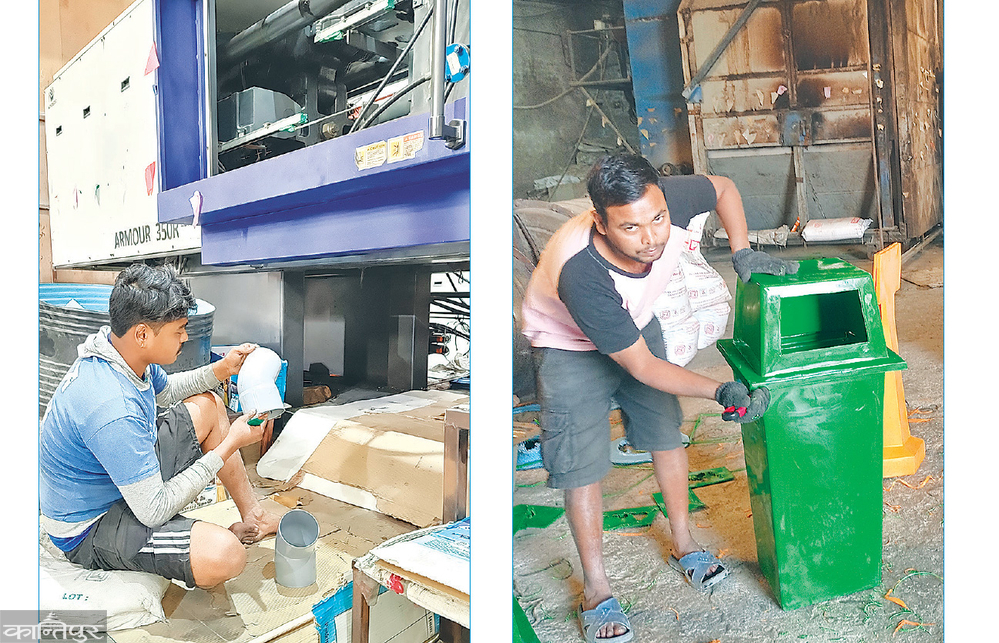
This industry started production with a new technology called three-date cap. He claims it took 12-13 years for competing industries to copy it. Recently, the industry has also developed the technique of hooking the tank. Naveen says that after connecting the hook, it will be easy to keep the tank on the 10th floor. "No other industry can offer as much variety as we do in Nepal," says Naveen, "this is the specialty of our industry."
According to Naveen, what are the consumers thinking? What do you want? The industry takes it seriously. "We also pay attention to the price that the consumer can afford," he says, "What to do by producing a tank that the consumer can't afford?" Although expensive, the design keeps changing. Naveen claims that the products of Rizalco Company have become the choice of consumers for that reason. Rizal's success story is not just a great example of entrepreneurship. It is also a symbol of identity and independence of indigenous products. The journey of 'Rizalco', which has achieved success in the field of plastic tanks, pipes and gas, is an inspiration for the Nepali industry sector.

