What is an object or figure like? Menuka doesn't know, but she knows - the tunes of music. He was introduced to music while living in a hostel. When he was 7 years old, when he heard a tune from the harmonium, it entered his soul.
We use Google Cloud Translation Services. Google requires we provide the following disclaimer relating to use of this service:
This service may contain translations powered by Google. Google disclaims all warranties related to the translations, expressed or implied, including any warranties of accuracy, reliability, and any implied warranties of merchantability, fitness for a particular purpose, and noninfringement.
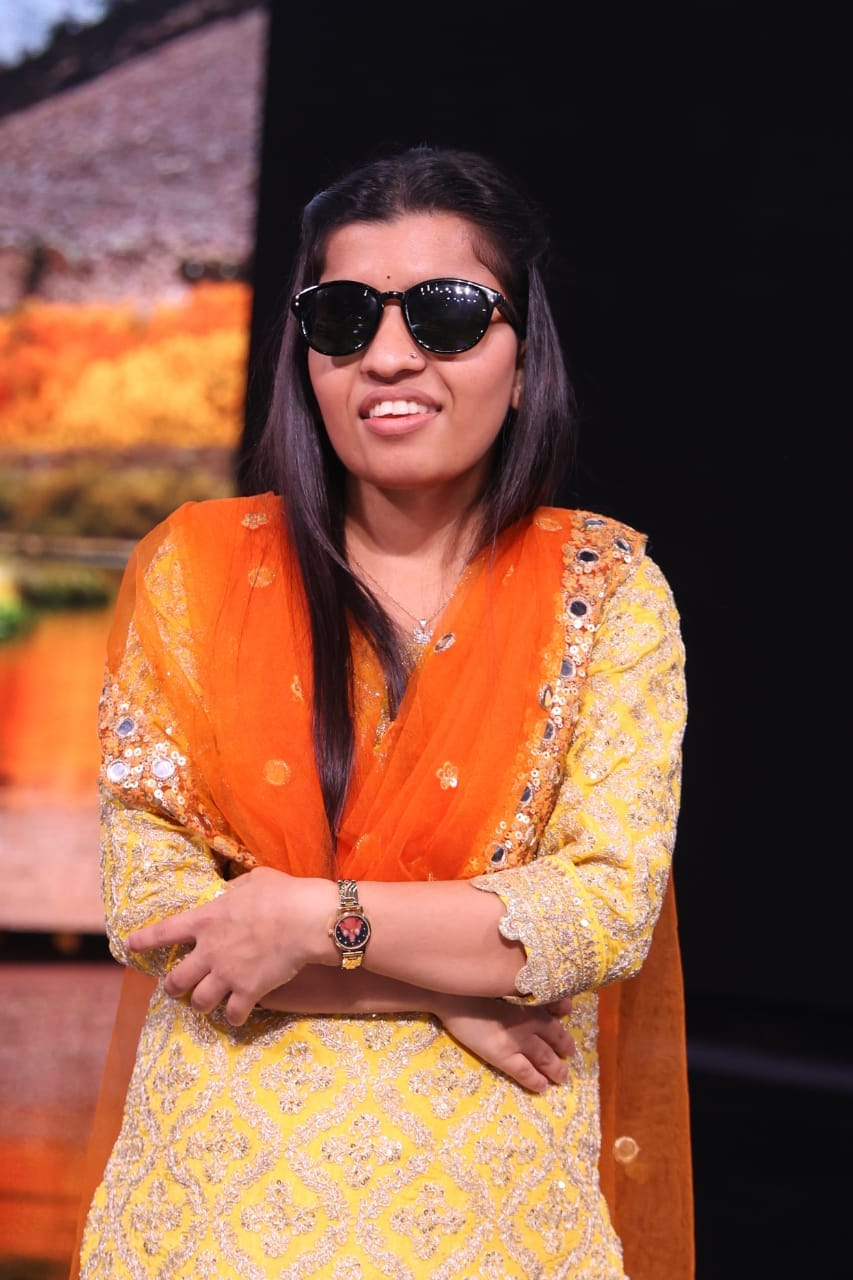
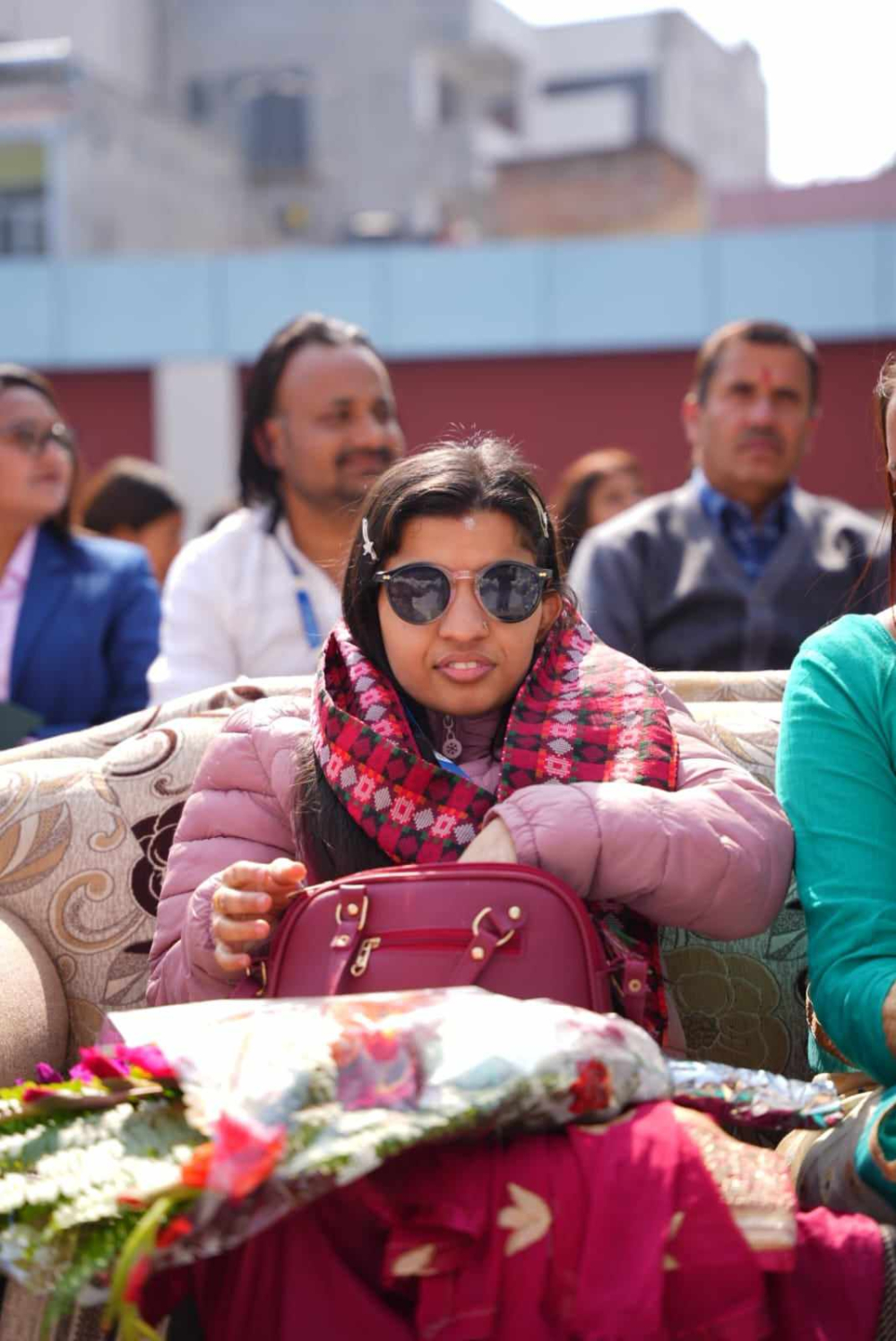
After crossing the compound of a house in Ghattekulo, Kathmandu, Menuka Paudel reached the pitch road. Carrying a small red handbag in her hand, wearing black glasses and a pink jacket, she was walking carefree even on this deserted road. She said, "How cold it is in Kathmandu!"
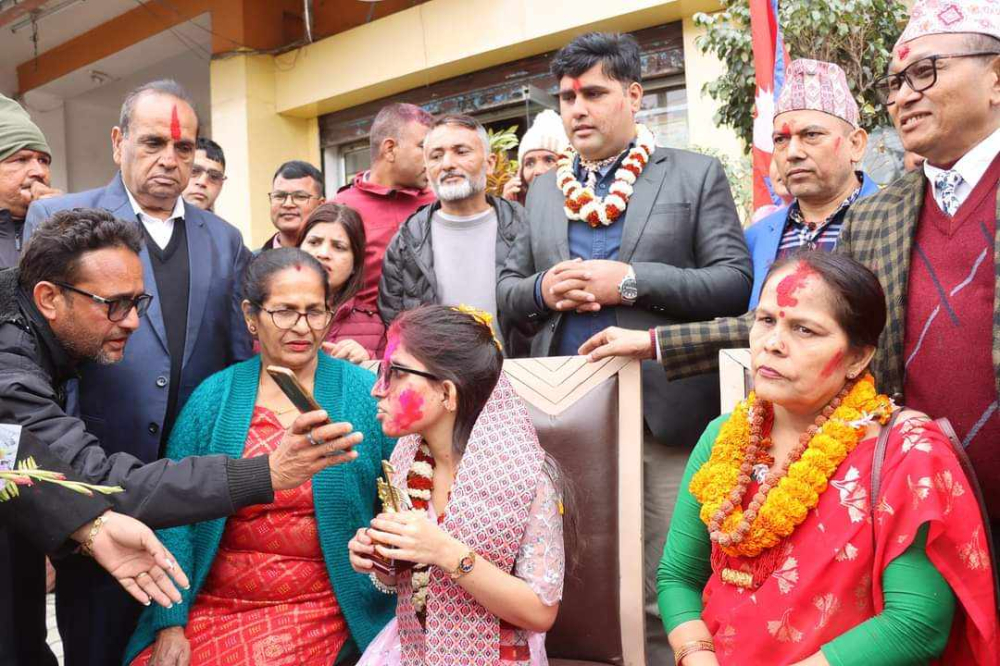
Under the night sky, she was surrounded by some people when she opened the gate of the house wet with icy snow and came to the yellow car stopped nearby. He quickly took out his mobile phone from his pocket to take a photo with her. Her eyes were saying in surprise, 'Menuka singing in Indian Idol is in our street!' Menuka Paudel, who recently returned to Nepal from Mumbai after participating in the Indian musical show Indian Idol, had arrived in Kathmandu just a day before to participate in the literature festival at Whitehouse College in Tinkune, Kathmandu. The woman holding Menuka's hand and opening the car door was saying, 'He is in a hurry, please don't confuse him by taking pictures.' On the grand stage of 'Idol', she sang old classical songs and hymns and made her special place among countless fans.
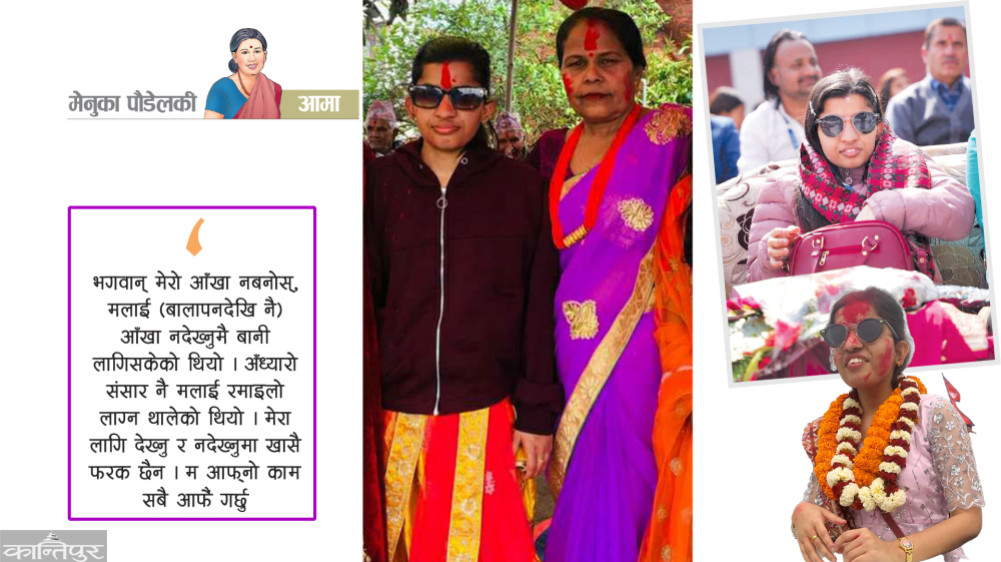
At midday last Saturday, surrounded by hundreds of students, she made her way to the festival stage, not realizing that she needed a white-cane (a special cane used by the blind). Addressing the students, she said, 'My warm greeting to this cold Kathmandu!' After singing 'Gali Me Aaj Chand Nikla', 'Agar Tum Saath Ho' on the Binatrack, she said, 'Music is the light of the soul for me, music is mine. be the soul I didn't choose music, God chose me for music.' Amid thunderous applause, she flipped through her short song-life memoir and shared fond memories with her mother. Often the relationship is emotional – full of tears. Mother-son, mother-daughter relationships are even more emotional! However, emotional relationships do not suit Menuka. "There is no such thing as a story of sadness, difficulty, or sadness in my life. Emotions are useless to me. The relationship between my mother and me is not emotional, it is not," Menuka says, "More emotional makes a person more lazy. And, there is more room for tears. There is no place for tears in the relationship between mother and me - there is more place for laughter and fun.' After finishing her solo session, she asked her mother in Jhapa on the phone in the middle of the festival, "Are you okay?" Have you eaten lunch?' But there is no gap between mother and her life in the past. Feelings and experiences, which both have experienced in different colors, but the colors of both have merged into one. And, it has been accepted by daughter Menuka and mother Pamphadevi Paudel (46).
•
•
•
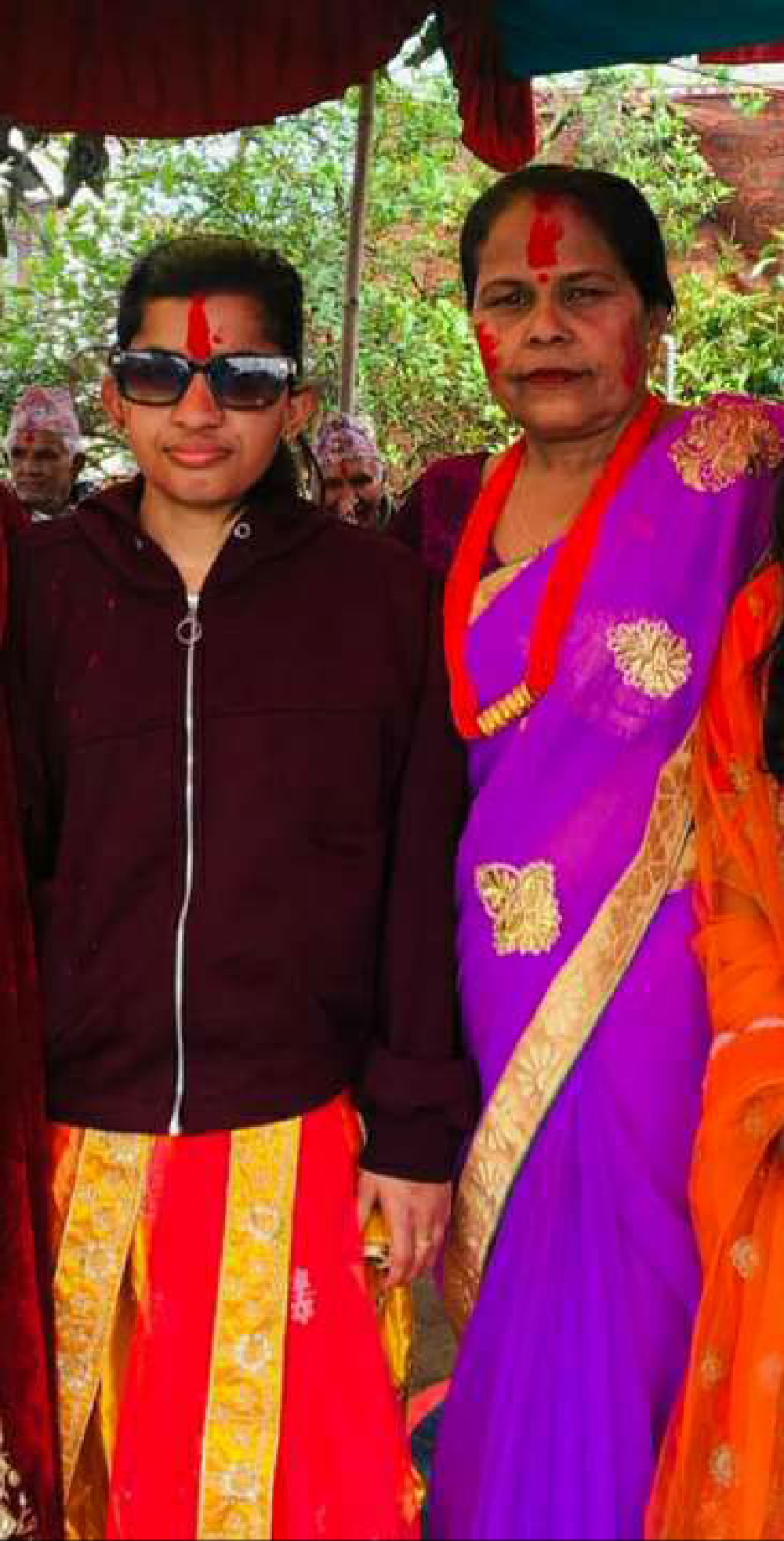
In October 2055, Jhapa was born in the house of Haldibari-4 – Menuka, being the eldest daughter. Menuka's eyes did not open until a few days after birth. Pamphadevi thought, 'They are slowly opening!' After 10/12 days, Menuka's eyes suddenly opened. But the eyes were red, white. Pamphadevi did not understand the meaning of that net. Heart pounded. "What happened when I saw that net," mother Pamphadevi said to Kantipur in a mid-day phone conversation on Saturday, "That time it was a dream that
is called Vipana. Pampadevi, who was terribly scared seeing the white web, reached the health post in front of the house with her daughter. The doctor looked at both of his eyes and said, 'The eyes are completely white.' After 2/3 months, she reached Birthamod's eye camp with her daughter – Pamphadevi, then Bhairawa and Birganj. All the doctors were of the same opinion, the water in Menuka's Jyoti-vein has dried up. Pampadevi and her husband Tikaram kept running with their daughter in their arms, caught in a small circle of hope - sometimes this corner and sometimes that corner! "An eye camp doctor concluded - Menuka's eyes do not have lenses, she cannot see", Pamphadevi remembers those days. Pamphadevi, who was shocked to see the white mesh of her eyes, was deeply moved by the words of the doctor. Pamphadevi sounded emotional as if the whole night my mind was numb, as if there was a cold frost somewhere in my heart. Pamphadevi's heart was knotted for a few months, her heart was cold. Life went on like entering a dark tunnel and disappearing somewhere in pure darkness. "People used to say that you will suffer for the rest of your life," Pamphadevi remembers the newspapers of those days, "I would not sleep all night, but I would pray to God - O God, what happened if my daughter was not a light?" May his life be happy and peaceful.' When Menuka was 10/11 years old, her mother Pamphadevi took her to the eye camp again, thinking, 'What happened?' Doctor asked for old documents, asked to come again. "Remembering the hassle of going to the doctor many times, my naive childhood prayed to God - God don't become my eyes," Menuka remembers that day, "I was used to not seeing my eyes." The dark world was starting to look fun. For me there is not much difference between seeing and not seeing. I do all my work myself. Blind people can also thread a needle. In my hostel there were some blind people who used to thread the thread through the eye of the needle. I can't do that.'
Pamphadevi used to cry alone, thinking that 'others will see tears'! ``Nowadays, seeing the rise of Menuka's progress, do you shed tears of happiness?'' After being silent for a moment, she slowly said, ``There were many tears at that time. I don't want to cry these days. Well! The tears seem to have ended too soon. I am very happy now. I have always been known as Furung, my daughter. It seems that he heard the prayer that he was crying to God. I am lucky, father.'
•
•
•
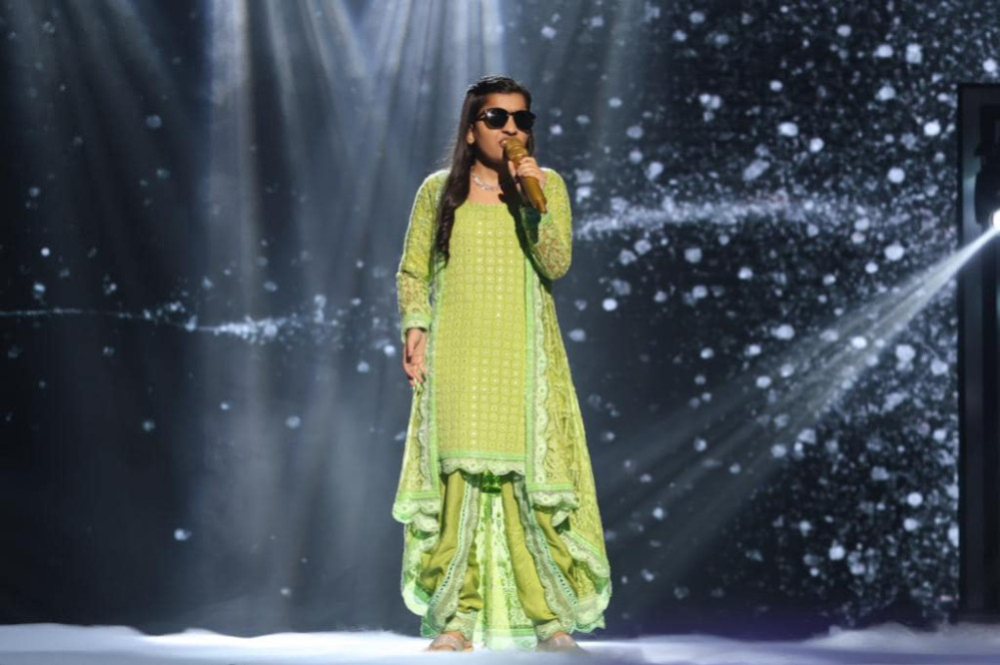
In the memory of mother Pamphadevi, when Menuka was 3/4 years old, she used to dance and clap her hands when she was taken to bhajankirtan. Childhood in particular is unique - time flows like clear water. It is only when people grow older that clear water becomes cloudy. One morning in the year 2060, Pamphadevi, leading Menuka, took Durga to the highest mountain in Garamani, an hour's distance from Haldibari. Teacher Khilprasad Sivakoti asked Menuka, who had a cheerful personality, 'What do you like to do?' 5-year-old daughter Menuka had an easy answer, 'Sing bhajans.' She had heard people sing bhajans many times and said with a good heart, 'I like to sing bhajans.' So she also sang in 'Indian Idol' -
O Palanhare, Nirguna aur Nyare Mhre bin hamra kono hin, solve our confusion God Mhre bin hamra kauno nahi, mutume hamka ho samhale, mutume hamre rakwale.
Menuka also sang this hymn at the White House Literature Festival at the request of a student. Mother Pamphadevi says, 'God has taken care of him.'Durga High School had 16/17 blind students. "After observing the environment there for a few days, my mother thought it was right and admitted me," says Menuka. "I heard the tune of the harmonium there and thought, Menuka will definitely learn something here," says Pamphadevi. Then Menuka stayed in the hostel there – till she passed her SLC. She used to go home on a week-to-fifteen-day vacation and take care of her mother. Seeing my inclination towards music and bhajan, my mother used to say - Look, Menuka, don't listen to anyone else, you should continue learning music, no matter how much it hurts. Never lag behind others. You have to be strong, you have to suffer,' remembers Menuka.
Ray Menuka cried a lot when her mother left the hostel for the first time. Maybe she was upset about having to sleep in a new world with a different bed, a new person. Ray used to cry, 'I will go with my mother.' But slowly she got used to it.
I used to wonder what would happen after holding the baby in my arms. But, I kept her in the hostel so that she could do something, so that her daughter's future would be made,' says Pamphadevi. So I left it there even though it made a knot in my heart. Pamphadevi thanks the teachers Krishnaprasad Pathak, Khilprasad Sivakoti and the hostel mother Nima Niraula, 'whose tireless efforts made her daughter here.' Menuka is remembered with great respect and honor for Nima, who took charge of cleaning up her faeces and raising her in the hostel. She says, 'The next mother after my mother is Nima.'
•
•
•
What is an object or figure like? Menuka doesn't know, but she knows - the tunes of music. He was introduced to music while living in a hostel. When he was 7 years old, when he heard a tune from the harmonium, it entered his soul. "I was young, but I would spend hours listening to music, waking up in the middle of the night and humming the keys of the harmonium. I fell in love with the tunes that came from it,” recalls Menuka those days. It is as if Menuka literally followed the great saying 'where there is no path, your beauty is there' and gave beautiful rhythms to her sorrows (little happiness) in her 'different' journey since childhood. Eight-year-old girl, who daily eight For
hours, she practiced music on the harmonium. Perhaps that is the sadhana, now millions have decorated it in their dhukdhuki. She wanders in the small corners of memory – how did something stir in her soul when she heard the tune of the harmonium? The little fingers were dancing on the harmonium, but neither the mind nor the hands were tired! She was independent from childhood - Menuka, Tejili too! Never forget what you hear once! Everyone said - it's so fast, surely something will happen! She used to do her work herself. Nisfikri used to roam the city and market alone. That habit continues even now. Even now, she travels abroad alone. She reached Mumbai alone for the 'Indian Idol' audition. While going to participate in 'Saregamp', she reached Mumbai looking for singer Anup Jalota's house and went around reciting bhajans. Menuka's mind keeps repeating the day when she went to the store alone to buy Cadbury, played the harmonium spurs, and played gutta for the first time. After SLC in 2070, Menuka came to Kathmandu to study music at Srijan College of Fine Art. In 2072, she participated in the modern singing competition organized by Radio Nepal and won first place. At the age of 18, she participated in 'Nepal Idol' and was eliminated after reaching the top 11, due to the public vote. In India's reality show 'Saregamup', she was selected from the Kathmandu audition and went to Calcutta and then Mumbai. She managed to reach the top 11 in that event as well. And so began Menuka's journey - in the 14th edition of 'Indian Idol'. Where she always received eloquent praise from guests and judges Shreya Ghoshal, Vishal Dadlani and Kumar Sanu. Amid accolades, she recently made it to the top 10.
``When Menu was young, I was sad because she would suffer,'' says her mother, 'but I was very happy after I went to Idol. She was singing on the stage, I was under the stage and I was chanting God's name for her success.'
- Pamphadevi went to Calcutta, Mumbai along with Menuka for the audition of 'Saregamup'. After reaching the 'studio round' in 'Indian Idol', she stayed in India for 5 months with Menuka. Pamphadevi did not know Hindi. I used to walk on him. He is curious about everything,' says his mother, 'I feel safe when I walk with Menuka.' Now what kind of image does Pamphadevi want to see of Menuka? "My daughter should go higher, make a name in the world," she says, "I walked half way up the ladder, now I want to see it reach the top of the ladder." It's been 16/17 years since Pamphadevi's husband Tikaram came to Malaysia to work. Pampha got married at the age of 19, studied 7th grade and works as a farmer. "My mother advises me even on the smallest practical aspects of the house," says Menuka, "I share every little thing with her, starting from minor injuries. My mother and I are kind of like friends. Mother is addicted to mobile, it is good to pass the time by hanging on the mobile. But, I think it will add stress to the health later.' The environment in which she grew up never made her realize that 'I am blind'. She says, 'Only after leaving school did I realize that I am blind, from the behavior of the outside world.' While walking on the streets of Kathmandu with a white cane, someone would hand her 5 rupees. She used to slap the donor's cheek! She says, 'I experienced such behavior only in the outside world.' Menuka's grandfather comes in a wave of memories along with her mother. When someone looked at Menuka when he was a child, Grandpa used to say - Look! Nahep hai to my granddaughter, later this will become the radio of the world. Maybe Grandpa was right. The songs used to be played on the radio that my grandfather saw, Menuka is also known in the world by singing songs.
Menuka thinks, how important is the smallest event in life! Those are the events that live in the memory! 'The very small event is very valuable,' she says. Life is not a story. It has a problem, the solution is, and six fast. I am working only, only in my family. It seems to have a lifetime and a package of life. 'Pumbayi' Mummy ',' sister ',' Sister 'and' Sister 'for the
menu. He also recorded songs of the mother - 'Mother Abrecised You ... "' My mother saw your shadow in the figure of the cloud ... '
Mukuka is about the mother world's hugs than millions of embraces, a cool relationship between thousands of miles far away from the moon away from the moon. "I am gulaful, there is God. 'And he is remembered,' Remember, 'Remember, Mother! Sad into the world. Muni Do You Do You! It is not enough for anyone to work hard! 'In the eyes of the mother, always a' good-and and soul ". The mother's command has come here to be wise (in Pamphavi's eye). She says, 'Thanks Mother!'